
General body weakness in Ho Chi Minh City: why rest doesn't bring your energy back, and how Tong Gia works with qi, blood, Spleen and Kidney
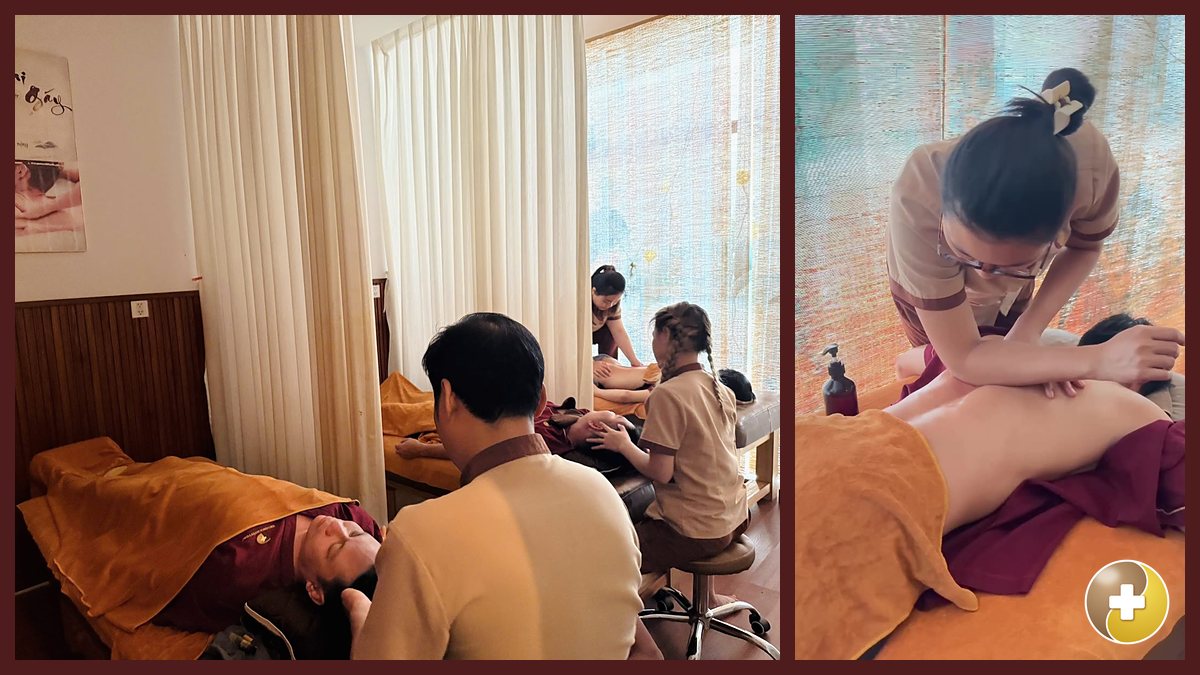
Quick answer: General body weakness is tiredness that lasts for weeks and does not lift with rest. The Vietnamese traditional view links it to a Spleen–Stomach system that makes too little qi and blood, and a worn-down Kidney. Tong Gia Acupoint Wellness (Huyệt Đạo Tống Gia), District 12 and Vinhomes Grand Park, Ho Chi Minh City, works by hand on D11–D12 and L1–L3 to help the body rebalance.
Want Lương Y Tống Văn Huynh’s team to read your spine and posture in person?
What is general body weakness, and who gets it?
General body weakness is tiredness that lasts for weeks and does not go away after rest. You sleep in on Sunday and still wake up empty on Monday. Two flights of stairs leave you out of breath, a few spoonfuls of rice feel like enough, and by late afternoon you only want to lie down. Ordinary tiredness after a hard day fades after one good night. This kind does not.
In Western terms, long-lasting fatigue is a symptom, not the name of one specific disease. The body needs enough energy from food that is properly digested and absorbed in the small intestine, enough red blood cells to carry oxygen to the muscles, and deep sleep so nerves and muscles can rest. When one link stays weak for months, energy runs short. The Tong Gia curriculum notes that when nutrient absorption drops, people become "short of nutrients, tired, thin", and that the kidneys release EPO, a hormone that helps make red blood cells.
In Ho Chi Minh City, Tong Gia often meets this pattern in:
- People recovering from flu or a viral fever: the fever is gone, the strength is not.
- New mothers with night feeds, rushed meals and broken sleep.
- Office workers in air-conditioned rooms all day who answer messages until midnight.
- Expats who skip breakfast, live on iced coffee and eat lunch at 3 pm.
- Shift workers in industrial zones and the Hi-Tech Park who sleep by day.
- Older parents visiting family who eat little, sleep little and complain of weak knees.
Common causes: why rest alone does not bring your energy back
Most people Tong Gia sees did not crash after one big event. Small habits added up over months:
- Irregular meals: no breakfast, eating at the desk, chewing too little, a heavy dinner right before bed.
- Cold food and iced drinks: iced tea and smoothies all day in the Saigon heat.
- Late nights: sleeping after midnight in short, light stretches.
- Sitting for long hours: back and leg muscles weaken from lack of use.
- Long-term worry: work pressure, relocation stress, caring for someone at home.
- After illness, childbirth or a period of overwork: the body has spent a lot and has not refilled.
The Tong Gia view: Spleen–Stomach short of supply, Kidney reserves drawn down
In the Tong Gia curriculum, the Spleen–Stomach (Tỳ Vị) is the root of "post-natal" energy: the Stomach receives food, the Spleen transforms it into essence and makes qi and blood for the whole body. The curriculum calls it the body's "kitchen and food store". It decides whether muscles are firm or weak and whether you feel alert or sluggish. One line worth remembering: how much you eat matters less than how much the Spleen–Stomach absorbs. The Spleen governs the muscles and limbs, opens into the mouth and shows on the lips, so a weak Spleen means tired arms and legs, a dull appetite and pale lips. It likes dryness and dislikes damp, which is why constant cold, raw food tires it.
The Kidney (Thận) is the root of "pre-natal" energy, the store of your life essence. It governs bones and marrow, so when it is depleted the lower back and knees feel weak and memory slips. It "grasps the breath", so you get short of breath on exertion. It governs water, so you may wake at night to urinate. The Spleen and Kidney nourish each other. Picture the Spleen as daily income and the Kidney as savings: poor eating cuts the income, while long illness, childbirth and late nights draw on the savings. Note that "Spleen" here is a functional system of digestion and absorption, not the anatomical spleen. Western and Eastern views look at the same body from different angles and complement each other.
Signs that often come with it
This table, based on the function charts in the Tong Gia curriculum, helps you see whether your signs lean towards the Spleen–Stomach or the Kidney:
| Common sign | Leans towards | Why (per the source) |
|---|---|---|
| Poor appetite, bland taste, bloating after meals | Spleen–Stomach | Spleen transforms food, opens into the mouth |
| Weak, heavy arms and legs, soft muscles | Spleen–Stomach | Spleen governs muscles and limbs |
| Pale, dry lips | Spleen–Stomach | Lips are rosy when qi and blood are sufficient |
| Weak, cold lower back and knees, feeling cold | Kidney | Kidney governs bones; Kidney yang deficiency |
| Short of breath on stairs | Kidney | Kidney grasps the breath |
| Waking twice or more at night to urinate, ringing ears, hair loss | Kidney | Kidney governs water, opens into the ears, shows in the hair |
| Light sleep, palpitations, constant worry | Heart–Spleen | Overthinking strains Heart and Spleen |
When to see a doctor
Long-lasting fatigue can come from issues that need blood tests, such as blood count, thyroid, blood sugar, liver or kidney function. Please see a doctor at a medical facility first, or alongside wellness care, if weakness comes with any of these:
- Weight loss without a clear reason.
- Fever that keeps returning, night sweats.
- Very pale skin, dizziness when standing up.
- Shortness of breath or a fast heartbeat while sitting still.
- Strong thirst, passing a lot of urine; urine that is brown, pink-red or very foamy.
- Swollen legs or a puffy face in the morning.
- Low mood that lasts, losing interest in everything.
Chest tightness, shortness of breath and cold sweats: call 115 (Vietnam emergency) right away.
This is a wellness service, not medical care. Tong Gia practitioners do not replace lab results and never advise stopping a prescription.
The face-reading view: how Spleen and Kidney show on the outside
Y Tướng Học (face reading for wellness) rests on one idea: "the sign is outside, the organ is inside". What happens within shows without. For someone with low energy, a Tong Gia practitioner looks at:
- Spleen–Stomach shows in the mouth, lips and flesh. In good shape: rosy lips, good appetite, firm muscles. Weak signals: pale lips, bloating, heaviness, tired limbs. The linked emotion is overthinking.
- Kidney shows in the ears, hair, bones and lower back. In good shape: thick rosy ears, glossy hair, a stable back. Weak signals: weak knees, cold lower back, ringing ears, hair loss, forgetfulness. The linked emotions are fear and worrying ahead.
- The "Mục" (目) face shape: long, narrow, thin, bony. The curriculum groups it as qi-and-blood deficiency, prone to body weakness and poor digestion; along the spine the muscles are thin and some vertebrae sit deep.
- Flesh quality: muscles that turn soft, cool and stay dented when pressed point to a cold, weak Spleen–Stomach: feeling cold, cold hands and feet, easy bloating.
- Ears: thin, floppy ear rims often go with weak Kidney qi: weak back and knees, cold limbs, waking at night to urinate.
This is reference knowledge from one school, used to choose which part of the back to check first. It never replaces a medical check and is not used to judge anyone. More in our Eastern face reading Q&A.
Spine segments and nerve-reflex zones involved
The Tong Gia curriculum explains that the spinal cord runs inside the spinal canal and nerve roots leave on both sides through the gaps between vertebrae, which is where the practitioner's fingers read. The thoracic segments D1–D12 relate to circulation, breathing and digestion; the lumbar segments L1–L5 relate to digestion, kidneys, urinary tract and the legs. Anatomically, the kidneys sit behind the abdominal lining on both sides of the spine, at about T12 to L3.
| Segment | Nerve / function | Common signs | Organ (Eastern view) |
|---|---|---|---|
| D4–D5 (between the shoulder blades) | D1–D12: circulation, breathing; Heart point Tâm Du at D5 | Palpitations, short breath, light sleep | Heart–Spleen |
| D11–D12 (mid-back, lowest ribs) | D1–D12: digestion; Spleen and Stomach points | Poor appetite, bloating, tired limbs | Spleen–Stomach |
| T12–L3 (upper lower back) | L1–L5: kidneys, urinary tract; Mệnh Môn and Thận Du below L2 | Cold, weak lower back, feeling cold, night urination | Kidney |
| L3–L5 (lower back) | L1–L5: legs | Heavy legs, weak knees | Kidney governs bones; Spleen governs limbs |
The table shows related zones for orientation, not causes. In people with low energy the hands often find thin muscles beside the spine, sunken vertebrae and skin over the lower back that feels cooler than elsewhere.
The Tong Gia method: spinal nerve-reflex balancing massage
This is a Vietnamese traditional wellness method built by Lương Y (master of traditional Vietnamese wellness) Tống Văn Huynh, founder of Tong Gia, with more than 13 years in Eastern wellness, face reading and spinal nerve-reflex balancing. A session runs in five steps:
- Observe: questions about when the tiredness began, meals, sleep, recent illness; a look at complexion, lips and ears.
- Read the spine by hand: segment by segment from D4 to L5, comparing left and right, looking for dips, soft muscle and cool skin.
- Muscle release: for a depleted body the curriculum uses tonifying techniques, gentle vibration and light gliding, with pressure going from light to moderate.
- Acupressure on the right points: Spleen and Stomach points at mid-back; Thận Du, Mệnh Môn and Chí Thất at the lower back; Tam Âm Giao (never during pregnancy) and Thái Khê on the leg. Work stops when the skin over the key point turns from dry to slightly moist.
- Home guidance: simple self-massage, sleep timing and eating tips for your pattern.
A real session usually looks like this. You sit with a cup of warm water while the practitioner asks about your meals and sleep and looks at your lips and hands. You lie face down; two palms move along the spine from the shoulder blades to the lower back. In someone run-down, the lower back often feels cooler than the upper back and the muscles at D11–D12 feel soft. Instead of hard pressure, the practitioner uses gentle vibration and slow strokes beside the spine, then works point by point. Most guests feel warmth spreading across the back and their breathing slows; some fall asleep. Afterwards the body feels lighter and many want a warm meal and an early night. Tong Gia does not promise your energy back in one session.
Suitable services (full price list):
- Spleen–Stomach wellness care, 75 min: 750,000 VND (about 29 USD). For weakness with poor appetite and bloating.
- Kidney wellness care, 75 min: 750,000 VND (about 29 USD). For weakness with a cold, weak lower back and night urination.
- Full-body care, 120 min: 950,000 VND (about 37 USD). Slow pace, back then arms and legs. See what a 120-minute full-body session feels like.
Want Lương Y Tống Văn Huynh’s team to read your spine and posture in person?
Self-care at home and prevention
- Regular, warm, cooked meals, chewed well: chewing well is the first step that eases the work of the stomach and gut. Cut back on iced drinks.
- Sleep before 11 pm: in the Eastern view early sleep nourishes yin and lets the Kidney rest.
- Rub the Kidney points: warm your palms, place them on both sides of the lower back and rub up and down 50–100 times until warm.
- Warm foot soak: 15–20 minutes at 38–42°C before bed; people with high blood sugar should test the water carefully.
- Gentle movement: the Bát Đoạn Cẩm move "hands holding the feet": bend forward and slide both hands down the back to the legs, slowly, 6–8 times.
If sleep is the weak link, our acupressure for sleep Q&A and acupressure massage Saigon Q&A answer the practical questions.
Book a session
- District 12: 225 Dương Thị Mười, Phường Tân Chánh Hiệp (Tan Chanh Hiep Ward). Open daily 8:00–19:00 (4.9★, 235 Google reviews).
- Vinhomes Grand Park: Căn T16-21 khu Manhattan, Phường Long Bình, TP. Thủ Đức (Unit T16-21, The Manhattan, Long Binh Ward, Thu Duc City, formerly District 9). Open daily 9:00–20:00 (5.0★, 208 reviews).
Call, Zalo or WhatsApp +84 888 264 559, or book online. If you are in Ho Chi Minh City for work or a long stay, it is a simple way to experience a Vietnamese traditional method in person.
Visit us
- Đông Y Huyệt Đạo Tống Gia Quận 12 (District 12)
225 Dương Thị Mười, Phường Tân Chánh Hiệp, Quận 12, HCMC · 8:00–19:00 daily · 0888 264 559 · Directions on Google Maps - Đông Y Huyệt Đạo Tống Gia Quận 9 (Vinhomes Grand Park, District 9)
Căn T16-21 khu Manhattan, Vinhomes Grand Park, Phường Long Bình, TP. Thủ Đức, HCMC · 9:00–20:00 daily · 0888 264 559 · Directions on Google Maps
Want Lương Y Tống Văn Huynh’s team to read your spine and posture in person?
FAQ
Is general body weakness dangerous? Tiredness alone does not show the cause. If it comes with weight loss, recurring fever, very pale skin, shortness of breath, a fast heartbeat at rest or changes in urine colour, get checked at a medical facility soon. If checks are clear, the cause is often months of irregular meals, short sleep and overwork; fixing habits and wellness care can support the body to rebalance.
Why do I feel tired all the time? In Western terms, constant tiredness can come from short sleep, poor absorption, stress or something that needs a blood test. In the Tong Gia curriculum it often links to the Spleen–Stomach (poor appetite, tired limbs, pale lips) and the Kidney (weak lower back and knees, feeling cold, night urination). Noticing which signs you have shows where to start.
How long does fatigue last after a viral fever? It differs from person to person, and Tong Gia does not set a number of days. While your strength returns, eat warm cooked food in small meals, sleep early and walk gently. If you are still very tired after a few weeks, or the fever returns, get checked at a medical facility.
What can men do about long-term tiredness? Long working hours, late nights, drinking and skipped breakfasts wear down both the Spleen–Stomach and the Kidney. Start with sleep before 11 pm, regular meals, less alcohol and fewer iced drinks. If a weak, cold lower back and night urination come with it, the 75-minute Kidney wellness care (750,000 VND, about 29 USD) focuses on the lower back.
Is acupressure massage suitable for older people with low energy? Yes, with light pressure and the gentle tonifying techniques the Tong Gia curriculum uses for a depleted body. Anyone on blood thinners or with heart conditions or high blood pressure should tell the practitioner first so pressure can be adjusted. A family member is welcome to come along for the first visit.
Why am I tired after breakfast? In the Eastern view the Spleen turns food into qi and blood; when it is weak, a meal leaves you heavy, sleepy and bloated. Eat a warm breakfast, chew well, do not overeat and skip iced drinks. The 75-minute Spleen–Stomach care at Tong Gia focuses on D11–D12 in the mid-back.
Author: Lương Y Tống Văn Huynh – founder of Huyệt Đạo Tống Gia, a master of traditional Vietnamese wellness with over 13 years in Eastern wellness care, Y Tướng Học (face reading) and spinal nerve-reflex balancing massage.
Updated: 2026-11-15
Related guides
- Anemia fatigue in Ho Chi Minh City: what is happening in your blood, the Spleen–Stomach link, and how Tong Gia supports you
- General body weakness in Ho Chi Minh City: why rest doesn't bring your energy back, and how Tong Gia works with qi, blood, Spleen and Kidney
This is a wellness service, not medical care.