
Knee pain when squatting: technique, load and how Tong Gia cares for the knee and the L3–L4 area
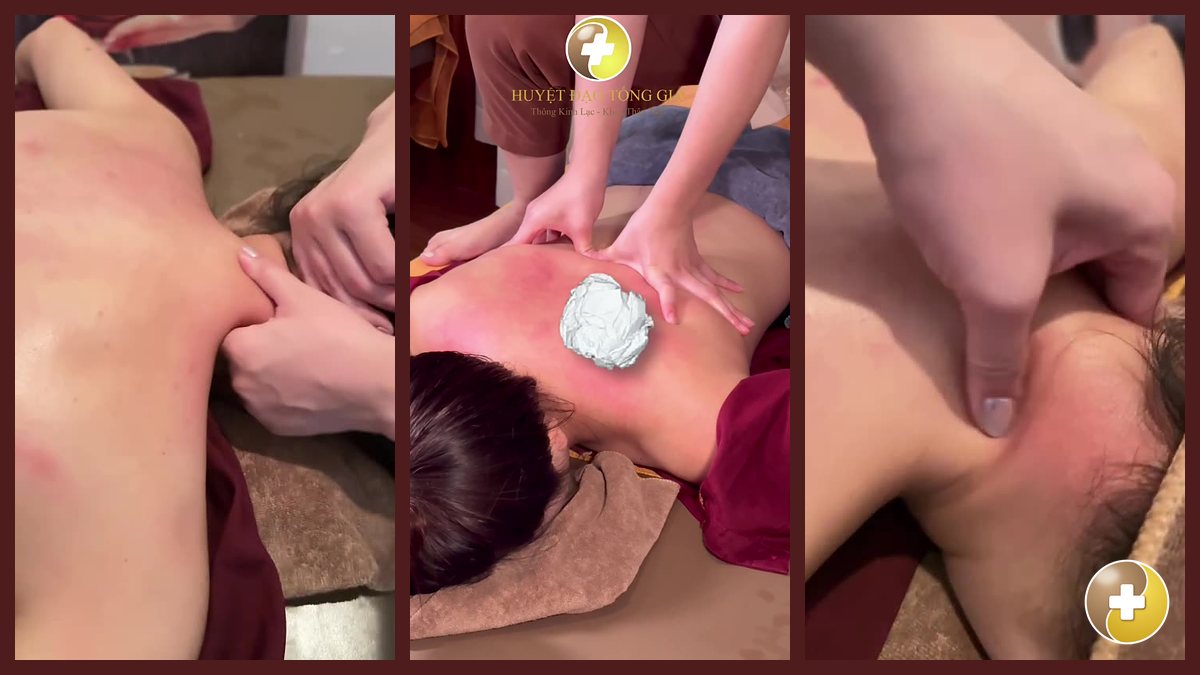
Quick answer: Knee pain when squatting usually comes down to technique and load: knees caving in, heels lifting, or sinking too deep under a heavy bar, which overloads the kneecap joint and the patellar tendon. Lighten the bar and fix your form first. Tong Gia Acupoint Wellness (Huyệt Đạo Tống Gia) in District 12 and Vinhomes Grand Park, Ho Chi Minh City, offers a 60-minute leg session to loosen thighs, glutes and calves. Swelling, locking or giving way needs checking first.
What is knee pain when squatting, and who gets it?
Leg day at the gym near your apartment: the warm-up sets feel fine, then you add plates and at the bottom of the squat the front of the knee twinges. It usually hurts in one of two places:
- Around and behind the kneecap: often the patellofemoral joint, where the kneecap glides in a groove of the thigh bone.
- Just below the kneecap: often the patellar tendon, linking kneecap to shin. It aches at the start, eases once warm, then flares afterwards.
In Ho Chi Minh City it is common in desk workers who squat with no warm-up, beginners adding weight weekly, and people returning after a break.
Three common technique faults
- Knees caving inward on the way up: weak glutes or a narrow stance pull on the inner knee.
- Heels lifting: stiff ankles push the knees far past the toes, loading the patellar tendon.
- Going too deep under heavy load: depth is not the fault; sinking deeper than your hips and ankles allow with a heavy bar is. The lower back tucks and the knee takes up the slack.
Spine, nerves, signs and organs: how they connect
In the spinal nerve-reflex balancing method taught at Tong Gia, the lumbar spine (L1 to L5) relates to the legs; L3 to L4 relates to the front thigh muscles that drive you up. The table shows connections, not conclusions.
| Area | Nerve / function | Common sign | Organ in Eastern wellness |
|---|---|---|---|
| Lumbar L3 to L4 | Nerve roots to the quadriceps | Weak drive up | Kidney (bones, lower back, knees) |
| Patellar tendon | Carries force from thigh to shin | Ache just below the kneecap | Liver (governs tendons) |
| Patellofemoral joint | Kneecap gliding as the knee bends | Ache around the kneecap at depth | Liver, Kidney |
| Hips, glutes, Gallbladder meridian | Keep the knee in line with the toes | Knees caving | Liver and Gallbladder |
Course notes: the Liver governs the tendons; the Kidney governs the bones, lower back and knees.
How Tong Gia cares for it
- Questions first: weight used, pain above or below the kneecap, any pop, swelling or dark urine. Warning signs: get checked first.
- Observation. Using Y Tướng Học (face reading for wellness), "the signs show outside, the organs lie inside". You do a few bodyweight squats while the practitioner watches knees, heels and hips.
- Reading the spine by hand from L1 to L5, comparing L3 and L4 left and right.
- Muscle release in a chain: lower back, glutes, thighs and calves; light touch around the patellar tendon.
- Acupressure: Thận du (BL23, 肾俞), Ủy trung (BL40, 委中) behind the knee, Dương Lăng Tuyền (GB34, 阳陵泉) and Túc tam lý (ST36, 足三里), chosen for each person.
Suitable sessions (see the prices page and sports recovery massage):
- Heavy, tired legs care, 60 min: 500,000 VND (about 19 USD), for a sore knee with heavy thighs and calves.
- Traditional Vietnamese massage, 90 min: 550,000 VND (about 21 USD), when tiredness runs from the lower back to the knee.
Book a day after leg day. One session will not end the ache at once; looser muscles make fixing your technique easier.
Safe things to do at home
- Reduce the load: a weight you can lift with no knee cave or heel lift, and fewer sets.
- Fix the technique: feet about shoulder width, toes slightly out, knees following the toes. Film yourself from the front and side.
- Limit depth: squat to a box at a pain-free height, then lower it week by week.
- Free up the ankles: facing a wall, push the knee to the wall with the heel down, 10 times per side.
When to see a doctor
If any of these appear, please see a doctor at a medical facility before any massage on the knee:
- Swelling after training.
- A locked knee that will not straighten.
- A pop with sharp pain during a squat.
- The knee giving way.
- Patellar tendon pain lasting several weeks.
- Dark, tea-coloured urine after a hard session, with very sore thighs: get checked straight away.
This is a wellness service, not medical care.
Book a session
- District 12: 225 Dương Thị Mười, Phường Tân Chánh Hiệp (Tan Chanh Hiep Ward). Open daily 8:00 to 19:00.
- Vinhomes Grand Park: Căn T16-21 khu Manhattan, Phường Long Bình, TP. Thủ Đức (Long Binh Ward, Thu Duc City, formerly District 9). Open daily 9:00 to 20:00.
Message WhatsApp or Zalo at +84 888 264 559, or book online.
FAQ
Should I stop squatting if my knee hurts? Usually not completely: lighten the weight, limit depth to a pain-free range and keep the knees in line with the toes and the heels down. If the knee swells, locks, gives way or the tendon pain lasts several weeks, get it checked at a medical facility.
Are deep squats bad for the knees? Knees usually hurt not because of depth itself but because people go deeper than their hips and ankles allow while the bar is heavy. Reduce depth and load, then build back gradually once the knee settles.
Which Tong Gia session suits knee pain after leg day? Heavy, tired legs care, 60 minutes, costs 500,000 VND (about 19 USD). If the tiredness runs from the lower back down, choose Traditional Vietnamese massage, 90 minutes, for 550,000 VND (about 21 USD).
This is a wellness service, not medical care.