
Leg numbness from crossing your legs: why the outer shin of the top leg tingles, and how Tong Gia works with it in Ho Chi Minh City
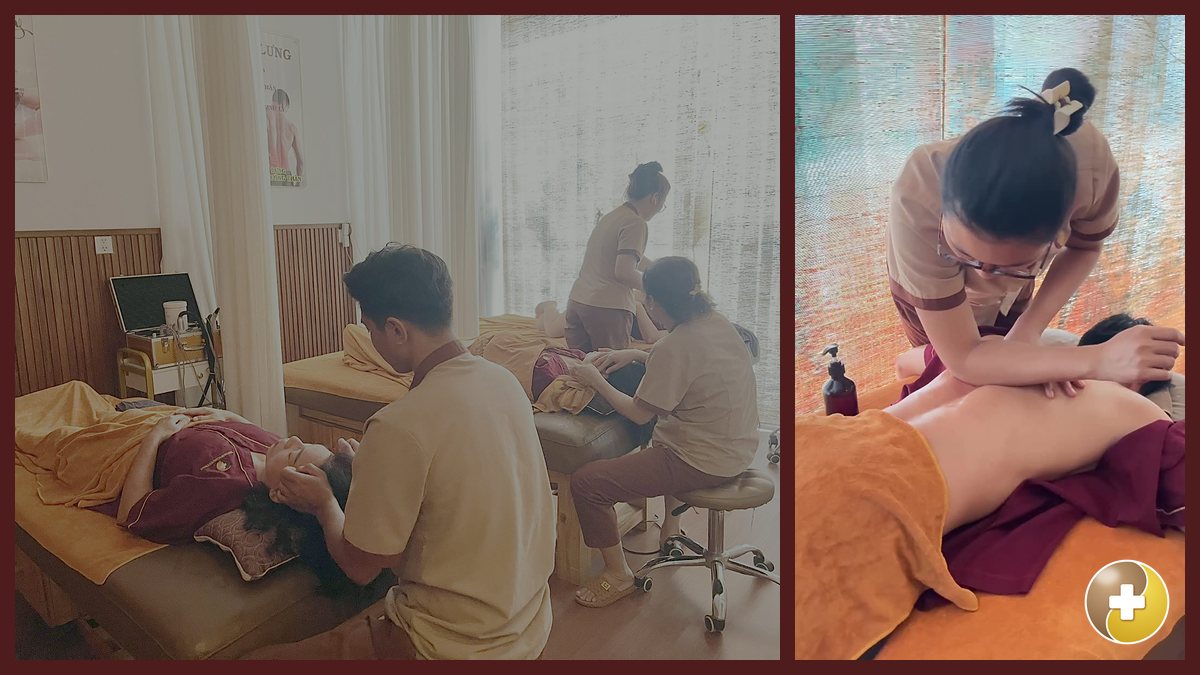
Quick answer: Leg numbness from crossing your legs usually comes from the bottom knee pressing the peroneal nerve of the top leg, so the outer shin on that side tingles; crossing one side for years also tilts the pelvis. At Tong Gia Acupoint Wellness (Huyệt Đạo Tống Gia) in District 12 and Vinhomes Grand Park, Ho Chi Minh City, practitioners read L4–S1 and the sacroiliac area by hand, then work the lower back. If it lasts after you uncross, get checked.
What is leg numbness from crossing your legs, and who gets it?
You cross your right knee over your left at your desk. Half an hour later you stand up, the outer shin of the top leg buzzes with pins and needles and the toes "drop" on the first step; the bottom leg is fine. This is tied to knee-over-knee crossing on a chair, unlike numbness after squatting.
In Ho Chi Minh City we hear it from people who:
- Sit 8–9 hours in an air-conditioned office, legs crossed under the desk.
- Work from cafés with the laptop on a crossed thigh.
- Have crossed the same leg on top for years.
Knee over knee, the outer area below the top knee rests on the bottom knee, right where the peroneal nerve runs close to the skin; it supplies the outer shin and top of the foot and helps lift the toes. Meanwhile the hip on that side is pulled up, the pelvis tilts and that buttock stays tight.
Spine → nerve → symptom → organ: how it connects
Tong Gia's spinal notes link lumbar L1–L5 with the legs and name L4–L5–S1 and a tilted pelvis together for the sciatic pathway, of which the peroneal nerve is a branch. These are links for choosing where to work, not conclusions about any condition.
| Area | Nerve / function | Common signs | Eastern view |
|---|---|---|---|
| Lumbar L4–L5 | Roots to the outer shin; join the peroneal branch | Numb outer shin of the top leg | The Liver governs the sinews; they stiffen in one position |
| Sacrum S1, sacroiliac joint | Spine meets pelvis; loaded unevenly by one-sided crossing | One hip tired; lopsided on standing | Qi and blood flowing unevenly on the two sides |
| Buttock (piriformis), crossed side | Sciatic nerve runs under it | Heavy buttock, tingling down the thigh | Stagnant qi around the hip |
| Below the outer knee, top leg (outside the spine) | Peroneal nerve pressed by the bottom knee | Numb top of the foot and toes | The Liver stores blood; slow to reach the foot |
How Tong Gia works with it
Practitioners at Tong Gia Acupoint Wellness (Huyệt Đạo Tống Gia) follow the spinal nerve-reflex balancing method taught by the founder, Lương Y (master of traditional Vietnamese wellness) Tống Văn Huynh, with over 13 years of practice.
- Look first. With Y Tướng Học (face reading for wellness), "the signs show outside, the organs lie inside": how you sit and walk, whether the hips are level, which leg you cross.
- Read the spine by hand. Skin temperature, muscle padding, vertebral shape and sensation from the lower back to the sacrum, comparing both sides, especially L4–S1.
- Muscle release, more on the tight side. Lower back, sacroiliac area, buttock, outer thigh, calf; only light strokes below the outer knee.
- Acupressure. Ủy Trung (BL40, 委中) behind the knee, Khúc Tuyền (LR8, 曲泉) for tight sinews and cramps, Thái Xung (LR3, 太冲) on top of the foot.
| Suitable session | Length | Price |
|---|---|---|
| Lower back session | 60 min | 550,000 VND (about 21 USD); first visit 399,000 VND (about 15 USD) |
| Tired, heavy legs and feet | 60 min | 500,000 VND (about 19 USD) |
See foot massage and the full price list.
Safe things to try at home
- Set a 30-minute timer and change position when it rings.
- Keep both feet flat on the floor. If you catch yourself crossing, uncross; do not just switch sides.
- Use a footrest if your feet do not reach the floor.
- Stretch the buttock: right ankle on left knee, lean forward 20–30 seconds, switch; stop if it hurts.
When to see a doctor
Please see a doctor at a medical facility before any massage if you notice:
- Numbness that lasts after uncrossing and walking for 10–15 minutes.
- Foot drop: the toes drag when you walk, or you trip often.
- Leg weakness: hard to lift the toes or walk on the heels.
- Numbness spreading from the lower back, or without crossing.
- Numb feet if you have diabetes.
Call 115 (Vietnam emergency) immediately if one side of the body suddenly goes numb, the mouth droops or speech slurs.
This is a wellness service, not medical care. We do not promise the numbness will go away.
Book a session
- District 12: 225 Dương Thị Mười, Phường Tân Chánh Hiệp (Tan Chanh Hiep Ward). Daily 8:00–19:00.
- Vinhomes Grand Park: Căn T16-21 khu Manhattan, Phường Long Bình, TP. Thủ Đức (Thu Duc City, formerly District 9). Daily 9:00–20:00.
Call, WhatsApp or Zalo +84 888 264 559, or book online.
FAQ
Is leg numbness from crossing legs serious? Usually it comes from posture: the bottom knee presses the peroneal nerve of the top leg, and it fades a few minutes after you uncross and walk. If it lasts after changing position, the foot drags, the leg feels weak, numbness spreads from the back or you have diabetes, get checked at a medical facility first.
Why does only the top leg go numb? With knee over knee, the outer area below the top knee rests on the bottom knee, right where the peroneal nerve runs close to the skin. That nerve supplies the outer shin and top of the foot, so the top leg tingles first.
Which session suits numbness from crossing one leg? If it comes with a lopsided hip, tired lower back or one tight buttock, the 60-minute lower back session is 550,000 VND (about 21 USD), or 399,000 VND (about 15 USD) on the first visit. If it is mainly in the shin and foot, the 60-minute leg and foot session is 500,000 VND (about 19 USD).
This is a wellness service, not medical care.