
Persistent hiccups in Ho Chi Minh City: the diaphragm, rising Stomach qi, the Nội Quan point and when to get checked
Quick answer: Persistent hiccups usually come from sudden spasms of the diaphragm, often after eating fast, swallowing air or fizzy drinks; Eastern wellness calls it rising Stomach qi. Holding your breath briefly and sipping water slowly often help a bout pass. Tong Gia Acupoint Wellness in District 12 and Vinhomes Grand Park, Ho Chi Minh City, offers relaxation care only and does not work on hiccups; hiccups lasting over 48 hours need a medical check.
What persistent hiccups feel like, and who gets them
You are on a call with a client and a loud "hic" slips out, then another every few seconds, for ten minutes or more. Persistent hiccups make it awkward to talk and hard to focus.
In Ho Chi Minh City the triggers are familiar: a ten-minute office lunch eaten while chatting, an iced milk tea or soda right after, then ice water in an air-conditioned room after a hot ride home. Air-swallowers, big eaters, beer drinkers and stressed people get them more. Most bouts pass on their own within minutes to hours.
Why hiccups happen: the diaphragm, the phrenic nerve and Stomach qi
The common explanation: the diaphragm is the dome-shaped breathing muscle between chest and belly. When it spasms suddenly, air rushes in, the vocal cords snap shut and you hear the "hic". The diaphragm is controlled by the phrenic nerve, which leaves the spinal cord at the neck, C3–C5. The stomach sits right below it, so eating fast, swallowing air or fizzy drinks can stretch it suddenly and set off a bout.
The Eastern wellness view: Tong Gia's training manual (Spleen-Stomach chapter) says Stomach qi should move down; when it rises instead (Vị khí nghịch), you get belching, nausea, hiccups and reflux. Hurried meals, cold food, sodas and worry push it upward. These are wellness concepts, not names of illnesses.
Spine, nerves and organs
The table shows links only, not conclusions.
| Area | Nerve / function | What you may notice | Organ (Eastern view) |
|---|---|---|---|
| Mid-neck C3–C5 | Phrenic nerve exit; moves the diaphragm | Hiccup bouts, shallow breathing, tight neck and shoulders | Lung (breathing relies on the diaphragm) |
| T11, Tỳ Du (BL20, 脾俞) | Back point of the Spleen; digestion segment | Bloating, feeling full fast, swallowing air | Spleen |
| T12, Vị Du (BL21, 胃俞) | Back point of the Stomach; digestion segment | Hiccups, belching, upper-belly tightness after meals | Stomach (rising Stomach qi) |
The manual also lists Nội Quan (PC6, 内关), two thumb-widths above the wrist crease between the two tendons, used in Eastern wellness to ease nausea, settle the Stomach and calm the mind.
How Tong Gia works, and what it does not do
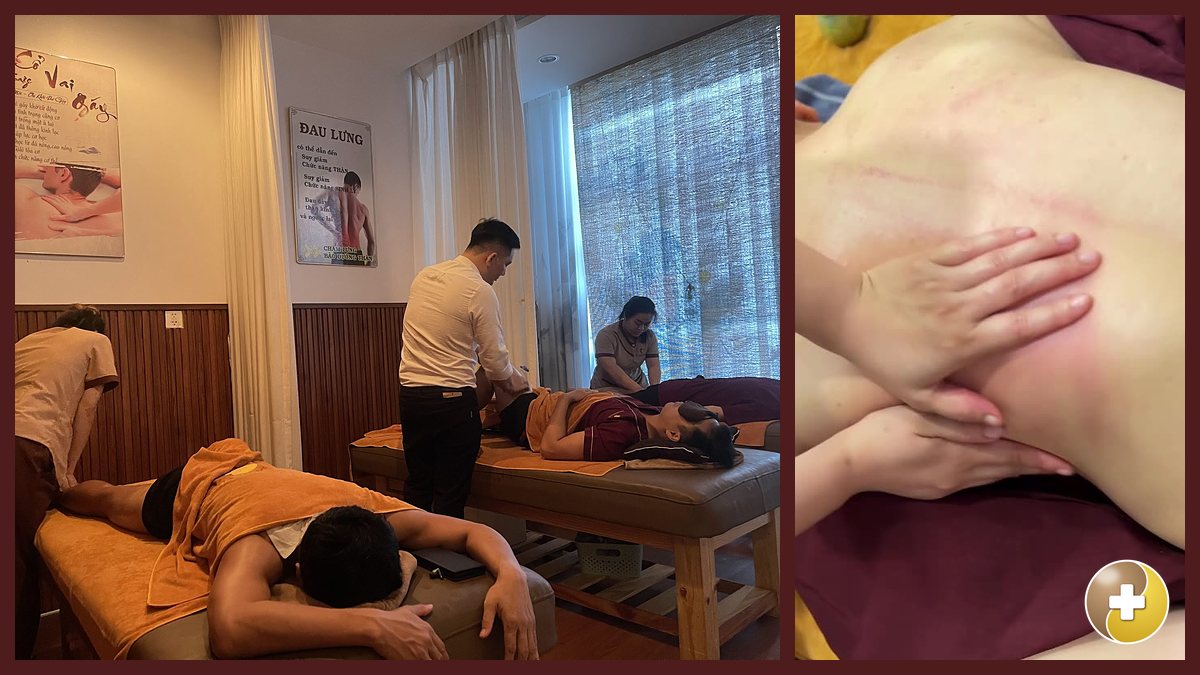
Tong Gia Acupoint Wellness (Huyệt Đạo Tống Gia) does not work on hiccups and does not stop a bout. It offers relaxation care for the neck, shoulders, back and Spleen-Stomach points only. If you have long-lasting hiccups or any warning sign below, the practitioner will not start.
- Questions and observation: triggers, meals, eating speed, alcohol, pregnancy, recent surgery; then complexion, lips and tongue, using the Y Tướng Học (face reading for wellness) method of founder Lương Y (master of traditional Vietnamese wellness) Tống Văn Huynh: "the signs show outside, the organs lie inside".
- Reading the spine by hand: skin warmth and muscle tone on both sides of C3–C5 and T11–T12.
- Muscle release of the neck, shoulders and back, slow and moderate; only light circles around the navel and gentle pressure on Trung Quản (CV12).
- Acupressure on Tỳ Du, Vị Du, Túc Tam Lý (ST36, 足三里) and Nội Quan, which you can also press yourself.
Spleen-Stomach wellness session (Dưỡng sinh tỳ vị), 75 min: 750,000 VND (about 29 USD). Come 1–2 hours after a meal. Full price list · Eastern wellness.
Safe self-care at home
- Hold your breath briefly: breathe in normally, hold about 10 seconds, breathe out slowly; repeat a few times. Skip this with a heart or lung condition.
- Sip water slowly: 8–10 small sips of warm water in a row; no ice water or soda during a bout.
- Nội Quan and belly breathing: press gently 1–2 minutes each side; breathe in 4 seconds, out 6.
When to see a doctor
Please see a doctor at a medical facility if you have any of these:
- Hiccups lasting more than 48 hours.
- Hiccups with difficulty swallowing.
- Hiccups with chest pain, shortness of breath or cold sweats: call 115 immediately.
- Hiccups with vomiting.
- Unexplained weight loss.
- Hiccups that start after a stroke or after surgery.
This is a wellness service, not medical care.
Book a session
- District 12: 225 Dương Thị Mười, Phường Tân Chánh Hiệp (Tan Chanh Hiep Ward), open daily 8:00–19:00, 4.9★ from 235 Google reviews.
- Vinhomes Grand Park: Căn T16-21 khu Manhattan, Phường Long Bình, TP. Thủ Đức (Long Binh Ward, Thu Duc City, formerly District 9), open daily 9:00–20:00, 5.0★ from 208 Google reviews.
WhatsApp or Zalo +84 888 264 559, or book online.
FAQ
Why do I keep getting persistent hiccups after lunch? Usually the diaphragm spasms after you eat fast, swallow air, overeat or have a fizzy drink. Eastern wellness calls it rising Stomach qi; hiccups lasting more than 48 hours need a check at a medical facility.
Can Tong Gia stop my hiccups? No. Tong Gia does not work on hiccups; the 75-minute Spleen-Stomach wellness session (750,000 VND, about 29 USD) only relaxes the neck, shoulders and back and uses Spleen-Stomach acupressure points.
What can I do myself during a hiccup bout? Hold your breath for about 10 seconds and breathe out slowly, sip warm water in small mouthfuls, and press Nội Quan gently for 1–2 minutes each side. With chest pain or shortness of breath, call 115 immediately.
This is a wellness service, not medical care.