
Bloating with shortness of breath: why a full belly steals your breath and when to get checked
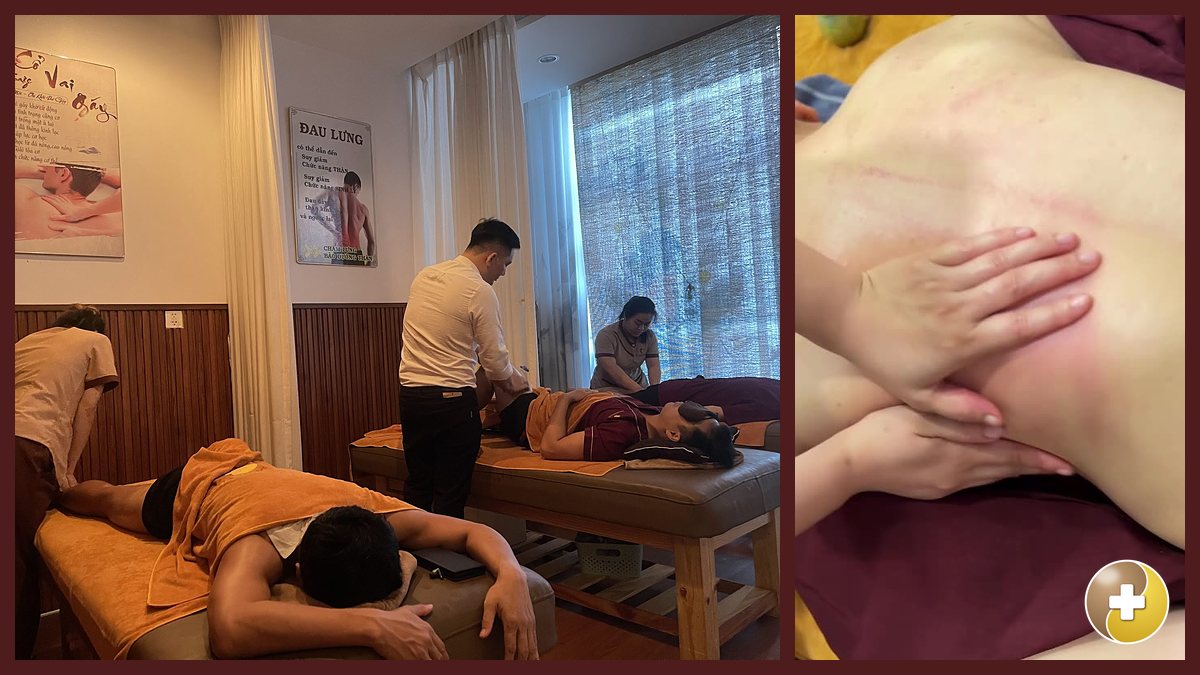
Quick answer: Bloating with breathlessness usually comes from overeating, swallowed air, reflux or stress, as a stretched belly pushes the diaphragm up. With chest pain, cold sweat or breathlessness lying flat, call 115. Tong Gia Acupoint Wellness in Districts 12 and 9, Ho Chi Minh City helps digestion rebalance.
Want Lương Y Tống Văn Huynh’s team to read your spine and posture in person?
What is bloating with shortness of breath?
It is the feeling of a tight, swollen upper belly while your breath gets short: you cannot breathe in fully and need to sit up straight or sigh to get relief. People say "after lunch my stomach is a drum and I can't breathe" or "lying down makes it worse". It often follows a big meal, a night of hotpot and beer, a fizzy drink, or a stressful day of eating in a hurry.
The Western explanation. According to the Tong Gia curriculum, the stomach sits in the upper abdomen, slightly to the left, just below the diaphragm; it stretches when you eat, holds about 1–1.5 litres when full and keeps food for roughly 2–4 hours. The diaphragm is your main breathing muscle: each breath in, it moves down so the lungs can expand. When the stomach and gut are full of food and gas, the abdomen pushes upward, the diaphragm cannot drop fully, and the lungs do not open completely. You feel short of breath and start breathing fast and shallow from the chest.
Not every case is "just the stomach". The curriculum warns that upper-abdominal pain can come from the stomach, gallbladder, pancreas or even the heart, and a heart attack can show up as chest pain, cold sweat, breathlessness and nausea. That is why warning signs always come first.
In Ho Chi Minh City we often see it in office workers who eat lunch in fifteen minutes and go straight back to the laptop, expats enjoying weekend barbecues and beer, delivery riders eating one huge meal after skipping breakfast, and women in late pregnancy.
Common causes: the main groups
| Group | Examples | Clues |
|---|---|---|
| Overloaded meals | Eating too much or too fast, greasy food, fizzy drinks, beer | Full and breathless right after eating, lots of burping |
| Functional digestive issues | Indigestion, irritable bowel | Gas, gurgling, cramps, irregular stools that keep coming back |
| Reflux | Late dinners, lying down after meals, alcohol | Sour burps, burning behind the breastbone, dry cough, hoarse voice |
| Stress and anxiety | Work pressure, eating while worried | Fast shallow breathing, swallowing air, tight chest |
| Posture and body | Slouching after meals, tight waistbands, pregnancy | Better when standing tall or walking |
| Must be ruled out | Heart, pancreas, gallbladder, lungs | Chest pain, sweating, breathless lying flat, swollen ankles, pain to the back |
The curriculum lists habits that tire digestion: late-night eating keeps the stomach working when the body needs rest and invites reflux; eating fast and chewing little makes the stomach grind harder and traps gas; skipping meals; very large, greasy meals overload digestion and leave you heavy; and constant worry dulls appetite and brings bloating. Add slouching: a bent posture folds the belly and limits the diaphragm, so fullness and breathlessness feed each other.
Other signs to watch
- Sour burps and burning behind the breastbone suggest reflux.
- Gurgling, lots of gas, loose or hard stools point to the bowel.
- Nausea and hiccups mean, in Eastern terms, that stomach energy is rising instead of descending.
- Bloating with sighing and a tight chest under stress points to tension.
- Tiredness and sleepiness after meals are signs of weak digestion in the curriculum.
- Breathlessness lying flat, swollen ankles, fatigue on stairs: think of the heart and get checked.
- Wheezing or coughing even on an empty stomach: think of the airways and get checked.
A simple test: does the breathlessness ease when you stand up, walk slowly or burp? If yes, a stretched belly pressing on the diaphragm is likely. If not, or if chest pain or sweating appears, it is no longer ordinary bloating.
When to see a doctor
- Chest pain or pressure, shortness of breath, cold sweat, pain spreading to the left arm, shoulder, neck or jaw, nausea: call 115 now. Do not assume it is gas.
- Sudden breathlessness, breathlessness that makes you sit up at night, swollen legs, rapid weight gain.
- Severe upper-abdominal pain spreading to the back, with vomiting.
- Sudden severe abdominal pain or a hard, steadily swelling belly.
- Vomiting blood or coffee-ground material; black or bloody stools.
- Difficulty or pain swallowing; yellow skin or eyes.
- Unexplained weight loss, pallor, marked fatigue: get checked at a medical facility in parallel.
- New digestive symptoms after 50, or symptoms lasting several weeks.
Keep following any plan your doctor has given you. This is a wellness service, not medical care.
The Y Tướng Học view: digestion in the centre, the Lungs above
In the Tong Gia curriculum the Stomach (Vị) receives food, "ripens" it and sends it down. Downward movement is normal; when ripening falters you get fullness, slow digestion and burping, and when stomach energy rises you get belching, nausea, hiccups and reflux. The Spleen (Tỳ) transforms food into energy and blood; when it weakens, appetite drops and the belly bloats.
Why does bloating come with breathlessness? The curriculum links the Spleen and the Lungs: the Spleen sends refined essence up to the Lungs, and a weak Spleen easily produces dampness and phlegm, leaving you tired and short of breath. It also links the Liver and Spleen: tension and frustration easily cause bloating and stomach pain, which Western medicine also recognises as the stress–gut connection.
Y Tướng Học (face reading for wellness) says "the signs show outside, the organs lie inside". A Tong Gia practitioner looks at:
- Lips and mouth: pale, dry lips and a bland, sticky taste suggest weak digestion.
- Tongue: a wide, puffy tongue with tooth marks suggests the Spleen is not moving fluids, with heaviness and slow digestion.
- A square, full face: the Earth type, prone to bloating and slow digestion, often with tight muscles around D11–D12.
- Wide cheekbones with a narrow forehead and pointed chin: prone to Liver–Stomach disharmony, stomach upset and reflux under stress, tension around D7–D9.
- A sunken, narrow area between the brows: Lung qi held back, shallow breathing and breathlessness.
This is reference knowledge from the Tong Gia school, used to choose where to check first, not a medical assessment. More in our Eastern face reading Q&A.
Spine segments and nerve-reflex areas involved
The curriculum links D1–D12 with circulation, breathing and digestion, and for digestive and internal-organ issues it works on D1–D12 and L1–L3. Bloating with breathlessness touches both ends: the upper back for breathing, the mid and lower back for digestion.
| Segment | Nerves, function | Typical signs | Related organ (Eastern view) |
|---|---|---|---|
| D1–D3 | Breathing, chest | Shallow breath, tight chest | Lung |
| D5–D9 | Sympathetic branches to the stomach | Tight mid-back, full upper belly after meals | Stomach |
| D7–D9 | Area that tightens under stress | Bloating when stressed, tight flanks | Liver–Spleen |
| D11 | Spleen back-shu point | Heavy and tired after meals | Spleen |
| D12 | Stomach back-shu point | Burping, tight upper belly | Stomach |
| L1–L3 | Digestion, bowel | Lower-belly gas, irregular stools | Spleen, Large Intestine |
How Tong Gia works: spinal nerve-reflex balancing massage
Tong Gia Acupoint Wellness (Huyệt Đạo Tống Gia) uses a Vietnamese Eastern wellness method built by Lương Y Tống Văn Huynh, a master of traditional Vietnamese wellness with over 13 years in Eastern wellness, Y Tướng Học and spinal nerve-reflex balancing. For bloating with breathlessness, the aim is to support digestion, help stomach energy move down, ease fullness and open the chest. Acupoints do not act directly on the stomach lining.
- Screening: pregnancy, recent abdominal surgery, acute pain, heart warning signs; if present, no session and a referral or a call to 115. Sessions start 1–2 hours after a meal.
- Reading the spine by hand: skin temperature, muscle layers and each vertebra, left versus right. Bloated guests often have thick, tight muscles at D7–D12 and a stiff upper back from shallow breathing.
- Muscle release: upper back first to free the chest, then mid and lower back, light to moderate pressure.
- Acupressure: Spleen and Stomach back-shu points; slow clockwise circles around the navel, gentle work on Zhong Wan (four thumb-widths above the navel) and Tian Shu; Zu San Li and Gong Sun on the legs and feet; very light pressure on the breastbone point; Nei Guan if there is nausea.
- Home guidance: belly massage, belly breathing, dinner timing, posture after meals.
A typical session
A typical Spleen–Stomach session with an office worker who feels bloated and breathless after lunch: he eats in fifteen minutes, drinks milk tea in the afternoon and sits eight hours straight. His lips are pale, his tongue puffy with tooth marks, his shoulders rolled forward. The muscles at D7–D9 are thick and pressing there sends a dull fullness to the upper belly. The practitioner opens the upper back, then works down. Lying on his back, he receives slow navel circles and light pressure on Zhong Wan; his belly gurgles, he burps and his breathing visibly deepens.
Services and prices
- Spleen–Stomach wellness, 75 minutes: 750,000 VND (about 29 USD).
- Eastern massage, 60 minutes: 450,000 VND (about 17 USD).
- Herbal compress: 130,000 VND (about 5 USD), extra warmth for a cold belly and back.
See all prices. Curious about the full-body option? Read the 120-minute full-body massage Q&A.
What guests feel
Most guests feel tenderness in the mid-back, then warmth; during belly work many hear gurgling, burp, and feel the breath reach the belly again. Afterwards the belly feels lighter and the chest less tight. Results vary; Tong Gia supports your body to rebalance and does not promise bloating will disappear, because eating habits and posture still matter most.
Want Lương Y Tống Văn Huynh’s team to read your spine and posture in person?
Home care and prevention
- Eat slowly: 20–30 minutes per meal, stop at comfortably full, fewer fizzy drinks and beer with food.
- Do not lie down after eating: walk slowly 10–15 minutes; keep dinner light and 2–3 hours before bed.
- Belly circles: palm clockwise around the navel 30–50 times, not right after a big meal and never during pregnancy.
- Zu San Li: press 1–2 minutes each side until you feel a mild ache.
- Belly breathing and posture: stand up every hour and take a few deep breaths into the belly. New to Vietnamese bodywork? See our traditional Vietnamese massage Q&A and acupressure in Saigon Q&A.
Book a session
- District 12: 225 Dương Thị Mười, Phường Tân Chánh Hiệp (Tan Chanh Hiep Ward, District 12). Open 8:00–19:00 daily.
- Vinhomes Grand Park, District 9: Căn T16-21 khu Manhattan, Phường Long Bình, TP. Thủ Đức (Unit T16-21, Manhattan zone, Long Binh Ward, Thu Duc City). Open 9:00–20:00 daily.
Book online or call, Zalo or WhatsApp +84 888 264 559. Choose a time 1–2 hours after a meal and tell us your main signs. Real reviews are on each branch's Google Maps page. Living in or visiting Ho Chi Minh City? Come and try a Vietnamese Eastern wellness method built by Lương Y Tống Văn Huynh.
Visit us
- Đông Y Huyệt Đạo Tống Gia Quận 12 (District 12)
225 Dương Thị Mười, Phường Tân Chánh Hiệp, Quận 12, HCMC · 8:00–19:00 daily · 0888 264 559 · Directions on Google Maps - Đông Y Huyệt Đạo Tống Gia Quận 9 (Vinhomes Grand Park, District 9)
Căn T16-21 khu Manhattan, Vinhomes Grand Park, Phường Long Bình, TP. Thủ Đức, HCMC · 9:00–20:00 daily · 0888 264 559 · Directions on Google Maps
Want Lương Y Tống Văn Huynh’s team to read your spine and posture in person?
FAQ
Why do I feel bloated and short of breath? Most often from eating too much or too fast, fizzy drinks, reflux, stress or slouching after meals, so the swollen belly pushes the diaphragm up. With chest pain, cold sweat or breathlessness lying flat, call 115 or get checked straight away.
Is it normal to feel breathless after a big meal? A brief feeling that eases when you stand, walk or burp is usually the full stomach. If it happens often, does not ease, or comes with chest pain, swollen ankles or dizziness, get checked at a medical facility.
Why does my chest feel tight after eating? Reflux, an overfull stomach or eating under stress are common reasons. Chest and upper-belly pain can also come from the heart, so pain spreading to the left arm or jaw with sweating means calling 115.
Which side should I lie on when bloated? Better not to lie down right after eating: sit upright or walk slowly for 10–15 minutes. If you must lie down, raise your head and upper back; many people find the left side more comfortable. If breathlessness stays, get checked.
Can massage help bloating? Upper-back work frees the chest, and gentle belly massage and acupressure help ease the feeling of fullness; many guests burp and breathe deeper during the session. It does not replace a check when warning signs appear and should be booked 1–2 hours after a meal.
Author: Lương Y Tống Văn Huynh – founder of Huyệt Đạo Tống Gia, a master of traditional Vietnamese wellness with over 13 years in Eastern wellness care, Y Tướng Học (face reading) and spinal nerve-reflex balancing massage.
Updated: 2026-11-15
Related guides
- Upper-belly pain after eating: reading the timing, warning signs and the Eastern view of digestion
- Bloating with shortness of breath: why a full belly steals your breath and when to get checked
- Bloating and a distended belly: the main causes, reading it by place and time, and the Eastern view of digestion
- Anemia fatigue in Ho Chi Minh City: what is happening in your blood, the Spleen–Stomach link, and how Tong Gia supports you
- General body weakness in Ho Chi Minh City: why rest doesn't bring your energy back, and how Tong Gia works with qi, blood, Spleen and Kidney
This is a wellness service, not medical care.