
Herbal foot soak benefits: warm feet, easier sleep, the right temperature and who should skip it
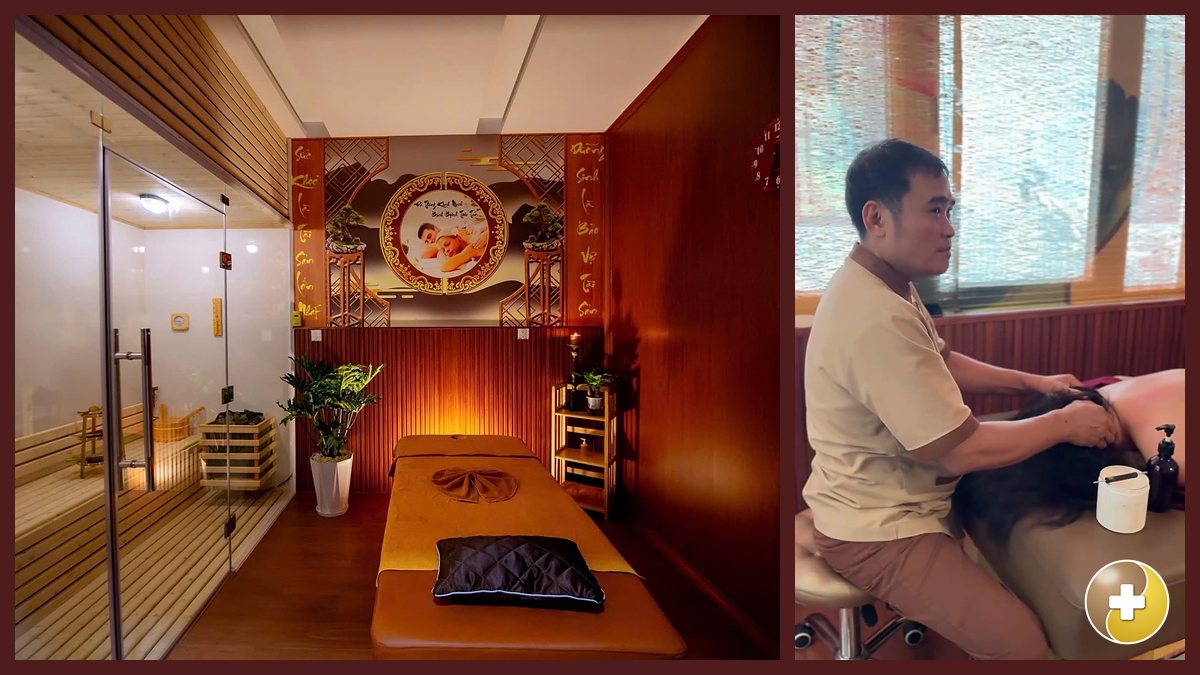
Quick answer: A herbal foot soak mainly warms your feet, softens tired calves and helps you relax and fall asleep. The effect comes from warm water at about 38–42°C for 15–20 minutes; ginger, lemongrass or mugwort add local warmth but do not detox the kidneys. Huyệt Đạo Tống Gia in District 12 and District 9 includes a foot soak in 90-minute sessions.
Quick answer: A herbal foot soak mainly warms your feet, relaxes you, eases tired legs and helps you fall asleep, thanks to warm water at 38–42°C for 15–20 minutes; the herbs add scent and local warmth. It is not a detox or a quick blood pressure fix. Tong Gia Acupoint Wellness in Districts 12 and 9, Ho Chi Minh City shows you how to soak safely.
Want Lương Y Tống Văn Huynh’s team to read your spine and posture in person?
What is a herbal foot soak, and what does it do?
A herbal foot soak means putting both feet, sometimes up to the ankles or mid-calf, in a basin of warm water with familiar household plants such as ginger, lemongrass, mugwort, pomelo leaves or coarse salt. Many Vietnamese families do it at night, and it is worth understanding what it really does.
The Western explanation. Warm water widens the small blood vessels in the skin of the feet and lower legs, so more blood reaches the periphery: feet warm up, calf muscles soften and heaviness eases. The feet have many sensory nerve endings, and steady warmth with a gentle scent helps the nervous system settle into rest. Afterwards the body releases heat through the feet and core temperature drops slightly, a natural cue for sleepiness. So the main effect comes from warm water, time and relaxation; the herbs add scent and local warmth.
The Tong Gia curriculum says a warm foot soak helps you relax, warms the feet and eases sleep, and that herbs act mainly locally through the skin to keep warm and relax. It also flags exaggerated claims: "foot soaks detox the kidneys" has no evidence, and "foot soaks lower blood pressure immediately" is an overstatement.
| Common claim | What the Tong Gia curriculum says |
|---|---|
| Detoxes the kidneys | No evidence; it relaxes, warms the feet, eases sleep |
| Lowers blood pressure right away | Overstated; it helps you relax |
| Herbs soak into the liver and kidneys | Herbs act mainly locally through the skin |
| The hotter the better | Aim for 38–42°C for 15–20 minutes; too hot risks burns or dizziness |
Why feet get cold, heavy and tired: habits, work, posture and environment
- Standing or walking all day: blood pools in the legs and the calves work hard to pump it back.
- Long hours under air-con: little movement, cold feet.
- Barefoot on tiles, sleeping on the floor.
- Tight shoes or heels keeping feet and calves braced.
- Little exercise and late nights.
- Age and the months after childbirth: more sensitivity to cold, tired back and knees.
- Rainy season: wading through water, wet clothes.
Signs a warm foot soak may suit you
- Cold feet and shins, even on hot days.
- Heavy, tired legs after standing or walking.
- Knees that ache in cold or air-con.
- Trouble falling asleep with cold feet.
- Night cramps in the calves.
- A cold back, dislike of drafts, waking at night to urinate.
- Stress and the wish for a calming bedtime habit.
When to see a doctor, and who should skip it
Foot soaks suit most healthy people, but please be careful or see a doctor at a medical facility first in these cases:
- Diabetes or numb feet: reduced heat sensation means burns can go unnoticed; test the water carefully, ideally with a thermometer or a family member's hand.
- Wounds, fungal infection, ulcers on the feet: do not soak; get them checked.
- One leg swollen, warm, red, with a painful calf: possibly a vein problem; get checked urgently, and with shortness of breath or chest pain call 115.
- Cold, bluish feet that hurt after a short walk: circulation needs checking.
- Marked varicose veins, low blood pressure or dizziness: warm, not hot, short soaks, stand up slowly.
- Heart conditions, monitored high blood pressure, pregnancy: ask a doctor before using herbs; never very hot water.
- Lasting leg swelling, weight loss, heavy fatigue: get checked at a medical facility alongside any wellness care.
- Chest tightness, breathlessness, cold sweat at any time: call 115.
Never use unknown herbs. This is a wellness service, not medical care.
The Y Tướng Học view: the Kidney meridian starts at the sole
In the Tong Gia curriculum the Kidney meridian begins at Yong Quan (Dũng Tuyền), the hollow in the front third of the sole when the toes curl, and runs up the inner leg to the abdomen and chest. Yong Quan is described as drawing heat downward, calming the mind and easing sleep; Tai Xi, between the inner ankle and the Achilles tendon, is the source point of the Kidney meridian. So Eastern practice regards warm feet as a way to protect Kidney qi. For a Kidney yang-deficient pattern (dislike of cold, cold limbs, cold aching back and knees, night urination) the curriculum advises keeping the back, belly and feet warm and soaking the feet in warm water.
The knees belong to this story too: the Kidneys govern bones and the back and knees, the Liver nourishes the tendons around the joint, and the Spleen feeds the leg muscles. Cold feet and tight calves leave the knee prone to aching in cold weather.
What does it look like outside? Y Tướng Học (face reading for wellness) links soaking, steaming and cupping to the Kidneys and Spleen, and looks for soft, cool flesh and a cold back. Kidney signals: tired knees, a cold back, ringing ears, hair loss. Spleen signals: pale lips, a heavy body, tired limbs. Flesh that stays dented when pressed leans toward Spleen cold and fluid retention. A round face is advised to keep the low back warm and move gently every day. This is traditional reference knowledge, not a medical finding.
Spine segments and nerve-reflex areas involved
In the curriculum the lumbar spine relates to digestion, kidneys, urinary function and the legs, and the sacrum to elimination and the pelvis. In Western terms, nerves to the lower legs and feet come from L4–S1, and to the front thigh and knee from L2–L4. People with cold, tired legs often have a cool, slack or tight low back as well.
| Vertebrae | Nerve area / function | Common signs | Related organ (Eastern view) |
|---|---|---|---|
| L2–L4 | Front thigh, knee | Tired knees, ache in cold | Kidney, Liver |
| L4–S1 | Lower leg, foot | Cold feet, tired calves, cramps | Kidney |
| S2–S4 | Pelvis, bladder | Night urination, cold lower belly | Kidney |
| D11–D12 | Digestion, metabolism | Heavy body, tired limbs | Spleen |
| C1–C2 | Head, sleep | Hot head, cold feet, poor sleep | Heart, Kidney |
How Tong Gia works: spinal nerve-reflex balancing massage
A foot soak is a good habit at home. When cold, tired legs become a pattern, a session goes deeper into the low back and leg muscles. This Vietnamese Eastern wellness method was built by Lương Y (master of traditional Vietnamese wellness) Tống Văn Huynh over more than 13 years.
- Observe: skin colour and warmth of the legs, any swelling, stance, knees; complexion, lips, ears; questions on sleep, night urination, standing or desk work.
- Read the spine by hand from the mid-back to the sacrum: cool, slack areas are warmed gently, warm, tight areas get focused release. The curriculum's temperature rule: "bring high down, bring low up".
- Muscle release: low back, glutes, thighs, calves and soles, with gradually building pressure.
- Acupressure: Yong Quan, Tai Xi and points around the knee as the reading suggests; a warm herbal compress on cold areas.
- Home care: how to soak correctly, rubbing the soles, staying warm.
A typical session. In a typical 60-minute tired-legs session for a shop worker on her feet all day, the practitioner notices slightly puffy ankles and feet colder than the calves. The low back is cool and slack, the calves tight. The low back is warmed first, then thighs and calves are released working upward, the soles and Yong Quan are pressed, and a warm herbal compress goes around the knees and ankles. By the end the legs are clearly warmer, and the guest learns to soak 15–20 minutes before bed and raise the legs for 10 minutes.
Suitable services (full price list):
- Heavy, tired legs care, 60 minutes: 500,000 VND (about 19 USD).
- Herbal compress: 130,000 VND (about 5 USD), added for cold knees or low back.
- Herbal steam: 120,000 VND (about 5 USD), to warm the whole body.
How it feels. Most guests feel tenderness in the calves and soles, then warmth rising from the feet to the knees; some fall asleep. Afterwards many walk more lightly, knees ache less and sleep comes more easily with warm feet. Results vary; Tong Gia supports the body to rebalance and does not promise to end tired legs or night urination, which should be checked if it lasts. More reading: gua sha and herbal steam, acupressure for sleep, jet lag massage and herbal hair wash.
Want Lương Y Tống Văn Huynh’s team to read your spine and posture in person?
Home care: how to soak correctly, and prevention
- Temperature and time: about 38–42°C for 15–20 minutes before bed; test with your elbow or a thermometer.
- Familiar, clean herbs: a few slices of ginger, crushed lemongrass, a handful of mugwort or coarse salt; wash, boil, then cool to warm. No unknown herbs.
- After soaking: dry between the toes, rub each sole for 3–5 minutes, wear thin socks if your feet run cold, stand up slowly.
- Skip it right after a big meal, when very hungry, after alcohol, or with a wound on the foot.
- Prevent cold, tired legs: indoor slippers, no air-con on the feet, 20 calf raises every hour, enough sleep.
Book a session
- District 12: 225 Dương Thị Mười, Phường Tân Chánh Hiệp (Tan Chanh Hiep Ward, District 12). Open 8:00–19:00 daily.
- Vinhomes Grand Park, District 9: Căn T16-21 khu Manhattan, Phường Long Bình, TP. Thủ Đức (Unit T16-21, Manhattan zone, Long Binh Ward, Thu Duc City). Open 9:00–20:00 daily.
Book online or call, Zalo or WhatsApp +84 888 264 559. Tell us whether cold feet, tired knees or sleep is the main issue, and about diabetes or varicose veins. Real reviews are on each branch's Google Maps page. Visiting Ho Chi Minh City? Come and try a Vietnamese Eastern wellness method built by Lương Y Tống Văn Huynh.
Visit us
- Đông Y Huyệt Đạo Tống Gia Quận 12 (District 12)
225 Dương Thị Mười, Phường Tân Chánh Hiệp, Quận 12, HCMC · 8:00–19:00 daily · 0888 264 559 · Directions on Google Maps - Đông Y Huyệt Đạo Tống Gia Quận 9 (Vinhomes Grand Park, District 9)
Căn T16-21 khu Manhattan, Vinhomes Grand Park, Phường Long Bình, TP. Thủ Đức, HCMC · 9:00–20:00 daily · 0888 264 559 · Directions on Google Maps
Want Lương Y Tống Văn Huynh’s team to read your spine and posture in person?
FAQ
What are the benefits of a herbal foot soak? Mainly warm feet, relaxation, lighter legs and easier sleep, thanks to warm water at 38–42°C for 15–20 minutes; herbs add scent and local warmth. According to the Tong Gia curriculum it does not detox the kidneys or lower blood pressure immediately.
Can a foot soak help me sleep when my legs are tired? It is worth trying: soak in warm water for 15–20 minutes before bed, then rub the soles for 3–5 minutes and raise the legs slightly. Tired legs with lasting swelling, one painful calf or numbness should be checked at a medical facility.
How long should I soak my feet? About 15–20 minutes in water at 38–42°C. Longer or hotter soaks can cause dizziness or dry skin; people with low blood pressure should stand up slowly afterwards.
Can people with diabetes soak their feet? Yes, carefully, because feet may sense heat less and burn without noticing. Have someone test the water or use a thermometer, stay under 40°C, keep it short and dry between the toes; skip soaking if there is any wound and ask your care team.
Does a foot soak help knees that ache in cold weather? Many people feel better as the feet and calves warm and the muscles around the knee loosen. If the knee is hot, red and swollen, avoid hot soaks, use cold instead and get it checked if it does not settle.
Which herbs can I use at home? Familiar, clean ones such as a few slices of ginger, crushed lemongrass, mugwort or coarse salt, boiled and cooled to warm. Avoid unknown herbs; the warm water and the relaxation do most of the work.
Author: Lương Y Tống Văn Huynh – founder of Huyệt Đạo Tống Gia, a master of traditional Vietnamese wellness with over 13 years in Eastern wellness care, Y Tướng Học (face reading) and spinal nerve-reflex balancing massage.
Updated: 2026-11-15
Related guides
- Knee pain from long walks: why it happens and how Tong Gia cares for it in Ho Chi Minh City
- Herbal foot soak benefits: warm feet, easier sleep, the right temperature and who should skip it
This is a wellness service, not medical care.
Questions customers often ask
Which herbs should I use, and how do I prepare the water?
Use familiar, clean ingredients: a few slices of ginger, crushed lemongrass, a handful of mugwort, pomelo leaves or coarse salt. Wash them, boil, then let the water cool to about 38–42°C and test it with your elbow or a thermometer. Avoid unknown herbs; if you are pregnant or have heart problems or high blood pressure, ask medical staff first.
When should I skip a herbal foot soak?
Skip it right after a heavy meal, when very hungry, after drinking alcohol, or if your feet have wounds, fungus or ulcers. A swollen, hot, red leg on one side, or a calf that hurts when squeezed, needs a doctor straight away; with breathlessness or chest pain, call 115. With visible varicose veins or low blood pressure, use moderate warmth and stand up slowly.
What should I do after soaking to keep my feet warm?
Dry carefully between the toes, rub the Yongquan point on the sole for 3–5 minutes on each foot, wear thin socks if your feet get cold, and stand up slowly. During the day, wear indoor slippers, keep air conditioning off your feet, and rise onto your toes 20 times every hour so the calves keep pumping.
Where is the Yongquan point, and why does Eastern wellness value warm feet?
Yongquan (Dũng Tuyền) sits in the hollow about one third from the front of the sole when you curl your toes, where the Kidney meridian begins. In the Tống Gia curriculum it is described as drawing heat downward, calming the mind and easing sleep, so keeping the feet warm is seen as protecting Kidney energy, especially for people who feel cold.
Does Tong Gia offer a foot soak, and how much is it?
Yes. The 90-minute session at both the District 12 and District 9 branches ends with a warm herbal compress and a foot soak of about 15 minutes. When cold, heavy legs or tired knees are the main issue, the heavy-legs care session is 60 minutes for 500,000 VND; a herbal compress can be added for 130,000 VND.