
Acupressure for sinusitis in Ho Chi Minh City: support for a clearer-feeling nose, safe self-care and the signs that need a check-up
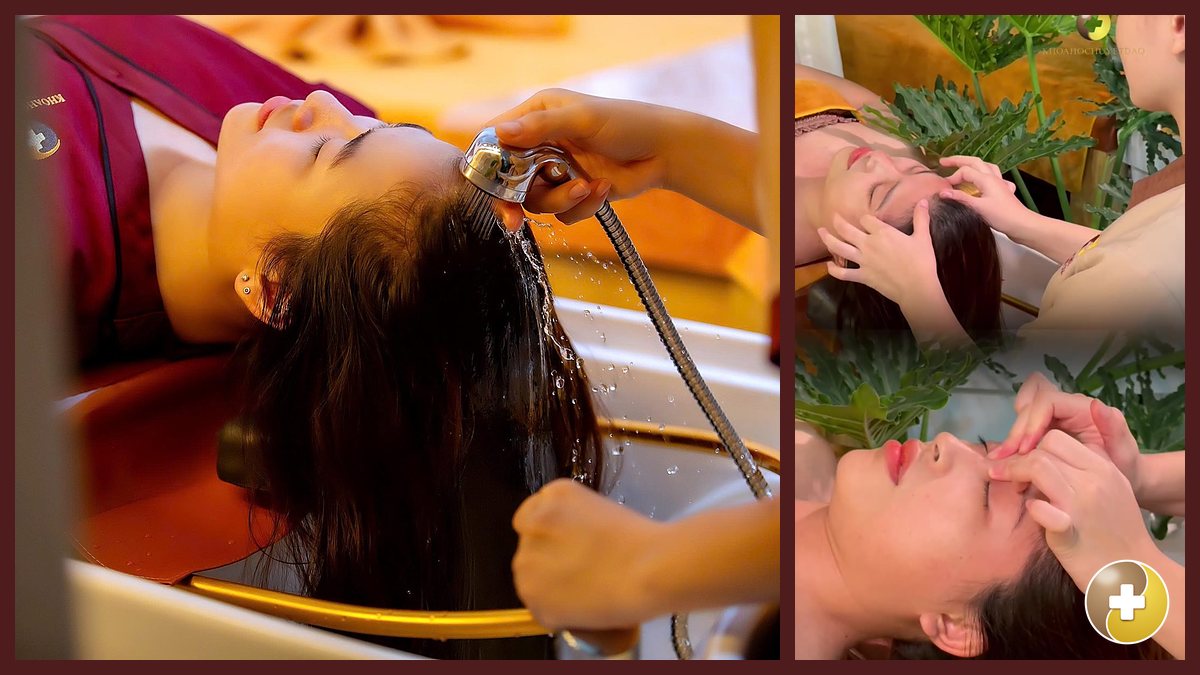
Quick answer: Yes, acupressure can be added for sinusitis once an ENT check-up has confirmed it: many people feel a clearer nose and lighter head. It supports, not replaces, medical follow-up. Tong Gia Acupoint Wellness (Huyệt Đạo Tống Gia), in District 12 and Vinhomes Grand Park, Ho Chi Minh City, works on the neck, upper back and nose points.
Want Lương Y Tống Văn Huynh’s team to read your spine and posture in person?
What is sinusitis, and why do people in Saigon look for acupressure?
In simple Western terms, the sinuses are air-filled spaces inside the bones of the face around the nose: the frontal sinuses above the eyebrows, the ethmoid sinuses between the eyes, the maxillary sinuses behind the cheeks and the sphenoid sinuses deeper behind. They are lined with a thin mucous membrane and drain into the nose through very small openings. When everything works, mucus moves out quietly and you never think about your sinuses.
Sinusitis means that lining has become swollen. The openings narrow or block, fluid collects and pressure builds. That is why people feel heaviness in the forehead, tightness beside the nose, a blocked nose, mucus running down the throat, and a head that seems to "fall forward" when they bend down. Acute sinusitis often follows a cold; when it lasts or keeps coming back, it is called chronic sinusitis. Which type you have is for an ENT specialist to decide.
Among expats and visitors in Ho Chi Minh City, the people who search for acupressure for sinusitis usually recognise themselves here:
- Office workers in air-conditioned rooms for 8–10 hours, with a heavy forehead by late afternoon.
- Riders who commute by motorbike through Hanoi Highway or Highway 22 traffic, breathing dust and exhaust.
- Engineers and managers at the Saigon Hi-Tech Park who move between cold factory floors and tropical heat.
- Anyone who spends long hours looking down at a phone or laptop, with a stiff neck that makes the head feel even heavier.
They have already seen an ENT specialist and followed the advice, yet they want a hands-on way to breathe more easily, feel lighter in the head and sleep better. That is exactly what acupressure at Tong Gia is for: a wellness approach to the nose and sinus area that supports a clearer feeling. It does not replace medical follow-up and does not make sinus inflammation disappear. For an overview of acupressure in the city, see our acupressure massage in Saigon Q&A.
Common triggers: air-con, traffic dust and shallow breathing
Sinusitis has many causes, and your own cause is for a medical facility to find. In daily city life, a few habits, jobs and surroundings make the nose and sinuses more irritable:
- Air-conditioning and dry air: the nose warms, moistens and filters air before it reaches the lungs. Hours of cold air blowing straight at your face dry the lining, which then reacts by swelling and producing mucus.
- Dust, fine particles and cooking smoke: according to the Tong Gia curriculum, small particles travel deep into the airways and irritate them. Rush-hour riders and people who cook over charcoal or wood feel this more than others.
- Colds and weather swings: a blocked nose that lingers after a cold is very common. In Saigon's rainy season, a cool morning, a scorching noon and an afternoon downpour keep the body adjusting.
- Shallow breathing and slouching: the curriculum notes that when you slouch, the diaphragm moves less, the lungs do not fully expand, and you tire and feel short of breath and tense more easily.
- Ongoing stress: frowning at a screen keeps the forehead and the muscles between the brows contracted, adding to the pressure in the face.
In Eastern medicine the Lung is called the "delicate organ": easily affected by cold, heat and dryness. Air-con all day, then the heat outside, then traffic fumes, test it again and again. This is the traditional explanation, offered next to the Western one about the mucous lining so you can picture it, not a conclusion about any illness.
Other signs to watch for
Sinusitis rarely stays in the nose. Notice these signs and note them down for your ENT visit and for your session:
- Pressure in the forehead, between the eyebrows or across the cheeks, worse when bending forward.
- A blocked nose on one or both sides, and a weaker sense of smell.
- Mucus dripping down the throat, a scratchy throat or hoarse voice in the morning.
- A blocked nose at night, mouth breathing and light sleep.
- Headache or a heavy head, sometimes spreading to the back of the neck or the temples.
- A stiff neck, tight upper shoulders, an aching upper back between the shoulder blades, and a "catch" when you breathe in deeply.
- Tiredness and irritability from poor sleep.
The Tong Gia curriculum places "nose and throat" (blocked nose, dry throat, frequent sore throat) among ten groups of signs that the Lung function is under strain, alongside breathing, voice, sleep and resistance. It also states clearly that a single sign proves nothing; a check-up is needed to know for sure.
When to see a doctor
Acupressure is only for times without warning signs. If you have any of the following, stop self-massage and please see a doctor at a medical facility (an ENT department) first:
- Fever, especially a high fever with cloudy nasal discharge.
- Redness or swelling around the eyes or eyelids.
- Blurred or double vision.
- A severe headache unlike your usual ones.
- Nasal discharge with blood or a bad smell, or coughing up blood-streaked phlegm.
- Symptoms lasting more than 10 days, or coming back again and again.
- A cough lasting more than 2 weeks, breathlessness at rest, or wheezing for the first time.
- Unexplained weight loss, night sweats, or a low fever every afternoon.
Eye swelling with a high fever, confusion or a stiff neck, or chest pain, breathlessness and cold sweats: go to emergency or call 115 immediately.
With signs such as weight loss or long-lasting fatigue, get checked at a medical facility in parallel instead of relying on acupressure. Keep using anything prescribed to you exactly as advised. Tong Gia practitioners ask about these signs before every session; if one is present, they will not work on you and will ask you to get checked first.
This is a wellness service, not medical care.
The Y Tướng Học view: the Lung opens into the nose
Y Tướng Học (face reading for wellness) rests on the saying "the signs show outside, the organs lie inside". For the nose and sinuses, the organ in question is the Lung. According to the Tong Gia curriculum, the Lung governs qi and breathing; it nourishes the skin and body hair and holds the protective qi; and it "opens into the nose": when Lung qi is sufficient, the nose is clear, smell is sharp and the voice carries; when it is weak, the nose blocks easily and the voice turns hoarse. The Lung is paired with the Large Intestine, whose meridian runs from the index finger up the arm and neck and ends at Yingxiang (LI20) beside the nostril. That is why points around the nose and on the hand are used together.
What does a practitioner look at when you sit down?
- Ấn Đường, the point between the eyebrows: the curriculum links it to the Heart and Lung. A narrow, sunken area with vertical frown lines and tight muscle is read as a tendency toward stagnant Lung qi, often seen with shallow breathing and a tense face and neck.
- The nose: the root, the tip and the wings of the nose reflect the Lung and Spleen. A short, upturned nose with loose wings is described as "an open gate of the Lung": such people tend to feel the cold and should keep their airways warm.
- Skin and breath: a strong Lung shows as smooth skin, deep breathing and a clear voice; signals to care for are dry skin, frequent congestion, shallow breaths and frequent sighing.
- The "Đồng" (同) face shape: long yet square with firm bone and muscle, linked to the Lung and Large Intestine. The curriculum notes these people tend to tighten or show a raised vertebra around D3 (Feishu, BL13), which affects breathing rhythm.
All of this is observation to choose where to work, not fortune-telling and not a statement that you have any illness. You can read more in our Eastern face reading for wellness Q&A.
Spine segments and nerve-reflex zones involved
In Tong Gia's spinal nerve-reflex balancing, the 33 vertebrae are grouped by what they serve: the neck (C1–C7) serves the head, face, neck and arms; the upper and mid back (D1–D12) relates to circulation, breathing and digestion. Nerve roots leave the spinal cord between the vertebrae, and that is where the practitioner's fingers search. For sinus discomfort, these zones matter:
| Vertebrae / zone | Nerves and function | Typical feelings | Organ (Eastern view) |
|---|---|---|---|
| C1–C3 (upper neck, at the hairline) | Upper neck serving the head and face; deep muscles at the base of the skull | Stiff neck, heavy head, ache at the back of the head or temples | Lung opens into the nose (face); head area also linked to Liver and Kidney |
| C4–C7 (mid and lower neck) | Neck, shoulders and arms; Dingchuan point just below C7 | Tight neck and shoulders, a catch on deep breaths | Lung governs qi and breathing |
| D1–D3 (upper back, between the shoulder blades) | Breathing; Feishu (BL13) lies 1.5 cun beside D3 | Tight upper back, shallow breathing, a stiff or raised vertebra near D3 | Lung (Feishu is the Lung's back point) |
| Face: Ấn Đường, Yingxiang | The nasal lining warms, moistens and filters air | Pressure between the brows and beside the nose, congestion | Large Intestine meridian (paired with Lung) ends at Yingxiang |
| Wrist and hand: Lieque (LU7), Hegu (LI4) | Lung and Large Intestine meridians in the arm | Stiff neck, heavy face | "For head and neck, seek Lieque"; "for face and mouth, Hegu" |
The table shows related zones for choosing where to work; it does not name a cause. The curriculum is frank that acupressure points do not act directly on lung tissue; in traditional theory, stimulating them helps balance qi and blood. In Western terms, when the neck, shoulders and upper back soften, the rib cage and diaphragm move more freely, breathing deepens and the tension in the head and face eases.
The Tong Gia method: spinal nerve-reflex balancing massage
This is a Vietnamese Eastern-medicine method developed by Lương Y (master of traditional Vietnamese wellness) Tống Văn Huynh, founder of Tong Gia, with more than 13 years in Eastern wellness care, Y Tướng Học and spinal nerve-reflex balancing. Instead of pressing face points at random, the practitioner reads your face first, reads your spine by hand second, and only then works on the right zones. A session runs like this:
- Questions and screening: your ENT advice, pregnancy, asthma, heart or lung conditions, fever, a long cough. Any warning sign means no session today.
- Observation: breathing rate at rest, chest or belly breathing, voice, complexion, the area between the brows, the nose and your posture.
- Reading the spine by hand: pressing, stroking and rolling to sense skin temperature, muscle padding, vertebra shape and sensation, comparing left with right, focusing on "over-active" zones (warmer, tighter, more tender).
- Muscle release: the neck, shoulders and upper back, building through 5 pressure levels; the face always stays at the lightest level.
- Acupressure on the right points: Feishu and Dingchuan on the back; gentle Ấn Đường and Yingxiang on the face; Lieque and Hegu on the hands (Hegu is skipped in pregnancy). Work stops when the skin at the point turns from dry to slightly moist.
- Breathing and home care: a few minutes of belly breathing on the spot, plus a short routine to repeat at home.
What a typical session looks like (no client named): a guest arrives after work, already checked by an ENT specialist, with a heavy forehead and a nose that blocks every afternoon. The practitioner notices quick chest breathing and frown lines between the brows. Lying face down, the upper neck at C1–C2 feels stiff and the area around D3 is warmer and thicker on one side. Most of the hour goes to releasing the neck, shoulders and upper back, then pressing Feishu and Dingchuan in a steady rhythm. Face up, the practitioner works very lightly between the brows, rubs beside the nose until it feels warm, then presses Lieque and Hegu.
What you may feel: a tender but pleasant ache on the upper back, warmth around the nose, and afterwards a lighter head, looser shoulders and easier deep breaths. Everyone responds differently; not everyone notices a change after one visit. Say so at once if anything hurts more.
Suitable services (full price list):
- Nose and sinus care, 60 minutes: 350,000 VND (about US$13).
- Lung wellness care, 90 minutes: 900,000 VND (about US$35), if you also want work on the upper back, chest and breathing.
Tong Gia does not promise a clear nose or an end to sinusitis after one session. For neck-focused work, see our neck and shoulder massage Q&A, and for budgeting, massage prices in Ho Chi Minh City.
Want Lương Y Tống Văn Huynh’s team to read your spine and posture in person?
Self-care at home and prevention
- Rub Yingxiang: with both index fingers, gently rub beside the nostrils for 1–2 minutes until warm, morning and night.
- Press Ấn Đường and Hegu: slow circles between the inner ends of the eyebrows for about a minute, never pressing into the eye socket; then press the web between thumb and index finger, about a minute per hand. Skip Hegu if pregnant.
- Belly breathing: breathe in through the nose for about 4 seconds, out slowly for about 6 seconds, 5–10 minutes a day.
- Keep the neck and chest warm: do not let air-con blow on your face, keep a light jacket at the office, drink enough warm water.
- Avoid dust and smoke: wear a mask on the motorbike, keep your home ventilated and sit upright so you breathe deeper.
If you have a fever, a red swollen face, or pressing makes it hurt more, do not self-massage; get checked.
How to book
- District 12: 225 Dương Thị Mười, Phường Tân Chánh Hiệp (Tan Chanh Hiep Ward); daily 8:00–19:00; 4.9★, 235 Google reviews.
- Vinhomes Grand Park: Căn T16-21 khu Manhattan, Phường Long Bình, TP. Thủ Đức (Thu Duc City, formerly District 9); daily 9:00–20:00; 5.0★, 208 reviews.
WhatsApp or Zalo +84 888 264 559 (0888 264 559 in Vietnam), or book online. Mention sinusitis when you book so the practitioner can prepare a nose and sinus session. Maps and directions are below.
Visit us
- Đông Y Huyệt Đạo Tống Gia Quận 12 (District 12)
225 Dương Thị Mười, Phường Tân Chánh Hiệp, Quận 12, HCMC · 8:00–19:00 daily · 0888 264 559 · Directions on Google Maps - Đông Y Huyệt Đạo Tống Gia Quận 9 (Vinhomes Grand Park, District 9)
Căn T16-21 khu Manhattan, Vinhomes Grand Park, Phường Long Bình, TP. Thủ Đức, HCMC · 9:00–20:00 daily · 0888 264 559 · Directions on Google Maps
Want Lương Y Tống Văn Huynh’s team to read your spine and posture in person?
FAQ
Does acupressure for sinusitis actually help? It can help you feel a clearer nose and a lighter head once an ENT specialist has confirmed sinusitis, but it supports rather than replaces medical follow-up. With fever, eye swelling, blurred vision or a severe headache, get checked first.
Is sinusitis dangerous? Most of the time it is a lingering discomfort: congestion, forehead pressure, poor sleep. Redness or swelling around the eyes, double vision, high fever, a severe headache or confusion need urgent care or a call to 115, and no acupressure.
Should I get acupressure for a sinus headache? It is reasonable for a familiar heavy, pressing headache without warning signs. At Tong Gia the practitioner releases the upper neck (C1–C3) and upper back (D1–D3), then works gently between the brows and beside the nose.
What can I do at home for a blocked nose from sinusitis? Rub beside the nostrils for 1–2 minutes until warm, press gently between the brows, practise belly breathing for 5–10 minutes, keep your neck and chest warm, drink warm water and keep air-con off your face.
Can I get a massage if my chronic sinusitis keeps coming back? Yes, as long as you stay under regular ENT follow-up and have no warning signs. Massage and acupressure only support easier breathing; repeated flare-ups are a reason to get the cause checked.
Sinusitis keeps me up at night. Can acupressure help me sleep? By loosening the neck and helping the nose feel clearer, many people fall asleep more easily. The 60-minute nose and sinus session costs 350,000 VND (about US$13). Loud snoring or pauses in breathing at night need a check-up.
Author: Lương Y Tống Văn Huynh – founder of Huyệt Đạo Tống Gia, a master of traditional Vietnamese wellness with over 13 years in Eastern wellness care, Y Tướng Học (face reading) and spinal nerve-reflex balancing massage.
Updated: 2026-11-15
Related guides
- Herbal steam for a cold in Ho Chi Minh City: how to steam safely, who should skip it, and what Tong Gia does
- Acupressure for sinusitis in Ho Chi Minh City: support for a clearer-feeling nose, safe self-care and the signs that need a check-up
This is a wellness service, not medical care.