
Heart palpitations: six groups of causes, warning signs and the Eastern view of the Heart and spine
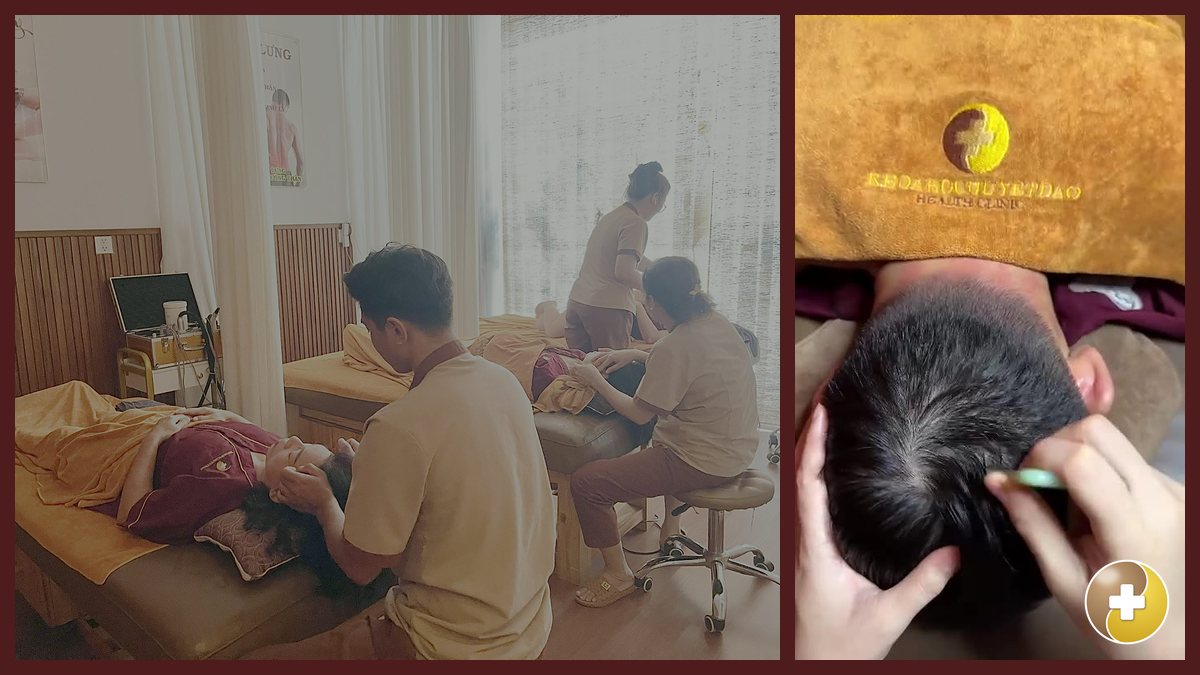
Quick answer: Palpitations usually come from stress, coffee, poor sleep, dehydration or hormonal changes, but can also signal anaemia, thyroid issues or a heart rhythm disorder. With chest pain, breathlessness or cold sweat, call 115. Tong Gia Acupoint Wellness in Districts 12 and 9, Ho Chi Minh City helps your body rebalance.
Want Lương Y Tống Văn Huynh’s team to read your spine and posture in person?
What are heart palpitations?
Palpitations are the feeling of noticing your own heartbeat: pounding, racing, fluttering, or a "skipped" beat followed by one hard thump. People describe it as "my heart is jumping in my chest" or "I can hear my pulse in my ears when I lie down". Most of the time we never notice our heart. When we start to, the body is usually telling us something.
The Western explanation. The heart has its own electrical system. According to the Tong Gia curriculum, the sinus node is the natural pacemaker, firing about 60–100 times a minute; the signal travels through the AV node, the bundle of His and the Purkinje network so the upper and lower chambers contract in turn. A resting adult heart rate is around 60–100 beats per minute, lower in people who train regularly. The autonomic nervous system adjusts that rhythm: the sympathetic side speeds it up and strengthens it, the parasympathetic side slows it down when you rest. A disturbance anywhere along that conduction path can make the rhythm fast, slow or irregular.
So palpitations can come from the heart itself or from outside it: stress hormones, coffee, poor sleep, anaemia, an overactive thyroid, fever or dehydration. In other words, palpitations are a sign, not a disease. "Why is my heart pounding?" can only be answered by looking at the whole picture: when it happens, how long it lasts, what comes with it, and whether you have any heart history.
Among expats and visitors in Ho Chi Minh City we hear the same stories again and again: two iced coffees before 10 am, time-zone calls with head office until midnight, long rides in the midday heat without enough water, a new baby and broken nights, perimenopausal hot flushes, or the first weeks of adjusting to a new city and climate.
Common causes: six groups to know
The Tong Gia curriculum notes that palpitations can be caused by anxiety, coffee, anaemia, an overactive thyroid and more, or by a heart rhythm disorder. These groups help you understand your body and talk to medical staff; they are not a way to label yourself.
| Group | Typical examples | When palpitations tend to appear |
|---|---|---|
| Emotion, stress, anxiety | Work pressure, presentations, interviews, family or money worries | Before big moments, when lying still at night |
| Stimulants | Coffee, strong tea, energy drinks, alcohol, nicotine, slimming pills with stimulants | A while after drinking, more on an empty stomach |
| Poor sleep, exertion, dehydration, fever | Late nights, stairs, riding at noon, viral fever | After a short night, on hot days, while feverish |
| Hormonal changes | Before a period, pregnancy, after birth, perimenopause | Cyclically, with hot flushes or sweating |
| Outside the heart | Anaemia, overactive thyroid, low blood sugar after long fasting | Tired with light effort; with weight loss or shaky hands; when hungry |
| Heart and circulation | Rhythm disorders, valve disease, high blood pressure, heart failure | With dizziness, fainting, breathlessness, swollen ankles, irregular beat |
The curriculum also lists habits that tire the heart: salty, fatty food raises blood pressure and blood fats; alcohol and nicotine damage vessel walls and make rhythm problems more likely; little exercise, stress and late nights raise heart rate and blood pressure, and poor sleep stops the body from recovering. Typical city versions: coffee instead of breakfast, under six hours of sleep, skipped lunch, too little water in the heat, and hours hunched over a laptop with shallow breathing.
Other signs to watch
- Chest: tightness or heaviness, pain on effort that eases with rest.
- Breathing: out of breath on stairs, breathless lying flat, needing extra pillows.
- Rhythm: irregular beats or pauses.
- Swelling: ankles swelling by evening, rapid weight gain.
- Dizziness: light-headed, vision going dark, nearly fainting.
- Sweat and colour: sweating at rest or at night, cold clammy hands, pale face, bluish lips or fingertips.
- Mind and sleep: restlessness, startling easily, trouble sleeping, vivid dreams.
Palpitations with pale skin and tiredness on light effort point towards anaemia; with weight loss, shaky hands and heavy sweating, towards the thyroid; when hungry with trembling, towards low blood sugar. A single sign is never enough to conclude anything. A simple habit helps: keep a palpitation diary for one or two weeks, writing the time, what you were doing, what you drank, how long you slept, and your pulse counted for one minute at the wrist. Bring it with you when you get checked.
When to see a doctor
The first rule in the Tong Gia curriculum for heart care is simple: chest pain, breathlessness or signs of a stroke mean calling emergency number 115 straight away, with no massage and no acupressure. Please see a doctor or call for help if you have:
- Chest pain or pressure, shortness of breath, cold sweat: call 115 now.
- Chest tightness lasting more than 5–10 minutes that does not ease with rest, or pain spreading to the left arm, shoulder, neck or jaw.
- Fainting or nearly fainting; a rapid pounding heart with dizziness.
- Sudden breathlessness, or breathlessness that makes you sit up at night.
- A drooping face, weakness on one side, slurred speech, blurred vision, loss of balance: possible stroke, call 115.
- Very high blood pressure with a severe headache.
- Palpitations with pallor and fatigue, or with weight loss and tremor: get checked at a medical facility in parallel.
- Palpitations several times a week, or an irregular pulse without coffee or stress: ask for a heart check and an ECG.
If you have a stent or pacemaker, take blood thinners or are pregnant, ask the medical team following you before booking a massage and tell your practitioner. Keep following your doctor's plan for heart or blood pressure. Massage relaxes you; it does not open narrowed coronary arteries. This is a wellness service, not medical care.
The Y Tướng Học view: the Heart governs blood and houses the spirit
In Eastern wellness, the "Heart" (Tâm) is more than the organ. The Tong Gia curriculum describes it as a system linked to blood, vessels, mind, sleep, the tongue, the complexion, sweat and emotions. When Heart qi weakens, the pulse is weak, the face pale and palpitations appear; when the Heart's role of housing the spirit is disturbed, sleep is light, dreams are many, memory slips. Saying "your Heart is weak" in this sense does not mean you have heart disease.
The curriculum describes four common patterns: Heart qi deficiency (palpitations with breathlessness on effort, sweating, pale face), Heart yang deficiency (palpitations with chest tightness, cold hands and feet), Heart blood deficiency (startling easily, poor sleep, pale lips, dizziness) and Heart yin deficiency (restlessness, night sweats, hot palms and soles, red tongue). It also links the Heart with the Spleen (worry drains both, bringing palpitations, poor sleep and poor appetite), the Kidneys (palpitations with insomnia and weak lower back and knees) and the Lungs (shortness of breath with palpitations).
Y Tướng Học (face reading for wellness) says "the signs show outside, the organs lie inside". For palpitations, a Tong Gia practitioner looks at:
- Complexion: rosy when the Heart is balanced; pale, flushed or dusky when it is not.
- Tongue: the "sprout" of the Heart. A small, pointed, very red tongue suggests an overheated Heart and an over-stimulated nervous system: fast heart, anxiety, insomnia.
- Ấn Đường, the point between the brows: sunken, narrow, with vertical lines, suggesting blocked Heart blood, a chest that feels pressed, sighing and palpitations without cause.
- Skin tone: very pale or sallow skin, suggesting weak Heart and Spleen, with dizziness and breathlessness.
- Sweat: sweat is the fluid of the Heart, so unusual sweating matters.
This is reference knowledge from the Tong Gia school, used to choose where to check first. It does not replace a medical check. Read more in our Eastern face reading Q&A.
Spine segments and nerve-reflex areas involved
The curriculum links the neck (C1–C7) with the head, face, neck and arms, and the thoracic spine (D1–D12) with circulation, breathing and digestion. For nerve and mind issues such as long-term insomnia it combines C1–C7, the upper back D1–D3 and the sacrum; for blood pressure and internal organs it uses D1–D12 and L1–L3. The Heart's back-shu points sit right on the upper back, beside T4 and T5. The sympathetic chain runs along both sides of the thoracic spine, which is why people with frequent palpitations often have thick, warm, tender muscles there.
| Segment | Nerves, function | Typical signs | Related organ (Eastern view) |
|---|---|---|---|
| C1–C2 | Back of head, sleep | Hot neck, heavy head, trouble falling asleep | Heart, Liver |
| C3–C7 | Neck, shoulders, inner arm | Braced shoulders, tired inner forearm | Pericardium, Liver |
| D1–D3 | Upper back, chest, breathing | Tight chest, shallow breath, racing heart under pressure | Heart, Lung |
| D4–D5 | Circulation, Heart back-shu area | Mild chest tightness, palpitations, poor sleep | Heart, Pericardium |
| D11 | Digestion, source of blood | Poor appetite, palpitations when worried | Spleen |
| Lower back, sacrum | Pelvic nerves | Weak lower back, light sleep, cold feet | Kidney |
The table shows links for orientation only, never a verdict on your health.
How Tong Gia works: spinal nerve-reflex balancing massage
Tong Gia Acupoint Wellness (Huyệt Đạo Tống Gia) uses a Vietnamese Eastern wellness method built by Lương Y Tống Văn Huynh, a master of traditional Vietnamese wellness with over 13 years in Eastern wellness, Y Tướng Học and spinal nerve-reflex balancing. For palpitations the aim is to calm the mind, support sleep, open the chest and arms and help the body leave "alarm mode". Acupoints do not act directly on the heart muscle or coronary arteries.
- Screening and observation: heart history, blood pressure, stents, pacemakers, blood thinners, pregnancy; any warning sign means stopping and calling 115. Then face, tongue, brow area, sweat, sleep and coffee habits, followed by slow 4–6 breathing.
- Reading the spine by hand: press-and-lift and press-and-shift to feel skin temperature, then gliding and probing each vertebra from C1 to the sacrum, comparing left and right.
- Muscle release: neck, between the shoulder blades, along the spine, using the lighter of the 5 pressure levels and gentle vibration.
- Acupressure on the right areas: Heart back-shu points on the upper back; Nei Guan, Shen Men and nearby wrist points for 1–2 minutes each side; very light pressure on the breastbone point; finishing at Bai Hui on the crown.
- Home guidance: breathing, self-acupressure, coffee timing and sleep.
A typical session
A typical Heart wellness session with an office worker whose heart races in the afternoon: she drinks two coffees a day, sleeps about five hours and has already had a heart check. Her shoulders are lifted, breathing short, the tip of the tongue slightly red. Her neck is warmer than her back and the muscles beside D4–D5 are thick and tender. The practitioner starts at the hands and forearms, then the neck and upper back. Halfway through, her breathing slows and some guests fall asleep. The session ends at the wrists and the head, with tips on Nei Guan and moving the second coffee before noon.
Services and prices
- Heart wellness, 75 minutes: 750,000 VND (about 29 USD), when palpitations, chest tightness and poor sleep come first.
- Eastern massage, 60 minutes: 450,000 VND (about 17 USD), a gentle first visit.
- Head care, 60 minutes: 750,000 VND (about 29 USD), when palpitations come with a heavy head and trouble falling asleep.
Full list on our price page. For sleep-focused care see acupressure for sleep in Saigon.
What guests feel
During the session most guests feel tenderness in the neck and between the shoulder blades, then warmth, deeper breathing and a lighter chest. Afterwards many say they fall asleep more easily and notice their heartbeat less. Feeling sleepy is common as the body shifts into rest. Results vary; Tong Gia helps the body rebalance and does not promise that palpitations will stop, because coffee, sleep and workload still need your attention.
Want Lương Y Tống Văn Huynh’s team to read your spine and posture in person?
Home care and prevention
- Slow 4–6 breathing: in through the nose for 4 seconds, out for 6, for 5–10 minutes a day.
- Nei Guan and Shen Men: Nei Guan is two thumb-widths above the inner wrist crease between the tendons; press gently 1–2 minutes each side when tense. Shen Men sits on the wrist crease on the little-finger side; use it before sleep.
- Rethink coffee: never on an empty stomach, keep it to the morning.
- Sleep and a short nap: fixed bedtime; a 15–30 minute nap. In Eastern tradition 11 am–1 pm is the Heart's hour.
- Long-term heart habits: about 150 minutes of movement a week, under 5 g of salt a day, less alcohol, regular blood pressure checks. Jet-lagged? See jet lag massage in Saigon.
Book a session
- District 12: 225 Dương Thị Mười, Phường Tân Chánh Hiệp (Tan Chanh Hiep Ward, District 12). Open 8:00–19:00 daily.
- Vinhomes Grand Park, District 9: Căn T16-21 khu Manhattan, Phường Long Bình, TP. Thủ Đức (Unit T16-21, Manhattan zone, Long Binh Ward, Thu Duc City). Open 9:00–20:00 daily.
Book online or call, Zalo or WhatsApp +84 888 264 559. Tell us when your palpitations happen and share any check-up results. Real reviews are on each branch's Google Maps page. Living in or visiting Ho Chi Minh City? Come and try a Vietnamese Eastern wellness method built by Lương Y Tống Văn Huynh. New to this style? Start with our traditional Vietnamese massage Q&A.
Visit us
- Đông Y Huyệt Đạo Tống Gia Quận 12 (District 12)
225 Dương Thị Mười, Phường Tân Chánh Hiệp, Quận 12, HCMC · 8:00–19:00 daily · 0888 264 559 · Directions on Google Maps - Đông Y Huyệt Đạo Tống Gia Quận 9 (Vinhomes Grand Park, District 9)
Căn T16-21 khu Manhattan, Vinhomes Grand Park, Phường Long Bình, TP. Thủ Đức, HCMC · 9:00–20:00 daily · 0888 264 559 · Directions on Google Maps
Want Lương Y Tống Văn Huynh’s team to read your spine and posture in person?
FAQ
Why does my heart pound and race? Common reasons are stress, anxiety, coffee, energy drinks, poor sleep, dehydration, fever and hormonal changes. Anaemia, an overactive thyroid, low blood sugar or a rhythm disorder are also possible, so repeated episodes need a check. With chest pain, breathlessness or cold sweat, call 115 straight away.
Are palpitations with no obvious reason dangerous? Often the reason is hidden: coffee, short sleep, skipped meals, built-up pressure. Keep a diary of time, pulse and drinks for two weeks. If the beat is irregular, or comes with dizziness, fainting or breathlessness, get a heart check at a medical facility.
Is a racing heart with shortness of breath serious? It can be. Sudden breathlessness, breathlessness lying down, or breathlessness with chest pain, sweating or dizziness means calling 115. Even if it fades with slow breathing, get checked to know the cause.
Why do I get palpitations after eating? After a big meal blood shifts to digestion and the heart may beat harder; sugar, coffee or alcohol with the meal make it more noticeable. If it happens daily or comes with dizziness or chest pain, get checked.
Can massage or acupressure help palpitations? Gentle massage and acupressure relax the neck and upper back, deepen breathing and help the body shift into rest, and many guests sleep better afterwards. Massage does not act on the heart muscle and never replaces a heart check when warning signs appear.
Can I book a session if I have a stent or pacemaker? Ask the medical team following you first, then tell us when booking. Your practitioner will avoid strong pressure on the chest and the device area and use light techniques only.
Author: Lương Y Tống Văn Huynh – founder of Huyệt Đạo Tống Gia, a master of traditional Vietnamese wellness with over 13 years in Eastern wellness care, Y Tướng Học (face reading) and spinal nerve-reflex balancing massage.
Updated: 2026-11-15
Related guides
- Chronic stress that lasts for months: stiff neck, headaches, poor sleep and bloating, seen through the spine
- Heart palpitations: six groups of causes, warning signs and the Eastern view of the Heart and spine
This is a wellness service, not medical care.