
Herbal warm compress: how a mugwort, ginger and sea salt pouch differs from dry heat, and how to use one safely at home in Ho Chi Minh City
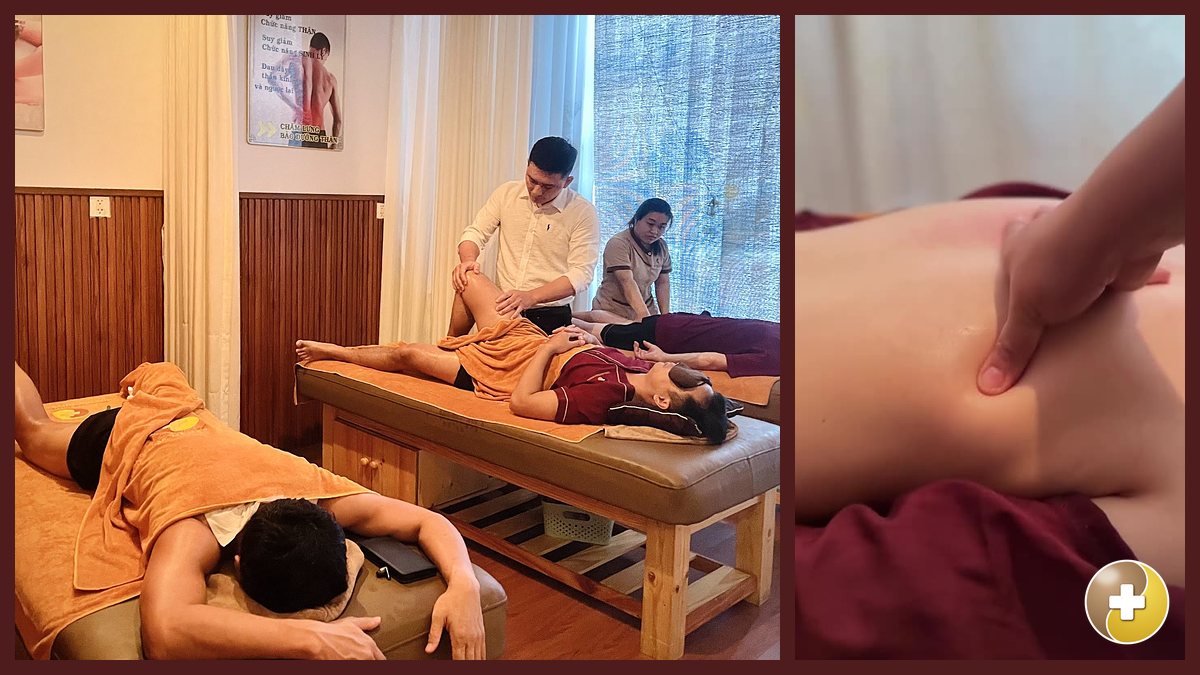
Quick answer: A herbal warm compress is a cloth pouch of mugwort, ginger, lemongrass and coarse salt, heated and placed on a cold, tired back, neck or belly; its moist warmth relaxes muscle and feels deep and soothing. Never use it on a fresh, hot, swollen injury. Tong Gia Acupoint Wellness in Districts 12 and 9, Ho Chi Minh City adds herbal compresses after muscle release.
Want Lương Y Tống Văn Huynh’s team to read your spine and posture in person?
What is a herbal warm compress, and how is it different from dry heat?
A herbal warm compress is a cloth pouch filled with familiar ingredients such as mugwort, ginger, lemongrass, betel leaves and coarse salt, pan-roasted or steamed, then placed on a cold, tired low back, upper back, neck or belly. Many Vietnamese families use it after childbirth, for older relatives, or when the back aches as the weather turns.
The Western explanation. Warmth widens local blood vessels, more blood reaches soft tissue, tight muscle eases and nerve endings become less sensitive for a while. Compared with dry heat (an electric pad or hot water bottle), a steamed herbal pouch carries moist heat, which feels more even and is gentler on the skin; the scent of ginger, lemongrass and mugwort helps you relax. Even so, herbs on the skin act mainly locally.
The Tong Gia curriculum states that herbs act mainly locally through the skin, keeping you warm and relaxed; some components may be absorbed to a limited degree, but they do not act directly on the liver or kidneys as some advertising claims.
| Point | Herbal compress (moist warmth) | Dry heat | Cold pack |
|---|---|---|---|
| Suits | Cold, long-term tired back or neck, weather changes | Mild muscle ache, quick and easy | First 48 hours after a knock, swollen hot spots |
| Feels | Even, deep warmth, pleasant scent | Surface heat, can dry skin | Cool, numbing, less swelling |
| Time | 15–20 minutes | 15–20 minutes | 10–15 minutes, wrapped |
| Avoid when | Broken skin, hot red swelling, numbness | Same as herbal | Cold, stiff chronic areas, very cold-sensitive people |
Why the back gets cold and tired: habits, work, posture and environment
- Air-con blowing on your back at the office or while sleeping.
- Rain and wet clothes: riding home in a monsoon downpour.
- Tiled floors and thin mattresses.
- Long sitting, little movement.
- After childbirth: a tired low back and tailbone, sensitivity to drafts.
- Age: more sensitivity to cold, tired back and knees.
- Late showers and washing hair at night, then going straight to bed.
Signs a warm compress may suit you
- Your low back feels cooler to the touch than elsewhere and you seek warmth.
- A dull, nagging ache that worsens with weather changes or air-con.
- Back pain worse at night and stiff mornings that ease with movement.
- A cold belly with dull pain that feels better with warmth.
- A tired low back and tailbone after childbirth.
- A stiff neck after air-con on the nape.
If the pain is new after a knock and the area is swollen, hot and red, use cold first.
When to see a doctor, and who should not use a compress
- Back pain with fever, painful or bloody urine, or severe one-sided flank pain: see a doctor at a medical facility promptly.
- Upper or mid-back pain with chest tightness, breathlessness or cold sweat: call 115.
- Pain after a fall or crash; pain down the leg with numbness, weakness or bladder changes.
- Night pain at rest or unexplained weight loss: get checked at a medical facility alongside any wellness care.
- Broken skin, pustules, burns, rashes, or a hot, red, swollen area.
- Diabetes or numb skin: burns can go unnoticed; test carefully or skip it.
- Pregnancy: no heat on the belly or low back without asking your doctor.
- Children, older adults and very tired people: someone should stay nearby; never fall asleep with a hot pouch on.
This is a wellness service, not medical care.
The Y Tướng Học view: Kidney yang, Spleen yang and a cold back
In the Tong Gia curriculum the Kidney yang-deficient pattern shows as dislike of cold, cold hands and feet, a cold aching back and knees, night urination and fatigue; the advice is to warm the Kidney yang and keep the back, belly and feet warm. The Spleen and Stomach cold pattern shows as a cold belly with dull pain that likes warmth, cold limbs and discomfort after cold food. So in Eastern terms, warming the low back and belly "protects yang qi" for people whose bodies run cold.
What does it look like outside? Y Tướng Học (face reading for wellness) links cupping, steaming, soaking and compresses to the Kidneys and Spleen, and looks for soft, cool flesh and a cold back. The round face type, by the curriculum, has a back that catches cold easily, cool skin over the low back, slack lumbar muscles and dull aches; it is advised to keep the low back warm and move gently. Soft, cool flesh that stays dented leans toward Spleen cold. Rosy, thick ears and glossy hair signal healthy Kidneys; a cold back, tired knees and ringing ears are signals. Pale lips and a heavy body point to the Spleen. This is traditional reference knowledge, not a medical finding.
Spine segments and nerve-reflex areas involved
In the curriculum D1–D12 relate to circulation, breathing and digestion, L1–L5 to the kidneys, urinary function and legs, S1–S5 to elimination and the pelvis. The practitioner reads skin temperature first: warmer than normal is "excited", cooler is "inhibited". The curriculum's rule is "bring high down, bring low up", so warmth suits cool areas only, never hot ones.
| Vertebrae | Nerve area / function | Signs when cold and tight | Related organ (Eastern view) |
|---|---|---|---|
| C6–D2 | Nape, shoulders, upper back | Cold nape, dislike of drafts | Lung, Liver |
| D7–D9 | Mid-back, liver and gallbladder | Stiff mid-back, rib-side fullness | Liver |
| D11–D12 | Stomach, digestion | Cold belly, bloating, dull pain | Spleen, Stomach |
| L1–L5 | Low back, kidneys, legs | Cold low back, tired knees | Kidney |
| S1–S5 | Pelvis, elimination | Sore tailbone after childbirth | Kidney |
How Tong Gia works: spinal nerve-reflex balancing massage
This Vietnamese Eastern wellness method was built by Lương Y (master of traditional Vietnamese wellness) Tống Văn Huynh over more than 13 years. At Tong Gia a herbal compress is not applied everywhere; it goes on the cold areas found after reading the spine and releasing the muscles.
- Observe: complexion, lips, ears, posture; questions on when the back turned cold, childbirth, air-con, night urination.
- Read the spine by hand from the nape to the sacrum, comparing sides, finding tight areas and slack, cool ones.
- Muscle release: pushing and rolling for tight areas; gentle warming strokes for slack, cool ones.
- Acupressure: back points along the Bladder meridian, such as the Kidney point on the low back, warmed with rubbed palms.
- Herbal compress: a warm pouch on the cold area for about 15–20 minutes; the practitioner tests the heat on their own hand first and keeps checking with you.
- Home care: how to make a pouch at home and keep the back warm under air-con.
A typical session. With a mother a few months after giving birth, the practitioner notices a slightly rounded posture, pale lips and cool hands. L3–S1 is clearly cooler than the upper back and the muscle slack, while the muscles between the shoulder blades are tight from carrying the baby. The upper back and shoulders are released first, then the low back is warmed and its points pressed gently, and a warm herbal pouch goes on the low back and sacrum. By the end the low back is warm and she learns to make a salt and mugwort pouch at home.
Suitable services (full price list):
- Back and waist care, 60 minutes: 550,000 VND (about 21 USD); first visit 399,000 VND (about 15 USD); 90 minutes 750,000 VND (about 29 USD).
- Herbal compress: 130,000 VND (about 5 USD), added for a cold low back, belly or neck.
- Cupping to clear cold, 30 minutes: 85,000 VND (about 3 USD), after rain or air-con.
How it feels. Muscle release can feel tender at tight spots; under the compress warmth spreads evenly into the low back with a gentle scent of ginger, lemongrass and mugwort, and many people doze off. Afterwards the back feels warm and lighter and sleep comes easily; the skin may look slightly pink for a few hours. Results vary; Tong Gia helps the back rebalance and does not promise the pain will go away. More reading: cupping Q&A, gua sha and herbal steam, back massage and traditional Vietnamese massage.
Want Lương Y Tống Văn Huynh’s team to read your spine and posture in person?
Home care: making a safe herbal compress
- Prepare about half a kilo of coarse salt, a handful of mugwort, a few slices of ginger and two crushed lemongrass stalks; wash and drain.
- Heat them in a dry pan until warm and fragrant, pour into a thick cloth bag, tie it closed and wrap in a towel.
- Test first on the inside of your wrist for a few seconds; if it stings, wait. Use for 15–20 minutes, moving the pouch so it never sits too long in one spot.
- Never fall asleep with it on, never on wet or broken skin or a swollen, hot area; people with diabetes, older adults and children need someone to test the heat.
- Prevent a cold back: air-con at 26–27°C and not aimed at your back, a light blanket over the low back, dry off after rain, stand and move every 45 minutes.
Book a session
- District 12: 225 Dương Thị Mười, Phường Tân Chánh Hiệp (Tan Chanh Hiep Ward, District 12). Open 8:00–19:00 daily.
- Vinhomes Grand Park, District 9: Căn T16-21 khu Manhattan, Phường Long Bình, TP. Thủ Đức (Unit T16-21, Manhattan zone, Long Binh Ward, Thu Duc City). Open 9:00–20:00 daily.
Book online or call, Zalo or WhatsApp +84 888 264 559. Tell us which area feels cold or tired and whether you are pregnant, postpartum or have diabetes. Real reviews are on each branch's Google Maps page. Visiting Ho Chi Minh City? Come and try a Vietnamese Eastern wellness method built by Lương Y Tống Văn Huynh.
Visit us
- Đông Y Huyệt Đạo Tống Gia Quận 12 (District 12)
225 Dương Thị Mười, Phường Tân Chánh Hiệp, Quận 12, HCMC · 8:00–19:00 daily · 0888 264 559 · Directions on Google Maps - Đông Y Huyệt Đạo Tống Gia Quận 9 (Vinhomes Grand Park, District 9)
Căn T16-21 khu Manhattan, Vinhomes Grand Park, Phường Long Bình, TP. Thủ Đức, HCMC · 9:00–20:00 daily · 0888 264 559 · Directions on Google Maps
Want Lương Y Tống Văn Huynh’s team to read your spine and posture in person?
FAQ
What does a herbal warm compress do? It warms a cold, tired back, neck or belly evenly, relaxes the muscle and feels soothing, and many people sleep more easily. Per the Tong Gia curriculum, herbs on the skin act mainly locally, keeping you warm and relaxed; they do not detox the liver or kidneys.
Should I use heat or cold for knee pain? A new, swollen, hot knee after a knock gets cold wrapped in a towel for 10–15 minutes during the first 48 hours. A cool, stiff, long-term achy knee that flares in cold weather gets warmth or a herbal compress for 15–20 minutes. A very swollen or locking knee needs a medical check.
Heat or cold for hip pain? The same rule: new, hot, swollen pain gets cold; long-term stiffness gets warmth. Hip pain with fever, inability to stand, after a fall, or in an older person needs a medical check first.
Will a warm compress help back pain at night? If the pain comes from cold, tight back muscles after air-con or a poor sleeping position, 15–20 minutes of warmth before bed often helps. Night pain at rest with weight loss or fever needs a medical check, not just a compress.
Can I use a herbal compress for back pain after childbirth? Many mothers find a salt and mugwort pouch on the low back warm and comforting. Test the heat carefully, never place it on a scar or wound, and ask your care team first after a caesarean or any postpartum complication.
How long should a herbal compress stay on? About 15–20 minutes, moving the pouch gently so it never sits too long in one place, and stop if the skin stings or turns very red.
Author: Lương Y Tống Văn Huynh – founder of Huyệt Đạo Tống Gia, a master of traditional Vietnamese wellness with over 13 years in Eastern wellness care, Y Tướng Học (face reading) and spinal nerve-reflex balancing massage.
Updated: 2026-11-15
Related guides
- Herbal warm compress: how a mugwort, ginger and sea salt pouch differs from dry heat, and how to use one safely at home in Ho Chi Minh City
- Massage along the spine in Ho Chi Minh City: what it does, spine sections C – D – L – S, and what Tong Gia does
This is a wellness service, not medical care.