
Indigestion: common causes, warning signs and how Tong Gia supports the Spleen and Stomach in Ho Chi Minh City
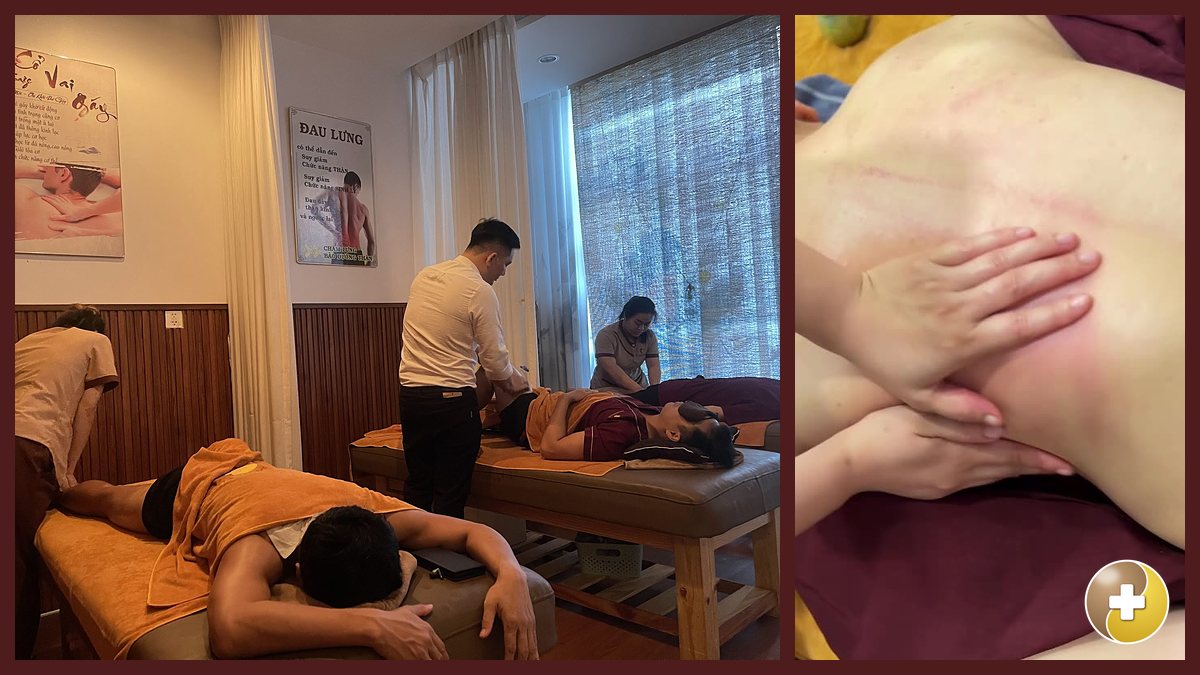
Quick answer: Indigestion is usually functional, from eating fast, overeating, late meals or stress, but gastritis, H. pylori or gallbladder problems are possible, so lasting symptoms should be checked. Vietnamese tradition sees a slow Spleen–Stomach. Tong Gia Acupoint Wellness (Huyệt Đạo Tống Gia), Ho Chi Minh City, works by hand on D11–D12.
Want Lương Y Tống Văn Huynh’s team to read your spine and posture in person?
What is indigestion, and who gets it?
Indigestion is the feeling that food just "sits" in your stomach: a few spoonfuls and you feel full, after the meal the upper belly is heavy and uncomfortable, sometimes with mild nausea, burping or a burning feeling above the navel. Many people put it this way: "I eat lunch, and at 3 pm I can still feel the whole of lunch." Indigestion is not quite the same as bloating: bloating is mainly a belly stretched with gas, while indigestion is mainly slowness, heaviness and early fullness in the upper abdomen.
In Western medicine, indigestion (dyspepsia) is a group of upper-abdominal symptoms, not one disease. The causes fall into two broad groups. One has a visible problem: gastritis, stomach or duodenal ulcers, gastro-oesophageal reflux, H. pylori infection, gallstones, pancreatic problems, or side effects of anti-inflammatory painkillers (NSAIDs). The second, more common group is "functional dyspepsia": an endoscopy shows nothing clear, and the issue lies in the rhythm of stomach contractions, the sensitivity of its lining, and the effects of stress, sleep and eating habits.
The Tong Gia training curriculum explains that the stomach stores, grinds and starts digestion, holding food for about 2–4 hours; most nutrients are absorbed in the small intestine; the pancreas produces enzymes for protein, starch and fat; the liver makes bile around the clock for fat digestion. If one step slows, you feel indigestion. In Ho Chi Minh City, Tong Gia Acupoint Wellness (Huyệt Đạo Tống Gia) often sees it in:
- Office workers who eat lunch fast at the screen and then sit hunched all afternoon.
- Expats discovering rich street food, late-night hotpot and barbecue, plus beer.
- Older adults who eat little, chew poorly and walk less, often with constipation too.
- Shift workers eating late at night.
- People who worry a lot and no longer enjoy food.
Common causes: where does indigestion come from?
Most people we see with indigestion do not have a serious illness; it comes from habits repeated every day. The curriculum has a whole table of "habits that tire the Spleen and Stomach":
- Eating fast, chewing little: the stomach must grind more, leading to gas and overeating.
- Overeating, too much oil: the Spleen–Stomach is overloaded and, in Eastern terms, makes "dampness": heaviness and slow digestion.
- Eating late: the stomach works when the body should rest, with reflux and poor sleep.
- Skipping meals: stomach acid is released into an empty stomach.
- Raw, iced food: cold damages Spleen yang: belly pain, loose stools.
- Alcohol and smoking: irritate the lining and raise the risk of ulcers and reflux.
- Worry and stress: "worry harms the Spleen": poor appetite, bloating.
- Self-medicating with painkillers for long periods: can inflame or ulcerate the stomach.
The Eastern view: when the "kitchen" works slowly
In the curriculum, the Spleen–Stomach is the body's "kitchen" and "granary": the Stomach receives and grinds, the Spleen transforms food into essence, which is distributed as qi and blood. How much you eat matters less than how much your Spleen–Stomach can absorb. The Stomach "ripens" food; when disturbed there is fullness, slow digestion and burping. It also sends food downwards; when this fails there is nausea, hiccups and sour burps. Four common patterns are described: Spleen qi deficiency (poor appetite, fullness after meals, fatigue, soft stools, sallow face); Spleen yang deficiency (cold belly, cold limbs, pain after cold food); Spleen deficiency with dampness (heavy body, sticky bland mouth, thick tongue coating); and Stomach yin deficiency (hungry but no wish to eat, dry mouth, dull burning in the upper belly). The Liver also "governs free flow" and helps digestion; when liver–gallbladder function is weak, fatty food is hard to digest. "Spleen" here is a functional system, not the anatomical spleen.
Signs that often come with it
| Accompanying sign | Leans towards | Why (per the source) |
|---|---|---|
| Full after a little, bloated after meals, tired, sallow face | Spleen qi deficiency | The Spleen governs transformation |
| Heavy body, sticky bland mouth, thick coating, scalloped puffy tongue | Spleen deficiency with dampness | The Spleen likes dryness, dislikes damp |
| Cold belly, pain after cold food, loose stools | Spleen yang deficiency | Cold damages Spleen yang |
| Hungry but no appetite, dry mouth, dull burning | Stomach yin deficiency | The Stomach likes moisture |
| Bitter taste, trouble with fat, tightness under right ribs | Liver–Gallbladder | Bile helps flow and fat digestion |
| Very sleepy and tired after eating | Spleen | Listed among Spleen–Stomach signs |
When to see a doctor
The curriculum reminds us that upper-abdominal pain can come from the stomach, gallbladder, pancreas or even the heart, and that ongoing symptoms need medical assessment. Please see a doctor, and have an endoscopy if advised, when indigestion comes with:
- Vomiting blood or coffee-ground material; black or bloody stools.
- Unexplained weight loss; difficulty or pain when swallowing.
- Sudden severe pain, or upper-belly pain spreading to the back.
- Yellow skin or eyes.
- Anaemia, pale skin, heavy fatigue.
- Ongoing vomiting, unable to eat or drink.
- Digestive symptoms starting after 50, or a family history of stomach cancer.
Upper-belly pain with chest tightness, breathlessness or sweating: call 115 (Vietnam emergency) immediately. Do not massage.
This is a wellness service, not medical care. Our technicians do not replace endoscopy or H. pylori results and never advise stopping prescribed medication.
The face-reading view: how the Spleen and Stomach show outside
Y Tướng Học (face reading for wellness) says "the appearance is outside, the organs are inside". The Spleen–Stomach shows in the mouth, lips, tongue and muscles: rosy lips, good appetite and firm muscles when strong; pale lips, bloating, heaviness and tired limbs when weak; the related emotion is worry. Part 3 of the curriculum adds:
- The square "Điền" (田) face: full and fleshy, an Earth constitution led by the Spleen–Stomach. Out of balance it tends towards dampness: bloating, slow digestion, weight gain or puffiness. On the back, a thick muscle layer that can stiffen in large patches at D11–D12.
- The "Do" (由) face: narrow above, wide jaw below; prone to stagnation and long-term damp, bowel problems.
- The "Thân" (申) face: broad cheekbones, Liver pressing on the Stomach: stress brings stomach pain and reflux.
- Tongue and lips: a puffy tongue with teeth marks, thick sticky coating, pale dry lips or a sticky, bitter mouth are listed among Spleen–Stomach signs.
This is reference knowledge, used to decide where to check first, not a medical finding. More in Eastern face reading for wellness: Q&A.
Spine segments and nerve-reflex zones involved
According to the curriculum, the thoracic spine D1–D12 relates to circulation, breathing and digestion, the lumbar spine L1–L5 to digestion, kidneys and urinary function. The internal organ and metabolism group, including stomach pain and digestive problems, is worked through D1–D12 together with L1–L3. For indigestion, technicians pay attention to:
| Segment | Nerve / function | Common signs | Organ (Eastern view) |
|---|---|---|---|
| D4–D5 | D1–D12: circulation; Heart back point | Worry, light sleep, no appetite | Heart–Spleen |
| D7–D10 | D1–D12: digestion; Liver and Gallbladder back points | Trouble with fats, bitter taste, rib tightness | Liver–Gallbladder |
| D11–D12 | Spleen point under T11, Stomach point under T12 | Early fullness, slow digestion, bloating | Spleen–Stomach |
| L1–L3 | L1–L5: digestion; organ and metabolism group | Heaviness, loose or hard stools | Spleen–Kidney |
These are "related" zones for orientation only. In people with indigestion, the muscles beside D11–D12 are often either stiff in a patch or soft and hollow, and each needs a different approach. Excited zones (warm, tight, more tender) are worked on; cool inhibited zones are not pressed directly; depleted bodies get the gentle tonifying techniques.
The Tong Gia method: spinal nerve-reflex balancing massage
The method was built by Lương Y Tống Văn Huynh, a master of traditional Vietnamese wellness and founder of Tong Gia, with over 13 years in Eastern wellness care, face reading and spinal nerve-reflex balancing. The Spleen–Stomach chapter of the curriculum aims to strengthen the Spleen, harmonise the Stomach, help qi descend, resolve damp and ease fullness. A session has five steps:
- Observe: how long, after which foods, at what time; eating, sleep and bowels; face shape, lips, tongue, posture.
- Read the spine by hand: skin temperature, muscle layer, vertebra shape and sensation, left against right, narrowing in around D7–D12.
- Release the muscles: pushing and rotating for thick tight muscle, vibration for soft slack muscle, kneading and gliding into hollows, light to moderate pressure.
- Press the right points: Spleen, Stomach, Liver and Gallbladder back points; Zhongwan and Tianshu on the belly, gently and never right after a meal; Zusanli, Gongsun, Taibai and Yinlingquan on the legs; Neiguan on the wrist for nausea. Work stops once the skin over a key point turns from dry to slightly moist.
- Self-care guidance: belly rubbing, Zusanli pressing, meal pace, dinner time and foods that suit your pattern.
A typical session
A guest arrives in the morning and says that for weeks lunch has sat heavy until evening. The technician asks about meals and checks the tongue: a little puffy, with a thick white coating. Face down, the muscles on both sides of D11–D12 form a stiff, tender patch. The technician pushes and rotates until it softens, vibrates lightly, then presses the Spleen and Stomach points with the guest's breathing. Many people hear their belly gurgle right then; some burp and feel lighter. Face up, the technician rubs the belly very gently clockwise and presses Zusanli and Gongsun. Afterwards guests often feel a calm belly and want a light, warm meal. We do not promise indigestion is gone after one visit; how and when you eat decides the long run.
Suitable services and prices
- Spleen–Stomach wellness care, 75 minutes: 750,000 VND (about 29 USD). For early fullness, slow digestion, bloating, poor appetite.
- Liver wellness care, 75 minutes: 750,000 VND (about 29 USD). For trouble with fatty food, bitter taste, frequent drinking.
- Vietnamese traditional massage, 60 minutes: 450,000 VND (about 17 USD). A good start for mid-back and shoulder tension from long sitting.
See all prices. Come 1–2 hours after eating. For background on the method, read traditional Vietnamese massage: Q&A and acupressure massage in Saigon: Q&A.
Want Lương Y Tống Văn Huynh’s team to read your spine and posture in person?
Self-care at home and prevention
- Eat slowly and chew well: 20–30 minutes per meal; the curriculum notes chewing is the first step that makes the stomach's job lighter.
- Eat on time and stop at "comfortably full": do not skip breakfast; keep dinner light, 2–3 hours before bed; favour warm, cooked, easy food; less fried, spicy food and alcohol.
- Rub around the navel: clockwise 30–50 circles, not straight after a big meal and not during pregnancy.
- Press Zusanli: three thumb-widths below the outer knee hollow, one finger-width from the shin bone; 1–2 minutes each side.
- Walk gently 10–15 minutes after meals: avoid lying down straight away. With sour burps, many people find lying on the left side with the head of the bed raised more comfortable.
Book a session
- District 12: 225 Dương Thị Mười, Phường Tân Chánh Hiệp (Tan Chanh Hiep Ward). Open daily 8:00–19:00.
- Vinhomes Grand Park: Căn T16-21 khu Manhattan, Phường Long Bình, TP. Thủ Đức (Unit T16-21, The Manhattan, Long Binh Ward, Thu Duc City, formerly District 9). Open daily 9:00–20:00.
Call, Zalo or WhatsApp +84 888 264 559, or book online. While you are in Ho Chi Minh City, it is an easy way to experience a Vietnamese traditional method in person. Real ratings and reviews are on each branch's Google Maps profile.
Visit us
- Đông Y Huyệt Đạo Tống Gia Quận 12 (District 12)
225 Dương Thị Mười, Phường Tân Chánh Hiệp, Quận 12, HCMC · 8:00–19:00 daily · 0888 264 559 · Directions on Google Maps - Đông Y Huyệt Đạo Tống Gia Quận 9 (Vinhomes Grand Park, District 9)
Căn T16-21 khu Manhattan, Vinhomes Grand Park, Phường Long Bình, TP. Thủ Đức, HCMC · 9:00–20:00 daily · 0888 264 559 · Directions on Google Maps
Want Lương Y Tống Văn Huynh’s team to read your spine and posture in person?
FAQ
What causes indigestion? Most often functional dyspepsia: a slow, sensitive stomach after eating fast, overeating, late meals, stress or poor sleep. Gastritis, ulcers, reflux, H. pylori or gallbladder problems can also cause it, so weeks of symptoms should be checked at a medical facility. The Eastern view looks at a slow Spleen–Stomach and Liver–Gallbladder.
Is indigestion after meals serious? An occasional heavy feeling after a big, oily meal is not a worry. Get checked if it lasts or comes with weight loss, vomiting blood, black stools, swallowing trouble, yellow skin, or starts after 50. Upper-belly pain with chest tightness or breathlessness needs 115.
What is functional dyspepsia? Indigestion symptoms such as early fullness, heaviness or burning in the upper belly, with no clear damage on endoscopy. The issue is stomach rhythm and sensitivity, influenced by stress, sleep and eating habits. Slower, regular meals and less worry usually help a lot.
Which side should I lie on with indigestion? It is better not to lie down right after eating; walk gently for 10–15 minutes first. With sour burps or reflux, many people find the left side with the head of the bed raised more comfortable. Frequent night reflux should be checked.
Can massage help indigestion? It helps you relax, and many guests hear their belly gurgle, burp and feel lighter during the session. At Tong Gia we release D11–D12 and press the Spleen, Stomach and Zusanli points. Slower, regular meals keep the effect.
Author: Lương Y Tống Văn Huynh – founder of Huyệt Đạo Tống Gia, a master of traditional Vietnamese wellness with over 13 years in Eastern wellness care, Y Tướng Học (face reading) and spinal nerve-reflex balancing massage.
Updated: 2026-11-16
Related guides
- Recurring stomach pain: why it keeps coming back, when to get checked and the Eastern view of digestion
- Stomach pain and vomiting: the main causes, signs that need urgent care and the Eastern view of rising Stomach qi
- Stomach pain with diarrhea: the main causes, red flags and the Eastern view of digestion
- Dark spots on lips: causes, when to see a doctor, and what Y Tướng Học face reading notices
- Acid reflux with a burning throat: why stomach acid reaches the throat, red flags and the Eastern view of digestion
- Acid reflux and a white tongue: why the coating builds up, when to see a doctor, and what face reading notices
This is a wellness service, not medical care.