
Acid reflux and a white tongue: why the coating builds up, when to see a doctor, and what face reading notices
Quick answer: Acid reflux and a white tongue often share the same roots: late dinners, dry mouth, mouth breathing at night, alcohol, nicotine and coffee thicken the tongue coating, with a bitter or sour taste. White patches that will not scrape off, trouble swallowing or weight loss need a doctor. Tong Gia in Ho Chi Minh City supports digestion.
Want Lương Y Tống Văn Huynh’s team to read your spine and posture in person?
Acid reflux with a white tongue: what it means and who gets it
Many people with acid reflux say they wake up, look in the mirror and see a cloudy white layer on the tongue, sometimes thick like paste, with a bitter or sour taste, heavy breath and a slightly raw throat. They ask whether the white tongue comes from reflux or from something else. The honest answer: the two often appear together, but a white tongue is not a specific sign of reflux.
In Western terms, the tongue surface has thousands of tiny papillae. When they are dry, slightly swollen or not cleaned, they trap dead cells, food debris and bacteria, forming a white "coating". Gastro-oesophageal reflux is when stomach contents flow back into the oesophagus, sometimes up to the throat and mouth, causing sour burps, burning behind the breastbone, dry cough and hoarseness; the Tong Gia curriculum lists the same signs. People with reflux often also have the habits that whiten the tongue: late meals, snoring and mouth breathing, dry mouth, too little water, alcohol, nicotine, coffee. So a white tongue in reflux is usually a shared root, rarely acid whitening the tongue directly.
Among guests of Tong Gia Acupoint Wellness (Huyệt Đạo Tống Gia) in Ho Chi Minh City, reflux with a white tongue is common in:
- Office workers who eat dinner late, finishing work at 7–8 pm, eating, sitting at a screen, then going straight to bed;
- People who entertain clients or drink several nights a week with fried and grilled food and iced beer;
- Delivery and ride-hailing drivers who skip meals and drink coffee instead of breakfast;
- Snorers and people with a blocked nose who wake with a bone-dry mouth;
- People under long stress who eat fast, burp often and feel tight above the navel under pressure.
New to reading the face and tongue for wellness? Start with our Eastern face reading Q&A.
Common causes: seven groups behind a white tongue in people with reflux
This table helps you describe your situation to a doctor and to our practitioners; it is not for judging it yourself.
| Cause group (Western view) | How the tongue looks | Often comes with |
|---|---|---|
| Late dinner, lying down after eating | Thick white coating in the morning, fading during the day | Night-time sour burps, early cough, bitter mouth |
| Dry mouth, mouth breathing at night | Dry white coating, sore tongue | Snoring, blocked nose, thirst on waking |
| Alcohol, nicotine, coffee | White or yellowish coating, heavy breath | Heartburn, hoarseness |
| Greasy, sweet, overly large meals | Thick, sticky coating | Bloating, slow digestion, heaviness |
| Little tongue cleaning, low water intake | Even white layer that scrapes off | Bad breath |
| Oral thrush, some prescriptions | Curd-like white patches, hard to scrape, may bleed | Burning, pain when eating, loss of taste |
| Stress and poor sleep | Pale tongue with a thin or thick white coat | Burping, tightness above the navel under pressure |
Late dinners. The Tong Gia curriculum notes that eating late makes the stomach work when the body should rest, encouraging reflux and poor sleep. Lying down on a full stomach lets acid travel up; less saliva at night means a thick coating and a bitter-sour mouth by morning.
Dry mouth. Saliva is the tongue's natural rinse. Snoring, a blocked nose, a dry air-conditioned bedroom and mouth breathing all night dry the tongue so the coating clings. A long-blocked nose also makes people swallow more air and burp more.
Alcohol, nicotine, coffee. The curriculum notes that alcohol and smoke irritate the stomach lining and raise the risk of ulcers and reflux; they also dry the mouth and thicken or discolour the coating. Coffee on an empty stomach makes many people burp sour.
Heavy meals. In traditional terms, too much greasy food overloads the Spleen and Stomach and creates "dampness": heaviness and slow digestion. A stomach that stays full longer raises pressure in the belly, and the tongue often turns thick and sticky.
Hygiene and water. Brushing teeth without cleaning the tongue, little water and little fibre let the coating build up; this type scrapes off and returns in a few days.
Thrush and medication. Antibiotics, inhaled steroids, high blood sugar or dentures can lead to oral thrush: curd-like patches over a red, sore base. Long-term acid-reducing prescriptions also change the mouth environment. A doctor should look at this group.
Stress. The curriculum says Liver wood overacts on Spleen earth: tension easily brings bloating and stomach pain, and Western medicine also recognises stress affects digestion. Stressed people eat fast, swallow air and sleep badly, so digestion slows, the mouth dries and the coating thickens.
Signs worth noting
- The coating: thin or thick, dry or sticky, scrapes off or not, red or bleeding underneath.
- Timing: mornings only or all day; worse after drinking or late meals.
- Mouth: bitter, sour, bland, sticky, bad breath, sores, burning tongue.
- Throat and chest: sour burps, heartburn, night cough, morning hoarseness, a lump-in-the-throat feeling.
- Belly: bloating, burping, tightness above the navel, loose stools or constipation.
- Whole body: tired after meals, heaviness, light sleep, weight loss, fever.
Photograph your tongue each morning for a few days and note what and when you ate the night before; you will see the pattern, and a doctor can judge faster.
When to see a doctor
- Chest pain or pressure, shortness of breath, cold sweat, even if it feels like "reflux burning": call 115 now; pain behind the breastbone can come from the heart.
- Vomiting blood or coffee-ground material; black or bloody stools.
- Food sticking, painful swallowing, persistent vomiting.
- Unexplained weight loss, lasting poor appetite, pallor or marked fatigue: get checked at a medical facility in parallel.
- White patches that do not scrape off, bleed when scraped, a burning tongue, or a sore that does not close in about 2 weeks.
- Hoarseness or dry cough for weeks; digestive symptoms starting after 50; family history of stomach cancer: ask about an endoscopy.
- White tongue with fever, severe sore throat or swollen neck glands.
The Tong Gia curriculum states that reflux needs lifestyle change and management by your doctor; massage only supports relaxation, and acupoints do not act directly on the stomach lining. If you have a plan, keep following it. This is a wellness service, not medical care.
The Y Tướng Học view: what the tongue says about the Spleen, Stomach and rising Stomach qi
Y Tướng Học (face reading for wellness) has roots over 2,000 years old in the idea that what is inside shows outside. Lương Y Tống Văn Huynh (master of traditional Vietnamese wellness) puts it as "the signs show outside, the organs lie inside". The tongue is always checked in Tong Gia's digestion and Heart sessions.
The curriculum says the Heart opens into the tongue, but in its Spleen–Stomach chapter it lists signs of weakened digestion: a swollen tongue with teeth marks and a thick, sticky coating, a sticky, bitter mouth and bad breath. The Stomach is the "sea of food and drink"; Stomach qi should descend, and when it rises it brings burping, nausea, hiccups and reflux. In Eastern terms, reflux with a thick coating suggests the Spleen is not transforming well and the Stomach is not sending things down.
| Tongue you see | Pattern in the Tong Gia curriculum | Wellness suggestion |
|---|---|---|
| Thick sticky coating, heaviness, bland sticky mouth | Spleen weakness with dampness | Less sweet and fatty food, warm cooked meals |
| Swollen, pale, teeth marks at the edges | Spleen not moving fluids | Regular meals, regular movement |
| Red tongue, little coating, dry mouth and throat | Stomach yin deficiency | Less spicy and fried food, enough water |
| Pale tongue, white coat, tired after meals | Spleen qi deficiency | Easy-to-digest food |
| Burping and side tension under stress | Liver and Spleen out of harmony | Less stress, slower eating |
These are traditional concepts, not Western disease names. The curriculum describes the Thân face (wide cheekbones, narrow forehead and chin) as a Wood type in which the Liver presses on digestion, so the stomach reacts quickly to stress and the back often tightens at D7–D9; the Điền face (square, full) as an Earth type rooted in the Spleen and Stomach, prone to dampness, bloating and a thick mid-back at D11–D12; and down-turned mouth corners with dull lips as long-held Liver qi tension pressing on digestion. This is reference knowledge for choosing where to work, never for labelling anyone.
Spine and nerve-reflex areas involved
In the Tong Gia curriculum, D1–D12 relate to circulation, breathing and digestion; for stomach and digestive complaints the curriculum works on D1–D12 and L1–L3. People with long-standing reflux often have a board-stiff mid-back, a heavy area between the shoulder blades, a forward head and a closed chest; that hunched posture also squeezes the belly.
| Vertebrae | Nerve area, function | Common signs | Organ (Eastern view) |
|---|---|---|---|
| C1–C7, D1–D3 | Nerve and mind group (curriculum) | Light sleep, worry, stiff neck, lump-in-throat feeling | Heart – Liver |
| D5–D9 | Western view: sympathetic branches to the stomach | Stiff mid-back, tightness above the navel | Stomach |
| D7–D9 | Often tight in stressed people (face reading) | Burping, side tension under pressure | Liver – Stomach |
| D11 (Spleen shu) | Strengthens the Spleen | Poor appetite, tired after meals, thick coating | Spleen |
| D12 (Stomach shu) | Harmonises the Stomach, sends qi down | Burping, sour burps, upper-belly tightness | Stomach |
"Linked" means a direction for care, not a conclusion about disease.
The Tong Gia method: spinal nerve-reflex balancing massage
Built by Lương Y Tống Văn Huynh over more than 13 years of Eastern wellness, face reading and spinal nerve-reflex balancing. The curriculum's aim here is to strengthen the Spleen, harmonise the Stomach, send rising qi down, ease bloating and help you relax, eat well and sleep. Tong Gia does not promise to stop reflux; we support balance so your changes in meals and sleep can work.
- Screening: endoscopy done or not, current prescriptions, swallowing trouble, black stools, weight loss, chest pain, pregnancy, recent abdominal surgery; warning signs mean no session. Sessions are 1–2 hours after a meal.
- Observation: tongue colour, shape and coating, lips, mouth corners, complexion, posture; questions about dinner time, alcohol, coffee, sleep, snoring and worry.
- Reading the spine by hand: skin temperature, muscle layer, vertebral shape and sensation, left against right, top against bottom.
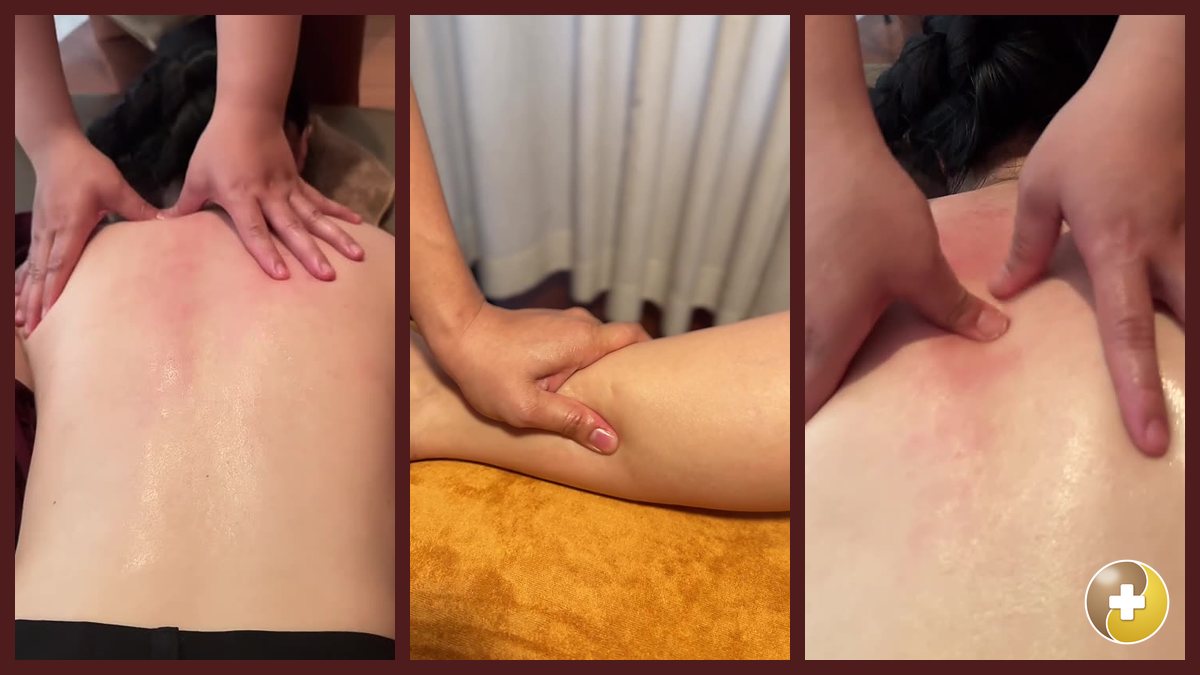
- Muscle release: neck, front of the chest, between the shoulder blades and mid-back, light to medium pressure, opening the chest so breath reaches the belly.
- Acupressure: Spleen shu and Stomach shu on the back; Zusanli, Gongsun and Taibai on the legs and feet; Neiguan on the wrist for nausea and calm; Taichong if you are stressed; only gentle circles around the navel and light Zhongwan once the belly is settled.
- Self-care coaching: the curriculum's ten golden rules for digestion, dinner timing, tongue cleaning, sleeping position.
A typical session. An HR manager, already scoped and following her doctor's plan for reflux, said her tongue was "white every morning, bitter mouth, and back by noon after scraping". She ate dinner at 8 pm, slept at 10 in an air-conditioned room, and her husband said she snored. The practitioner saw a slightly swollen tongue with teeth marks, a thick white coating at the centre and back, slightly down-turned mouth corners, a hunched posture. The mid-back was board-stiff, both sides of D7–D9 warm and tender with a pull towards the belly, D11–D12 soft and cool. Slow release of chest, neck and mid-back made her sigh and burp a few times; then Spleen shu, Stomach shu, Zusanli, Gongsun and Neiguan, with only light belly circles. Her plan: dinner before 7 pm, raise the head of the bed, warm water on waking, gentle tongue cleaning, try sleeping on her side.
Services and prices: Spleen–Stomach wellness 75 min 750,000 VND (about 29 USD); throat care 60 min 350,000 VND (about 13 USD); Eastern massage 60 min 450,000 VND (about 17 USD). See our prices page and Eastern wellness; for general massage questions read traditional Vietnamese massage Q&A.
How it feels. Many guests feel the mid-back ache, then warm; the chest opens, breathing deepens, the belly gurgles, some burp or doze. Afterwards they report a lighter belly, deeper sleep and, once dinner moves earlier, a less bitter mouth in the morning. Results vary; meal timing, alcohol, weight and sleep still decide most of it.
Want Lương Y Tống Văn Huynh’s team to read your spine and posture in person?
Self-care at home and prevention
- Eat dinner early and stay upright: 2–3 hours before bed; regular meals, slow chewing, moderate portions, warm cooked food.
- Raise the head of the bed and try the left side: in Western advice, raising the bed head 15–20 cm and lying on the left side reduces night reflux for many; avoid tight waistbands.
- Keep the mouth moist and clean the tongue gently: enough water, warm water on waking; brush or scrape lightly from back to front, never until it bleeds; if you snore or have a blocked nose, look after the nose and ask a doctor.
- Cut alcohol, nicotine, coffee on an empty stomach and fried food.
- Belly massage, Zusanli, Neiguan and less worry: 30–50 clockwise circles around the navel (not right after a meal, not in pregnancy), 1–2 minutes on Zusanli each side, Neiguan when nauseous or tense. Our acupressure in Saigon Q&A and back massage Q&A explain how sessions work.
Book a session
- District 12: 225 Dương Thị Mười, Phường Tân Chánh Hiệp (Tan Chanh Hiep Ward, District 12). Open 8:00–19:00 daily.
- Vinhomes Grand Park, District 9: Căn T16-21 khu Manhattan, Phường Long Bình, TP. Thủ Đức (Unit T16-21, Manhattan zone, Long Binh Ward, Thu Duc City). Open 9:00–20:00 daily.
Book online or call, Zalo or WhatsApp +84 888 264 559. Choose a time 1–2 hours after a meal and tell us when reflux happens, how your tongue looks and when you eat dinner; bring endoscopy results if you have them. Real reviews are on each branch's Google Maps page. Living in or visiting Ho Chi Minh City? Come and try a Vietnamese Eastern wellness method built by Lương Y Tống Văn Huynh.
Visit us
- Đông Y Huyệt Đạo Tống Gia Quận 12 (District 12)
225 Dương Thị Mười, Phường Tân Chánh Hiệp, Quận 12, HCMC · 8:00–19:00 daily · 0888 264 559 · Directions on Google Maps - Đông Y Huyệt Đạo Tống Gia Quận 9 (Vinhomes Grand Park, District 9)
Căn T16-21 khu Manhattan, Vinhomes Grand Park, Phường Long Bình, TP. Thủ Đức, HCMC · 9:00–20:00 daily · 0888 264 559 · Directions on Google Maps
Want Lương Y Tống Văn Huynh’s team to read your spine and posture in person?
FAQ
Why do I have acid reflux and a white tongue? They often share roots: late dinners, dry mouth, mouth breathing at night, alcohol, nicotine and coffee thicken the coating and leave a bitter or sour taste. Patches that will not scrape off, a burning tongue, trouble swallowing or weight loss need a doctor.
Is a white tongue a sign of reflux? Not by itself. A white tongue appears with dry mouth, poor tongue cleaning, thrush, fever or lack of sleep. Reflux shows as sour burps, heartburn, dry cough and hoarseness; a check-up confirms it.
What should I do about a bitter mouth and white tongue with reflux? Eat dinner 2–3 hours before bed, raise the head of the bed, drink enough water, clean the tongue gently, and cut alcohol and coffee on an empty stomach. If it lasts weeks or warning signs appear, see a doctor.
What does a thick white coating mean in Eastern wellness? In the Tong Gia curriculum a thick, sticky coating and a swollen tongue with teeth marks point to weakened Spleen and Stomach function with dampness, and rising Stomach qi brings burping and reflux. It is a wellness hint, not a disease label.
Can I get a massage if I have acid reflux? Yes, if there are no warning signs and the session is 1–2 hours after a meal. Massage and acupressure support relaxation, ease stress and loosen the mid-back; they do not replace lifestyle change or your doctor's advice.
Will scraping my tongue every day fix it? Gentle scraping clears the coating, but if the root is late meals, dry mouth or alcohol it comes back. Never scrape until it bleeds; patches that will not come off or a sore tongue need a doctor.
Author: Lương Y Tống Văn Huynh – founder of Huyệt Đạo Tống Gia, a master of traditional Vietnamese wellness with over 13 years in Eastern wellness care, Y Tướng Học (face reading) and spinal nerve-reflex balancing massage.
Updated: 2026-11-17
Related guides
- Recurring stomach pain: why it keeps coming back, when to get checked and the Eastern view of digestion
- Stomach pain and vomiting: the main causes, signs that need urgent care and the Eastern view of rising Stomach qi
- Stomach pain with diarrhea: the main causes, red flags and the Eastern view of digestion
- Dark spots on lips: causes, when to see a doctor, and what Y Tướng Học face reading notices
- Acid reflux with a burning throat: why stomach acid reaches the throat, red flags and the Eastern view of digestion
- Acid reflux and a white tongue: why the coating builds up, when to see a doctor, and what face reading notices
This is a wellness service, not medical care.