
Stomach pain with diarrhea: the main causes, red flags and the Eastern view of digestion
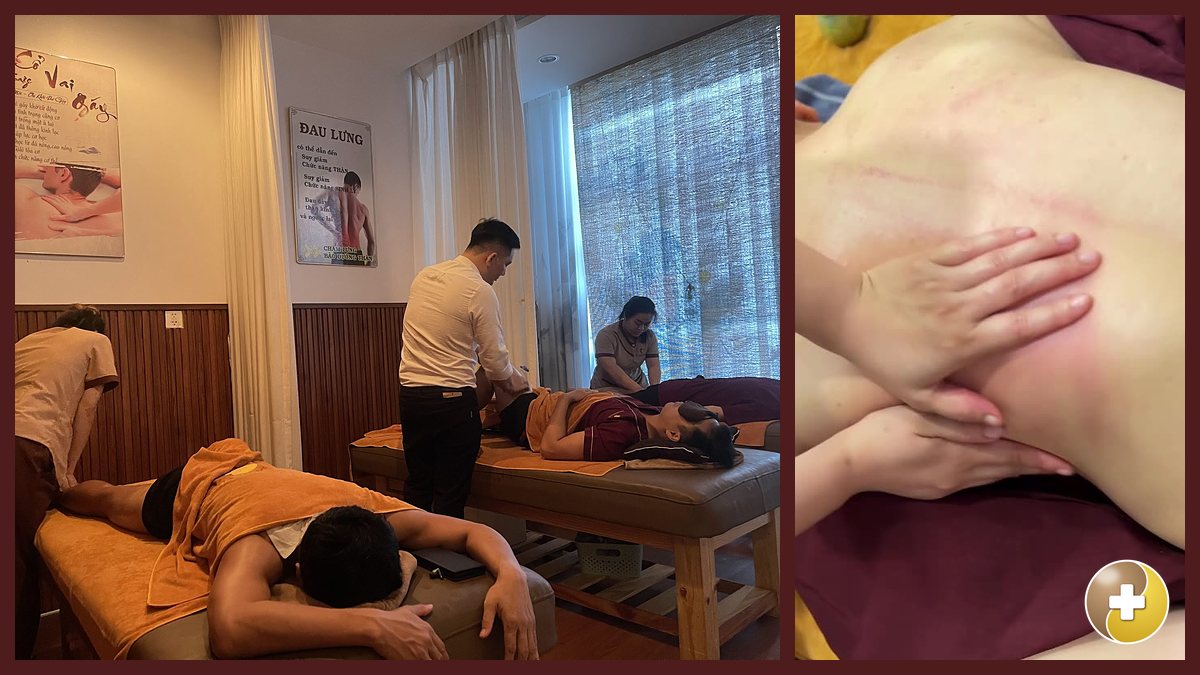
Quick answer: Stomach pain with diarrhea often comes from food poisoning, raw or cold food, alcohol, gastroenteritis, irritable bowel or stress. Blood in the stool, high fever, dehydration or diarrhea beyond 2–3 days needs medical care. Tong Gia Acupoint Wellness in Districts 12 and 9, Ho Chi Minh City supports digestion to rebalance.
Want Lương Y Tống Văn Huynh’s team to read your spine and posture in person?
What is stomach pain with diarrhea?
It is pain, cramping or burning in the upper belly – the area people call "the stomach" – together with loose or watery stools several times a day. Some feel pain above the navel that moves down around it, with gurgling, and need the toilet right after eating; others have a dull ache all week, stools swinging between loose and hard, bloating and tiredness.
The Western medical picture: according to the Tong Gia curriculum, the stomach stores and mixes food with digestive juice, the small intestine absorbs most nutrients, and the large intestine absorbs water and forms stool. When stomach and bowel are irritated, inflamed or contracting too hard at the same time, you feel both: pain above and looseness below. If the colon cannot absorb water in time, stools become loose; strong bowel spasms bring cramping waves that ease after a bowel movement. This combination is common in acute gastroenteritis (food, bacteria, viruses) and in longer-term problems such as irritable bowel syndrome.
In Ho Chi Minh City, newcomers often meet it after seafood, salads or raw dishes, a few nights of drinking, street lunches in the heat, or simply a high-pressure work period. Travellers may know it as the classic "traveller's stomach".
Common causes: the main groups
These groups help you understand the problem and talk with medical staff; they are not a way to label yourself.
| Cause group | Typical pain and stools | Clues |
|---|---|---|
| Food poisoning, bacteria, viruses | Cramps, frequent loose stools, maybe vomiting or fever | Starts hours to a day after a suspect meal; others who ate it are ill too |
| Raw, cold food, iced drinks | Dull ache, gurgling, loose stools | Curriculum: cold harms Spleen yang, causing belly pain and loose stools |
| Alcohol, oversized greasy meals | Upper-belly burning, soft stools next morning | Alcohol irritates the lining; overeating creates "dampness" and slow digestion |
| Irritable bowel syndrome | Pain, bloating, diarrhea or constipation that keep returning | Pain eases after a bowel movement; worse with stress |
| Stress and anxiety | Pain before meetings, several morning bowel movements | Curriculum: Liver–Spleen disharmony disturbs digestion and bowel habits |
| Gastritis, H. pylori | Upper-belly pain or burning, bloating, nausea | Some people also have irregular stools |
| Milk, very sugary food | Gas, gurgling, loose stools after dairy | Common with lactose intolerance |
| Some medications | Pain and loose stools on antibiotics or painkillers | Ask the prescriber; do not stop on your own |
Colitis, thyroid problems and chronic bowel diseases can also cause long-lasting pain and diarrhea and need medical assessment. The curriculum lists habits that tire digestion: late eating, skipped meals, eating fast, cold raw food, alcohol, heavy greasy meals, worry and self-prescribed anti-inflammatory painkillers.
Other signs to watch
- Fever, chills, vomiting: leans towards infection or food poisoning; watch closely and get checked.
- Thirst, dry lips, little urine, dizziness on standing: signs of dehydration.
- Cramps around the navel that ease after the toilet, recurring for weeks, alternating loose and hard: suggests irritable bowel.
- A cold belly that likes warmth, pain after cold food: the curriculum's Spleen yang deficiency.
- Loose stools at dawn, feeling cold, weak lower back and knees: Spleen–Kidney yang deficiency in the curriculum.
- Sticky stools, heavy body, bland mouth: Spleen deficiency with dampness.
Keep a short diary for one or two weeks: where it hurts, how many bowel movements, loose or soft, after which meal, any fever. It speeds up a medical visit.
When to see a doctor
- Blood in the stool, black stools, or vomiting blood or coffee-ground material.
- High fever; sudden severe pain; pain fixed in one spot (for example the lower right) and getting worse.
- Dehydration: strong thirst, very little urine, drowsiness, dizziness; vomiting so you cannot keep fluids down.
- Diarrhea not improving after 2–3 days in adults; sooner for young children, older adults and pregnant women.
- Pain and irregular bowels for weeks; unexplained weight loss; pallor or marked fatigue: get checked at a medical facility in parallel.
- New bowel changes after 50, or a family history of serious bowel or stomach disease.
- Upper-belly pressure with chest pain, breathlessness or cold sweat: call 115, as upper-belly pain can come from the heart.
If a doctor has given you a plan, keep following it. This is a wellness service, not medical care.
The Y Tướng Học view: the Spleen cannot transform dampness
In the Tong Gia curriculum the Spleen (Tỳ) is the centre of transformation, turning food into qi and blood; it likes dryness and dislikes damp. It transforms food and fluids: when weak, appetite drops, the belly bloats and stools turn loose. It lifts the clear upward: when weak, you get dizziness and long-lasting diarrhea. The Stomach (Vị) sends food down: when disturbed, there is nausea, belching and fullness. So "pain in the stomach, looseness below" is, in Eastern terms, the Spleen–Stomach pair losing rhythm.
- Spleen qi deficiency: poor appetite, bloating after meals, fatigue, soft or loose stools, a sallow face.
- Spleen yang deficiency: cold belly, dull ache relieved by warmth, cold hands and feet, loose stools, pain after cold food.
- Spleen deficiency with dampness: heavy body, full belly, bland sticky mouth, thick greasy tongue coating, sticky stools.
- Liver–Spleen disharmony: stress and frustration bring bloating, stomach pain and irregular bowels.
- Spleen–Kidney yang deficiency: diarrhea at dawn, feeling cold.
These are traditional concepts, not Western disease names.
What can the body show? Following "the sign is outside, the organ is inside", Tong Gia technicians notice:
- Soft, slack, cool muscles that stay dented when pressed: the curriculum links this with Spleen–Stomach cold: cold limbs, bloating, diarrhea or undigested food in the stool.
- The "Điền" face (square, full, fleshy): an Earth type with digestion at its root; illness often comes from damp – bloating, slow digestion – with large tight patches around D11–D12.
- A crooked nose bridge or sunken root of the nose: weak digestion and Liver–Spleen disharmony with bloating and colon spasms.
- Face, lips, tongue: sallow skin, pale dry lips, a puffy tongue with tooth marks and thick coating.
This is school-based reference knowledge to choose where to examine first; it never replaces a medical visit. See our Eastern face reading Q&A.
Spine segments and nerve-reflex areas involved
According to the Tong Gia curriculum, D1–D12 relate to circulation, breathing and digestion; L1–L5 to digestion, kidneys, urinary and reproductive organs and the legs. For stomach pain and digestive upset, it combines D1–D12 with L1–L3. People with frequent pain and loose stools often feel a heavy, tired, sometimes cool mid-back and upper lower back.
| Segment | Nerve / function | Common signs | Related organ (Eastern view) |
|---|---|---|---|
| D5–D9 | Sympathetic branches to the stomach (Western anatomy) | Upper-belly pain, tight mid-back | Stomach |
| D11 (Tỳ du) | Back point of the Spleen | Poor appetite, soft stools, fatigue | Spleen |
| D12 (Vị du) | Back point of the Stomach | Bloating, nausea, belching | Stomach |
| L1–L3 | Digestion, bowel | Pain around the navel, irregular stools | Spleen, Large Intestine |
| Lower back area | Kidney-related in the curriculum | Dawn diarrhea, weak back, feeling cold | Spleen – Kidney |
How Tong Gia works: spinal nerve-reflex balancing massage
This Vietnamese Eastern method was built by Lương Y Tống Văn Huynh, a master of traditional Vietnamese wellness with over 13 years in Eastern wellness, Y Tướng Học and spinal nerve-reflex balancing. The aim: strengthen the Spleen, calm the Stomach, resolve damp, ease bloating and regulate the bowels. Acupoints do not act directly on the stomach lining; the cause of pain and diarrhea needs medical assessment.
- Screening: active diarrhea many times a day, fever, dehydration, blood in the stool, acute belly pain, pregnancy or recent surgery mean no session – rehydrate and get medically checked. Sessions take place once the belly has settled, 1–2 hours after a meal.
- Observation: complexion, muscle tone, lips, tongue; questions about cold drinks, alcohol, bowel timing and stress.
- Reading the spine by hand: pressing, stroking and rolling to feel skin temperature, muscle padding and spinal shape; D11–D12 and the upper lower back are often cool, soft or tight in large patches.
- Muscle release: warming and softening the mid and lower back with light to moderate, even pressure.
- Targeted acupressure: Tỳ du and Vị du; Túc tam lý (ST36), Âm lăng tuyền (SP9), Thái bạch (SP3) and Công tôn (SP4) on the legs; gentle clockwise circles around the navel with light pressure on Trung quản (CV12) and Thiên xu (ST25), which is used to regulate the bowels; Nội quan (PC6) for nausea. Tam âm giao (SP6) is not used in pregnancy.
- Home-care coaching: keeping the belly warm, cooked food and boiled water, self-massage of the belly and ST36.
A typical session
A typical Spleen–Stomach session with a businessman who often has upper-belly pain and soft stools in the morning, already medically checked: he drinks iced coffee right after waking, has three drinking dinners a week, loves raw seafood salads and is worried about a big project. His face is slightly sallow, his tongue puffy with tooth marks. Around D11–D12 and the upper lower back the skin is cooler and the muscles tight in patches. The technician warms and softens the back, then works Tỳ du, Vị du, ST36, SP9 and SP4, with only gentle circles and light pressure on ST25 on the belly. His belly warms and gurgles softly. He leaves with advice to swap iced coffee for warm water after breakfast, eat less raw food, keep his belly warm in air conditioning and breathe slowly before tense meetings.
Matching services and prices
- Spleen–Stomach care, 75 minutes: 750,000 VND (about 29 USD), when upper-belly pain, bloating and irregular stools dominate.
- Herbal compress: 130,000 VND (about 5 USD), to warm a cold belly and back.
- Eastern massage, 60 minutes: 450,000 VND (about 17 USD), when stress tightens the back and shoulders.
See the full price list, our traditional Vietnamese massage Q&A and acupressure massage in Saigon Q&A.
What guests feel during and after
During the session many guests feel the back and belly warming, soft gurgling and slower breathing. Afterwards they often describe a calmer belly, a lighter body and deeper sleep. Responses vary; Tong Gia supports the body to rebalance and does not promise the pain or diarrhea will stop, because the cause needs medical assessment and daily eating habits matter most.
Want Lương Y Tống Văn Huynh’s team to read your spine and posture in person?
Home care and prevention
- Rehydrate during diarrhea: small sips of water or oral rehydration solution mixed as directed; rice porridge, thin soups, soft cooked food.
- Eat cooked, drink boiled, prefer warm: the curriculum advises limiting raw, cold food and iced drinks.
- Regular meals, chew well, moderate portions: less alcohol, fried and spicy food; do not skip breakfast.
- Keep the belly warm and self-massage once settled: 30–50 clockwise circles around the navel, not right after a big meal and not in pregnancy.
- Press ST36 and worry less: 1–2 minutes each side, a gentle walk after meals and enough sleep. For a full reset after a long trip, see the 120-minute full-body massage Q&A.
Book a session
- District 12: 225 Dương Thị Mười, Phường Tân Chánh Hiệp (Tan Chanh Hiep Ward, District 12). Open 8:00–19:00 daily.
- Vinhomes Grand Park, District 9: Căn T16-21 khu Manhattan, Phường Long Bình, TP. Thủ Đức (Unit T16-21, Manhattan zone, Long Binh Ward, Thu Duc City). Open 9:00–20:00 daily.
Book online or call, Zalo or WhatsApp +84 888 264 559. Book once your belly has settled and you are no longer running to the toilet, 1–2 hours after a meal, and share your main signs and any check-up results. Real reviews are on each branch's Google Maps page. Living in or visiting Ho Chi Minh City? Come and try a Vietnamese Eastern wellness method built by Lương Y Tống Văn Huynh.
Visit us
- Đông Y Huyệt Đạo Tống Gia Quận 12 (District 12)
225 Dương Thị Mười, Phường Tân Chánh Hiệp, Quận 12, HCMC · 8:00–19:00 daily · 0888 264 559 · Directions on Google Maps - Đông Y Huyệt Đạo Tống Gia Quận 9 (Vinhomes Grand Park, District 9)
Căn T16-21 khu Manhattan, Vinhomes Grand Park, Phường Long Bình, TP. Thủ Đức, HCMC · 9:00–20:00 daily · 0888 264 559 · Directions on Google Maps
Want Lương Y Tống Văn Huynh’s team to read your spine and posture in person?
FAQ
What causes stomach pain with diarrhea? Common causes are gastroenteritis from food, bacteria or viruses, raw or cold food, alcohol, irritable bowel syndrome and long-term stress. Blood in the stool, high fever, dehydration, severe pain or diarrhea lasting more than 2–3 days need medical care.
Are cramping pains with diarrhea serious? Cramps that ease after a bowel movement following an unusual meal usually settle within 1–2 days with light food and fluids. Pain that keeps rising, stays in one spot, comes with fever or returns for weeks should be checked.
What should I do about long-lasting stomach pain and diarrhea? Keep a food and symptom diary and see a digestive specialist to look for causes such as H. pylori, irritable bowel or colitis. Meanwhile eat cooked, warm food, drink boiled water, cut alcohol and keep your belly warm.
Do I need medical staff for belly pain, diarrhea and fever? Yes. Fever with pain and frequent loose stools suggests infection or food poisoning. Go early, and do not wait at all if there is blood in the stool, constant vomiting, drowsiness or very little urine.
Can stress cause stomach pain and diarrhea? Yes. Stress clearly affects digestion; Eastern medicine calls it Liver–Spleen disharmony. Many people get pain and urgency before meetings or trips. Slow breathing, enough sleep and regular meals often help.
Can massage help stomach pain with diarrhea? Not during active diarrhea, fever or dehydration. Once the belly has settled, a Tong Gia session warms the belly, relaxes you and supports the Spleen and Stomach to rebalance; the cause still needs medical assessment.
Author: Lương Y Tống Văn Huynh – founder of Huyệt Đạo Tống Gia, a master of traditional Vietnamese wellness with over 13 years in Eastern wellness care, Y Tướng Học (face reading) and spinal nerve-reflex balancing massage.
Updated: 2026-11-17
Related guides
- Recurring stomach pain: why it keeps coming back, when to get checked and the Eastern view of digestion
- Stomach pain and vomiting: the main causes, signs that need urgent care and the Eastern view of rising Stomach qi
- Stomach pain with diarrhea: the main causes, red flags and the Eastern view of digestion
- Dark spots on lips: causes, when to see a doctor, and what Y Tướng Học face reading notices
- Acid reflux with a burning throat: why stomach acid reaches the throat, red flags and the Eastern view of digestion
- Acid reflux and a white tongue: why the coating builds up, when to see a doctor, and what face reading notices
This is a wellness service, not medical care.