
Recurring stomach pain: why it keeps coming back, when to get checked and the Eastern view of digestion
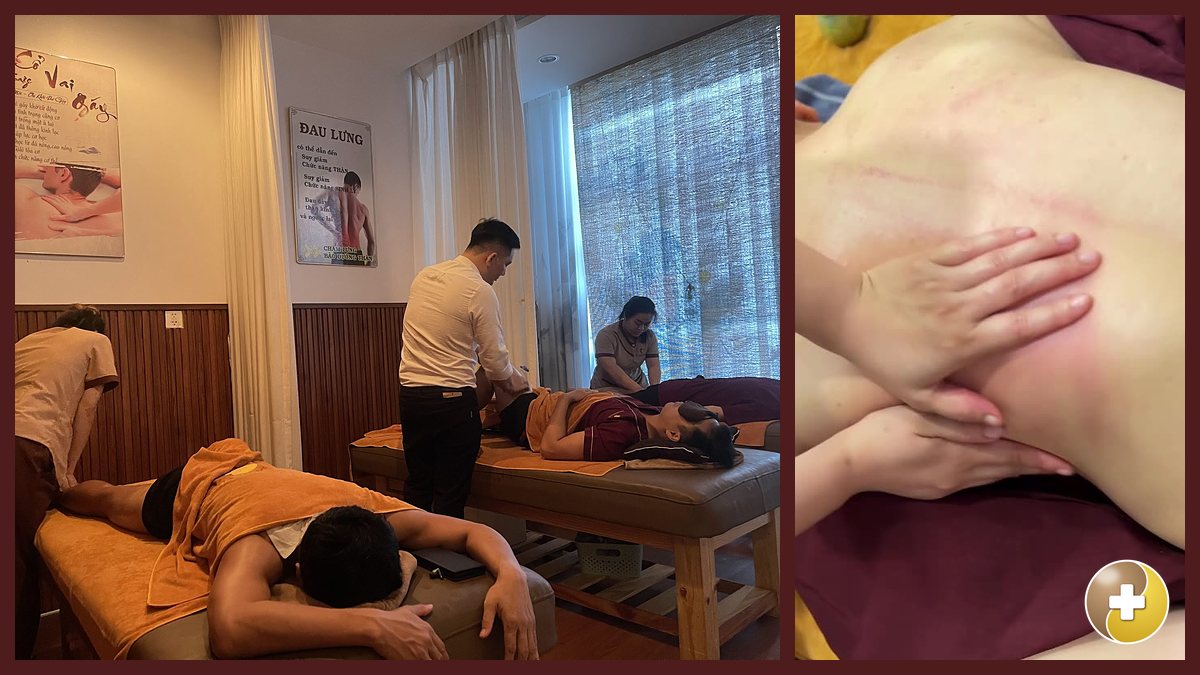
Quick answer: Stomach pain that keeps returning often comes from H. pylori, chronic gastritis, ulcers, functional dyspepsia, irregular meals, alcohol, painkillers or long-term stress. Pain recurring for weeks, weight loss or black stools needs a medical check-up and possibly an endoscopy. Tong Gia Acupoint Wellness in Districts 12 and 9, Ho Chi Minh City supports digestion.
Want Lương Y Tống Văn Huynh’s team to read your spine and posture in person?
What is recurring stomach pain?
It is pain in the area above the navel and below the breastbone – the epigastrium – that keeps coming back: better this week, back next week; calmer for a few days after an antacid, then the same again. Some feel a dull ache almost daily, some get waves of pain when hungry or at midnight, and many also notice poor appetite, a bland taste, bloating, burping and growing tiredness.
The Western medical picture: according to the Tong Gia curriculum, the stomach churns food with acid and pepsin, and its lining must constantly protect itself from that acid. When the lining is irritated for a long time (chronic gastritis), has an ulcer or carries H. pylori, or when the nerves that run digestion are under long-term stress, pain returns whenever conditions allow: a skipped meal, a night of drinking, a late night, a deadline week. Recurring pain is a signal to find the cause, not just to "calm it down" again.
In Ho Chi Minh City we often see this in office workers with years of irregular meals, ride-hailing drivers eating on the go, night-shift staff, shop owners who lunch at 3 pm, people with frequent business dinners and anyone carrying long-term worry. Expats juggling time zones and late calls fit the pattern too.
Common causes: the main groups
These groups help you understand and talk with medical staff; they are not a way to label yourself.
| Cause group | Why the pain keeps returning | Clues |
|---|---|---|
| H. pylori infection | Often silent but a common cause of gastritis and ulcers (curriculum) | Long dull ache; found only by testing |
| Chronic gastritis | A long-irritated lining flares easily | Upper-belly pain or burning, bloating, nausea |
| Stomach or duodenal ulcer | Settles, then returns if the cause remains | Pain when hungry or after meals, sometimes at night |
| Functional dyspepsia | A sensitive, sluggish stomach without visible damage | Early fullness, gas, discomfort after meals, worse with stress |
| Irregular or skipped meals | Acid is released into an empty stomach (curriculum) | Pain when hungry, meal times shift daily |
| Alcohol, coffee on an empty stomach, spicy food | Irritate the lining, raise ulcer and reflux risk | Pain after drinks or the morning coffee |
| Self-prescribed anti-inflammatory painkillers | NSAIDs can cause gastritis and ulcers | Pain worse since taking pills for back or head pain |
| Long-term stress and worry | Stress clearly affects digestion; "worry harms the Spleen" | Worse in peak work seasons, with poor sleep |
The curriculum also warns that upper-belly pain is not always the stomach – the gallbladder, pancreas or even the heart can be involved – and that early stomach cancer is often vague, while late stages bring weight loss, poor appetite, pain and anaemia. That is why recurring pain, especially from age 50, deserves a check-up rather than endless self-bought antacids.
Other signs to watch
- Poor appetite, bland taste, full after a few bites: listed in the curriculum as signs of weakened digestion; with weight loss, get medically checked.
- Waves of pain when hungry or at midnight, eased by food: think of an ulcer.
- Bloating, burping, sour burps after meals: slow emptying, reflux.
- Worse with stress, with poor sleep and tight flanks: an emotional factor.
- Bitter mouth, trouble with greasy food: liver–gallbladder.
- Tired or sleepy after meals, heavy limbs: Spleen qi deficiency in the curriculum.
- Black stools, pallor, weight loss: warning signs; get checked soon.
A two-week notebook helps: when it hurts, before or after meals, what you ate, coffee or alcohol, hours of sleep, any pressure that week. Bring it to your appointment.
When to see a doctor
- Chest pain or pressure, shortness of breath, cold sweat, even if the pain sits above the navel: call 115 now.
- Vomiting blood or coffee-ground material; black or bloody stools.
- Unexplained weight loss or lasting poor appetite; pallor or marked fatigue: get checked at a medical facility in parallel.
- Difficult or painful swallowing; persistent vomiting; yellow skin or eyes.
- Sudden severe upper-belly pain spreading to the back.
- Pain starting after 50, recurring for weeks, or a family history of stomach cancer: ask about an endoscopy.
- Weeks of over-the-counter stomach products without relief, or regular use of anti-inflammatory painkillers.
H. pylori needs management by your doctor; acupressure only supports relaxation. If you have a plan, keep following it. This is a wellness service, not medical care.
The Y Tướng Học view: a long-tired Spleen and Stomach under Liver and worry
The Tong Gia curriculum calls the Spleen and Stomach the body's "kitchen" and "granary": the Stomach (Vị) receives and grinds, the Spleen (Tỳ) transforms food into essence and distributes it as qi and blood. As the curriculum puts it, how much you eat matters less than how much your digestion absorbs. When the Stomach receives poorly, appetite fades or hunger returns too fast; the Spleen "opens into the mouth", so a weak Spleen means a bland mouth and no pleasure in food. Recurring stomach pain often means a Spleen–Stomach pair that has been tired for a long time, with daily loads piled on top.
- Spleen qi deficiency: poor appetite, bloating after meals, fatigue, soft stools, sallow face.
- Stomach yin deficiency: hungry but no appetite, dry mouth and throat, dull burning, red tongue with little coating.
- Spleen yang deficiency: cold belly, dull ache relieved by warmth, pain after cold food.
- Liver–Spleen disharmony: stress and frustration bring bloating and stomach pain.
- Heart–Spleen: excessive worry harms both, with poor appetite, poor sleep, palpitations and forgetfulness.
These are traditional concepts, not Western disease names.
What can the face show? Tong Gia technicians notice:
- The "Thân" face (wide cheekbones, narrow forehead, pointed chin): Liver overriding Stomach; under stress, stomach pain, reflux and tight flanks, with tension at D7–D9.
- Deeply drooping mouth corners, dull lips: long-term Liver qi stagnation pressing on digestion, linked in the curriculum with a higher risk of stress-related ulcers and reflux, a tight jaw and stiff neck.
- A crooked or bony nose bridge, sunken nose root: weak digestion with stomach pain, ulcers, reflux and bloating.
- Complexion, lips, tongue: sallow skin, pale dry lips, a puffy tooth-marked tongue or a red one with little coating.
This is school-based reference knowledge to choose where to examine first; it never replaces a medical visit. See our Eastern face reading Q&A.
Spine segments and nerve-reflex areas involved
According to the Tong Gia curriculum, D1–D12 relate to circulation, breathing and digestion; for stomach pain and digestive upset it combines D1–D12 with L1–L3. Long-term stomach-pain sufferers often have a board-stiff mid-back, a heavy area between the shoulder blades, a stiff neck and a clenched jaw.
| Segment | Nerve / function | Common signs | Related organ (Eastern view) |
|---|---|---|---|
| D5–D9 | Sympathetic branches to the stomach (Western anatomy) | Dull ache above the navel, stiff mid-back | Stomach |
| D7–D9 | Area that tightens with stress (face reading) | Worse under pressure, tight flanks | Liver – Stomach |
| D11 (Tỳ du) | Back point of the Spleen | Poor appetite, tired after meals | Spleen |
| D12 (Vị du) | Back point of the Stomach | Burping, sour burps, upper-belly fullness | Stomach |
| C1–C7, D1–D3 | Nerve–mind group in the curriculum | Poor sleep, worry, stiff neck | Heart – Spleen |
How Tong Gia works: spinal nerve-reflex balancing massage
This Vietnamese Eastern method was built by Lương Y Tống Văn Huynh, a master of traditional Vietnamese wellness with over 13 years in Eastern wellness, Y Tướng Học and spinal nerve-reflex balancing. The aim: strengthen the Spleen, calm the Stomach, guide qi downward, ease bloating and support appetite and sleep. Massage does not replace medical management of ulcers; it supports relaxation, stress relief and a better appetite, and acupoints do not act directly on the stomach lining.
- Screening: how long, any endoscopy or H. pylori test, current products; black stools, weight loss, swallowing trouble, acute pain, pregnancy or recent surgery mean no session and advice to get medically checked. Sessions start 1–2 hours after a meal.
- Observation: face, mouth corners, nose, complexion, lips, tongue; questions on meal times, coffee, alcohol, painkillers, sleep and worry.
- Reading the spine by hand: pressing, stroking and rolling each segment for skin temperature, muscle padding, spinal shape and your sensations, left against right, upper against lower.
- Muscle release: softening the neck, between the shoulder blades and the mid-back with light to moderate pressure so muscles let go on their own.
- Targeted acupressure: Tỳ du and Vị du; Túc tam lý (ST36), Công tôn (SP4) and Thái bạch (SP3) on the legs; Nội quan (PC6) for nausea or anxiety; gentle circles around the navel and very light pressure on Trung quản (CV12) once the belly is calm.
- Home-care coaching: the curriculum's 10 golden rules for digestion, belly self-massage, pressing ST36.
A typical session
A typical Spleen–Stomach session with a ride-hailing driver who has had a dull stomach ache "on and off for two years", lately with poor appetite, already scoped and following his medical plan: breakfast is a black coffee, lunch whenever there is time, the main meal late at night before sleep. His face is slightly sallow, his mouth corners droop and his tongue is puffy with tooth marks. The mid-back is stiff in a plate, D7–D9 warm and tender with pressure radiating to the front, D11–D12 soft and slightly cool. The technician softens the neck and mid-back slowly; he sighs a few times and lets go. Then come Tỳ du, Vị du, ST36, SP4 and SP3, with only gentle circles on the belly. He leaves with advice to eat a real breakfast before coffee, fix his lunch time, lighten dinner and walk a few minutes after eating.
Matching services and prices
- Spleen–Stomach care, 75 minutes: 750,000 VND (about 29 USD), for a dull recurring stomach ache, bloating and poor appetite.
- Eastern massage, 60 minutes: 450,000 VND (about 17 USD), when stress stiffens the mid-back and neck.
- Herbal compress: 130,000 VND (about 5 USD), to warm a belly that likes heat.
See the full price list, our traditional Vietnamese massage Q&A and acupressure massage in Saigon Q&A.
What guests feel during and after
Many guests feel tenderness in the mid-back at first, then warmth, slower breathing and a calmer upper belly; some gurgle, burp or fall asleep. Afterwards they often report a lighter body, more appetite at the next meal and deeper sleep. Responses vary; Tong Gia supports the body to rebalance and does not promise the pain will go away, because the cause needs medical assessment and daily habits matter most.
Want Lương Y Tống Văn Huynh’s team to read your spine and posture in person?
Home care and prevention
- Regular meals, never skip breakfast: from the curriculum's 10 golden rules; fix your lunch time, keep dinner light and 2–3 hours before bed.
- Eat slowly, chew well, moderate portions; prefer warm, cooked, easy food; limit alcohol, fried and spicy dishes.
- No coffee on an empty stomach, no self-prescribed anti-inflammatory painkillers; ask medical staff if you need them often.
- Daily belly circles and ST36: 30–50 clockwise circles around the navel (not right after a big meal, not in pregnancy), ST36 for 1–2 minutes each side.
- Worry less, sleep enough, walk gently after meals: if your neck and shoulders also carry the stress, see our neck and shoulder massage Q&A.
Book a session
- District 12: 225 Dương Thị Mười, Phường Tân Chánh Hiệp (Tan Chanh Hiep Ward, District 12). Open 8:00–19:00 daily.
- Vinhomes Grand Park, District 9: Căn T16-21 khu Manhattan, Phường Long Bình, TP. Thủ Đức (Unit T16-21, Manhattan zone, Long Binh Ward, Thu Duc City). Open 9:00–20:00 daily.
Book online or call, Zalo or WhatsApp +84 888 264 559. Choose a time 1–2 hours after a meal and share your main signs (when it hurts, how you eat) and any endoscopy or test results. Real reviews are on each branch's Google Maps page. Living in or visiting Ho Chi Minh City? Come and try a Vietnamese Eastern wellness method built by Lương Y Tống Văn Huynh.
Visit us
- Đông Y Huyệt Đạo Tống Gia Quận 12 (District 12)
225 Dương Thị Mười, Phường Tân Chánh Hiệp, Quận 12, HCMC · 8:00–19:00 daily · 0888 264 559 · Directions on Google Maps - Đông Y Huyệt Đạo Tống Gia Quận 9 (Vinhomes Grand Park, District 9)
Căn T16-21 khu Manhattan, Vinhomes Grand Park, Phường Long Bình, TP. Thủ Đức, HCMC · 9:00–20:00 daily · 0888 264 559 · Directions on Google Maps
Want Lương Y Tống Văn Huynh’s team to read your spine and posture in person?
FAQ
Why does my stomach keep hurting? Common causes are H. pylori, chronic gastritis, stomach or duodenal ulcers, functional dyspepsia, irregular meals, alcohol, self-prescribed painkillers and long-term stress. Pain that recurs for weeks should be checked, with an endoscopy if medical staff advise.
What do waves of stomach pain mean? Waves of pain when hungry or at midnight, eased by food, are typical of ulcers; waves after drinks or spicy food usually mean an irritated lining. Sudden severe pain spreading to the back needs emergency care.
How long does stomach pain take to go away? It depends on the cause. Pain after one heavy meal often settles within hours to days. Pain from H. pylori or ulcers needs medical assessment and guidance, plus regular meals and less alcohol and coffee on an empty stomach.
What should I do about long-term stomach pain? See a digestive specialist for an endoscopy and H. pylori test as advised, especially after 50 or with weight loss or black stools. Meanwhile keep a food and pain diary, stop skipping meals and avoid long-term self-medication.
Why do I have stomach pain and no appetite? In Eastern terms, a weak Stomach receives poorly and a weak Spleen makes food taste bland; worry harms the Spleen too. In Western terms, lasting loss of appetite, especially with weight loss, needs an early check-up.
Can stress cause stomach pain? Yes. Stress clearly affects digestion; Eastern medicine calls it Liver qi invading the Stomach. Many people hurt mostly in peak work seasons, with poor sleep and stiff shoulders. Sleep, regular meals and relaxation often help.
Can massage help long-term stomach pain? Massage does not replace medical management of ulcers or H. pylori. At Tong Gia, sessions relax the mid-back and neck, ease stress and support appetite and Spleen–Stomach balance.
Author: Lương Y Tống Văn Huynh – founder of Huyệt Đạo Tống Gia, a master of traditional Vietnamese wellness with over 13 years in Eastern wellness care, Y Tướng Học (face reading) and spinal nerve-reflex balancing massage.
Updated: 2026-11-17
Related guides
- Recurring stomach pain: why it keeps coming back, when to get checked and the Eastern view of digestion
- Stomach pain and vomiting: the main causes, signs that need urgent care and the Eastern view of rising Stomach qi
- Stomach pain with diarrhea: the main causes, red flags and the Eastern view of digestion
- Dark spots on lips: causes, when to see a doctor, and what Y Tướng Học face reading notices
- Acid reflux with a burning throat: why stomach acid reaches the throat, red flags and the Eastern view of digestion
- Acid reflux and a white tongue: why the coating builds up, when to see a doctor, and what face reading notices
This is a wellness service, not medical care.