
Insomnia in women: why sleep breaks before periods, after birth and in perimenopause, and how gentle acupressure care works in Ho Chi Minh City
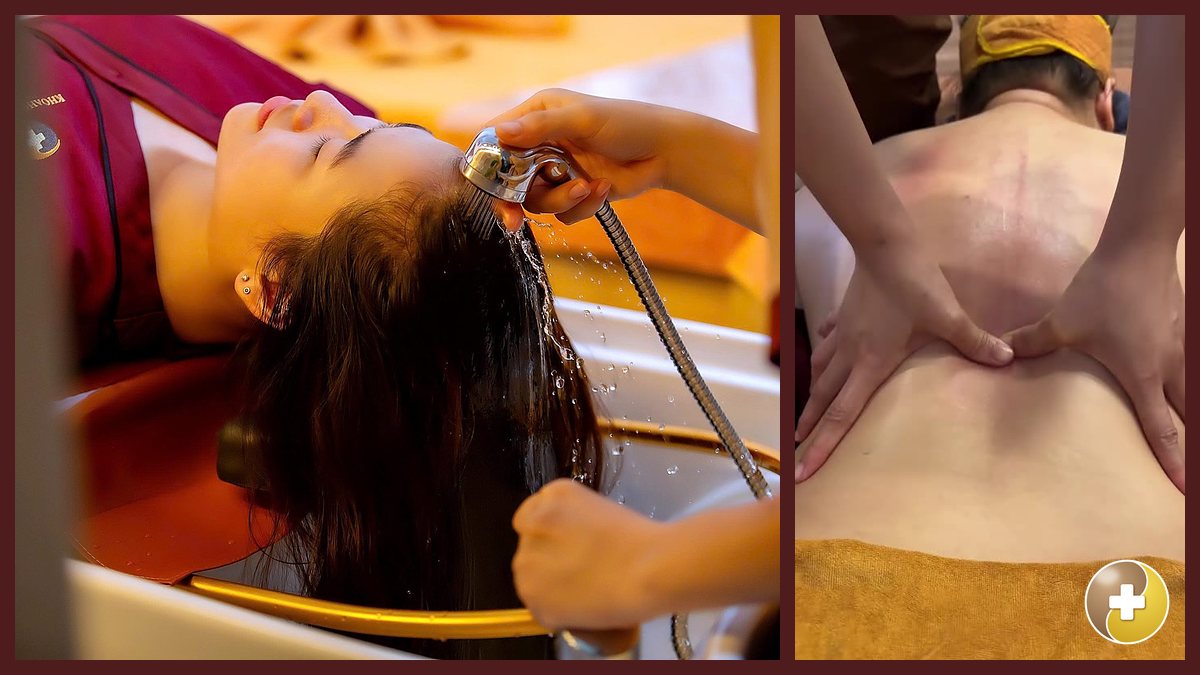
Quick answer: Insomnia in women often follows the monthly cycle, childbirth, night feeds, perimenopause and long worry; Eastern wellness links it to the Heart, Liver, Spleen and Kidney. Tong Gia Acupoint Wellness (Huyệt Đạo Tống Gia) in District 12 and Vinhomes Grand Park, Ho Chi Minh City, reads the spine by hand and uses gentle acupressure to help body and mind settle.
Want Lương Y Tống Văn Huynh’s team to read your spine and posture in person?
What insomnia in women looks like, and why it is so common
Insomnia means taking a long time to fall asleep, sleeping lightly, waking in the night or too early and not drifting off again, then feeling drained, foggy and short-tempered the next day. For women, sleep also shifts with the body's own stages: the monthly cycle, pregnancy, the months after birth, breastfeeding and perimenopause. Each stage brings a change in hormones, daily rhythm and mood.
In Western terms, sleep needs the nervous system to "shift down": the heart slows, muscles soften, the mind stops working through tasks. The Tong Gia course notes explain that heart rate and blood pressure change with emotion through the autonomic nervous system. Under long stress the body stays on alert, so you lie down and still hear your heartbeat and your thoughts keep running. The spine is the axis of that autonomic system, which is why a tight upper back and stiff neck also make it hard to let go.
Scenes we hear about in Ho Chi Minh City all the time:
- An office worker who sits in traffic home to District 12, cooks, helps with homework, and at 11 p.m. is still planning tomorrow in her head.
- A new mum in Vinhomes Grand Park feeding every 2–3 hours; the baby falls back asleep, she doesn't.
- A woman in her late forties woken by heat rising to her face and neck, a damp shirt, then wide awake until dawn.
- Expats juggling a Saigon workday with calls to family in another time zone.
Common causes of poor sleep in women
- Before and during your period: restless, warm, irritable, slow to fall asleep. In Eastern wellness the Liver system governs the smooth flow of qi, blood, emotions and the cycle; when qi stagnates you get a tight chest, irritability, poor sleep and irregular periods.
- After birth and while breastfeeding: blood loss, then sleep in fragments. The course notes say "the Liver stores blood": at rest, blood returns to the Liver to be replenished. Constant night waking leaves Liver blood low (dizziness, brittle nails, light periods) and Heart blood low (palpitations, waking with a start, vivid dreams, forgetfulness).
- Perimenopause: hot flushes in the afternoon or night, night sweats, warm palms and soles. This is described as yin deficiency, "not enough water to cool", which creates inner heat and restless, dream-filled sleep.
- Worry and a double shift: the Spleen makes blood and the Heart governs it; heavy worry drains both, giving poor appetite, poor sleep, palpitations and forgetfulness.
- Posture and work: hours at a laptop, looking down at a phone, carrying a child on one hip.
- Evening habits: afternoon coffee or milk tea, a late heavy dinner (the stomach works when the body needs rest), scrolling in bed.
- Environment: a hot room, air-con set too cold, traffic noise.
Signs that come with it
- Slow to fall asleep, aware of your heartbeat, a racing mind: the Heart "houses the spirit" and governs sleep.
- Waking at night, vivid dreams, startling easily, pale face and lips: a Heart-blood pattern, common after birth.
- Restlessness, night sweats, warm palms, a red tongue: a yin-deficiency pattern, common in perimenopause.
- Irritable before your period, tight ribs, frequent sighing: stagnant Liver qi.
- Poor appetite, bloating, overthinking, pale lips: Heart and Spleen both depleted.
- Stiff neck, heavy head, ache between the shoulder blades.
These are wellness patterns to guide care, not a conclusion about any condition.
When to see a doctor
Call 115 immediately for chest tightness, shortness of breath or cold sweats. If you have thoughts of harming yourself, call someone close now and go to a medical facility right away.
Please see a doctor at a medical facility if:
- Poor sleep has lasted more than 3 months or keeps getting worse.
- Low mood or heavy anxiety won't lift, including after birth.
- You have unusual bleeding: between periods, after sex, or after menopause.
- Hot flushes or night sweats disrupt daily life.
- You feel very tired, look pale, feel dizzy or lose weight without reason: get checked in parallel for anaemia or low iron.
- You snore loudly with pauses in breathing, or wake short of breath.
If you are pregnant, after embryo transfer, or recently gave birth (especially by C-section), check with the medical team following you before booking a massage. This is a wellness service, not medical care.
The face-reading view: how sleep shows on the face
Y Tướng Học (face reading for wellness) at Tong Gia rests on one line: "the signs show outside, the organs lie inside". For women, Lương Y (master of traditional Vietnamese wellness) Tống Văn Huynh often speaks of complexion, skin, sleep and calm: beauty from the inside out.
- Heart: shows in the complexion and tongue. In balance, a rosy face, deep sleep, a bright mind; out of balance, a pale or flushed face, a red tongue tip, poor sleep, palpitations.
- Liver: eyes, nails, skin tone, mood. Dry tired eyes, pale brittle nails, irritability; dark patches on the cheekbones and a dull complexion are read as Liver blood stagnation.
- Spleen: lips and rosy colour. Pale lips, a heavy body; very pale or sallow skin with dizziness and poor sleep is read as Heart and Spleen both depleted.
- Kidney: ears, hair, lower back; in perimenopause often hair loss, tired knees, ringing ears.
The course also notes face shapes prone to broken sleep, such as the "Giáp" shape (wide forehead, narrow chin): "full above, weak below", with headaches, poor sleep and hot flushes above and tired knees below. Face reading only guides where to work; it never labels you. More in our face reading Q&A.
Spine, nerve reflexes and the organ link
In the Tong Gia course on spinal nerve-reflex balancing, the head is the central nervous system and the spine carries the autonomic system: neck C1–C7 relates to head, face, neck and arms; back D1–D12 to circulation, breathing and digestion; lower back L1–L5 to digestion, kidneys, urinary and reproductive organs; sacrum S1–S5 to the lower pelvis. For long-term sleep problems the method combines C1–C7, upper back D1–D3 and the sacral area; for cycle-related issues it combines D10–D12, L1–L3 and S1–S5.
| Spine area | Related nerves / function | Common signs in women | Traditional organ link |
|---|---|---|---|
| C1–C7, D1–D3 | Head, face, neck, arms; nerve and mood group | Heavy head, stiff neck, racing mind in bed | Heart (spirit), Liver (tendons) |
| D4–D5 | Circulation; Jueyin Shu (BL14) below D4, Heart Shu (BL15) below D5 | Slow to fall asleep, palpitations, vivid dreams | Heart, Pericardium |
| D7–D9 | Digestion; Liver Shu area | Irritable before periods, waking mid-night | Liver (flow of qi, stores blood) |
| D10–D12 | Digestion; Spleen Shu (BL20) below D11 | Poor appetite, overthinking, shallow sleep | Spleen and Stomach |
| L1–L3, S1–S5 | Kidney, urinary, reproductive; cycle group | Irregular cycle, tired lower back, night sweats | Kidney, Liver |
The table shows links used to choose where to work, not a conclusion about any condition.
The Tong Gia method: spinal nerve-reflex balancing massage
This Vietnamese Eastern wellness method was built by Lương Y Tống Văn Huynh, founder of Tong Gia, with more than 13 years in Eastern wellness, face reading and spinal nerve-reflex balancing. It follows "three nos": no chemicals or herbs taken by mouth or injection, no needles, no rough force. A sleep session for women goes like this:
- Questions and safety check: falling or staying asleep, your stage (before periods, after birth, breastfeeding, perimenopause), and whether you are or could be pregnant. If you could be, Hegu (LI4) and Sanyinjiao (SP6) are not used and the belly is not worked.
- Observation: complexion, lips, tongue, under-eye area, nails, shoulders.
- Reading the spine by hand: skin warmth, muscle tone and each vertebra compared with its neighbours, focusing on the neck, D4–D5, D7–D9, D11 and the lower back.
- Muscle release of the upper and mid-back, light to moderate pressure, working only the "excited" zones (warmer, tighter). Nursing mums can lie on their side with pillows.
- Acupressure on the right points: Heart Shu, Jueyin Shu, Liver Shu or Spleen Shu as needed; Neiguan (PC6) and Shenmen (HT7) at the wrist; finishing at Baihui (GV20) to calm the mind.
- Home care tips: slow breathing, pressing Shenmen before bed, timing of dinner.
What a real session is like: many women come after work saying "I lie awake an hour, then wake at 3 a.m." The practitioner offers warm water, asks about sleep, cycle and children, looks at face, lips and nails, then asks you to lie face down. Running a hand down the spine there is often a tight band between the shoulder blades, warmer than the skin around it, and the D7–D9 area feels tender. Release starts slowly from the shoulders down, pressure rising only as you respond. By the wrist points and Baihui, breathing slows; some guests doze off on the table.
How it feels: tender at first over tight spots, then warm and lighter; afterwards the neck feels loose and many women say falling asleep that night came easier. Results vary from person to person; one session is not a promise of perfect sleep.
- Heart wellness session (Dưỡng sinh tim), 75 min: 750,000 VND (about 29 USD) – for a racing mind, palpitations, vivid dreams.
- Head care, 60 min: 750,000 VND (about 29 USD) – when a heavy head and tight temples come too.
- Hair wash with neck and shoulder massage, 60 min: 250,000 VND (about 10 USD) – a gentle option for tired new mums.
Full list on prices. Read more in acupressure for sleep in Saigon, Vietnamese head spa Q&A and acupressure massage Q&A, or see the sleep acupressure page.
Want Lương Y Tống Văn Huynh’s team to read your spine and posture in person?
Self-care at home and prevention
- 4–6 breathing: in through the nose for 4 seconds, out slowly for 6, 5–10 minutes in bed.
- Press Shenmen before bed: on the wrist crease, little-finger side, 1–2 minutes each hand. For daytime tension, press Neiguan, 2 cun above the wrist crease between the two tendons.
- Warm foot soak for 10–15 minutes in the evening (people with diabetes should test the water carefully).
- A short nap of 15–30 minutes; in perimenopause go to bed early, avoid late nights and very spicy food.
- Share the night: ask a partner to cover one feed with expressed milk, write tomorrow's list on paper, eat dinner about 3 hours before bed.
How to book
- District 12: 225 Dương Thị Mười, Phường Tân Chánh Hiệp (Tan Chanh Hiep Ward), Quận 12. Daily 8:00–19:00; 4.9★, 235 Google reviews.
- Vinhomes Grand Park: Căn T16-21 khu Manhattan, Phường Long Bình, TP. Thủ Đức (Unit T16-21, The Manhattan, Long Binh Ward, Thu Duc City, formerly District 9). Daily 9:00–20:00; 5.0★, 208 reviews.
Call, WhatsApp or Zalo +84 888 264 559, or book online. Let us know if you are breastfeeding or could be pregnant so the practitioner can prepare your position and points. If you are visiting or living in Ho Chi Minh City, we would be glad to show you this Vietnamese way of caring for sleep.
Visit us
- Đông Y Huyệt Đạo Tống Gia Quận 12 (District 12)
225 Dương Thị Mười, Phường Tân Chánh Hiệp, Quận 12, HCMC · 8:00–19:00 daily · 0888 264 559 · Directions on Google Maps - Đông Y Huyệt Đạo Tống Gia Quận 9 (Vinhomes Grand Park, District 9)
Căn T16-21 khu Manhattan, Vinhomes Grand Park, Phường Long Bình, TP. Thủ Đức, HCMC · 9:00–20:00 daily · 0888 264 559 · Directions on Google Maps
Want Lương Y Tống Văn Huynh’s team to read your spine and posture in person?
FAQ
Is insomnia in women something to worry about? Most of the time it follows the cycle, childbirth, night feeds, perimenopause or worry, and better habits plus relaxation can help it settle. Go to a medical facility if it lasts over 3 months, if low mood or anxiety is heavy, if you have unusual bleeding, loud snoring with breathing pauses, or you feel very tired and look pale.
Can sleep problems from falling hormone levels get better? In perimenopause, hot flushes, night sweats and warm palms are common; Eastern wellness calls it yin deficiency. Ask a medical facility about the hormone side. Alongside that, early nights, less spicy food, 4–6 breathing and gentle spinal acupressure at Tong Gia can help body and mind relax.
What can I do about poor sleep after giving birth? Eat well, share one night feed, take a short nap and press Shenmen before bed. If low mood lasts, see a medical facility. Before any massage, check with the team following you, especially after a C-section; at Tong Gia nursing mums lie on their side with moderate pressure.
Why do I keep waking at 3 a.m.? Waking mid-night and not drifting back is common with long stress, after birth, or with perimenopausal night sweats. In the Tong Gia course it is often linked to the Liver (stagnant qi, low blood) and low Heart blood. If you also snore, stop breathing or cough at night, get checked at a medical facility.
Which acupressure points help with sleep? At home, Shenmen (HT7) on the wrist crease, little-finger side, and Neiguan (PC6), 2 cun above the crease between the tendons: 1–2 minutes each with slow breathing. In a session the practitioner adds Heart Shu, Jueyin Shu, Liver Shu and Spleen Shu along the spine and ends at Baihui. Hegu and Sanyinjiao are not used in pregnancy.
How much is a sleep-focused session for women? Heart wellness session 75 minutes 750,000 VND (about 29 USD); head care 60 minutes 750,000 VND (about 29 USD); hair wash with neck and shoulder massage 60 minutes 250,000 VND (about 10 USD). Prices are the same in District 12 and Vinhomes Grand Park.
Author: Lương Y Tống Văn Huynh – founder of Huyệt Đạo Tống Gia, a master of traditional Vietnamese wellness with over 13 years in Eastern wellness care, Y Tướng Học (face reading) and spinal nerve-reflex balancing massage.
Updated: 2026-11-15
Related guides
- Insomnia in women: why sleep breaks before periods, after birth and in perimenopause, and how gentle acupressure care works in Ho Chi Minh City
- Midlife insomnia (ages 40–55): why your mind races in bed, and how Tong Gia works with it in Ho Chi Minh City
This is a wellness service, not medical care.