
Midlife insomnia (ages 40–55): why your mind races in bed, and how Tong Gia works with it in Ho Chi Minh City
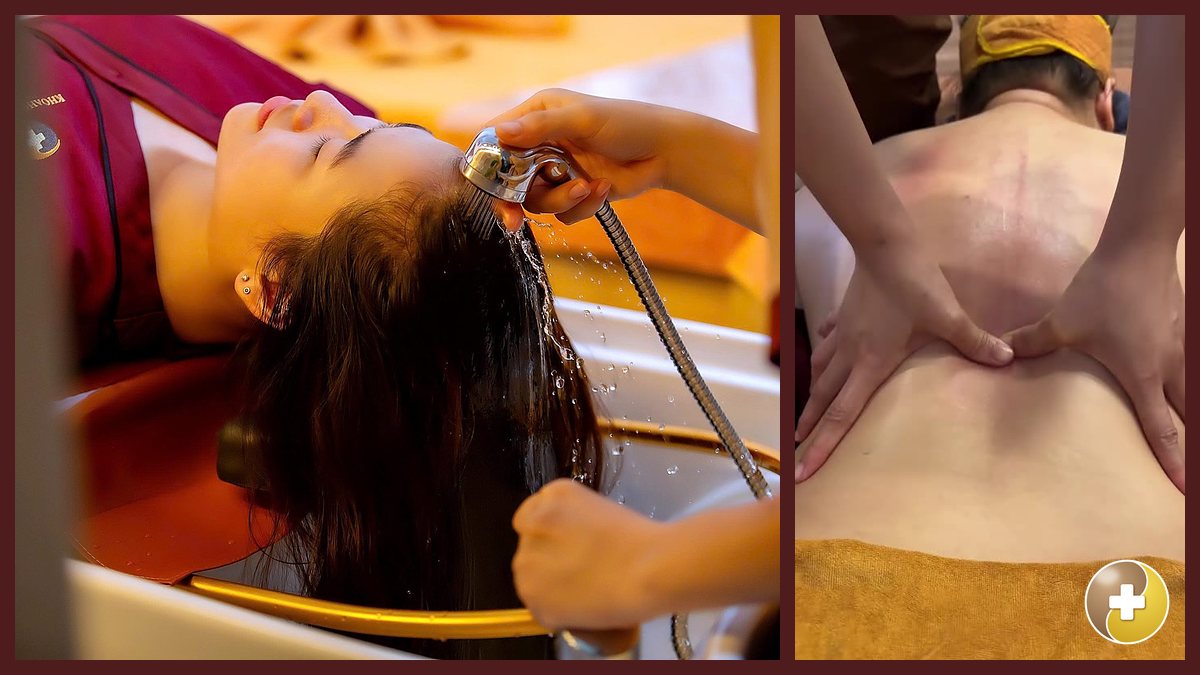
Quick answer: Midlife insomnia (around 40–55) usually comes from work pressure, family worries, late client dinners and night bathroom trips. Tong Gia Acupoint Wellness in District 12 and Vinhomes Grand Park, Ho Chi Minh City, reads your spine by hand, then uses muscle release and acupressure to help you rebalance.
Want Lương Y Tống Văn Huynh’s team to read your spine and posture in person?
What is midlife insomnia, and who gets it?
In Western terms, insomnia is not only lying awake all night. It covers four patterns: taking a very long time to fall asleep; falling asleep but waking in the night and not getting back; waking far too early, around 3 or 4 a.m.; or sleeping enough hours and still waking up drained. Between 40 and 55 the middle two are the most common. You are exhausted at 11 p.m., you drift off, and at 2 or 3 a.m. your eyes open and your mind starts running through money, deadlines and family.
Sleep is run by the brain (the central nervous system) together with the autonomic nervous system along the spine, the part that keeps automatic functions going: heartbeat, breathing, digestion, the bladder. Tong Gia’s curriculum notes that heart rate and blood pressure change with emotion through the autonomic nerves. So when your head is still busy, your heart keeps pounding and your neck and back stay braced, and the body refuses to switch into rest mode even though you are in bed.
Among expats and Vietnamese clients in Ho Chi Minh City, we hear this most from:
- People squeezed from both sides: children with exams or school runs until 9 p.m., parents back home who need more care, a mortgage or car loan due.
- Managers, founders and regional heads answering messages across time zones at 10 or 11 p.m.
- Anyone with regular client dinners: drinks three or four nights a week, home near midnight, quick to drop off but sleep is broken and thirsty.
- People who get up once or twice a night to urinate and then lie awake for a long time.
- Shift workers and long-distance drivers whose sleep hours change every week.
Men and women both get it. Men often add drinking, night bathroom trips and a tired lower back; women often add family worries and a tight neck. If you are over 60 or travelling a lot, see also our Q&A on acupressure for sleep in Saigon.
Common causes between 40 and 55
- Long-running worry. Tong Gia’s curriculum says heavy worry harms the Spleen and drains Heart blood, bringing palpitations, poor sleep and poor appetite. In midlife you often worry for three generations at once.
- Stress and held-in anger. Long anger leads to Liver qi stagnation: irritable, tense, unable to relax. Liver fire can also stir Heart fire, which means restlessness and trouble sleeping.
- Work posture. Hours at a laptop, in meetings or behind the wheel tighten the neck, shoulders and lower back. At night the muscles still dig in and you keep turning.
- Late eating and drinking. The curriculum is clear: eating late makes the stomach work when the body needs rest, which favours reflux and poor sleep. A long dinner with drinks is late eating plus alcohol.
- Afternoon coffee and phones in bed. Palpitations can come from anxiety, coffee, anaemia, an overactive thyroid or a heart rhythm problem. That 4 p.m. iced coffee can be the heartbeat you hear at midnight.
- Night urination. In Western terms the kidneys make urine all the time; an adult bladder holds about 400–600 ml and you usually feel the urge at 200–300 ml. Drink a lot in the evening and the bladder wakes you. In Eastern terms, weak Kidney qi often goes with frequent and night urination.
- Your “root capital” wearing down. The curriculum teaches that the constitution you are born with is either built up or worn down by daily eating, sleeping and thinking habits. After twenty or thirty years of late nights, the Kidney, the root, starts to show fatigue.
- Bedroom conditions. Heat, air-con blowing straight onto your back, street noise and screen light all make sleep lighter.
Signs that often come with it
Insomnia rarely comes alone. Tong Gia groups the companion signs by organ system, which helps the practitioner decide where to work:
- Heart group (spirit, sleep): palpitations, hearing your heartbeat in bed, many dreams, forgetfulness, startling easily.
- Kidney group: tired lower back and knees, ringing ears, hair loss, waking to urinate. Some people also have hot palms and soles, afternoon flushes, night sweats and a dry mouth; others feel cold, with a cold lower back and pale, frequent urine at night.
- Liver group: irritability, tight neck and shoulders, dry tired eyes, cramps; light sleep and frequent waking.
- Spleen–Stomach group: poor appetite, bloating, heaviness, tired limbs.
These are Eastern wellness patterns used to choose a direction of care, not Western disease names, and one sign alone proves nothing.
When to see a doctor
Please see a doctor at a medical facility first, or alongside wellness care, if you have any of the following:
- Insomnia lasting months that affects work, driving or safety.
- Loud snoring with pauses in breathing noticed by your partner; waking up short of breath.
- Waking because you cannot breathe, needing extra pillows to lie down, swollen ankles, night cough.
- Palpitations with dizziness, fainting or an irregular pulse; Tong Gia’s curriculum says this needs a cardiac check.
- Night urination many times a night for weeks, blood in the urine, very foamy urine, swollen face or legs, fever with flank pain.
- Fatigue, pale skin or weight loss without a clear reason: get checked at a medical facility in parallel, because signs such as anaemia need their cause found.
- Persistent low mood, loss of interest, or dark thoughts.
Call 115 immediately for chest tightness, shortness of breath or cold sweats, even at rest.
This is a wellness service, not medical care. If you are following advice from a medical professional, keep following it and tell your practitioner before the session.
The face-reading view: Y Tướng Học
Y Tướng Học (face reading for wellness) is a tradition of over 2,000 years, organised by Lương Y (master of traditional Vietnamese wellness) Tống Văn Huynh into a way of caring for each person’s constitution. Its core idea: “the signs show outside, the organs lie inside.” For midlife insomnia, three organ systems come up most.
- Heart shows in the complexion and tongue. In Eastern terms the Heart houses the spirit and governs consciousness and sleep. A balanced Heart shows as a rosy face and deep sleep; a strained one as a pale or flushed face, a red tongue tip, trouble sleeping and palpitations. The curriculum stresses that “Heart-type” insomnia does not mean heart disease.
- Kidney shows in the ears, hair, bones and lower back. Thick, rosy ears suggest a sturdy root; thin, dull ears suggest the Kidney needs support and the lower back should be kept warm. A rounded occipital bone at the back of the head is read as a strong Kidney root.
- Liver shows in the eyes, nails and tendons. Dry eyes at night, rope-like neck muscles, and brows that meet between the eyes (someone who keeps things inside) point to a Liver under strain. As the curriculum puts it, a stagnant Liver means shallow sleep and hasty decisions.
- Forehead and back. A forehead with many tangled lines shows pressure loading the forehead, neck and shoulders. Back muscles that feel hard as wood mean pressure has built up for a long time and need deep release.
At Tong Gia face reading is observation for wellness only: no fortune telling, no judging character, no naming diseases. Read more in our Eastern face-reading Q&A.
Spine and nerve-reflex areas involved
According to the curriculum, the neck (C1–C7) serves the head, face, neck and arms; the thoracic spine (D1–D12) circulation, breathing and digestion; the lumbar spine (L1–L5) digestion, kidneys, urinary and reproductive function and legs; the sacrum the lower pelvis. Long-term insomnia sits in the nervous-system group (C1–C7, D1–D3 and the sacral area), while the kidneys sit in the internal-organ group (D1–D12, L1–L3). The table shows links used to choose where to work, not conclusions.
| Spine area | Nerve / function | Common signs at 40–55 | Related organ (Eastern view) |
|---|---|---|---|
| Neck C1–C7 | Head, face, neck, arms | Stiff neck, tight head, mind won’t switch off | Liver (tendons), Heart (spirit) |
| Upper back D1–D3 | Circulation, breathing | Shallow breathing, heavy chest when worried, sighing | Heart, Lung |
| Mid-back D4–D5 | Circulation; Quyết Âm Du (below D4) and Tâm Du (below D5) | Hearing the heartbeat in bed, many dreams | Heart |
| Lower back L1–L3 | Kidneys, urinary function; Thận Du, Chí Thất, Mệnh Môn around L2 | Night urination, aching or cold lower back | Kidney |
| Sacrum S1–S5 | Excretion, lower pelvis | Heavy hips after long sitting | Kidney, Bladder |
The curriculum describes the Heart–Kidney pair as “water and fire supporting each other”: Heart fire descends to warm the Kidney, Kidney water rises to calm the Heart. When the pair falls out of step (Tâm Thận bất giao) you see poor sleep, palpitations and tired back and knees. That is why Tong Gia works the mid-back and lower back, not only the head. For back-focused sessions see our back massage Q&A.
The Tong Gia method: spinal nerve-reflex balancing massage
Practitioners at Tong Gia Acupoint Wellness (Huyệt Đạo Tống Gia) follow the spinal nerve-reflex balancing method developed by the founder, Lương Y Tống Văn Huynh, who has more than 13 years in Vietnamese Eastern wellness. It is a Vietnamese traditional approach with “three no’s”: no ingested or injected chemicals, no needles, no rough force. A session has five steps:
- Observe and ask: complexion, eye circles, ears, shoulders; bedtime, waking time, bathroom trips, drinking nights, coffee, pregnancy.
- Read the spine by hand: skin temperature, muscle padding, vertebral shape and sensation, comparing left and right. Warmer, “excited” zones are the focus; cooler zones are not worked directly.
- Muscle release: neck, shoulders, shoulder blades, then down both sides of the spine. For tired, poor sleepers the curriculum uses a gentle vibration technique, building through 5 pressure levels.
- Acupressure on the right points: Quyết Âm Du and Tâm Du in the mid-back; warming Thận Du, Chí Thất and Mệnh Môn in the lower back; Thần Môn at the wrist, Thái Xung on the foot, Thái Khê at the inner ankle, Dũng Tuyền on the sole (to “draw fire down” for easier sleep); finishing at Bách Hội on the crown. Work stops when the skin at the key point turns from dry to slightly moist.
- Home routine: a few simple things to do before bed.
What a session looks like. A Kidney session for a midlife guest who sleeps badly usually starts with warm water and a few minutes of talk about sleep and bathroom trips. The practitioner looks at your face and ears, then asks you to lie face down and reads from the neck to the lower back. In people who worry a lot the neck and shoulder blades are often hard and the mid-back warmer; in people who wake to urinate, the lower back often feels cool and soft. Many guests fall asleep while their soles are being worked.
| Service | Duration | Price | Good for |
|---|---|---|---|
| Kidney wellness session | 75 min | 750,000 VND (about 29 USD) | Night urination, cold or tired lower back |
| Heart wellness session | 75 min | 750,000 VND (about 29 USD) | Racing mind, hearing your heartbeat, many dreams |
| Neck and shoulder care | 60 min | 550,000 VND (about 21 USD); first visit 399,000 VND (about 15 USD) | Stiff neck, shoulder digging in when lying on your side |
More on the neck option in our neck and shoulder massage Q&A, and all prices on the price list or in our price Q&A.
How it feels. Tight spots feel a little sore at first, then a “good ache”, then warm; breathing slows and many people doze. Afterwards the shoulders feel lighter and the lower back warm. Some guests fall asleep more easily that night; others need a few sessions plus habit changes. Tong Gia makes no promise of instant sleep; the aim is to help the body rebalance and let sleep come more easily.
Want Lương Y Tống Văn Huynh’s team to read your spine and posture in person?
Self-care at home
- Foot soak and sole rub: warm water at about 38–42°C for 15–20 minutes before bed, then rub each sole for 3–5 minutes. People with diabetes should check the water temperature carefully.
- Lower-back rub: rub your palms until warm, place them on both sides of the lower back and rub up and down 50–100 times. Press Thái Khê, the hollow between the inner ankle bone and the Achilles tendon, 1–2 minutes each side.
- Bed before 11 p.m., notifications off, tomorrow’s tasks written on paper.
- Drink early: enough water in the day, less after dinner; fewer drinking nights on weekdays; coffee in the morning only.
- Gentle movement: about 30 minutes of walking daily, or the Ba Duan Jin move of bending and sliding both hands down the back to the legs, slowly 6–8 times; go gently with spine problems or high blood pressure.
Book a session
Tong Gia has two branches in Ho Chi Minh City, open every day:
- District 12: 225 Dương Thị Mười, Phường Tân Chánh Hiệp (Tan Chanh Hiep Ward, District 12). Open 8:00–19:00 daily (4.9★, 235 Google Maps reviews).
- Vinhomes Grand Park, District 9: Căn T16-21 khu Manhattan, Phường Long Bình, TP. Thủ Đức (unit T16-21, The Manhattan zone, Long Binh Ward, Thu Duc City). Open 9:00–20:00 daily (5.0★, 208 reviews).
An early-evening slot works well for poor sleepers, so you can go straight home to rest. Call, Zalo or WhatsApp +84 888 264 559, or book online. Let us know about night urination, back pain or any medical advice you are following.
Visit us
- Đông Y Huyệt Đạo Tống Gia Quận 12 (District 12)
225 Dương Thị Mười, Phường Tân Chánh Hiệp, Quận 12, HCMC · 8:00–19:00 daily · 0888 264 559 · Directions on Google Maps - Đông Y Huyệt Đạo Tống Gia Quận 9 (Vinhomes Grand Park, District 9)
Căn T16-21 khu Manhattan, Vinhomes Grand Park, Phường Long Bình, TP. Thủ Đức, HCMC · 9:00–20:00 daily · 0888 264 559 · Directions on Google Maps
Want Lương Y Tống Văn Huynh’s team to read your spine and posture in person?
FAQ
Is midlife insomnia dangerous? Most midlife insomnia comes from stress, late meals, drinking and night urination, so it is usually not alarming, but over time it drains energy and focus. If it comes with loud snoring and breathing pauses, palpitations with fainting, many night bathroom trips or long low mood, please get checked at a medical facility first.
Why do I keep waking at 3 a.m. in my 40s? Common reasons are needing the bathroom, thirst after evening drinks, or a mind still busy with work. In Eastern wellness terms, worry makes Liver qi stagnate and the Heart restless, so sleep is shallow and easily broken. Waking short of breath needs a medical check.
What is Heart–Kidney imbalance insomnia (Tâm Thận bất giao)? In Tong Gia’s curriculum, Heart fire should descend to warm the Kidney and Kidney water rise to calm the Heart. When this pair falls out of step you see poor sleep, palpitations and tired back and knees. It is an Eastern wellness concept for choosing care, not a Western disease name.
I wake up to pee every night. What can I do? Drink enough during the day and less after dinner, cut evening alcohol, soak your feet and rub your lower back before bed. Waking 0–1 times is common; twice or more for weeks, difficulty passing urine or blood in the urine should be checked at a medical facility.
Which acupressure points help with sleep? Tong Gia often uses Thần Môn at the wrist crease, Dũng Tuyền on the sole, Thái Khê at the inner ankle and Thái Xung on top of the foot. At home, rub each sole 3–5 minutes and press Thái Khê 1–2 minutes per side with light pressure.
Can massage help a 50-year-old sleep better, and how soon? Massage and acupressure help the neck and back let go and support the body’s shift into rest. Some guests sleep more easily that night; others need several sessions plus habit changes. Tong Gia gives no fixed number; the Kidney session is 75 minutes for 750,000 VND (about 29 USD).
Author: Lương Y Tống Văn Huynh – founder of Huyệt Đạo Tống Gia, a master of traditional Vietnamese wellness with over 13 years in Eastern wellness care, Y Tướng Học (face reading) and spinal nerve-reflex balancing massage.
Updated: 2026-11-15
Related guides
- Insomnia in women: why sleep breaks before periods, after birth and in perimenopause, and how gentle acupressure care works in Ho Chi Minh City
- Midlife insomnia (ages 40–55): why your mind races in bed, and how Tong Gia works with it in Ho Chi Minh City
This is a wellness service, not medical care.