
Numb hands from neck and shoulder pain: the path from your neck to your fingers
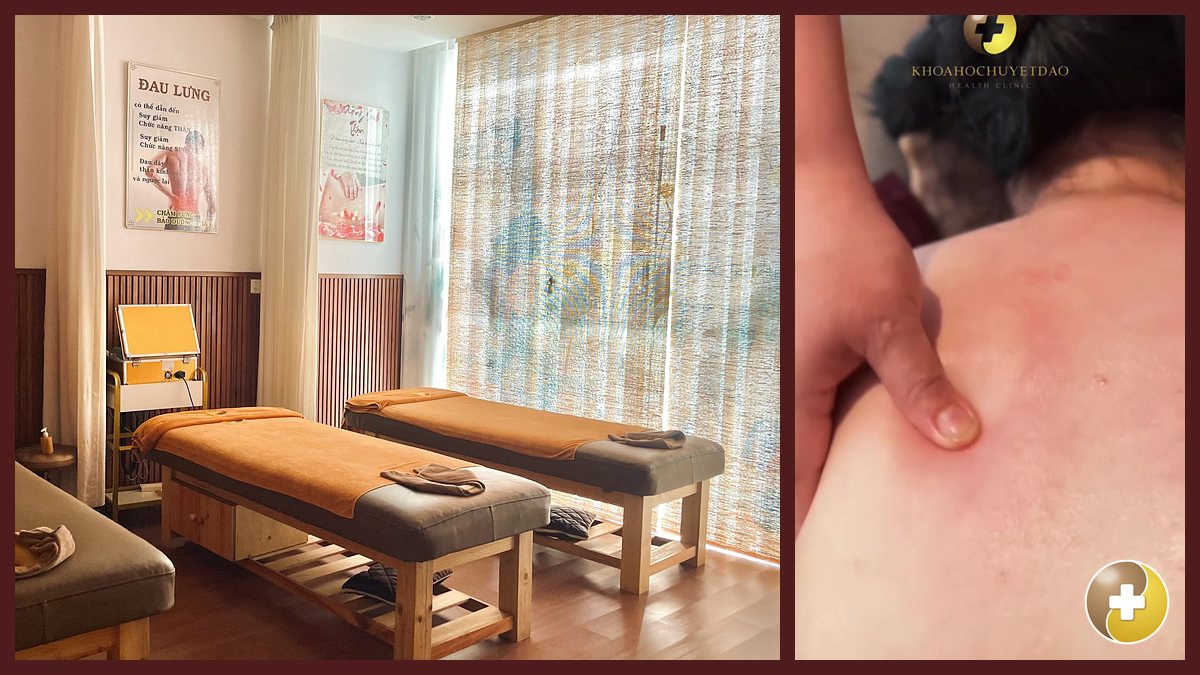
Quick answer: Numb hands that come with neck and shoulder pain usually mean tight neck muscles are irritating the nerve roots from C5 to D1, so tingling travels down the arm and gets worse with long screen time. Sudden weakness or a drooping face needs emergency care. Tong Gia Acupoint Wellness in Ho Chi Minh City reads the neck by hand before releasing it.
Want Lương Y Tống Văn Huynh’s team to read your spine and posture in person?
What does it mean when neck pain makes your hands numb?
Many people living in Ho Chi Minh City describe the same pattern: a stiff neck and heavy shoulders for a week or two, then pins and needles in the fingers, a hand that goes dead while scrolling on the phone, or waking up and shaking the hand before the tingling fades. The obvious question is why a problem in the neck shows up in the hand. The answer is the route of the nerves. Feeling and movement in the whole arm come from nerve roots that leave the lower neck and upper back, roughly from C5 to D1. These roots join into the brachial plexus, pass between the scalene muscles at the side of the neck, run under the collarbone, through the armpit, and then branch down the arm to the fingertips.
In Western medical terms, numb hands from neck and shoulder pain is a symptom, not a disease. It means a nerve is being irritated or squeezed somewhere along that route. Three places are common. The first is the cervical spine itself: a bulging disc, a bone spur from wear, or a narrowed opening can press on a root as it exits. The second is the muscles of the neck and shoulder girdle: scalenes and the small chest muscle (pectoralis minor) that stay tight for months can squeeze the nerve bundle and the blood vessels going to the arm. The third is trigger points in the trapezius, levator scapulae and supraspinatus, small knots that can send heaviness and tingling down the arm even when no nerve is actually compressed.
We see this pattern in office workers with 8 to 10 hours at a laptop, ride-hailing drivers, tailors and nail technicians who bend their heads all day, people who sleep on a high pillow or in a hammock, and adults past 40 whose neck discs are starting to change. For a broader overview of every common reason hands go numb, read numb hands: common causes.
Neck-driven numbness or wrist-driven numbness?
Numbness that starts in the neck usually comes with a stiff neck or heavy shoulder, follows a strip along the arm rather than staying in the hand, and gets worse when you bend the neck for long, look up, tilt the head or carry a heavy bag. Some people find it eases when they rest the hand on top of the head. Carpal tunnel numbness, by contrast, sits in the thumb, index and middle fingers, is worse at night, improves when you shake the hand, and rarely comes with neck pain. Elbow-driven numbness affects the ring and little fingers and builds when the elbow stays bent, for example holding a phone to your ear. Many people have both: a tight neck makes the nerve more sensitive, and then a bent wrist is enough to trigger tingling. See numb hands when holding a phone and numb hands after waking up.
Common causes in daily life
- Head forward at the screen: each centimetre the head moves forward makes the back-of-neck muscles and trapezius work much harder. Bracing all day shortens the scalenes and narrows the space the nerves pass through.
- Long phone use: scrolling while lying on one side or texting with the head bent compresses the back of C5–C7.
- Motorbike commuting: arms forward, shoulders raised, constant vibration on Highway 1A or Hanoi Highway; a tight grip on the throttle adds forearm tension.
- Pillow and sleeping habits: a pillow that is too high, sleeping in a hammock, or sleeping on your arm keeps the neck bent or tilted for hours.
- Carrying on one side: a heavy shoulder bag, a baby on one arm, a laptop backpack on one strap pulls the shoulder down and stretches the nerve bundle.
- Air-conditioning on the neck: cold makes muscles contract; people sitting under a vent often get a stiff neck and cold hands together.
- Long-term stress: shoulders creep up, the jaw clenches. The Tong Gia curriculum notes that lasting mental pressure tightens the occipital-frontal muscles and the levator scapulae, causing chronic neck ache that spreads to the head.
- Age-related neck changes: from around 40, discs lose water and spurs may form; combined with weak, tight neck muscles, roots are irritated more easily.
Most cases sit in the muscle-and-posture group, which hands-on care and better habits help a lot. Disc and bone causes need a medical check first.
Signs worth noting
- Which fingers: thumb and outer forearm often point to C5–C6; the middle finger to C7; little and ring fingers and the inner arm to C8–D1 or the nerve at the elbow.
- One side or both: one side usually relates to posture or one-sided muscle tightness; both sides at once deserves more attention.
- Type of pain: a dull heavy shoulder, or an electric shock down the arm when turning the head.
- When it builds: after work, while riding, on waking, when coughing or sneezing.
- Weakness: dropping things, trouble buttoning a shirt or using chopsticks.
- Cold or pale hand when the arm is raised, which suggests blood vessels are also squeezed near the collarbone.
- Headache, dizziness, tired eyes, common when the upper neck C1–C3 is also tight.
When to see a doctor
Please see a doctor at a medical facility first, and skip neck massage for now, if you have:
- Sudden numbness or weakness in one arm with a drooping face, slurred speech, blurred vision or loss of balance: this may be a stroke, call 115 immediately.
- Left arm numbness or left shoulder pain with chest tightness, shortness of breath or cold sweat: call 115 immediately.
- Weakness that keeps getting worse, wasting of the hand muscles, constantly dropping things.
- Numbness after an accident, a fall or a blow to the neck; never let anyone crack your neck.
- Numbness in both hands, or in hands and legs, unsteady walking, bladder changes: the spinal cord in the neck may be involved.
- Neck pain with fever, a very stiff neck or a severe headache unlike any before.
- Numbness with diabetes, unexplained weight loss, pale skin or ongoing fatigue (possible anaemia or low B12): get checked at a medical facility in parallel.
- Numbness lasting more than two weeks despite rest and better posture, or pain at night that rest does not ease.
This is a wellness service, not medical care. If you already have a scan showing a neck disc problem, keep following the advice you have been given and bring the report with you.
The Y Tướng Học view: Liver, Gallbladder, Spleen and the face of a stiff neck
Eastern wellness sees numb hands as qi and blood not reaching the fingertips, like a stream blocked upstream. With neck-driven numbness, the blockage sits in the neck and shoulders. According to the Tong Gia curriculum, the Liver governs the sinews and stores blood; when the Liver channel is out of balance there is muscle tension and cramping, and Liver qi held back by long stress makes the neck and shoulders brace. The Gallbladder channel runs along both sides of the head, neck and shoulders, and the curriculum lists easing head and neck-shoulder pain among its roles. The Spleen governs the flesh and the four limbs; when it is weak the arms feel tired and the neck muscles lack the strength to hold the head.
The core idea of Y Tướng Học (face reading for wellness) is that "the signs show outside, the organs lie inside". Before touching the neck, a Tong Gia practitioner looks at:
- Shoulder muscle texture: firm but wooden muscle points to held-back Liver qi and deep spasm in the trapezius; soft, cool muscle suggests the Spleen needs support.
- A bony, thin nose bridge: the curriculum links it to Liver–Kidney yin weakness, sinews that stiffen easily, chronic neck ache, early disc dryness and tension headaches.
- A forehead with many broken lines: linked to tightness in the face and neck from mental pressure.
- Nails (the Liver shows in the nails) that are thin and pale, and lips (the Spleen shows in the lips) that look pale.
- Posture: head forward, rounded or uneven shoulders.
These signs help choose where to start and how firm to go. They are not a medical conclusion and are never used to judge anyone.
Spine segments and nerve-reflex zones involved
In the Tong Gia spinal nerve-reflex balancing curriculum, C1–C7 relate to the head, face, neck and arms, and D1–D12 to circulation, breathing and digestion. The spinal cord runs inside the canal and the roots exit through the gaps between vertebrae, which is exactly where the practitioner's fingers search. For the muscle-bone-joint group, which includes neck ache and numb limbs, the curriculum combines C5–C7, L1–L5 and S1–S5; for numb hands from the neck, the focus is C5 to D1 and the upper back.
| Segment | Nerves / function | Typical feeling | Related organ |
|---|---|---|---|
| C1–C3 | Head, face, muscles under the skull | Ache at the base of the skull rising to the head, tired eyes | Liver, Kidney |
| C4–C5 | Shoulder, supraspinatus, outer upper arm | Heavy shoulder, hard to raise the arm | Liver (sinews); Gallbladder channel |
| C6 | Outer forearm, thumb, index finger | Tingling thumb and index finger | Liver, Spleen |
| C7 | Middle finger, extensor muscles | Tingling middle finger, stiff neck when looking up | Liver, Kidney |
| C8–D1 | Inner arm, ring and little fingers, small hand muscles | Tingling little finger, weaker grip | Held-back Liver qi, tense trapezius |
| D1–D3 | Upper back between the shoulder blades | Ache between the blades, cold hands, shallow breathing | Lung, Heart |
The table only shows what is "related", to choose areas and pressure. The curriculum also uses "paired work": the key point on the spine together with a matching point along the nerve route, at the side of the neck, above the collarbone, in the armpit, the inner elbow and the forearm.
The Tong Gia method: spinal nerve-reflex balancing massage
The method was built by Lương Y Tống Văn Huynh, a master of traditional Vietnamese wellness and founder of Tong Gia Acupoint Wellness (Huyệt Đạo Tống Gia), over more than 13 years of practice in Eastern wellness, Y Tướng Học and spinal nerve-reflex balancing. No needles, nothing invasive, no rough force, and no neck cracking. A session for numb hands from the neck:
- Questions and screening: which fingers, which side, how long, any weakness, falls, scans or pregnancy. Warning signs mean no session and advice to get checked.
- Observation: head position, shoulder height, complexion, nails, lips and shoulder muscle texture.
- Reading the spine by hand: skin temperature, the muscle layer, vertebral shape and your feedback from C1 to D3, comparing left and right. Only "excited" zones (warmer, tighter, more tender) are worked.
- Releasing the neck and shoulders: trapezius, levator scapulae, the inner edge of the shoulder blade, and very gently the scalenes and front of the shoulder where the nerve bundle runs; pressure rises through 5 levels with your feedback.
- Following the arm: armpit, inner arm, elbow, forearm and wrist on the numb side.
- Acupressure: Fengchi (GB20, 风池) at the base of the skull, Jianjing (GB21, 肩井) on the shoulder, Quchi (LI11, 曲池) at the elbow, Lieque (LU7, 列缺) at the wrist, which the curriculum links to a stiff neck, and Hegu (LI4, 合谷), never used in pregnancy.
- Knowing when to stop: work ends when the skin at the key point turns from dry to slightly moist.
- Self-care advice for your screen, pillow and phone habits.
Suitable services (see prices): neck and shoulder care, 60 min 550,000 VND (about 21 USD), first visit 399,000 VND (about 15 USD), 90 min 750,000 VND (about 29 USD); extra 30 minutes on one area such as the arm and hand, 199,000 VND (about 8 USD); cold-releasing cupping, 30 min, 85,000 VND (about 3 USD), not for people who bruise easily.
A typical session: a software developer in his thirties working near Quang Trung Software Park came to the District 12 branch after work. His neck had been stiff for two months, and for a few weeks his right thumb and index finger tingled during late coding sessions. No fall, no weakness, already checked and told to fix his posture. The practitioner saw his head forward, the right shoulder raised and the right trapezius hard as wood. Reading the spine, C5–C6 on the right felt warmer, the muscle layer thick, and the right scalene tight like a cord; pressing it sent tingling to the thumb. The right trapezius and levator were released first, then the side of the neck very lightly, then down the outer arm, with Fengchi, Jianjing, Quchi and Lieque. He felt soreness at first, then warmth spreading to the elbow; by the end turning his head was easier and the thumb felt lighter. He was advised to raise his screen and stand up every 45 minutes.
What guests feel: tight spots feel sore but pleasant, what the curriculum calls "a wave of sensation". On the right point many feel a brief tingle or warmth run down the arm and fade. Afterwards most say the neck turns more easily and the hand feels warmer; mild muscle tiredness the next day is normal. Long-standing numbness usually needs a few sessions 5–7 days apart. Tong Gia supports and helps rebalance; it does not promise the numbness will go after one visit. More on neck care in neck and shoulder massage in Ho Chi Minh City, questions and answers.
Want Lương Y Tống Văn Huynh’s team to read your spine and posture in person?
Self-care at home and prevention
- Chin tucks: sit tall and gently slide the chin back, hold 5 seconds, 10 times, a few rounds a day.
- Screen at eye level, phone at chest level: use a laptop stand and a separate keyboard.
- Move every 45–60 minutes: 10 backward shoulder rolls, open the chest; riders should stop and relax both arms every hour.
- The right pillow: low when lying on your back, shoulder-height when on your side; avoid sleeping on your arm.
- Keep the neck warm: stay out of the air-conditioning stream; a warm compress on the neck for 10–15 minutes in the evening.
- Gentle side-neck stretch: let the numb arm hang and tilt the head slowly to the other side for 15–20 seconds, 3 times; stop if tingling increases.
Booking
- District 12: 225 Dương Thị Mười, Phường Tân Chánh Hiệp (Tan Chanh Hiep Ward, District 12). Open 8:00–19:00 daily.
- District 9 – Vinhomes Grand Park: Căn T16-21 khu Manhattan, Phường Long Bình, TP. Thủ Đức (unit T16-21, Manhattan zone, Long Binh Ward, Thu Duc City). Open 9:00–20:00 daily.
Call, Zalo or WhatsApp +84 888 264 559, or book online. Tell us which fingers are numb, on which side, for how long, and whether you have had a scan. If you are visiting Ho Chi Minh City, this is a chance to try a Vietnamese traditional wellness method built by Lương Y Tống Văn Huynh. A guest's account is in a neck and shoulder massage in Saigon.
Visit us
- Đông Y Huyệt Đạo Tống Gia Quận 12 (District 12)
225 Dương Thị Mười, Phường Tân Chánh Hiệp, Quận 12, HCMC · 8:00–19:00 daily · 0888 264 559 · Directions on Google Maps - Đông Y Huyệt Đạo Tống Gia Quận 9 (Vinhomes Grand Park, District 9)
Căn T16-21 khu Manhattan, Vinhomes Grand Park, Phường Long Bình, TP. Thủ Đức, HCMC · 9:00–20:00 daily · 0888 264 559 · Directions on Google Maps
Want Lương Y Tống Văn Huynh’s team to read your spine and posture in person?
FAQ
Is numbness in the hands from neck and shoulder pain dangerous? Usually it comes from tight neck and shoulder muscles and posture, and responds well to early care. Get emergency help for sudden one-sided weakness, a drooping face, slurred speech, chest pain, numbness in hands and legs, or numbness after a fall. Tong Gia is a wellness service, not medical care.
My right neck and shoulder hurt and my right hand tingles. Why? The most common pattern is a tight right trapezius and scalene from mouse use, riding or sleeping on one side, irritating the C5–C7 roots on that side. A bulging disc or bone spur can also cause one-sided tingling, so numbness lasting over two weeks should be checked.
How can I tell if numbness comes from my neck or my wrist? Neck-driven numbness comes with a stiff neck, follows a strip down the arm and builds when you bend or tilt your head. Wrist-driven numbness sits in the thumb, index and middle fingers, is worse at night and eases when you shake the hand. Many people have both.
Can I get a massage if a neck nerve is pinched? Yes, if the compression is known to be mild and there are no warning signs. The practitioner releases the neck and shoulders with light to moderate pressure and never cracks the neck. Severe compression, weakness or muscle wasting need medical guidance first.
How many sessions until the tingling eases? Many guests feel the neck turning more easily and the hand warmer after the first session, but long-standing numbness usually needs a few sessions 5–7 days apart, plus better posture and a better pillow.
Does riding a motorbike cause numb hands? It can. Arms forward, raised shoulders and hours of vibration keep the trapezius and scalenes tense, and a tight grip adds forearm strain. Stop every hour, drop the shoulders, and loosen your gloves.
Author: Lương Y Tống Văn Huynh – founder of Huyệt Đạo Tống Gia, a master of traditional Vietnamese wellness with over 13 years in Eastern wellness care, Y Tướng Học (face reading) and spinal nerve-reflex balancing massage.
Updated: 2026-11-16
Related guides
- Numb hands from neck and shoulder pain: the path from your neck to your fingers
- Swollen legs after a long flight to Saigon: why it happens, when to get checked, how to care for them
- Numb feet in Ho Chi Minh City: six common causes, the warning signs, and how Tong Gia can help
- Numb hands in Ho Chi Minh City: six common causes, the warning signs, and how Tong Gia can help
This is a wellness service, not medical care.