
Swollen legs after a long flight to Saigon: why it happens, when to get checked, how to care for them
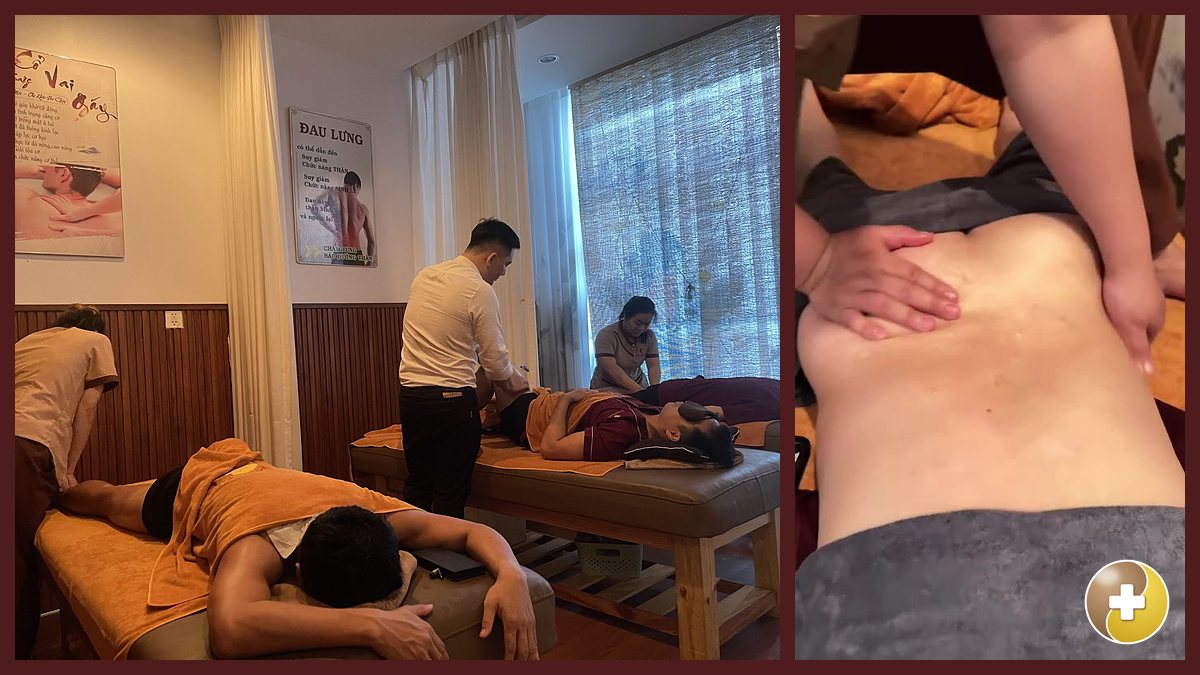
Quick answer: Swollen legs after a long flight usually come from hours of sitting with bent knees, when idle calf muscles let fluid pool in the lower legs; mild swelling in both ankles often settles within a day or two. One swollen, painful calf or sudden breathlessness needs urgent care. Tong Gia Acupoint Wellness in District 12 and Thu Duc, Ho Chi Minh City, offers gentle leg care.
Want Lương Y Tống Văn Huynh’s team to read your spine and posture in person?
Swollen legs after a long flight: what is going on, and who gets it
You land at Tan Son Nhat after 15 to 20 hours from Los Angeles, Sydney or Paris, often with a change of planes in between. The shoes that fitted on departure now pinch, your socks leave deep rings around the ankles, and your calves feel like they are full of sand. That is swelling after a long flight, and for overseas Vietnamese coming home for Tết, and for anyone flying long-haul into Saigon, it is one of the most common complaints of the first few days.
In Western anatomy terms, most of it is dependent oedema: fluid seeping out of small blood vessels into the tissue under the skin of the lowest part of the body. Blood in the legs returns to the heart largely thanks to the "calf muscle pump". Every step squeezes the deep veins between the calf muscles and pushes blood upwards, while one-way valves stop it falling back. Sitting still in an aircraft seat switches that pump off. At the same time your bent knees and hips put a kink in the veins behind the knee and in the groin. Blood moves slowly, pressure in the small vessels of the lower leg rises, and fluid leaks out. Press a finger into the ankle and it leaves a dent.
The reassuring part: this kind of swelling usually affects both legs, is mild, and settles once you walk around normally again. The part you must not ignore: swelling in one leg with calf pain, warmth or redness can be a deep vein thrombosis (DVT), a blood clot in a deep vein, and needs to be checked straight away. That difference is the core of this article.
People who tend to notice it:
- Older travellers in narrow economy seats who do not like asking the neighbour to stand up.
- Anyone in a window seat who sleeps for hours with the legs folded under the seat in front.
- Pregnant women, new mothers, people carrying extra weight or with varicose veins.
- Travellers who drink wine, beer or coffee on board instead of water.
This article is part of our series on body care after long-haul flights. For the overview of the neck, back and lower back after a full day in a plane seat, start with our main guide, spine care after a long-haul flight. Here we focus on the legs.
Common causes: bent knees for hours, dry cabin air, salty food
Leg swelling after flying is rarely down to one thing. Usually several small factors add up on the same journey:
- Sitting still with bent knees. The main cause: no calf pump, kinked veins behind the knee and in the groin.
- Gravity. For many hours the feet sit lower than the heart, so fluid collects in the feet and ankles.
- Dry cabin air. You lose water through breath and skin without feeling thirsty, and the body regulates fluid less evenly.
- Alcohol and coffee. Alcohol widens small vessels and makes you sleep deeply without moving; coffee sends you to the toilet and leaves you drier.
- Salty meals and snacks. Salt holds water in the tissue. At Tết, add braised pork, Vietnamese sausage, pickled vegetables and candied ginger.
- Tight clothing. Jeans that dig into the groin, socks with tight elastic, stiff shoes.
- The climate switch. From a cold northern winter to humid Saigon heat: in warm weather, vessels in the skin and legs widen to release heat, so the legs swell more easily for the first days.
- Jet lag. A scrambled body clock affects eating, sleep and even urination; many people sit up awake the first night, which does not help. Our guide to jet lag and sleep after flying to Vietnam covers resetting the clock.
Some factors raise the risk of a clot on a long flight: a previous DVT, recent surgery or a leg injury or cast, pregnancy or the weeks after giving birth, the contraceptive pill or menopause hormones, cancer, obesity, older age, severe varicose veins and heart disease. If any of these apply, ask a health professional before you fly about sensible prevention, for example whether properly fitted compression stockings suit you.
Signs worth noting
Use this table to look at your own legs, or your parents' legs, after the flight:
| Feature | Swelling from sitting (common) | Think of a deep vein clot |
|---|---|---|
| Where | Both legs, mostly feet and ankles | Usually one leg; may spread up the calf or thigh |
| Feeling | Tight, heavy, tired; shoes feel small; no sharp pain | Pain or tenderness in the calf, worse when walking or pulling the toes up |
| Skin | Normal colour; a finger dent fills back slowly | Warm, red or dusky purple; veins look more visible |
| Course | Better with walking and raising the legs; often settles in 1–2 days | Does not ease when raised, gets worse; may appear days or weeks after the flight |
| What to do | Walk, drink water, raise the legs, gentle massage is fine | Get checked now; no leg massage, no squeezing the calf |
Other things that often come with it: numb or tingling feet from sitting folded (see numb feet from sitting), tight calves or night cramps after a first day of walking the markets (see calf tightness after walking), puffy eyelids in the morning, passing little urine on the plane and a lot at night once home, and a heavy, sluggish feeling in the lower back.
When to see a doctor
If swollen legs after a long flight come with any of the following, see a doctor at a medical facility rather than relying on massage:
- Swelling in one leg, clearly bigger than the other, especially if it spreads up the calf or thigh.
- Pain or tenderness in the calf or inner thigh, worse when walking or when pulling the toes towards you.
- Warm, red or purple skin over the swelling, with more visible veins. These suggest a deep vein clot: get checked now, no leg massage.
- Sudden shortness of breath, chest pain (sharper on a deep breath), coughing blood, a racing heart, dizziness or fainting in the days after a flight: call 115 (Vietnam's emergency number) immediately. A clot from the leg may have travelled to the lungs.
- Chest tightness, breathlessness, cold sweats: call 115 immediately, no massage.
- Swelling in both legs that has not eased after 2–3 days of walking and raising the legs, or that spreads to the thighs, belly or face.
- Rapid weight gain, breathlessness lying flat, needing extra pillows to sleep, passing very little urine: this can involve the heart, kidneys or liver and needs checking.
- Known heart, kidney or liver disease, pregnancy, a previous clot, or blood thinners: get checked first, and do not massage swollen legs yourself.
- A wound, cracked or weeping skin on the leg, or a fever.
Clot signs can appear late, days to weeks after landing. At Tong Gia, practitioners ask about these signs before touching your legs; if any apply, they will not start and will ask you to get checked. This is a wellness service, not medical care.
The Y Tướng Học view: Spleen, Kidney and how fluid shows on the face
In the Tong Gia course material, the Vietnamese Eastern wellness tradition links the body's handling of water to three organ systems: the Spleen governs the transformation of fluids, the Kidney governs water (working with the Lung and Spleen), and the Lung spreads fluids through the body. When the Spleen is weak, the material lists poor appetite, bloating, loose stools, swelling and heaviness; when the Kidney's control of water is low, it lists swelling, too little or too much urine and night urination. The Spleen also governs the muscles and limbs, so heavy, tired legs are read through it; tight calves and cramps add the Liver, which governs the sinews. These are functional ideas, not a statement that your kidneys or spleen are diseased.
The guiding phrase of Y Tướng Học (face reading for wellness) is "the signs show outside, the organs lie inside". Lương Y (traditional healer) Tống Văn Huynh organised this knowledge so practitioners read the outside first and know which part of the spine to check. For people prone to swelling, the material notes:
- Puffy, shadowed eyelids: the eyelids belong to the Spleen; puffiness points to weak fluid handling by the Spleen, Stomach and Kidney.
- A swollen tongue with tooth marks along the edges.
- Morning puffiness around the eyes and swollen ankles, both grouped under Kidney signs.
- Soft, dull, puffy ears: the Kidney "opens into the ears".
- A round face with more flesh than bone (the "Viên" type): Kidney and Bladder lead; when Kidney energy is low, fluid is not transformed and swelling follows; the lower back skin often feels cool.
- Soft, cool flesh that keeps a dent: described as "hidden fluid retention", with heavy limbs and a puffy face on waking.
Face signs only guide where the practitioner looks first. They are not a health verdict and are never used to judge anyone.
Spine segments and nerve-reflex zones involved
In the Tong Gia material on spinal nerve-reflex balancing, the spine has 33 vertebrae: 7 cervical, 12 thoracic (D1–D12), 5 lumbar (L1–L5), the sacrum and coccyx. The lumbar spine relates to digestion, kidneys, urinary and reproductive function and the legs. Nerve roots leave between the vertebrae, which is where the practitioner's fingers search.
| Vertebrae | Nerves / function (Western anatomy) | What shows up after a flight | Organ | Outer signs (Y Tướng Học) |
|---|---|---|---|---|
| D11–D12 (Tỳ du BL20, Vị du BL21) | Lower thoracic roots; upper abdomen, digestion, absorption of water and salt | Bloating after salty meals, heaviness, mild swelling | Spleen–Stomach | Puffy eyelids, tooth-marked tongue, thick mid-back muscles |
| L1–L3 (Thận du BL23, Mệnh môn GV4 at L2) | Upper lumbar roots; kidneys sit either side of the spine at about T12–L3; hip flexors | Swollen ankles, little urine on board then night urination, cold tired lower back | Kidney | Morning eye puffiness, dull puffy ears, round face, cool lower back |
| L4–L5 | Roots to the legs; thigh and shin muscles, foot movement | Heavy, tired shins | Kidney and Liver | Uneven hips, one side of the lower back tighter |
| L5–S1 | Roots forming the sciatic nerve; calf and soleus muscles, the venous "pump" | Tight calves, night cramps, numb feet after sitting folded | Liver, Kidney–Bladder | Calves hard and knotted, or soft, cool and dented |
To be clear in Western terms: swelling after a flight is mainly about venous circulation and gravity, not a "misaligned" vertebra. The spine is read because the nerves to the lower back, buttocks, thighs and calves exit there; when those muscles relax, the calf pump works more easily once you start walking again.
The Tong Gia method for heavy, swollen legs after flying
Tong Gia Acupoint Wellness (Huyệt Đạo Tống Gia) is a Vietnamese Eastern wellness method built by its founder, Lương Y (traditional healer) Tống Văn Huynh, from more than 13 years in Eastern wellness, Y Tướng Học and spinal nerve-reflex balancing. The aim is to help the legs and related organ functions rebalance, not to replace a medical check. A session for a recent arrival:
- Questions and safety check: flight length, seat, days since landing; one leg or both, calf pain, warmth, breathlessness; heart or kidney conditions, pregnancy, past clots. Any warning sign and the session stops here.
- Observation: eyelids, tongue, ears, skin tone and posture; a light press at the ankle to see how fast the dent refills; left leg against right.
- Reading the spine by hand from D11 to S1, feeling skin temperature, muscle thickness, vertebral shape and your response.
- Muscle release of the lower back, buttocks, back of the thighs and calves, using only the lighter of the 5 pressure levels (one finger, whole palm) on swollen legs, stroking from foot to knee in the direction veins carry blood to the heart. No hard squeezing of the calf and no deep pressure behind the knee.
- Acupressure: Tỳ du (BL20, 脾俞), Thận du (BL23, 肾俞), Mệnh môn (GV4, 命门) on the back; Âm lăng tuyền (SP9, 阴陵泉), Túc tam lý (ST36, 足三里), Thái khê (KI3, 太溪) and Phục lưu (KI7, 复溜) on the leg; finishing with Dũng tuyền (KI1, 涌泉) on the sole. Tam âm giao (SP6) is never used in pregnancy.
- Self-care coaching for the rest of your stay and the flight back.
Three sessions fit (retail prices, full price list):
- Tired, heavy legs care, 60 min: 500,000 VND (about 19 USD). Lower back, buttocks, thighs, calves and feet; for mild swelling in both legs after the flight or after days of Tết errands.
- Kidney wellness session, 75 min: 750,000 VND (about 29 USD). For swelling with a cold, tired lower back, night urination and morning eye puffiness.
- Full-body care, 120 min: 950,000 VND (about 37 USD). Head, neck, back and legs; for whole-body fatigue and jet lag after 15–20 hours of travel.
What it feels like. Tight spots in the buttocks and calves feel achy in a pleasant way, and the lower back and feet warm up; many people doze off. Guests often say afterwards that their legs feel lighter, shoes feel less tight and they sleep more deeply that night; some need the toilet more in the following hours. Results vary from person to person, and Tong Gia does not promise the swelling will be gone after one session. Prefer feet only? See our foot massage page; for general jet lag sessions, see jet lag massage, and for planning a visit home, Viet Kieu wellness visit Q&A.
Want Lương Y Tống Văn Huynh’s team to read your spine and posture in person?
Self-care on the plane and at home
- Walk the aisle every 1–2 hours. In your seat, circle the ankles and pump the feet up and down 10–20 times, like pressing a pedal. Choose an aisle seat if you can.
- Sip water steadily, go easy on alcohol and coffee; dark urine means drink more. Wear loose trousers and socks without tight elastic.
- Raise your legs above heart level for 15–20 minutes a few times a day after arrival, and walk gently rather than sitting all day.
- Go lighter on salt for the first days of Tết feasting; add vegetables, soup and fruit.
- Warm (not hot) foot soak for 15–20 minutes in the evening, then rub Dũng tuyền on each sole for 3–5 minutes. Skip the soak and massage if one leg is swollen, painful or red. More in herbal foot soak benefits.
How to book
- District 12: 225 Dương Thị Mười, Phường Tân Chánh Hiệp, Quận 12 (Tan Chanh Hiep Ward, District 12). Daily 8:00–19:00.
- Vinhomes Grand Park: Căn T16-21 khu Manhattan, Phường Long Bình, TP. Thủ Đức (Unit T16-21, The Manhattan, Long Binh Ward, Thu Duc City, formerly District 9). Daily 9:00–20:00, handy after an afternoon arrival.
Both branches have real reviews on Google Maps. WhatsApp or Zalo +84 888 264 559 (0888 264 559 in Vietnam), or book online. Message before you fly to hold a slot in the busy days before Tết, and tell us how long your flight was, whether one or both legs are swollen, and any health conditions.
Visit us
- Đông Y Huyệt Đạo Tống Gia Quận 12 (District 12)
225 Dương Thị Mười, Phường Tân Chánh Hiệp, Quận 12, HCMC · 8:00–19:00 daily · 0888 264 559 · Directions on Google Maps - Đông Y Huyệt Đạo Tống Gia Quận 9 (Vinhomes Grand Park, District 9)
Căn T16-21 khu Manhattan, Vinhomes Grand Park, Phường Long Bình, TP. Thủ Đức, HCMC · 9:00–20:00 daily · 0888 264 559 · Directions on Google Maps
Want Lương Y Tống Văn Huynh’s team to read your spine and posture in person?
What guests say on Google Maps
“The Truy Phong Thang herbal foot steam leaves the whole body at ease after a tiring workday.” (translated from a Vietnamese review)
— Linh T., Google Maps review · District 12 branch · 2025 · See on Google Maps
“I do a lot of high-intensity exercise – running, hiking – and my leg muscles are often overloaded… After the session, following a day of overdoing it, my body felt light and comfortable.” (translated from a Vietnamese review)
— Lộc N., Google Maps review · Vinhomes Grand Park branch (District 9) · 10/2026 · See on Google Maps
Quoted from public reviews, shortened where marked (…). Experiences vary from person to person; reviews are not a substitute for seeing a doctor when something feels wrong.
Related guides for your trip
- Night leg cramps in Vietnam's heat: why your calves seize up, how to stretch and how to care for your legs
- Standing long shifts in Macau: lower back pain, tired calves and sore heels on leave in Saigon
- Shopping trip to Saigon left you with tired legs and a sore back: how to recover before you head home
FAQ
Are swollen legs after a long flight dangerous? Usually not: mild swelling in both feet and ankles after hours of sitting tends to settle within a day or two of walking, raising the legs and drinking water. One swollen leg with calf pain, warmth or redness needs checking straight away, and sudden breathlessness or chest pain after a flight means calling 115.
How long does leg swelling last after flying? Swelling from sitting usually eases in about 1–2 days if you walk, raise your legs and cut back on salt. If both legs are still swollen after 2–3 days, the swelling spreads up the legs or to the face, or you gain weight fast or get breathless lying down, get checked at a medical facility.
How can I tell if a swollen calf after a flight is a blood clot? Warning signs are swelling in one leg, pain or tenderness in the calf that worsens when walking, and warm, red or purple skin with more visible veins. They can appear days or even weeks after the flight. If you notice them, get checked straight away and avoid any leg massage.
Can massage help swollen legs after flying? For mild swelling in both legs with no warning signs, gentle strokes from foot to knee plus muscle release of the lower back, buttocks and calves can help the legs feel lighter and sleep come easier. Tong Gia asks safety questions first and will not work on a leg that is swollen on one side or painful.
Which session suits me after landing in Saigon? For heavy legs only, the 60-minute tired legs care at 500,000 VND (about 19 USD). For whole-body fatigue and jet lag, the 120-minute full-body care at 950,000 VND (about 37 USD). For swelling with a cold lower back and night urination, the 75-minute kidney wellness session at 750,000 VND (about 29 USD).
My elderly parents have swollen ankles after flying home for Tết. Can they have a massage? Yes, if the swelling is mild and in both legs, with no calf pain or breathlessness, and their health conditions are stable; tell us about heart, kidney or blood pressure issues and blood thinners. Parents with heart or kidney disease or a past clot should be checked first. Practitioners use light pressure only.
Author: Lương Y Tống Văn Huynh – founder of Huyệt Đạo Tống Gia, a master of traditional Vietnamese wellness with over 13 years in Eastern wellness care, Y Tướng Học (face reading) and spinal nerve-reflex balancing massage.
Updated: 2026-11-15
Related guides
- Swollen legs after a long flight to Saigon: why it happens, when to get checked, how to care for them
- Numb feet in Ho Chi Minh City: six common causes, the warning signs, and how Tong Gia can help
- Numb hands in Ho Chi Minh City: six common causes, the warning signs, and how Tong Gia can help
This is a wellness service, not medical care.