
A stuffy nose that won't go away: six common causes, the warning signs, and how Tong Gia supports easier breathing in Ho Chi Minh City
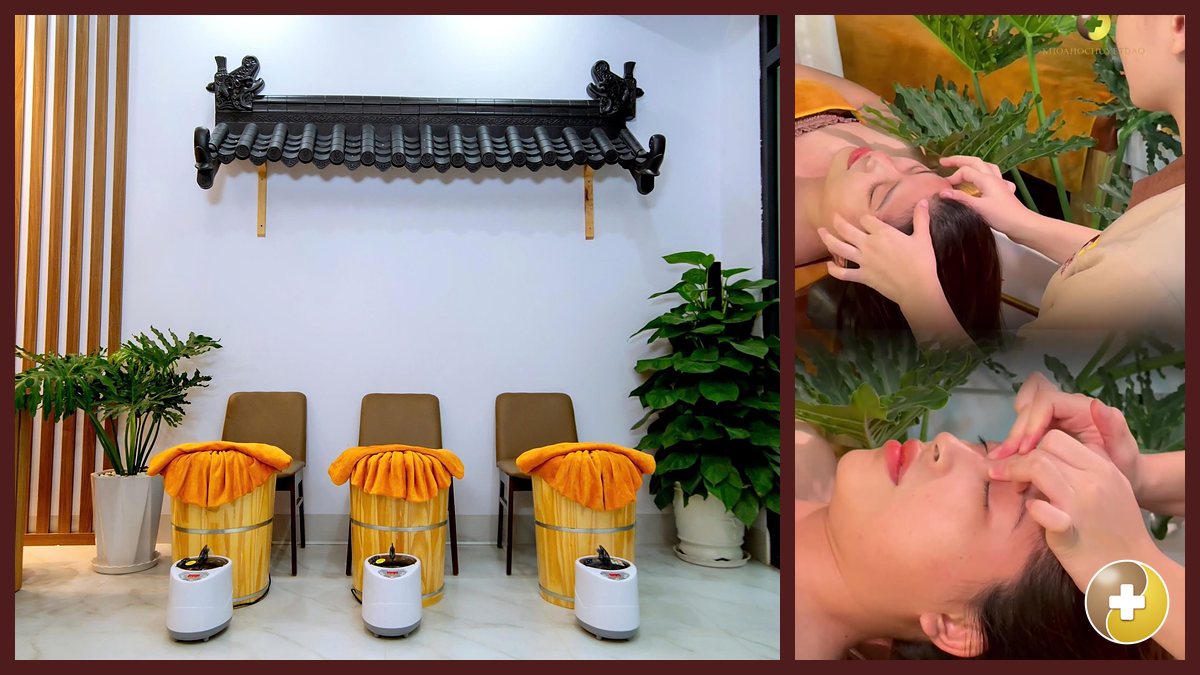
Quick answer: A stuffy nose lasting over 10 days usually comes from allergic rhinitis, a nose sensitive to air-con, long-lasting sinusitis, polyps, a deviated septum or decongestant spray overuse; an ENT check tells which. Tong Gia in District 12 and District 9, Ho Chi Minh City offers hands-on nose and sinus care.
Want Lương Y Tống Văn Huynh’s team to read your spine and posture in person?
A stuffy nose that won't go away: what it is in Western terms, and who gets it
A persistent stuffy nose means the nose stays blocked for weeks, or keeps coming back every few days, instead of clearing after a cold. Congestion from an ordinary cold usually eases within about 7 to 10 days. When it lasts longer, improves and then gets worse again, or goes beyond 12 weeks, Western medicine sees it as a sign that the cause should be looked for. A blocked nose is not just "too much mucus": mostly the lining of the nose and the turbinates swell as blood vessels under the lining widen, narrowing the airway. That is why some people have no runny nose at all and are still completely blocked.
The Tong Gia curriculum explains that the nose is the first stage of the airway: it warms, moistens and filters the air; nasal hairs catch large dust, mucus traps dust and germs, and tiny cilia move the mucus towards the throat. Breathing through the nose warms, moistens and cleans the air better than breathing through the mouth. When the nose stays blocked, people switch to mouth breathing, wake with a dry throat, snore, sleep lightly, feel heavy-headed in the morning and lose some sense of smell and appetite.
Among expats and visitors in Ho Chi Minh City, the people who tell us their nose "has been blocked for months" are often:
- Office workers who sit in air-con all day, step out into the heat and back into the cold room.
- People who ride through traffic fumes and dust without a well-fitting mask.
- People living in humid apartments with dust mites in bedding, curtains, soft toys or pets, and mould in the rainy season.
- People with allergies: sneezing fits in the morning, itchy nose and eyes, clear runny nose.
- People who use a decongestant nasal spray every night for weeks and find the nose blocks up more each time it wears off.
- Pregnant women whose nose stays congested for months because of hormonal changes.
Common causes: six groups
| Group | Typical clues | Often worse when |
|---|---|---|
| Allergic rhinitis | Sneezing fits, itchy nose and eyes, clear runny nose | Mornings, cleaning, near pets, old bedding |
| Non-allergic (vasomotor) rhinitis | Blocking and running with temperature changes, strong smells, smoke | Moving in and out of air-con, cold wind, spicy food |
| Long-lasting sinusitis | Heavy forehead and cheeks, thick yellow-green mucus dripping into the throat, reduced smell | Bending down, after a cold, mornings |
| Nasal polyps, enlarged turbinates | Constant blocking, gradual loss of smell, snoring | Lying on the back, at night |
| Deviated septum | Mainly one side, almost all the time | With a cold or allergy on top |
| Spray overuse, hormonal changes | Short relief after spraying, then worse; congestion in pregnancy | Many days of spray use; mid and late pregnancy |
Allergic and non-allergic rhinitis
Allergic rhinitis is very common in Ho Chi Minh City, where the hot, humid climate suits house dust mites and mould. The body overreacts to harmless things such as dust, pet hair or pollen, so the nasal lining swells, itches and produces more fluid. Others test negative for allergy yet block up every time they enter an air-conditioned room, face a draught, smell perfume or traffic fumes, or eat spicy food. This "sensitive nose" is common among office workers here, especially when the air-con is set very cold and dry.
Long-lasting sinusitis and structural causes
When the sinuses stay inflamed, thick mucus pools and drips down the throat, the forehead and cheeks feel heavy, smell fades and bending down makes the head heavier. Sinusitis lasting over 12 weeks is considered chronic and needs follow-up by an ENT specialist. Structural causes include polyps, soft growths from the lining that slowly dull the sense of smell; swollen turbinates that narrow the airway; and a deviated septum that keeps one side more blocked. These need a nasal examination at a medical facility; massage cannot change structure.
Decongestant spray overuse and other causes
Decongestant sprays open the nose quickly, but using them for many days in a row can make the lining rebound, swelling more as each dose wears off. If you have used one for more than a few days and the nose is getting worse, ask a medical professional how to stop safely. Pregnancy and hormonal changes can also congest the nose, and in young children enlarged adenoids are a common reason for mouth breathing and snoring.
Signs worth noting
- Which side: both, always the same one, or alternating.
- Mucus: clear and thin, thick yellow-green, foul-smelling, blood-streaked; dripping into the throat or not.
- Smell: normal, fading, or gone.
- Companions: sneezing, itchy eyes; heavy forehead or cheeks; headache; blocked ears; snoring or pauses in breathing at night; dry throat in the morning.
- Situations: worse in air-con, while cleaning, in the rainy season, at night, lying down.
- What you use: which spray, for how long, how many times a day.
When to see a doctor
- Congestion lasting over 10 days without improvement, or improving then worsening; recurring for months.
- High fever or severe pain in the forehead, cheeks or around the eyes.
- Red swelling around the eye, blurred or double vision, a bulging eye: go immediately.
- One side blocked and getting worse, repeated nosebleeds, blood-streaked mucus, facial numbness.
- Long-lasting loss of smell, loud snoring with pauses in breathing, a child who mouth-breathes all the time.
- A decongestant spray used for many days with the nose getting worse.
- Tiredness, pale skin or weight loss: get checked in parallel.
Call 115 immediately for severe breathlessness, blue lips, sudden swelling of the face or throat after food or an insect sting, or chest pain with shortness of breath and cold sweat.
This is a wellness service, not medical care. If an ENT specialist is following your rhinitis or sinusitis, keep following that advice; a Tong Gia session is supportive relaxation for easier breathing only.
The Y Tướng Học view: the Lung opens into the nose
Y Tướng Học (face reading for wellness) in the Tong Gia curriculum holds that outer signs reflect the inner organs. In Eastern theory the Lung is not just the lungs but a system covering qi, breathing, fluids, skin and hair, nose and throat, voice and resistance. The Lung opens into the nose: with enough Lung qi the nose is clear, smell is sharp and the voice carries; when it is weak, the nose blocks and the voice turns hoarse. The Lung governs the skin and defensive qi, so weakness shows as frequent colds, sweating easily and dry skin. The curriculum also links the Spleen ("the Spleen produces phlegm, the Lung stores it") and the Kidneys, whose weakness shows as sensitivity to cold and congestion at every change of season.
The practitioner looks at: the area between the brows, which the curriculum links with the Heart and Lung (a narrow, creased area points to stuck Lung qi, sinus trouble, allergic rhinitis, shallow breathing); an upturned nose with visible nostrils and loose nostril wings, described as an "open gate" for cold, linked with allergic rhinitis and low resistance; a long, square, firm face of the Metal type, prone to sinus problems and dry skin, with tightness around D3; dry skin and shallow breathing; and the bridge of the nose, which the curriculum calls "a small image of the spine", so a crooked bridge prompts a careful check of the spine. These are school-based observations, not fortune-telling or a medical conclusion. Read more in Eastern face reading for wellness.
Spine and nerve-reflex areas involved
| Area | Nerves and function | Typical signs | Related organ |
|---|---|---|---|
| C1 to C3 | Upper neck, linked with head and face | Stiff neck, heavy head with long congestion, snoring | Lung opens into the nose; head also linked with Liver and Kidney |
| C4 to C7, below C7 | Neck, shoulders, arms; Định Suyễn beside C7, Đại Chùy below C7 | Tight neck, sensitivity to draughts, catching colds | Lung governs qi |
| D1 to D3 | Breathing; Phế Du beside D3 | Tight upper back, shallow breathing | Lung |
| Face: Ấn Đường, Nghênh Hương | Nasal lining warms, moistens and filters air | Pressure between the brows, blocked nostrils | Large Intestine meridian, paired with the Lung, ends at Nghênh Hương |
| Hand and wrist: Hợp Cốc, Liệt Khuyết | Large Intestine and Lung meridians | Heavy face, stiff neck | Classic pairing for face and head-neck |
The curriculum groups breathing complaints with D1 to D12 and L1 to L3, as support, never a replacement for medical care, and states that acupoints do not act directly on lung tissue. In Western terms, when the neck, shoulders and upper back soften and breathing moves down into the belly, many people feel less tension in the head and face and breathe more easily.
The Tong Gia method
This Vietnamese Eastern wellness method was developed by Lương Y Tống Văn Huynh, a master of traditional Vietnamese wellness and founder of Tong Gia Acupoint Wellness (Huyệt Đạo Tống Gia), with over 13 years in Eastern wellness, Y Tướng Học and spinal nerve-reflex balancing. For long-lasting congestion the session does not only rub around the nose; it works from the neck and upper back to the breath, and only then to the face.
- Screening: how long, one or both sides, type of mucus, ENT checks, sprays in use, pregnancy, asthma. Warning signs mean no session.
- Observation: the area between the brows, the nose bridge and nostrils, skin, breathing pattern, voice, shoulders.
- Reading the spine by hand along C1 to C7 and D1 to D3: skin temperature, muscle layer, vertebra shape, tenderness, left against right.
- Muscle release of the neck, shoulders and upper back so the chest can move freely, building pressure in five levels; the face always stays light.
- Acupressure: Phế Du, Định Suyễn and Đại Chùy on the back; light work at Ấn Đường and Nghênh Hương until warm; Liệt Khuyết and Hợp Cốc on the hands (Hợp Cốc only when pregnancy is ruled out).
- Breathing and home care: a few minutes of belly breathing and simple tips for a less dusty bedroom.
A typical session: the guest is often an office worker blocked on both sides for about three months, sneezing every morning, already seen by an ENT and following that advice, now left with an afternoon blockage and mouth breathing at night. Sitting quietly they breathe through the mouth; the area between the brows is creased and the skin is dry. On the back, the upper neck is tight, the area below C7 feels cooler than around it, and the upper back near D3 is thicker on one side. After release of the neck and upper back, back points, warming at Đại Chùy, very light work around the nose and points on both hands, plus a few minutes of belly breathing, guests usually say the face feels warm and they can breathe deeper through the nose.
Suitable services (see prices):
- Nose and sinus care, 60 min: 350,000 VND (about 13.5 USD).
- Lung wellness care, 90 min: 900,000 VND (about 35 USD), adding the upper back, chest and breathing for people who catch colds easily.
- Herbal steam: 120,000 VND (about 4.6 USD), warm steam that feels soothing for nose and throat.
Guests feel a sore-but-pleasant ache on the neck and upper back and warmth across the face. Afterwards many describe a lighter head, looser shoulders and less mouth breathing at night. Everyone responds differently, and we do not promise the congestion will clear; the aim is to support balance and easier breathing. More reading: acupressure massage in Saigon, Q&A and gua sha and herbal steam Q&A.
Want Lương Y Tống Văn Huynh’s team to read your spine and posture in person?
Self-care at home and prevention
- Saline nasal rinse morning and evening as advised by a medical professional, with clean equipment.
- Less dust in the bedroom: wash sheets, pillowcases and mattress covers in hot water weekly, fewer soft toys and rugs, clean the air-con filter regularly, keep pets off the bed if you are allergic.
- Moderate air-con: around 26 to 27°C, not blowing at your face or neck; pause a moment at the door when moving between hot and cold; wear a mask on the motorbike.
- Belly breathing and nose massage: rub both sides of the nostrils with your index fingers for 1 to 2 minutes until warm, and practise belly breathing for 5 to 10 minutes a day.
- Warmth and digestion: keep the neck and chest warm, drink enough warm water, cut back on cold, sweet and greasy food, and raise your head slightly at night. See also traditional Vietnamese massage Q&A.
Booking
- District 12: 225 Dương Thị Mười, Phường Tân Chánh Hiệp, Quận 12 (District 12), daily 8:00–19:00.
- Vinhomes Grand Park: Căn T16-21 khu Manhattan, Phường Long Bình, TP. Thủ Đức (Thu Duc City, former District 9), daily 9:00–20:00.
WhatsApp or Zalo +84 888 264 559 (0888 264 559 in Vietnam), or book online; genuine Google Maps reviews are linked from each branch page. Tell us how long your nose has been blocked, one side or both, and whether you have been checked. If you live in or visit Ho Chi Minh City, come and try this Vietnamese method.
Visit us
- Đông Y Huyệt Đạo Tống Gia Quận 12 (District 12)
225 Dương Thị Mười, Phường Tân Chánh Hiệp, Quận 12, HCMC · 8:00–19:00 daily · 0888 264 559 · Directions on Google Maps - Đông Y Huyệt Đạo Tống Gia Quận 9 (Vinhomes Grand Park, District 9)
Căn T16-21 khu Manhattan, Vinhomes Grand Park, Phường Long Bình, TP. Thủ Đức, HCMC · 9:00–20:00 daily · 0888 264 559 · Directions on Google Maps
Want Lương Y Tống Văn Huynh’s team to read your spine and posture in person?
FAQ
What should I do about a stuffy nose that won't go away? If it lasts over 10 days or keeps coming back, see an ENT specialist to find the cause: allergy, vasomotor rhinitis, sinusitis, polyps, a deviated septum or spray overuse. At home, use saline rinses, reduce bedroom dust and keep the air-con moderate.
Why is my nose always blocked in Saigon? Common reasons are allergy to dust mites and mould in the humid climate, a nose sensitive to air-con and temperature swings, long-lasting sinusitis, or structural issues such as polyps, swollen turbinates or a deviated septum. A nasal examination is needed to know.
Is a blocked nose with difficulty breathing dangerous? Simple congestion is rarely dangerous but harms sleep and leaves a dry throat and heavy head. Severe breathlessness, blue lips or sudden face or throat swelling need 115; red swelling around the eye or blurred vision needs urgent care.
How can I stop my nose blocking in air-con at night? Set the air-con around 26 to 27°C, keep it off your face, clean the filter, wash bedding weekly, raise your head slightly and rinse your nose before bed. Rubbing beside the nostrils until warm helps many people breathe easier.
Why have I lost my sense of smell with a blocked nose? It can come from long-lasting sinusitis, nasal polyps, strong allergic rhinitis or after a viral infection. Loss of smell lasting several weeks should be checked by an ENT specialist.
Which acupressure points are used for a blocked nose? The Tong Gia curriculum uses Nghênh Hương beside the nostrils, Ấn Đường between the brows, Hợp Cốc on the hand (not during pregnancy), Liệt Khuyết at the wrist and Phế Du and Định Suyễn on the back. Acupressure supports, it does not replace a medical check.
Author: Lương Y Tống Văn Huynh – founder of Huyệt Đạo Tống Gia, a master of traditional Vietnamese wellness with over 13 years in Eastern wellness care, Y Tướng Học (face reading) and spinal nerve-reflex balancing massage.
Updated: 2026-11-15
Related guides
- Herbal steam for a cold in Ho Chi Minh City: how to steam safely, who should skip it, and what Tong Gia does
- A stuffy nose that won't go away: six common causes, the warning signs, and how Tong Gia supports easier breathing in Ho Chi Minh City
- Itchy throat and a lot of coughing: six common causes, the warning signs, and how Tong Gia supports the Lung in Ho Chi Minh City
- Acupressure for sinusitis in Ho Chi Minh City: support for a clearer-feeling nose, safe self-care and the signs that need a check-up
This is a wellness service, not medical care.