
Poor brain circulation in Ho Chi Minh City: why you get checked first, and how Tong Gia cares for a stiff neck afterwards
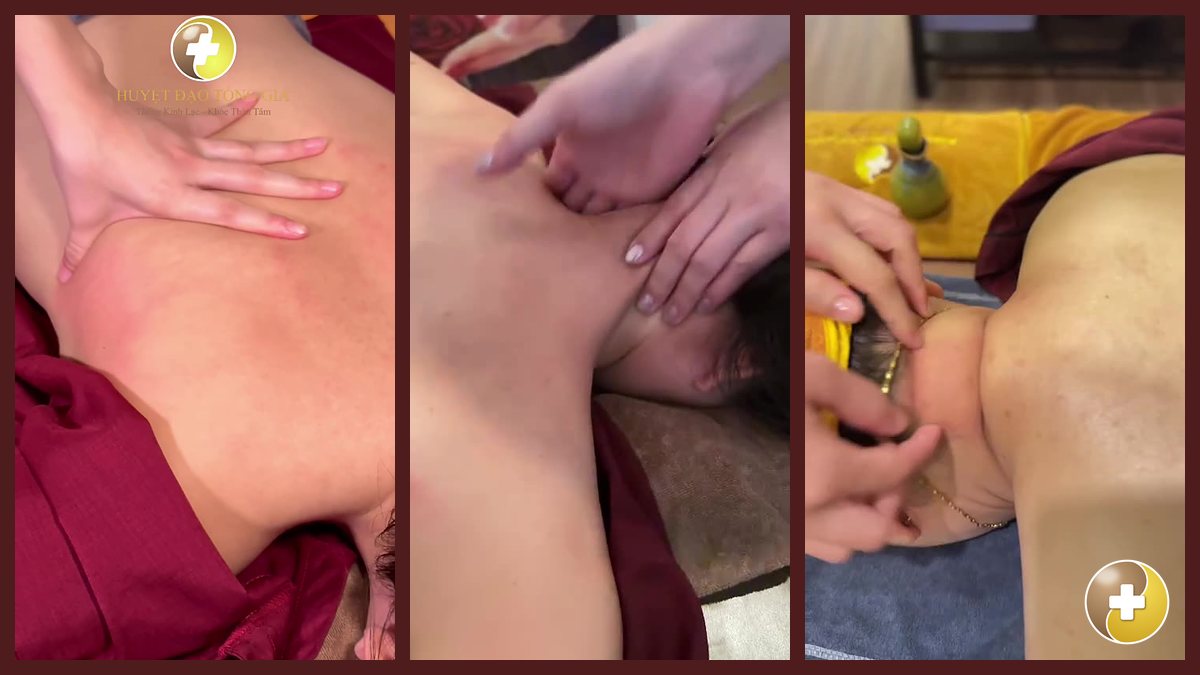
Quick answer: "Poor brain circulation" is an old Vietnamese umbrella term for headaches, dizziness, forgetfulness and ringing ears, not one specific disease, so get checked first. Once checked, Tong Gia Acupoint Wellness (Huyệt Đạo Tống Gia) in District 12 and Vinhomes Grand Park, Ho Chi Minh City, offers hands-on neck and head care.
Want Lương Y Tống Văn Huynh’s team to read your spine and posture in person?
What is "poor brain circulation", and who gets it?
If you live in Ho Chi Minh City long enough, you will hear Vietnamese friends say they have thiểu năng tuần hoàn não, usually translated as "poor brain circulation" or "cerebral insufficiency". It is a popular umbrella name for a cluster of complaints: headaches, a heavy head, dizziness, seeing black spots when standing up, forgetfulness, ringing in the ears and poor sleep. In modern medicine it is not the name of one specific disease. The brain is supplied by two carotid arteries at the front of the neck and two vertebral arteries that run up through the neck bones and meet at the base of the skull. Low or unstable blood pressure, narrowed vessels, an irregular heartbeat, anaemia or an inner-ear problem can all make you feel light-headed or foggy. Because the same feeling can come from very different causes, only a hospital check-up can tell you what is really going on.
So this article does not replace a check-up. It is written to help you understand your body through two lenses, modern physiology and traditional Vietnamese wellness, so you know when to get checked and, once you have been checked, how hands-on neck and head care may help you feel lighter.
Among expats and visitors in Saigon, the people who most often describe these symptoms are:
- Office and remote workers who spend 8–10 hours a day at a laptop with the head pushed forward.
- Motorbike commuters who ride long distances in heat and traffic, wearing a helmet for hours.
- Shift workers in industrial zones and the Saigon Hi-Tech Park whose sleep changes every week.
- Older parents visiting family who stand up quickly and feel the room go dark for a second.
- Anyone under stress who sleeps little and sits all day under an air conditioner blowing on the neck.
If neck stiffness is your main issue, read our Q&A on neck and shoulder massage in Saigon.
Common causes: habits, work, posture and environment
When a check-up has ruled out, or is already following, the causes that need hospital care, many people still feel a heavy head and mild light-headedness. That is usually the sum of everyday habits:
- Forward head posture: the head is heavy for the neck. Every time you look down at a phone, the muscles at the back of the neck work to hold it. Over months, the small suboccipital muscles just under the hairline tighten and can cause tension-type headaches, a heavy feeling at the back of the head and stiffness when turning.
- Sitting for long periods: blood returns from the legs more slowly. Standing up suddenly can bring a few seconds of dark vision before blood pressure adjusts.
- Short sleep, late nights, jet lag and shift work: the brain does not rest enough, so mornings feel foggy and concentration slips.
- Long-term stress: neck, shoulder and temple muscles stay clenched without you noticing. In Vietnamese traditional thinking, over-worrying weakens Heart (Tâm) and Spleen (Tỳ) function, linked to poor appetite, poor sleep, palpitations and forgetfulness.
- Heat and too little water: skipping meals and drinking little in the Saigon heat makes afternoons heavy and dizzy.
- Cold air on the neck: air conditioning blowing on the nape, or sleeping with wet hair, makes neck muscles contract.
- Low blood pressure: the Tong Gia curriculum notes that a reading below 90/60 mmHg with dizziness or fainting should be checked.
Accompanying signs worth noting
Write these down. They help the people who examine you, and they help our practitioners choose where to work:
- A heavy feeling at the back of the head, stiff neck, limited turning.
- Dark vision or light-headedness when standing up quickly.
- Ringing or buzzing in the ears, often worse in the afternoon or when tired.
- Forgetting what you just did; losing focus after a few lines of reading.
- Trouble falling asleep, light sleep, many dreams.
- Tired shoulders, tingling hands after long laptop sessions.
- Dry, tired eyes; tight temples.
- Fatigue, pale skin, pale lips, a cold lower back, tired knees.
A simple one- or two-week diary (time, duration, what you were doing, blood pressure if you have a monitor) is far more useful than "I think my circulation is poor".
When to see a doctor
Please see a doctor first, before booking any wellness session. Go straight away if you notice any of these:
- Dizziness that is new, or getting worse week by week.
- A sudden, severe headache unlike any before, with vomiting, a stiff neck or fever.
- Forgetfulness that affects work or daily life, or confusion about time and place.
- Double vision or sudden blurred vision.
- Difficulty speaking or finding words.
- Weakness or numbness on one side of the body.
- A drooping face or mouth.
- Fainting or nearly fainting.
- Dizziness with palpitations or an irregular heartbeat.
- Blood pressure below 90/60 mmHg with dizziness, or 140/90 mmHg and above.
- Pale skin, ongoing tiredness or unexplained weight loss: get checked for anaemia and other causes in parallel with any wellness care.
A drooping face, slurred speech, one-sided weakness or sudden double vision can mean a stroke: call 115 (Vietnam emergency) immediately, note the time it started, and do not massage or wait. Chest pain, shortness of breath or cold sweats also mean calling 115.
This is a wellness service, not medical care. Tong Gia does not promise to improve brain circulation. If you are following instructions from a doctor, keep following them and tell your practitioner before the session.
The face-reading view: which organ systems are involved
Y Tướng Học (face reading for wellness) rests on one idea: what is inside shows on the outside. In the Tong Gia curriculum, headaches, dizziness, forgetfulness and ringing ears are usually looked at through three organ systems. These are functional ideas from traditional Vietnamese wellness, not statements that your kidneys or liver are diseased.
- Kidney (Thận): stores essence, which produces marrow; the brain is called the "sea of marrow". When Kidney function is weak, people report tired lower back and knees, loose teeth and forgetfulness. Kidney shows in the ears, hair, bones and lower back. In bone reading, a flat or dented occipital bone at the back of the head is described as a sign of weak Kidney essence, often with tight deep muscles at the base of the skull around C1–C3. A low, sunken forehead points the same way, with headaches, dizziness, ringing ears, weaker memory and light sleep.
- Liver (Can): stores blood and nourishes eyes and tendons. Weak Liver blood is linked to dizziness, dark spots, dry eyes, brittle nails and cramps; outward signs are tired eyes, irritability and a tight neck and shoulders.
- Heart and Spleen (Tâm, Tỳ): the Heart houses the mind and governs sleep and thinking; weakness shows as poor sleep, many dreams and forgetfulness, and on the face as pallor or flushing. The Spleen produces blood; worry drains both, with pale or sallow skin, dizziness, shortness of breath and palpitations.
People with a "Giáp" face shape (wide forehead, pointed chin) are described as "full above, empty below": headaches and poor sleep above, tired knees below, with a warm, tense C1–C2 area. Practitioners use face reading only to decide where to feel first, never to label anyone. Learn more in our face reading wellness Q&A.
Vertebrae and nerve-reflex zones involved
According to the Tong Gia spinal nerve-reflex balancing curriculum, the cervical spine C1–C7 relates to the head, face, neck and arms; the thoracic spine relates to circulation, breathing and digestion. Nerve roots leave the spinal cord through the gaps between vertebrae, which is exactly where a practitioner's fingers read. For headaches, long-term poor sleep and dizziness, the curriculum combines the neck (C1–C7), upper back (D1–D3) and sacral area, as support only, not a replacement for medical care.
| Spine area | Nerve / function | Common signs | Organ system |
|---|---|---|---|
| C1–C3 (top of the neck) | Base of skull, suboccipital muscles; route of the vertebral arteries | Stiff nape, heavy back of head, light-headed on moving, ringing ears | Kidney ("sea of marrow") |
| C4–C7 and shoulders | Neck, shoulders, arms | Tired shoulders, tingling hands, tension rising to the head | Liver (governs tendons) |
| D1–D3 (upper back) | Worked with the neck for sleep and nervous tension | Poor sleep, shallow breathing, forgetfulness under stress | Heart, Lung |
| D4–D5 (between shoulder blades) | Back points of the Heart and Pericardium | Palpitations, tight chest when anxious | Heart |
| Lower back and sacrum | L1–L5, S1–S5 | Cold lower back, tired knees, night urination | Kidney |
The table shows related areas only; it does not explain the cause of your symptoms. In plain physiology, tight suboccipital and neck muscles can produce tension headaches and a heavy head, and softening them often makes the neck turn more freely.
The Tong Gia method: spinal nerve-reflex balancing massage
This is a traditional Vietnamese method built by Lương Y (master of traditional Vietnamese wellness) Tống Văn Huynh, founder of Tong Gia, with more than 13 years in Eastern wellness, Y Tướng Học and spinal nerve-reflex balancing. Each session follows the same path:
- Screening: your check-up results, today's blood pressure, heart history, stents, pacemakers, pregnancy or blood-thinning instructions. If you have warning signs and have not been checked yet, we ask you to get checked first.
- Observation: complexion, face shape, ears, the back of the skull and neck posture.
- Reading the spine by hand: C1–C7, D1–D5, lower back and sacrum, comparing each vertebra with its neighbours to find raised, sunken or tight spots.
- Muscle release: suboccipital, neck, shoulder and temple muscles, light to medium pressure. No neck cracking.
- Acupressure on the right zones: along both sides of the neck and upper back; Shenmen (Thần môn) on the wrist for calm; Taixi (Thái khê) on the ankle when ears ring and knees tire; finishing at Baihui (Bách hội) on the crown to clear the head.
- Home-care guidance you can repeat between visits.
What a session feels like: a typical head-care session for someone already checked starts seated, with questions about the check-up and how last night's sleep was. After looking at the face and ears and feeling along the nape, the practitioner often finds one side of the suboccipital area firmer and the upper back tight. Lying face down with the neck kept warm, you feel tenderness at the hairline when pressed, sometimes spreading toward the crown; then the breath slows and many guests doze off during the head work. Afterwards most people describe a lighter head and easier neck movement; some feel mild soreness for a day. Results vary from person to person, and there is no promise that dizziness or forgetfulness will disappear.
| Service | Duration | Price |
|---|---|---|
| Head care (heavy head, tight temples, poor sleep) | 60 min | 750,000 VND (about 29 USD) |
| Neck and shoulder care (stiff nape, tired shoulders) | 60 min | 550,000 VND (about 21 USD); first visit 399,000 VND (about 15 USD) |
| Herbal hair wash with neck and shoulder massage | 60 min | 250,000 VND (about 10 USD) |
See all prices, our headache and dizziness acupressure page, the Vietnamese head spa Q&A and acupressure for sleep.
Want Lương Y Tống Văn Huynh’s team to read your spine and posture in person?
Home care and prevention
- Stand up in three steps: lie, sit on the edge of the bed for a few seconds, then stand. If the room darkens, sit down again.
- Neck breaks every 30–45 minutes: gently tuck the chin, roll the shoulders, raise the screen to eye level.
- Slow breathing and points: breathe in for 4 seconds and out for 6 seconds for 5–10 minutes; press Shenmen gently 1–2 minutes per side before bed; rub Baihui on the crown for about a minute when stressed.
- Sleep, short naps and movement: a 15–30 minute nap and about 30 minutes of walking a day; a warm foot soak before bed, testing the water carefully if you have diabetes.
- Less salt, enough water, regular blood pressure checks: under 5 g of salt a day, limited alcohol, and no air conditioning blowing on the neck.
Book a session
- District 12: 225 Dương Thị Mười, Tân Chánh Hiệp Ward (street address in Vietnamese for drivers). Open 8:00–19:00 daily (4.9★, 235 Google Maps reviews).
- Vinhomes Grand Park, District 9: Unit T16-21, Manhattan zone, Long Bình Ward, Thủ Đức City. Open 9:00–20:00 daily (5.0★, 208 reviews).
Call or message WhatsApp/Zalo +84 888 264 559, or book online. Mention your check-up results and main symptoms so we can prepare the right service. If you are visiting Ho Chi Minh City, we would be glad to welcome you.
Visit us
- Đông Y Huyệt Đạo Tống Gia Quận 12 (District 12)
225 Dương Thị Mười, Phường Tân Chánh Hiệp, Quận 12, HCMC · 8:00–19:00 daily · 0888 264 559 · Directions on Google Maps - Đông Y Huyệt Đạo Tống Gia Quận 9 (Vinhomes Grand Park, District 9)
Căn T16-21 khu Manhattan, Vinhomes Grand Park, Phường Long Bình, TP. Thủ Đức, HCMC · 9:00–20:00 daily · 0888 264 559 · Directions on Google Maps
Want Lương Y Tống Văn Huynh’s team to read your spine and posture in person?
FAQ
Is acupressure good for poor brain circulation? Get checked first so causes such as blood pressure, neck vessels, the heart, anaemia or the inner ear are known. Once checked, if your symptoms come mainly from a stiff neck, long sitting and stress, neck and head care can help you relax. It supports, it does not replace medical advice, and Tong Gia does not promise to improve brain circulation.
What should I do when I feel dizzy from low blood flow to the brain? Sit or lie down at once to avoid falling, then get checked to find the real cause. If dizziness comes with a drooping face, slurred speech, one-sided weakness or double vision, call 115 immediately. After a check-up, stand up in three steps, take neck breaks and drink enough water.
My head feels heavy and slightly light-headed. Is it serious? Occasional heaviness after long sitting or short sleep is common. If it is new, getting worse, or comes with fainting, palpitations, blurred vision or trouble speaking, get checked. Blood pressure under 90/60 mmHg with dizziness also needs a check-up.
Which dizziness signs mean I should go to hospital right away? New or worsening dizziness, a sudden severe headache, marked forgetfulness, double vision, fainting or an irregular heartbeat. A drooping face, slurred speech or one-sided weakness can mean a stroke: call 115 and note the time.
How soon will neck massage make my head feel lighter? Many guests feel easier neck movement and a lighter head after the first session, but it varies with your body and your sitting and sleep habits. Regular neck breaks and enough sleep help keep the effect.
Should I choose head care or neck and shoulder care? For a stiff nape and tired shoulders, choose neck and shoulder care, 60 minutes, 550,000 VND (first visit 399,000 VND). For a heavy head, tight temples and poor sleep, choose head care, 60 minutes, 750,000 VND (about 29 USD).
Author: Lương Y Tống Văn Huynh – founder of Huyệt Đạo Tống Gia, a master of traditional Vietnamese wellness with over 13 years in Eastern wellness care, Y Tướng Học (face reading) and spinal nerve-reflex balancing massage.
Updated: 2026-11-15
Related guides
- Scalp detox in Ho Chi Minh City: deep cleaning, scalp massage and neck release at Tong Gia
- Poor brain circulation in Ho Chi Minh City: why you get checked first, and how Tong Gia cares for a stiff neck afterwards
This is a wellness service, not medical care.