
Scalp detox in Ho Chi Minh City: deep cleaning, scalp massage and neck release at Tong Gia
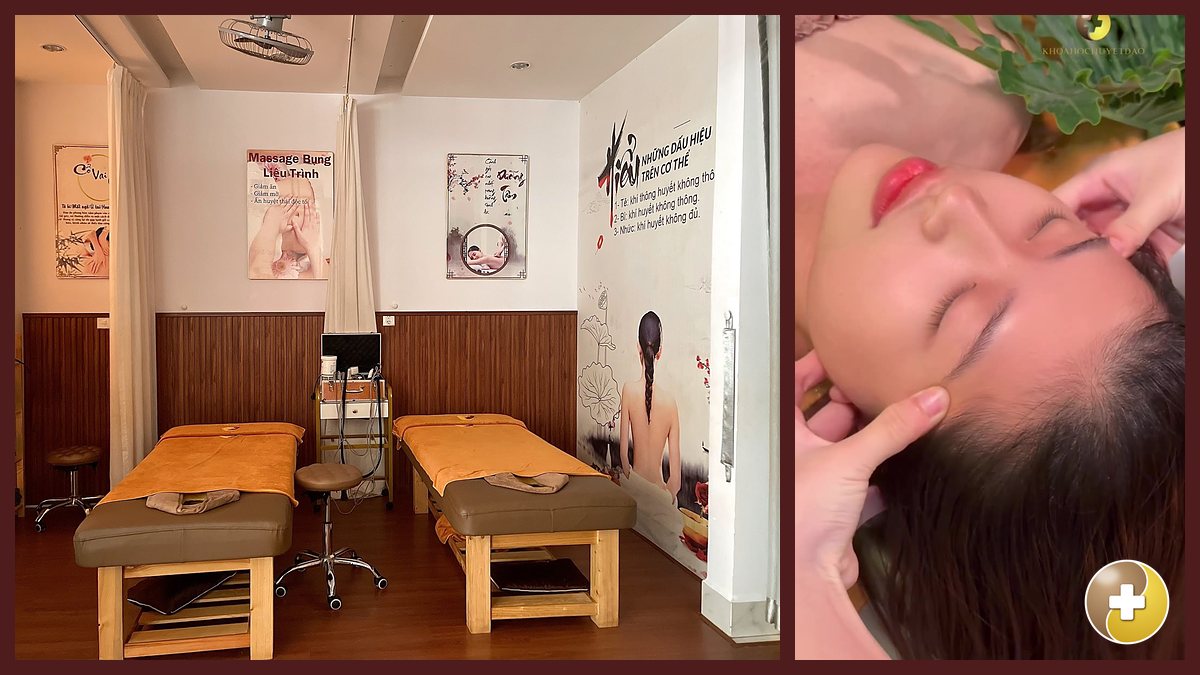
Quick answer: A scalp detox here means a deep clean of sweat, sebum, road dust and leftover shampoo, followed by scalp massage, muscle release at the upper neck (C1–C3) and gentle pressure on the Bách hội point. It does not remove toxins. Tong Gia Acupoint Wellness offers it in District 12 and Vinhomes Grand Park, Ho Chi Minh City.
Want Lương Y Tống Văn Huynh’s team to read your spine and posture in person?
What is a scalp detox, and who gets a greasy, itchy, heavy scalp in Saigon?
In plain terms, a scalp detox is a deep clean of the scalp and hair roots: it lifts off the sweat, sebum, road dust, shampoo and conditioner residue, wax and styling gel that build up over several days. After the cleaning comes scalp massage, muscle release at the back of the neck and light acupressure on the crown, so the scalp feels less tight and the head feels lighter. At Tong Gia Acupoint Wellness (Huyệt Đạo Tống Gia), "detox" means exactly that and nothing more. Your scalp is not a store of toxins that massage can push out. The Tong Gia curriculum tells practitioners never to claim that massage "flushes toxins", because the body clears waste through its own normal liver and kidney functions.
From a Western physiology point of view, the scalp is skin packed with oil (sebaceous) glands and sweat glands, and hair covers it, so it rarely gets air. Sebum is a natural oil that keeps skin and hair supple. When there is a lot of it, mixed with sweat and dust, it forms a sticky film at the roots: hair turns greasy fast, smells, and itches. Under the scalp sits a thin sheet of muscle, the occipitofrontalis, running from the forehead to the back of the head. Stress, long hours looking down at a screen or a tight helmet make this sheet and the deep muscles at the base of the skull tighten, which is why the head can feel heavy, as if you were still wearing the helmet.
If you live or work in Ho Chi Minh City, the picture is familiar: a 30–45 minute motorbike ride at midday under a full-face helmet, then an air-conditioned office until evening. By night the hair is limp, the scalp itches and the back of the head aches. It is common among:
- Expats and locals who commute by motorbike or Grab bike every day.
- Office workers who sit in air conditioning all day, looking down at laptops.
- Engineers and managers in the industrial parks and the Saigon Hi-Tech Park who wear hard hats on shift.
- Anyone who uses a lot of conditioner, wax or gel and does not rinse well.
- People who sleep late, sleep little or carry heavy work pressure.
If you are mainly curious about the experience itself, read our herbal hair wash Q&A and the Vietnamese head spa experience.
Common causes of a greasy, itchy, heavy scalp
Most of the time the cause is daily habits and the city climate, not a serious condition. Knowing the cause tells you how to clean and which area needs extra care.
- Heat, humidity and helmets: Saigon is hot all year and humid in the rainy season. A helmet traps heat, sweat cannot evaporate, and an unwashed liner presses old oil and dust back onto the scalp every day.
- Traffic dust and exhaust: fine dust sticks to the oil on the scalp; one quick wash does not remove it all.
- Product build-up: conditioner applied at the roots, wax, gel or dry shampoo used for days without a thorough rinse.
- Washing the wrong way: water that is too hot, scratching with nails, or washing so often the scalp dries out and produces more oil, or so rarely that oil piles up.
- Sleeping with wet hair: damp roots overnight in an air-conditioned room tend to smell and itch, and you wake up heavy-headed.
- Posture and stress: hours on a phone or laptop tighten the deep muscles at the base of the skull; poor sleep and pressure tighten the scalp muscle too.
According to the Tong Gia curriculum, long-term mental pressure can tighten the whole occipitofrontalis and the shoulder-lifting muscles, so neck and shoulder fatigue spreads up into the head. That is why a Tong Gia scalp session always works down into the neck and shoulders too.
Other signs worth noticing
A slightly greasy, itchy scalp after a hot day is normal. Pay more attention if you notice:
- A heavy head and aching base of the skull all afternoon, with a stiff neck when you turn.
- Tenderness when you touch or brush your hair.
- Heavy dandruff, white flakes on your shoulders even with regular washing.
- Dry, brittle hair or more hair loss than usual in the shower.
- Light sleep and a heavy head on waking.
- Strong-smelling scalp sweat, an oily face and spots on the forehead.
These signs help the practitioner decide where to start: scalp, base of the skull or shoulders. They are not used to name any illness.
When to see a doctor
A scalp detox is hygiene and relaxation. If you have any of the following, please see a doctor (a dermatologist or neurologist) at a medical facility rather than relying on a hair wash or massage:
- Hair falling out in round patches, or fast, unusual thinning.
- A red, burning scalp that weeps fluid or crusts, or pus-filled, painful spots.
- Thick scales peeling in sheets and spreading to the forehead, behind the ears or the neck.
- Intense itching for weeks that does not ease even after washing.
- Heavy hair loss with tiredness, weight loss or pale skin: get checked at a medical facility at the same time, as it may relate to anaemia or hormonal changes.
- A sudden, severe headache unlike any before, with vomiting, high fever, stiff neck, weakness on one side, a drooping mouth or slurred speech: call 115 straight away.
This is a wellness service, not medical care. If you use a scalp product prescribed by a medical professional, tell the practitioner before the session.
The Y Tướng Học view: which organs are involved, and what the head shows
Y Tướng Học (face reading for wellness) in the Tong Gia curriculum rests on one principle: "the signs show outside, the organs lie inside". Bone structure, complexion and body shape reflect how the organ systems are working. In Eastern wellness terms, three systems matter for the scalp and hair.
Kidney (Thận), the root of the hair. The curriculum says the Kidney stores essence, governs bone, produces marrow and connects to the brain, which is called the "sea of marrow". The Kidney "shows in the hair": hair is dark and glossy when essence and blood are full, and turns dry, thin or grey early when the Kidney is weak. This is an Eastern concept of a functional system, not a statement that your kidneys are unwell.
Liver (Can), energy rising to the head. The Liver keeps energy flowing smoothly. Under heavy pressure, Liver energy stagnates and "Liver yang" rises: a tight scalp, pain at the crown, a hot head, dry eyes. The Gallbladder channel, paired with the Liver, runs along both sides of the head; the curriculum notes its role in easing head, neck and shoulder discomfort.
Lung (Phế), skin and body hair. The Lung governs the skin surface. The curriculum describes "damp heat" in the Liver and Gallbladder, or heat in the digestive system, as oily sweat, a heavy odour and itching, which is exactly the greasy, itchy scalp many people in Saigon get in the hot season.
Looking at the head, a Tong Gia practitioner notes, for example:
- A round, upright head (Đầu Viên Trực): good flow along the spine and back channels, but under heavy stress the scalp tends to tighten and the crown aches.
- A rounded occipital bone (Đầu Hữu Long Cốt): if the back of the head is flat or dented, the curriculum links it to weak Kidney essence, often with deep muscle spasm at the base of the skull and the upper neck (C1–C3).
- A bony head with thin, tight scalp skin (Đầu Lộ Cốt Vô Nhục): tends toward dryness of Liver and Kidney, tight tendons and tension headaches across the whole scalp muscle and neck.
Complexion matters too: a shiny, oily scalp and forehead with spots suggests damp heat; dry, brittle hair and a dull face suggest the Kidney and blood need support. Reading the face only helps choose where to feel first. It is never used to judge personality or name an illness.
Vertebrae and nerve-reflex zones involved
In the Tong Gia curriculum on spinal nerve-reflex balancing, the 33 vertebrae are grouped by the areas they supply; the neck vertebrae C1–C7 serve the head, face, neck and arms. The spinal cord runs inside the spinal canal and nerve roots exit through the gaps between vertebrae, which is exactly where the practitioner's fingers search. A scalp session that ignores the neck rarely leaves the head truly light.
| Vertebrae / zone | Nerves, function | Common signs | Related organ (Eastern view) |
|---|---|---|---|
| C1–C2 (just below the skull, at the hairline) | Upper neck serving the head; deep suboccipital muscles | Heavy back of the head, warm nape, headache when this area is hot and tight | Kidney, Liver (rising Liver yang) |
| C1–C3 (upper neck) | Deep muscle band at the base of the skull | Stiff nape, neck ache after phone use or long helmet wear | Kidney: the nerve–Kidney–Governor vessel axis |
| C4–C7 and T1–T3 | Neck, shoulders, arms; upper back | Tight shoulders spreading up to the head | Liver (nourishes tendons), Gallbladder channel |
| Crown, Bách hội (GV20, 百会) | Where the midline meets the line joining the ear tips; clears the head, calms, eases tension | Tight head, hard to relax, light sleep | Governor vessel |
| Scalp, occipitofrontalis | Oil and sweat glands; thin muscle from forehead to nape | Greasy, itchy, tight scalp, heavy head | Lung (skin), Liver–Gallbladder damp heat, Kidney (hair) |
The table shows related zones to guide the work, not a medical finding. For the neck side of things, see our neck and shoulder massage Q&A.
The Tong Gia method: spinal nerve-reflex balancing massage
This is a Vietnamese Eastern wellness method built by Lương Y (master of traditional Vietnamese wellness) Tống Văn Huynh, founder of Tong Gia, with more than 13 years in Eastern wellness, Y Tướng Học and spinal nerve-reflex balancing. Cleaning the scalp is the outer layer; helping rebalance the base of the skull, the shoulders and the nervous system's ability to relax is the inner layer. A session runs like this:
- Observation: how long you wear a helmet, how often you wash, which products you use, how you sleep; a look at the scalp, roots, complexion and head shape.
- Reading the spine by hand: the fingers check each vertebra from C1 to C7 and T1 to T3, comparing left with right and top with bottom, looking for "active" spots: warmer, tighter, more tender.
- Muscle release: softening the deep muscles at the base of the skull, the neck and shoulders, building up through the 5 pressure levels and working only where the tissue is active.
- Deep clean and scalp massage: fingertips only, never nails, from the front hairline up to the crown, out to the temples along the Gallbladder channel and down to the back of the head; a thorough rinse at the roots, then blow-dry.
- Acupressure on the right points: a gentle hold on Bách hội (GV20) to clear the head and calm, and work on tight spots below the skull. The practitioner stops a point once the skin there turns from dry to slightly moist.
- Home-care tips: how to wash, how to keep the helmet clean, and a 3–5 minute self-massage.
A typical session: the guest is often someone who rides a motorbike to work, arrives late afternoon and says the hair has felt greasy since noon and the back of the head aches. The practitioner checks the roots, runs a hand down the neck and finds the area just under the skull on the right firmer and warmer than the left. The neck release comes first, about ten minutes, until the muscle softens and turning the head is easier. Then the wash: two rounds of cleaning, fingertips from forehead to crown, a hold on Bách hội for a few breaths. Many guests doze off here.
Suitable services (single-session prices, see all prices and our Vietnamese head spa page):
- Gội đầu trược khí (herbal head wash), 45 minutes: 150,000 VND (about 6 USD). Deep clean plus scalp massage, for a mainly greasy, itchy scalp.
- Head wash with neck and shoulder massage, 60 minutes: 250,000 VND (about 10 USD). Adds muscle release at C1–C3 and the shoulders, for a greasy scalp plus a heavy head and stiff neck.
- Head care, 60 minutes: 750,000 VND (about 29 USD). Full time on the head, base of the skull and points, for a heavy, tight head that has lasted for weeks.
How it feels: during the session the scalp feels cool and gradually lighter; tight spots below the skull feel tender but pleasant. Many people get sleepy at the Bách hội step. Afterwards most guests describe a lighter head, fluffier hair and an easier neck; a few feel slight aching at the nape the next day. Tong Gia supports and helps rebalance; it does not promise an itch-free scalp after one visit, since daily washing and helmet habits still matter most.
Want Lương Y Tống Văn Huynh’s team to read your spine and posture in person?
Self-care at home and prevention
- Wash gently: warm water, fingertips not nails, rinse the roots for 1–2 minutes, conditioner on the ends only. A deep clean every 1–2 weeks is enough.
- Keep your helmet clean: wear a thin cloth liner, wash the helmet liner weekly, take the helmet off as soon as you arrive.
- Dry the roots before bed: do not sleep in air conditioning with wet hair.
- Self-massage for 3–5 minutes: ten fingertips circling from forehead to crown, a gentle press on Bách hội for a few slow breaths, then along the base of the skull.
- Move every 45–60 minutes: lift your head, roll your shoulders, look into the distance. Better sleep helps too; see acupressure for sleep.
How to book
- District 12: 225 Dương Thị Mười, Phường Tân Chánh Hiệp (Tan Chanh Hiep Ward), Quận 12. Daily 8:00–19:00; 4.9★, 235 Google reviews.
- Vinhomes Grand Park: Căn T16-21 khu Manhattan, Phường Long Bình, TP. Thủ Đức (Unit T16-21, The Manhattan, Thu Duc City, formerly District 9). Daily 9:00–20:00; 5.0★, 208 reviews.
WhatsApp or Zalo +84 888 264 559 (0888 264 559 in Vietnam), or book online. Staff mainly speak Vietnamese and reply to English messages with a translation tool. When you visit Ho Chi Minh City, come and try this Vietnamese method for yourself.
Visit us
- Đông Y Huyệt Đạo Tống Gia Quận 12 (District 12)
225 Dương Thị Mười, Phường Tân Chánh Hiệp, Quận 12, HCMC · 8:00–19:00 daily · 0888 264 559 · Directions on Google Maps - Đông Y Huyệt Đạo Tống Gia Quận 9 (Vinhomes Grand Park, District 9)
Căn T16-21 khu Manhattan, Vinhomes Grand Park, Phường Long Bình, TP. Thủ Đức, HCMC · 9:00–20:00 daily · 0888 264 559 · Directions on Google Maps
Want Lương Y Tống Văn Huynh’s team to read your spine and posture in person?
FAQ
What is a scalp detox, and does it remove toxins? At Tong Gia a scalp detox is a deep clean of sweat, sebum, dust and product residue at the roots, plus scalp and neck massage. It does not remove toxins; your liver and kidneys clear waste through normal body functions.
Why does my head hurt when I touch my hair? Scalp tenderness often comes from a tight scalp muscle and tight muscles at the base of the skull, a scalp that stays hot under a helmet, or irritation from scratching and hot water. If there is redness, weeping, pus or patchy hair loss, please see a dermatologist.
Is a heavy head with a stiff neck something to worry about? Usually it is linked to tight neck muscles from screen time, long helmet wear and poor sleep. If it comes with dizziness, vomiting, weakness, slurred speech or a sudden severe headache, call 115 immediately.
Can scalp massage help a heavy feeling at the back of my head? Scalp massage combined with muscle release at C1–C3 can help those muscles soften and the head feel lighter. At Tong Gia the practitioner reads the neck by hand first to choose the spots, and makes no promise that one visit will clear it.
My head feels heavy from lack of sleep. What should I do? Sleep first: dry your hair before bed, cut screen time late at night and press Bách hội gently for a few minutes. The 60-minute head wash with neck and shoulder massage (250,000 VND, about 10 USD) helps you unwind; if poor sleep lasts for weeks, get checked.
How often should I get a scalp detox? Wash at home every 2–3 days, or daily with a mild shampoo on sweaty days. A deep clean with massage every 1–2 weeks is enough; washing too often or scrubbing too hard can dry the scalp and make itching worse.
Author: Lương Y Tống Văn Huynh – founder of Huyệt Đạo Tống Gia, a master of traditional Vietnamese wellness with over 13 years in Eastern wellness care, Y Tướng Học (face reading) and spinal nerve-reflex balancing massage.
Updated: 2026-11-15
Related guides
- Scalp detox in Ho Chi Minh City: deep cleaning, scalp massage and neck release at Tong Gia
- Poor brain circulation in Ho Chi Minh City: why you get checked first, and how Tong Gia cares for a stiff neck afterwards
This is a wellness service, not medical care.