
Acupressure for a stuffy nose: which points help you breathe easier, how to press them, and when to see a doctor
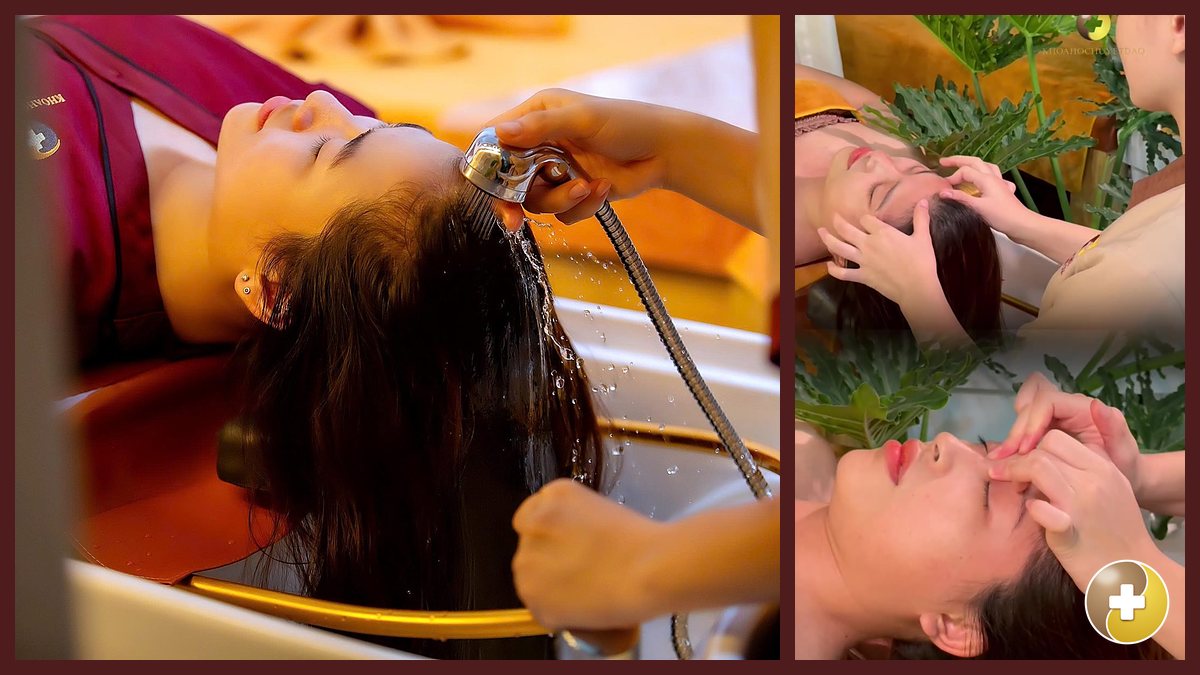
Quick answer: Acupressure can help a blocked nose feel clearer after a cold or air conditioning: rub Yingxiang beside the nostrils, press Hegu and Lieque, then warm the back of the neck and Feishu. It is no substitute for a medical check for fever or pus. Tong Gia sinus-area care, 60 minutes, is 350,000 VND (about 13 USD).
Want Lương Y Tống Văn Huynh’s team to read your spine and posture in person?
Can acupressure help a stuffy nose? What congestion is in Western terms
A stuffy nose is the feeling that air cannot pass easily, so you end up breathing through your mouth. In Western terms the direct cause is usually not "too much mucus" but swelling of the lining inside the nose: tiny blood vessels under the lining widen, the tissue puffs up, the airway narrows, and more mucus is produced. The lining swells with a cold virus, with allergies to dust, pets or pollen, in cold, dry air-conditioned rooms, or when you lie down and more blood flows to the head. Tong Gia's training material reminds us what the nose is for: it warms, moistens and filters the air; nasal hairs catch large dust, mucus traps dust and germs, so breathing through the nose is better than breathing through the mouth.
So can acupressure help? Yes, as support. When points around the nose, face, wrist and back of the neck are pressed correctly, circulation in the face improves, tight facial and neck muscles relax, and many people feel the nose "open" and breathe more deeply for a while. In Tong Gia's material, acupoints do not act directly on lung tissue or the nasal lining; in traditional theory, stimulating them helps balance qi and blood, open the channels and ease discomfort. Acupressure does not clear a virus and does not replace a medical check when there are signs of an infected sinus or a strong allergy.
In Ho Chi Minh City, people with frequent congestion are often expats who sit in freezing offices all day and then step into the midday heat, motorbike riders breathing rush-hour exhaust, factory staff in dusty workshops, people who sleep with the air conditioner set low, and children and older adults when the rainy season starts. Many newcomers also notice their nose reacting to the city's humidity and dust in the first months. For a broader look at pressure-point work, see acupressure massage in Saigon.
Common causes of a blocked nose
- Colds and flu: the virus swells the lining; a clear runny nose turns thicker, often with sneezing, sore throat and fatigue.
- Air conditioning and temperature swings: a cold office followed by hot streets, or sleeping with cold air blowing on your face; you wake up blocked with a dry throat.
- Allergies: house dust, mattresses, curtains, cat or dog hair, mould in the rainy season; congestion with an itchy nose and bouts of sneezing.
- Smoke, dust and strong smells: traffic fumes, cooking smoke, second-hand smoke, perfume, cleaning products.
- Lying down: blood flows toward the head and the lining swells; when you lie on one side, the lower nostril blocks more.
- After crying, alcohol or spicy food: blood vessels in the lining widen for a while.
- Overusing decongestant sprays: fast relief at first, then a rebound where the lining swells even more.
Eastern medicine looks at congestion through the Lung. In Tong Gia's material the Lung is not just the organ in the chest but a system linked with qi, breath, fluids, skin and body hair, nose and throat, voice and resistance. The Lung opens into the nose: a strong Lung means a clear nose, a good sense of smell and a ringing voice; a weak one shows as a blocked nose and a hoarse voice. The Lung governs skin and hair and the protective qi that keeps out external factors; when it is weak you catch colds easily, sweat easily and dislike wind. The Lung is the "delicate organ", easily affected by cold, heat and dryness, which is why a cold, dry air-conditioned room is hard on it. The material also notes the Lung–Spleen link: "the Spleen produces phlegm and the Lung stores it", so a weak Spleen means more phlegm and poor appetite. These are functional ideas from traditional medicine; they do not mean your lungs are diseased.
Signs that often come with a stuffy nose
- Runny nose: clear and thin is common with colds and allergies; thick yellow-green discharge that lasts, with facial pain, deserves more attention.
- Sneezing, itchy nose and eyes: typical of allergic congestion.
- Pressure in the forehead, around the eyes or cheeks: worse when you bend forward.
- Reduced sense of smell and taste.
- Blocked or full ears: the back of the nose connects to the middle ear.
- Dry or sore throat in the morning, snoring: from mouth-breathing all night.
- Stiff neck and shoulders: many people with congestion also have a cold, tight neck after hours in air conditioning, which is why Tong Gia works the neck and upper back, not only the face.
If congestion comes with a heavy head and a tight neck, a head-and-neck session can also help you relax; see Vietnamese head spa.
When to see a doctor
Acupressure only supports a clearer feeling in the nose. If you have any of the following, please see a doctor at a medical facility, and do not use acupressure in place of a medical check:
- High fever, or fever lasting several days; congestion that improves and then gets worse with yellow-green pus and facial pain.
- Congestion lasting several weeks, one side blocked all the time, repeated nosebleeds, or a complete loss of smell.
- Red swelling around the eyes, blurred or double vision, severe headache or a stiff neck.
- Breathlessness at rest, wheezing or noisy breathing for the first time, a cough lasting more than two weeks, or blood in your phlegm (Tong Gia's material lists these as warning signs that need a medical check).
- A baby who feeds poorly or breathes fast; an older adult who is drowsy and very tired.
- You cannot stop a decongestant spray after many days, or you have asthma or are pregnant.
Chest pain, shortness of breath or cold sweats: call 115 immediately; no massage, no acupressure. This is a wellness service, not medical care.
Face reading (Y Tướng Học): the Lung opens into the nose
Y Tướng Học (face reading for wellness) says "the signs show outside, the organs lie inside". The nose is the opening of the Lung, so the nose, the area between the eyebrows and the skin are the first places a Tong Gia practitioner looks. According to Tong Gia's material and organ-sign notes:
- Lung signals: dry skin, frequent stuffy nose, shallow breathing, frequent sighing; a strong Lung shows as smooth skin, deep breath and a clear voice.
- A sunken, narrow area between the brows (Ấn Đường) with vertical lines and tight muscle: described as constrained Lung qi, with a tendency toward sinus and allergic nose problems and shallow breathing.
- An upturned nose with visible nostrils and loose wings (Lộ Khống Tị): described as insufficient Lung qi, "the Lung's gate left open", so external factors enter easily: allergic nose, breathlessness, feeling the cold, tiring easily.
- Unevenly enlarged pores: also linked with insufficient Lung qi and catching wind-cold, colds and allergic congestion.
- The "Đồng" face (long but square, firm bone and flesh): a Metal type ruled by the Lung; when unwell it is usually from wind-cold or dryness, and the upper back tends to tighten around T3 (Feishu), affecting breathing.
These signs only suggest where to feel first. They are not a health verdict and are never used to judge anyone. The hands reading the spine decide what to work on. More on this tradition: Eastern face reading for wellness.
Spine and nerve-reflex zones involved
In Tong Gia's material the neck (C1–C7) serves the head, face, neck and arms, and the thoracic spine (T1–T12) relates to circulation, breathing and digestion. For the nose and upper airway, the zone to read runs from the back of the neck to the upper back, roughly C3 to T3. A cold, tight neck makes the head and face feel heavier; a tight upper back makes breathing shallow. The back-shu points of the organs lie along the Bladder channel, about 1.5 cun from the midline.
| Area | Nerves and function | Common signs | Related organ or channel | Points often used |
|---|---|---|---|---|
| Face, around the nose | Face area served from the neck segments | Blocked nose, heavy forehead, tired eyes | Large Intestine channel (paired with Lung) | Yingxiang (LI20), area between the brows |
| C3–C7 (neck, base of neck) | Head, face, neck, arms | Cold, stiff neck after air conditioning | Lung (protective qi, dislikes wind) | Back of neck, Dazhui (Governor Vessel); Dingchuan 0.5 cun beside C7 |
| T1–T3 (upper back) | Breathing; Feishu 1.5 cun beside the T3 spinous process | Shallow breath, tight upper back, frequent colds | Lung | Feishu (BL13) |
| Wrist and hand | Lung and Large Intestine channels | Nose, face, throat, stiff neck | Lung, Large Intestine | Lieque (LU7), Hegu (LI4) |
| T11–T12 (mid back) | Digestion; Pishu | Lots of phlegm, poor appetite | Spleen (source of phlegm) | Pishu (BL20) |
The table lists related zones to guide the hands, not a verdict on your health. As the material stresses, acupoints do not act directly on lung tissue; in traditional theory, stimulating them helps balance qi and blood, open the channels and ease discomfort.
The Tong Gia method: spinal nerve-reflex balancing massage
At Tong Gia Acupoint Wellness (Huyệt Đạo Tống Gia), a session for frequent congestion follows the spinal nerve-reflex balancing method developed by Lương Y (master of traditional Vietnamese wellness) Tống Văn Huynh, who founded Tong Gia and has over 13 years in Eastern wellness, Y Tướng Học and spinal nerve-reflex balancing. The method grew from the head-and-spine legacy of Lương y Nguyễn Tham Tán and Master Công Kim Thắng and follows three "no" rules: nothing to swallow or inject, no needles, no rough force. What sets it apart is that the hands do not stay around the nose: they move from the face to the neck and upper back, because the nose is the opening of the Lung and Feishu sits on the back.
- Questions and screening: fever, pus, facial pain, asthma, pregnancy, blood thinners, any nasal sprays you use. Warning signs mean no session and advice to see a doctor.
- Observation: the area between the brows, the nostrils, skin tone, whether you breathe through nose or mouth, shoulder height.
- Reading the spine by hand: pressing, gliding and rolling from the neck to the upper back to read skin temperature, the muscle layer, vertebral shape and sensation; warm, tight "excited" zones get attention, cool, slack "inhibited" zones are not worked hard.
- Muscle release of the neck, shoulders and upper back: warming and softening C3–T3, with pressure rising from one finger.
- Acupressure on the right points: rubbing Yingxiang, light strokes between the brows and along the sides of the nose, pressing Hegu and Lieque on both hands, pressing Feishu in time with your out-breath.
- Calming strokes and home advice: how to rub Yingxiang, belly breathing through the nose, keeping the neck and chest warm.
Points the material often uses for a stuffy nose
- Yingxiang (LI20, 迎香): beside the wing of the nose, the end point of the Large Intestine channel, which the material lists for the nose, face and throat. Rub both sides gently for 1–2 minutes until warm.
- Hegu (LI4, 合谷): between the first and second hand bones, near the edge of the second; the classic saying is that Hegu "governs the face and mouth". Not used during pregnancy.
- Lieque (LU7, 列缺): 1.5 cun above the wrist crease on the thumb side; the connecting point of the Lung channel, "for head and neck, seek Lieque", used for cough and a stiff neck.
- Feishu (BL13, 肺俞): 1.5 cun beside the T3 spinous process; the back-shu point of the Lung, tonifying Lung qi.
- Dazhui (GV14, 大椎) and Dingchuan (EX-B1, 定喘): the material notes Dazhui is commonly used for colds in traditional theory; Dingchuan is 0.5 cun beside the C7 spinous process.
Suitable services and prices
- Nose and sinus area care, 60 minutes: 350,000 VND (about 13 USD). Focused on the face, neck and upper back for frequent congestion and a heavy forehead.
- Herbal steam: 120,000 VND (about 5 USD), added when you feel chilled or your neck is cold after air conditioning; in Tong Gia's material herbs act mainly locally through the skin, keeping you warm and helping you relax. See gua sha and herbal steam.
- Lung wellness care, 90 minutes: 900,000 VND (about 35 USD). For frequent colds, shallow breathing and a tight upper back, with fuller work on the chest and back.
Full prices are on the price list. For background on the method, see traditional Vietnamese massage.
What a typical session looks like
Midday at the District 12 branch. The guest is a technician who works all day in an air-conditioned room. For about a week he has woken up blocked with a dry throat; it eases in the afternoon heat; no fever, no pus. The practitioner asks more: no asthma, no blood thinners, a nasal spray for two days and then stopped. His brows show a vertical line, he breathes through his mouth, and his shoulders are raised. On the spine, the neck and base of the neck feel cooler, and the muscles beside T1–T3 are tight and tender. The practitioner warms and releases the neck, shoulders and upper back for about 25 minutes, presses Feishu on each out-breath, works Hegu and Lieque on both hands, then rubs Yingxiang and strokes along the nose and between the brows. He leaves with three tips: angle the air-con vent away from his face, drink warm water, and rub Yingxiang each morning.
What guests usually feel
When Yingxiang and the sides of the nose are rubbed, many people feel the nose warm up, a little runny, and then they can breathe in more deeply. The neck and upper back work leaves the head lighter, the shoulders lower, and nose-breathing easier. The clearer feeling lasts for a while; with a virus or an allergy, the nose may block again when the trigger returns. Everyone responds differently; Tong Gia does not promise to end congestion, only to help the face, neck and breathing rebalance.
Want Lương Y Tống Văn Huynh’s team to read your spine and posture in person?
Self-care at home and prevention
- Rub Yingxiang: with both index fingers, rub gently beside the wings of the nose for 1–2 minutes until warm, on waking and before bed.
- Belly breathing through the nose: breathe in through the nose for about 4 seconds, belly rising; breathe out slowly for about 6 seconds; 5–10 minutes a day.
- Press Hegu and Lieque: 1–2 minutes each side when the nose is blocked or the neck is stiff. Skip Hegu during pregnancy.
- Keep the neck and chest warm and drink warm water: point the air-con vent away from your face, set a moderate temperature, keep a light scarf at the office. The material advises avoiding cold drafts directly on the body.
- Cut dust and smoke at home: wear a mask on the motorbike, wash bedding often, ventilate the room, avoid second-hand smoke. The "drawing the bow" movement from Baduanjin opens the chest for slow, deep breaths, 6–8 times each side.
How to book
Tong Gia Acupoint Wellness has two branches in Ho Chi Minh City, open every day, with real customer reviews on Google Maps:
- District 12: 225 Dương Thị Mười, Phường Tân Chánh Hiệp (Tan Chanh Hiep Ward, District 12). Open 8:00–19:00 daily.
- District 9 – Vinhomes Grand Park: Căn T16-21 khu Manhattan, Phường Long Bình, TP. Thủ Đức (unit T16-21, Manhattan zone, Long Binh Ward, Thu Duc City). Open 9:00–20:00 daily.
Call, Zalo or WhatsApp +84 888 264 559, or book online. Say you would like nose and sinus area care, whether you want to add a herbal steam, and tell us if you have a fever, asthma, are pregnant or take blood thinners. Visiting Ho Chi Minh City? It is a gentle way to try a Vietnamese traditional method developed by Lương Y Tống Văn Huynh.
Visit us
- Đông Y Huyệt Đạo Tống Gia Quận 12 (District 12)
225 Dương Thị Mười, Phường Tân Chánh Hiệp, Quận 12, HCMC · 8:00–19:00 daily · 0888 264 559 · Directions on Google Maps - Đông Y Huyệt Đạo Tống Gia Quận 9 (Vinhomes Grand Park, District 9)
Căn T16-21 khu Manhattan, Vinhomes Grand Park, Phường Long Bình, TP. Thủ Đức, HCMC · 9:00–20:00 daily · 0888 264 559 · Directions on Google Maps
Want Lương Y Tống Văn Huynh’s team to read your spine and posture in person?
FAQ
Does acupressure help a stuffy nose? Yes, as support. Rubbing Yingxiang, pressing Hegu and Lieque, and warming the neck and Feishu improve circulation in the face, and many people feel the nose open and breathe more deeply. It does not clear a virus or an allergy, and it does not replace a medical check for fever, pus or facial pain.
Which acupressure points are used for nasal congestion? Tong Gia often uses Yingxiang (LI20) beside the nostrils, Hegu (LI4) on the hand, Lieque (LU7) at the wrist and Feishu (BL13) on the upper back. At home, rub Yingxiang for 1–2 minutes until warm and press Hegu and Lieque 1–2 minutes each side; skip Hegu if pregnant.
My nose blocks every night with the air conditioner on. What can I do? Set a moderate temperature, point the vent away from your face, keep your neck and chest warm and drink warm water before bed. In the morning rub Yingxiang until warm and do a few minutes of belly breathing through the nose. If it lasts weeks or one side stays blocked, see a doctor.
How long can a stuffy nose last before I should get it checked? Get checked if it lasts several weeks, improves then worsens with yellow-green pus and facial pain, comes with high fever, repeated nosebleeds, total loss of smell, swelling around the eyes or breathlessness. A baby who feeds poorly or breathes fast should be seen early.
Can I use acupressure for congestion while pregnant? Gentle rubbing of Yingxiang and warming the neck are possible, but Hegu (LI4) is not used during pregnancy according to Tong Gia material. Please mention your pregnancy when booking and check with the professional following your pregnancy.
How much is nose and sinus care at Tong Gia? Nose and sinus area care for 60 minutes is 350,000 VND (about 13 USD); you can add a herbal steam for 120,000 VND (about 5 USD). For frequent colds and shallow breathing, the 90-minute Lung wellness care is 900,000 VND (about 35 USD). Book on +84 888 264 559.
Author: Lương Y Tống Văn Huynh – founder of Huyệt Đạo Tống Gia, a master of traditional Vietnamese wellness with over 13 years in Eastern wellness care, Y Tướng Học (face reading) and spinal nerve-reflex balancing massage.
Updated: 2026-11-16
Related guides
- Acupressure for a stuffy nose: which points help you breathe easier, how to press them, and when to see a doctor
- Herbal steam for a cold in Ho Chi Minh City: how to steam safely, who should skip it, and what Tong Gia does
- A stuffy nose that won't go away: six common causes, the warning signs, and how Tong Gia supports easier breathing in Ho Chi Minh City
- Itchy throat and a lot of coughing: six common causes, the warning signs, and how Tong Gia supports the Lung in Ho Chi Minh City
- Acupressure for sinusitis in Ho Chi Minh City: support for a clearer-feeling nose, safe self-care and the signs that need a check-up
This is a wellness service, not medical care.