
Bank employee work stress: poor sleep, headaches, stiff shoulders and how to care for your body
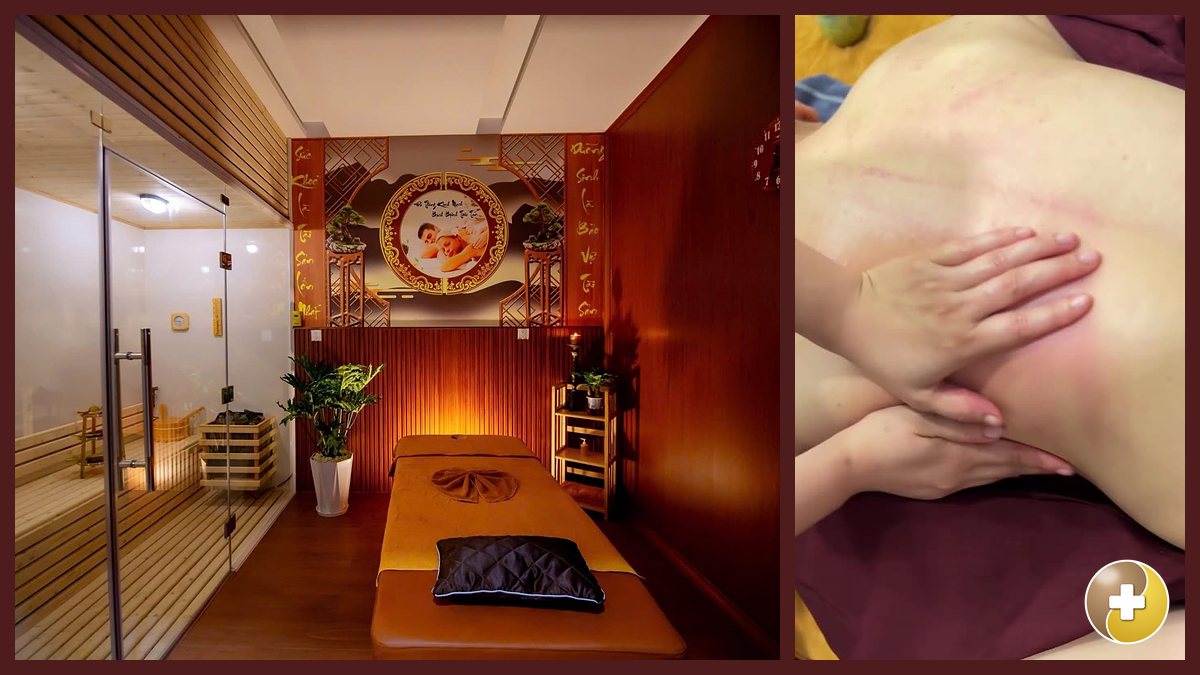
Quick answer: Bank employees under target pressure, sitting at the counter and serving customers non-stop often get poor sleep, tight temples, a stiff neck, stomach pain and palpitations. Slow breathing, regular meals, pressing Shenmen before bed and a calming hands-on session help the body let go. Tong Gia Acupoint Wellness (Huyệt Đạo Tống Gia), District 12 and Vinhomes Grand Park, Ho Chi Minh City.
Want Lương Y Tống Văn Huynh’s team to read your spine and posture in person?
Bank employee work stress: what the body goes through
Bank employee work stress is widely talked about in Vietnam: deposit targets, cross-selling insurance, cards and loans, crowded counters at the end of every month and quarter, and the need to explain any figure that does not match. This article is not about whether to stay in the job. It looks at what people rarely mention: how that pressure moves into the body. In Western medical terms, long-term stress keeps the body in "alarm mode": heart rate and blood pressure rise, muscles brace, sleep gets worse and digestion is disturbed. One day is fine; months of it and the body starts speaking up through poor sleep, headaches, a stiff neck and shoulders, stomach pain, palpitations and deep fatigue.
Tong Gia Acupoint Wellness (Huyệt Đạo Tống Gia) in Ho Chi Minh City often sees these banking roles:
- Tellers and cashiers at the counter: seated all day, counting cash, typing and talking to customers non-stop, rarely standing up at a good rhythm.
- Relationship managers and credit officers: chasing targets, riding motorbikes to clients in the heat, answering client messages at night.
- Advisers selling insurance and credit cards: meeting customers continuously, always smiling, the voice tiring by afternoon.
- Operations, control and back-office staff: long hours at the computer, reconciling data, under pressure never to make a mistake.
Expats working for international and joint-venture banks in the city describe very similar patterns. Because poor sleep is the most common sign, this article sits in our sleep series.
Common causes: habits, work, posture and environment
- Constant targets and reviews: monthly, quarterly and yearly sales; ranking between branches keeps the mind calculating.
- No room for error: working with money and figures, a small mistake may have to be repaid or explained, so you stay on guard all day.
- Back-to-back customers: staying calm and polite even with difficult clients; emotions are held in all day.
- Hours at the counter: little back support, shoulders lifted while counting and typing, neck bent over screens and papers.
- Irregular meals: rushed lunches to reopen the counter, skipped breakfast, lots of coffee or milk tea to stay alert.
- Work at home: client messages, work chat groups and evening reports; the mind never switches off.
- Air conditioning all day, then heat outside; the body struggles to adapt.
- Little exercise and late nights: too tired to move, scrolling the phone in bed, which makes sleep even harder.
Together these create a "quiet" pressure: no single big event, but not one day of full relaxation.
Accompanying signs to watch
- Trouble sleeping from stress: lying awake for a long time, waking at night thinking about numbers, still tired in the morning.
- Tension headaches at both temples or the back of the head by the end of the day.
- A stiff neck and shoulders and a tired back after counter hours.
- Stomach ache, bloating or sour burps under stress or before target meetings.
- Palpitations when your name is called, cold hands and feet, sweaty palms.
- Snapping at family, forgetfulness, losing interest, wanting only to sleep at weekends.
- A hoarse voice and dry throat late in the day from talking so much.
- For women: changes in the menstrual cycle during long stressful periods.
When to see a doctor
Work pressure is common, but in these situations please see a doctor at a medical facility rather than relying only on massage:
- Chest tightness, shortness of breath, cold sweats, a heavy chest spreading to the left arm or jaw: call 115 immediately.
- Fast heartbeat or palpitations that do not settle, light-headedness, near fainting; repeatedly high blood pressure readings.
- Insomnia for several weeks with sadness, hopelessness, loss of interest or dark thoughts: see a mental health professional soon.
- Stomach pain with vomiting blood, black stools, unexplained weight loss, pale skin and anaemia-like tiredness: get checked in parallel.
- A sudden severe headache, headache with vomiting, weakness in the arms or legs, slurred speech or blurred vision: go to emergency.
- Hoarseness lasting more than two weeks.
This is a wellness service, not medical care. If you are under medical care, keep following your doctor's instructions.
The Y Tướng Học view: Heart, Liver, Spleen and the look of a high-pressure job
According to the Tong Gia curriculum, the three organ systems most affected by work pressure are the Heart, the Liver and the Spleen:
- Heart: it houses the spirit and governs consciousness and sleep. When it is out of balance: poor sleep, many dreams, forgetfulness, palpitations. The curriculum also describes "Heart and Kidney not communicating": poor sleep, palpitations, tired lower back and knees, common in people doing long mental work.
- Liver: stuck Liver energy shows as stagnation, bloating, chest tightness, irritability and poor sleep. People who must hold back their emotions in front of customers all day often fall into this state.
- Spleen: the curriculum says too much worrying harms the Spleen and drains Heart blood: poor appetite, poor sleep, palpitations, forgetfulness. That is the loop of a job full of calculation: the more you worry, the less you eat; the less you eat, the worse you sleep.
Y Tướng Học, the Vietnamese face-and-body reading taught at Tong Gia, rests on "the signs are outside, the organs are inside". The practitioner usually notices:
- Complexion and tongue: the Heart opens into the tongue and shows on the face; a pale face or afternoon flushing and a red tongue tip suggest caring for sleep and calming the mind.
- Eyes: the Liver opens into the eyes; red, dry eyes and dark circles after weeks of closing the books.
- Lips: the Spleen shows on the lips; pale, dry lips in people who eat irregularly.
- The "Thân" face (wide cheekbones, narrow forehead and chin): the curriculum describes stomach pain, reflux, aching flanks and one-sided headaches as soon as stress or frustration hits; the back area to check is D7 and D9.
- The "Giáp" face (wide on top, narrow below): prone to excess Heart fire and stuck Liver energy, "headaches and poor sleep above, tired knees and night urination below", with a warm upper neck at C1–C2.
This is not fortune telling. It guides which area to start with and whether to work gently to calm the mind or more deeply to release muscle.
Vertebrae, nerve reflex areas and related organs
The Tong Gia curriculum groups its work into four functional groups. For work stress two are used most: the nervous system group (chronic headaches, long-term insomnia, nervous exhaustion: combining the neck C1–C7, upper back D1–D3 and sacral area) and the internal organ and metabolism group (blood pressure, stomach pain, digestive upset: combining D1–D12 and L1–L3). The curriculum states clearly that this is school material that supports, and does not replace, medical assessment and care. The table shows only what is "related":
| Spinal area | Nerves / function | What stressed people feel | Related organ |
|---|---|---|---|
| C1–C2 | Head, central nervous system | Headache at the back of the head, a hot head, trouble sleeping | Heart, Liver |
| C3–C7, D1–D3 | Neck, shoulders, arms, upper back | Stiff neck after counter hours, shallow breathing | Liver (sinews), Lung |
| D7, D9 | Liver and gallbladder, digestion | Stomach pain, bloating under stress | Liver – Spleen |
| D11–D12, L1–L3 | Digestion, kidneys | Poor appetite, tired back, night urination | Spleen and Stomach, Kidney |
| Sacral area | Combined with the nervous system group | Light sleep, never fully relaxed | Kidney |
Why does stress show up in the back? Under pressure we lift the shoulders, hold the breath and sit rigidly; the neck and upper spine carry load all day, the muscles there tighten, and the mid-back area linked to the Liver and Spleen tightens too when the stomach is upset.
The Tong Gia method: spinal nerve-reflex balancing for work stress
The method was built by Lương Y Tống Văn Huynh, master of traditional Vietnamese wellness and founder of Huyệt Đạo Tống Gia, over more than 13 years of practice in Eastern wellness, Y Tướng Học and spinal nerve-reflex balancing. A session for a stressed bank employee usually includes:
- Observation and questions: work hours, bedtime, meals and the main concern (sleep, headaches, stomach, palpitations); complexion, tongue, eyes, lips, face shape and posture. If any warning sign appears, you are advised to see a doctor first.
- Reading the spine by hand: pressing, stroking and rolling from the nape to the lower back to find warm, tight areas; stressed people often have a warm nape, hard shoulders and tension around D7–D9.
- Muscle release: softening the neck, shoulders, upper and mid back; pressure rises gradually through five levels, and for very tired guests it stays light and even so the body can let go.
- Acupressure in the right areas: following the Tong Gia curriculum, Neiguan (PC6) and Shenmen (HT7) at the wrist to calm the mind and support sleep and palpitations; Taichong (LR3) for stuck Liver energy; Ganshu and Pishu on the back for frequent bloating; finishing at Baihui (GV20) to clear the head. Work stops when the skin at the point turns from dry to slightly moist.
- Self-care guidance: slow breathing, pressing Shenmen before bed, break rhythm at work.
What guests feel: many tellers say the most pleasant moment is the head and wrist work: the mind "switches off", the breath slows and quite a few fall asleep. Afterwards the neck and shoulders feel lighter, the head less tight and falling asleep is easier. The session helps the body rebalance; it does not change the workload, which is why the practitioner always adds advice on rest and sleep at home.
A typical session: a teller at a District 12 branch, in the middle of closing quarterly targets, came in after two weeks of sleeping no more than four or five hours, with tight temples and bloating after lunch. The practitioner saw a pale complexion, a red tongue tip and dry eyes; a warm nape, a harder right shoulder from counting cash and a tense mid-back. A 75-minute Heart wellness session worked gently on the neck, shoulders and upper back, pressed Neiguan, Shenmen and Taichong and finished at Baihui. She was advised to eat lunch on time before reopening the counter, keep her phone away from the bed and press Shenmen every evening.
| Suitable service | Length | Price |
|---|---|---|
| Heart wellness (calm, sleep, palpitations) | 75 min | 750,000 VND (about 29 USD) |
| Head care | 60 min | 750,000 VND (about 29 USD) |
| Neck and shoulder care | 60 min | 550,000 VND (about 21 USD); first visit 399,000 VND (about 15 USD) |
Read more: acupressure for sleep, neck and shoulder massage questions, Vietnamese head spa and a 120-minute full-body session.
Want Lương Y Tống Văn Huynh’s team to read your spine and posture in person?
Home care and prevention for bank employees
- Slow breathing between customers: breathe in through the nose and breathe out longer than you breathe in; a few rounds are enough for the shoulders to drop.
- Press Neiguan when your heart races: following the Tong Gia curriculum, press gently for 1–2 minutes on each side during mild stress or palpitations.
- Press Shenmen before bed: gently for 1–2 minutes on each side with slow breathing; mute work chats after a fixed hour.
- Eat on time: keep breakfast, eat lunch before the afternoon counter opens, cut coffee after 2 p.m.
- Stand up between customers: whenever the counter is quiet, stand, roll your shoulders, stretch and take a few steps.
- Move gently: a 20–30 minute evening walk and a warm foot soak before bed.
How to book
- District 12 branch: 225 Dương Thị Mười, Tân Chánh Hiệp Ward (District 12), 8:00–19:00 daily.
- District 9 branch: Unit T16-21, Manhattan subdivision, Vinhomes Grand Park, Long Bình Ward, Thủ Đức City (former District 9), 9:00–20:00 daily.
- Hotline / Zalo / WhatsApp: +84 888 264 559.
- Online booking: /dat-lich.
When booking, write "bank work, stress, poor sleep" or your main concern so the right service can be prepared. The District 9 branch is open until 20:00, handy after the counter closes, and both branches open at weekends. If you live in or are visiting Ho Chi Minh City, this is an easy way to experience a Vietnamese traditional wellness method developed by Lương Y Tống Văn Huynh.
Visit us
- Đông Y Huyệt Đạo Tống Gia Quận 12 (District 12)
225 Dương Thị Mười, Phường Tân Chánh Hiệp, Quận 12, HCMC · 8:00–19:00 daily · 0888 264 559 · Directions on Google Maps - Đông Y Huyệt Đạo Tống Gia Quận 9 (Vinhomes Grand Park, District 9)
Căn T16-21 khu Manhattan, Vinhomes Grand Park, Phường Long Bình, TP. Thủ Đức, HCMC · 9:00–20:00 daily · 0888 264 559 · Directions on Google Maps
Want Lương Y Tống Văn Huynh’s team to read your spine and posture in person?
FAQ
What can a stressed bank employee do to stay healthy? Keep fixed meal and sleep times, breathe slowly between customers, stand and roll your shoulders when the counter is quiet and mute work chats after a set hour. When poor sleep, headaches or a stiff neck keep coming back, a calming hands-on session helps the body relax; chest symptoms or lasting low mood need a doctor.
Can massage help with poor sleep from work stress? Head, neck and shoulder work with calming points such as Neiguan, Shenmen and Baihui, as taught in the Tong Gia curriculum, can help you relax and fall asleep more easily. Insomnia lasting weeks with low mood needs a medical check as well.
Is long-term stress harmful? In Western medical terms long-term stress raises heart rate and blood pressure, tightens muscles, worsens sleep and upsets digestion. In the Tong Gia curriculum worry harms the Spleen and drains Heart blood, and stuck Liver energy brings irritability and poor sleep. It is better to look after yourself early than wait for burnout.
Can stress at work cause stomach pain? It can. The curriculum describes stuck Liver energy causing stagnation and bloating, and people with the "Thân" face often get stomach pain and reflux under stress. Eating lunch on time and cutting afternoon coffee help; vomiting blood or black stools need a doctor right away.
How much is the Heart wellness session and who is it for? Heart wellness is 75 minutes for 750,000 VND (about 29 USD), suited to people with poor sleep, palpitations and long-term tension. If the neck is the main issue, neck and shoulder care is 550,000 VND (about 21 USD) for 60 minutes, 399,000 VND (about 15 USD) on the first visit.
Author: Lương Y Tống Văn Huynh – founder of Huyệt Đạo Tống Gia, a master of traditional Vietnamese wellness with over 13 years in Eastern wellness care, Y Tướng Học (face reading) and spinal nerve-reflex balancing massage.
Updated: 2026-11-17
Related guides
- Driving stress in Saigon traffic: why jams lock up the body and shorten the temper, and how to unwind after the wheel
- Student stress: why your body goes into alarm mode in exam season and how to ease it
- Nervous tension explained: what stress does in the body, how Eastern medicine sees it, and how to return to rest
- Exam stress before tests: what your child's body is doing and how to help them walk in calmer
- Trouble sleeping after giving birth: why you are exhausted yet wide awake
- Insomnia and "weak kidneys": what Eastern and Western medicine say, why you wake at night, and how to care for it
This is a wellness service, not medical care.