
Trouble sleeping after giving birth: why you are exhausted yet wide awake
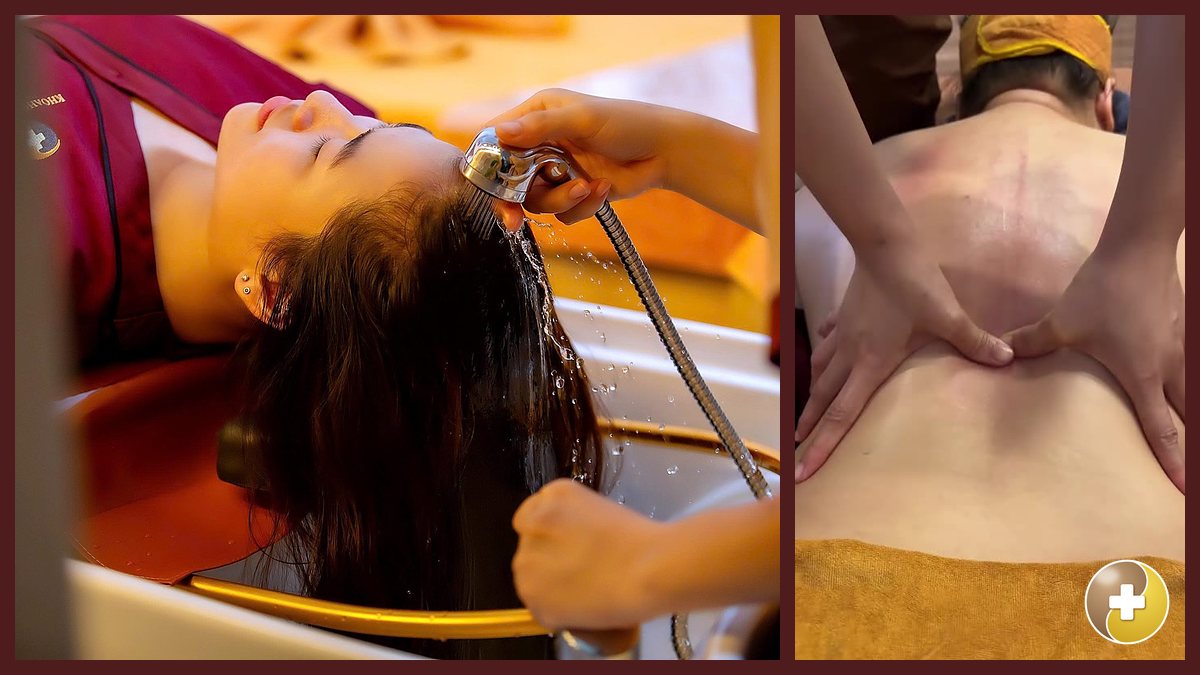
Quick answer: Trouble sleeping after giving birth usually comes from night feeds, fast hormonal change, worry about the baby, stitches or a scar, and blood loss. Eastern wellness sees depleted Heart and Spleen and low Liver blood. Low mood or anxiety that lasts needs a doctor early. Tong Gia in Ho Chi Minh City offers calming head, neck and shoulder care.
Want Lương Y Tống Văn Huynh’s team to read your spine and posture in person?
Why can't I sleep after giving birth?
Many new mothers describe the same paradox. All day the body is drained and the eyes keep closing, yet the moment the baby falls asleep and you lie down, your mind is wide awake. Just as you drift off you jolt up, sure the baby is crying. After the 2 am feed you lie there until 4. This is trouble sleeping after birth, and it is very common in the first months.
In Western terms, hormones change very quickly after delivery; sleep is broken into two- or three-hour pieces by feeds; stitches or a caesarean scar may still hurt; night sweats and frequent urination are common. Add worry: is the baby getting enough, why is she crying, how will I manage back at work. The brain stays on "watch", so even when exhausted you struggle to fall asleep, sleep lightly and wake easily.
At Tong Gia Acupoint Wellness (Huyệt Đạo Tống Gia) we often meet mothers in Vinhomes Grand Park apartments with little help, mothers in District 12 juggling the baby and the household, and mothers going back to work at the Hi-Tech Park after four or six months. For most, sleep slowly improves as the baby sleeps longer and support at home grows. But some signs should never be carried alone, and we cover them clearly below.
For sleep and acupressure in general, see our acupressure for sleep Q&A.
Common causes of sleeplessness after birth
- Broken sleep: night feeds, nappy changes, settling the baby. Short stretches make deep sleep hard to reach.
- Hormonal change: in Western terms, postpartum hormones swing sharply, affecting mood, body temperature and sleep; night sweats are common.
- Postpartum stress: worry about the baby, pressure around milk supply, a new role, work and money. The mind cannot switch off.
- Pain and discomfort: stitches, a caesarean scar, engorged breasts, back pain, stiff neck and shoulders from carrying and feeding.
- Low iron and irregular meals: blood loss at birth and skipped meals leave you tired and jittery.
- Screens at bedtime: reading news or searching baby questions at night keeps the brain alert.
- The room: too hot, or air conditioning blowing straight at you, noise, a bright night light.
The Tong Gia curriculum puts it simply: pain shows up in one place, but its source is often elsewhere. Sleeplessness may be rooted in the Heart and Liver, tiredness in the Spleen. After birth, all three carry a heavy load.
Signs that often come with it
- Can't fall asleep even while the baby sleeps, or wake easily and can't get back to sleep?
- Jumpy, vivid dreams, palpitations when you lie down?
- Night sweats, hot palms and soles, dry mouth?
- Pale face and lips, dizziness on standing, heavy hair loss?
- Poor appetite, bloating, a heavy body, tired limbs?
- Irritable, tearful, headaches, tight neck and shoulders?
- Exhaustion all day, unable to manage light tasks?
- Sadness, loss of interest or heavy anxiety lasting many days?
Partners and family should watch too. Often the people around you notice changes first.
When to see a doctor
- Sadness, emptiness, loss of interest or frequent crying lasting more than two weeks.
- Overwhelming anxiety or panic, unable to sleep even when someone else is caring for the baby.
- Thoughts of harming yourself or your baby: someone should stay with you and take you to a hospital now; call 115 in an emergency.
- Exhaustion, dizziness, pale skin, palpitations, heavy or prolonged bleeding: get checked and tested alongside rest.
- Fever, a painful or red, swollen scar or stitches, painful breasts with fever.
- Severe headache, blurred vision, swelling of the face or limbs.
- Chest pain, breathlessness, cold sweat: call 115.
- Almost no sleep for several nights in a row.
This is a wellness service, not medical care. It never replaces postnatal check-ups or the psychological support of your medical team.
The face-reading view: how postpartum sleep shows on a mother's face
Y Tướng Học (face reading for wellness) teaches that the outside mirrors the inside. According to the Tong Gia curriculum, sleeplessness after birth often relates to:
- Heart (Tâm), which houses the mind: it governs consciousness and sleep. Low Heart blood brings palpitations, jumpiness, poor sleep, vivid dreams, forgetfulness, pale face and lips. Low Heart yin brings restlessness, night sweats and hot palms and soles.
- Spleen (Tỳ), which makes blood: the curriculum notes that the Heart governs blood while the Spleen makes it, and that heavy worry harms the Spleen and drains Heart blood, bringing palpitations, poor sleep and poor appetite. That is the daily life of many new mothers.
- Liver (Can), which stores blood: at rest, blood returns to the Liver to be replenished; too little rest leaves Liver blood lower. Stuck Liver qi brings irritability and poor sleep.
- Kidney (Thận): the curriculum links Heart and Kidney falling out of balance with poor sleep, palpitations and tired lower back and knees.
On the outside, very pale or sallow skin suggests the Heart and Spleen are both depleted. Dark circles, a furrowed brow and pale lips are early signals to take care, not an illness. A long, narrow, thin face already tends to thinner qi and blood, so after birth it needs extra nourishment and gentle hands; a face wide at the forehead and narrow at the chin tends to "strong above, weak below", so cooling the head and neck helps sleep. These are observation hints only.
Spine segments and nerve-reflex zones involved
In the Tong Gia curriculum, the nervous-system group, which includes long-term sleeplessness, combines the neck C1–C7, upper back D1–D3 and the sacral zone, as support that never replaces medical care. The Pericardium back point sits below T4, the Heart point below T5 and the Spleen point below T11.
| Spine zone | Nerve / function link | Common after birth | Eastern organ link |
|---|---|---|---|
| C1–C3, base of skull | Head, face; central nervous system | Tight head, racing thoughts, headache at the back of the head | Liver, Kidney |
| C4–C7, D1–D3 | Neck, shoulders, arms; upper back | Stiff neck and shoulders from carrying and feeding | Liver (tendons) |
| D4–D5 | Circulation; Pericardium and Heart back points | Palpitations, jumpiness, light sleep | Heart |
| D11–D12 | Digestion; Spleen and Stomach back points | Poor appetite, fatigue, heaviness | Spleen |
| Sacral zone | Elimination, lower pelvis | Aching sacrum after birth | Kidney |
The Tong Gia method: spinal nerve-reflex balancing for new mothers
The method was developed by Lương Y Tống Văn Huynh, a master of traditional Vietnamese wellness and founder of Tong Gia, with over 13 years in Eastern wellness, face reading and spinal nerve-reflex balancing. It keeps three rules: no medicines, no needles, no rough force. For a new mother who cannot sleep:
- Questions first: vaginal birth or caesarean, how long ago, whether your medical team has cleared massage, any bleeding, fever, painful stitches, breastfeeding, the chance of a new pregnancy, and your mood over recent weeks. Warning signs mean a medical check first.
- Observation: complexion, lips, dark circles, tongue, shoulder posture.
- Reading the spine by hand: the base of the skull, C1–C7 and D1–D5, feeling skin temperature, the muscle layer and tight points.
- Muscle release: head, neck, shoulders and upper back with light to moderate, even pressure; you lie on your side with pillows or sit supported, never face down on the breasts, never pressure on the belly.
- Acupressure on the right zone: gentle work on the Pericardium and Heart back points, Thần môn at the wrist (calming and supportive for sleep in the curriculum), and rubbing Dũng tuyền on the sole (drawing heat down for easier sleep). Points unsuitable in pregnancy are used only if you are sure you are not pregnant.
- Home-care advice: a five-minute self-acupressure routine, foot soaks and a catch-up sleep plan.
| Suitable service | Duration | Price |
|---|---|---|
| Head care | 60 min | 750,000 VND (about 29 USD) |
| Hair wash with neck and shoulder massage | 60 min | 250,000 VND (about 10 USD) |
| Heart wellness care | 75 min | 750,000 VND (about 29 USD) |
All prices on our prices page. A typical session: a mother about three months after a vaginal birth in Vinhomes Grand Park, already cleared for massage, is booked by her husband because she tosses and turns after every night feed. No warning signs; the practitioner notices dark circles and pale lips and finds tight muscles at the base of the skull and on both sides of D1–D5. The 60-minute head care session releases the head, neck and shoulders, presses Thần môn and rubs the soles, timed right after a feed. Mothers often describe a lighter head and loose shoulders, and some fall asleep on the table. We do not promise the sleeplessness will end; postpartum sleep also depends on the baby's rhythm and support at home. See our Vietnamese head spa Q&A and herbal hair wash Q&A.
Want Lương Y Tống Văn Huynh’s team to read your spine and posture in person?
Self-care at home and prevention
- Sleep when the baby sleeps, share the night: leave housework for later; ask your partner or family to take one night feed with expressed milk so you get one longer stretch.
- Phone away before sleep: keep it away from the bed, use a very dim night light, keep the room comfortably cool without air blowing on you.
- Gentle self-acupressure: press Thần môn at the wrist crease for 1–2 minutes on each side and rub the soles for 3–5 minutes.
- Warm foot soak: 15–20 minutes at about 38–42°C before bed, once any wounds have healed well.
- Eat regularly and share your worries: the curriculum notes that heavy worry harms the Spleen and drains Heart blood. Talking with your partner, family or other mothers eases postpartum stress a great deal. For tight shoulders, our neck and shoulder Q&A may help.
Book a session
- District 12: 225 Dương Thị Mười, Phường Tân Chánh Hiệp (Tan Chanh Hiep Ward). Open daily 8:00–19:00.
- Vinhomes Grand Park: Căn T16-21 khu Manhattan, Phường Long Bình, TP. Thủ Đức (Unit T16-21, The Manhattan, Long Binh Ward, Thu Duc City, formerly District 9). Open daily 9:00–20:00.
Call, Zalo or WhatsApp +84 888 264 559, or book online. Please tell us the type of birth, how long ago, whether you have been cleared for massage and your feeding times, so we can plan the session. Partners booking for a new mother are welcome. This Vietnamese traditional method was developed by Lương Y Tống Văn Huynh. You can check real ratings and reviews on each branch's Google Maps profile.
Visit us
- Đông Y Huyệt Đạo Tống Gia Quận 12 (District 12)
225 Dương Thị Mười, Phường Tân Chánh Hiệp, Quận 12, HCMC · 8:00–19:00 daily · 0888 264 559 · Directions on Google Maps - Đông Y Huyệt Đạo Tống Gia Quận 9 (Vinhomes Grand Park, District 9)
Căn T16-21 khu Manhattan, Vinhomes Grand Park, Phường Long Bình, TP. Thủ Đức, HCMC · 9:00–20:00 daily · 0888 264 559 · Directions on Google Maps
Want Lương Y Tống Văn Huynh’s team to read your spine and posture in person?
FAQ
Is trouble sleeping after giving birth normal? It is very common in the first months because of night feeds, hormonal change, worry and pain, and it usually improves as the baby sleeps longer. Low mood or anxiety lasting over two weeks, almost no sleep for several nights, or thoughts of self-harm need medical help right away.
What can I do about postpartum insomnia? Sleep when the baby sleeps, share one night feed, keep the phone away at bedtime, eat regular meals, try warm foot soaks and gentle pressure on Thần môn and the soles. If you still cannot sleep for many nights, see a doctor for proper support.
Why am I so tired and unable to sleep after birth? In Western terms it may be long-term sleep loss, low iron after delivery, hormonal change or low mood. Eastern wellness often calls it Heart and Spleen depletion. Exhaustion, pallor, dizziness or palpitations call for tests alongside rest.
How can I reduce stress after giving birth? Share baby care, take a little time for yourself, walk gently outdoors, talk with people close to you and breathe slowly before sleep. A relaxing head and neck session, once cleared by your medical team, can also calm the mind.
Can I have massage or acupressure while breastfeeding? Yes, once your recovery is going well and you have been cleared. We schedule sessions after a feed, with you side-lying or seated, never pressing on the breasts or belly. Tell us about engorgement or breast pain so we avoid the area.
How soon after birth can I visit Tong Gia? It depends on the type of birth and your recovery; ask your medical team first, especially after a caesarean. Once cleared, we work gently on the head, neck and back, never on the belly.
Author: Lương Y Tống Văn Huynh – founder of Huyệt Đạo Tống Gia, a master of traditional Vietnamese wellness with over 13 years in Eastern wellness care, Y Tướng Học (face reading) and spinal nerve-reflex balancing massage.
Updated: 2026-11-17
Related guides
- Driving stress in Saigon traffic: why jams lock up the body and shorten the temper, and how to unwind after the wheel
- Student stress: why your body goes into alarm mode in exam season and how to ease it
- Nervous tension explained: what stress does in the body, how Eastern medicine sees it, and how to return to rest
- Exam stress before tests: what your child's body is doing and how to help them walk in calmer
- Trouble sleeping after giving birth: why you are exhausted yet wide awake
- Insomnia and "weak kidneys": what Eastern and Western medicine say, why you wake at night, and how to care for it
This is a wellness service, not medical care.