
Student stress: why your body goes into alarm mode in exam season and how to ease it
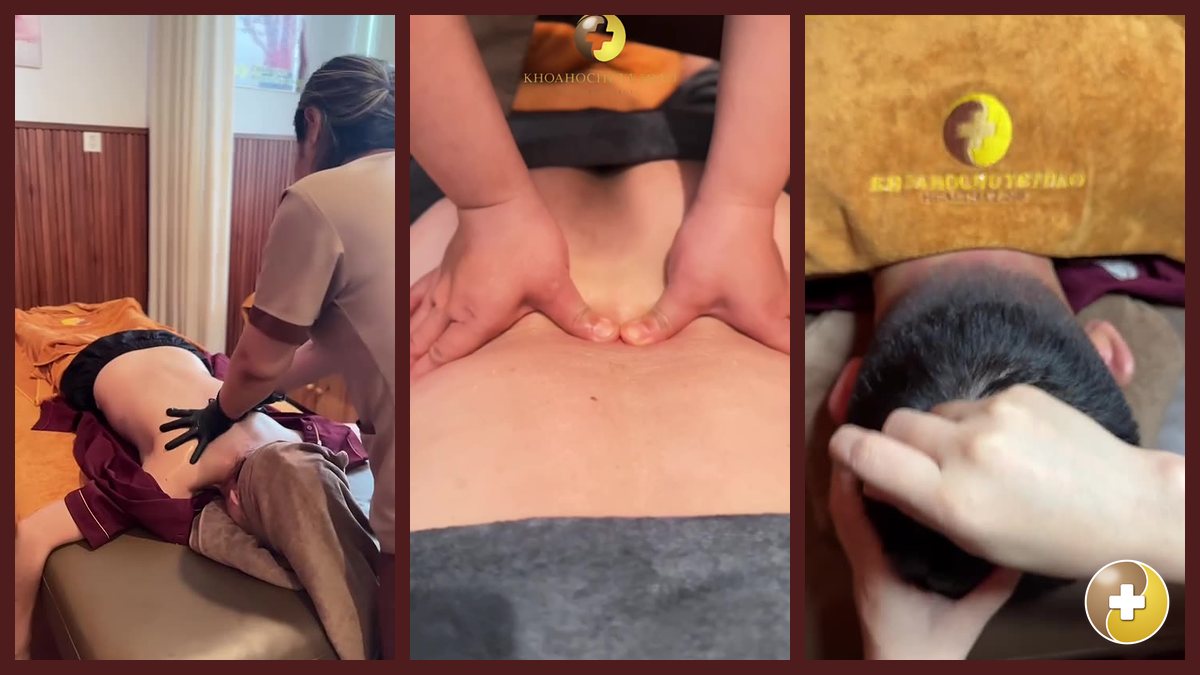
Quick answer: Student stress is when exams, projects and money worries keep your nervous system in alarm mode: headaches, a stiff neck, poor sleep, forgetfulness. Sleep, slow breathing and steady revision help most. Tong Gia Acupoint Wellness in Districts 12 and 9, Ho Chi Minh City helps the neck and upper back let go.
Want Lương Y Tống Văn Huynh’s team to read your spine and posture in person?
What is student stress?
During exam season in Ho Chi Minh City, Tong Gia hears the same story from students: classes by day, a part-time job in the afternoon, group projects in a rented room until 1 or 2 am. An iced milk coffee to wake up, instant noodles for lunch. By exam week the head feels as tight as a guitar string, the neck is stiff, the stomach churns and the heart pounds the moment you lie down. That is student stress: very common, but when it drags on it affects both health and grades.
The Western medical view: under pressure such as deadlines, exams or money worries, the brain activates the sympathetic nervous system and the stress hormone axis. The body releases adrenaline and cortisol, the heart speeds up and muscles brace to "cope". Short, moderate stress helps you focus. But when pressure piles up for weeks, the body never returns to rest mode: neck and shoulder muscles stay tight, sleep is lost, digestion gets upset, and memory and concentration drop exactly when you need them most.
Students are especially exposed because many changes arrive at once: first time away from home, shared rooms, managing money, studying while working, pressure over grades and future jobs, plus social media comparison. High school students preparing for entrance and graduation exams face similar pressure. Students under 16 must come with a parent to Tong Gia; if they have an underlying condition, parents should ask the medical staff who follow them first.
Common causes: why students stress so easily
- Cramming close to exams: a relaxed semester, then two weeks of all-nighters keep the body in alarm mode.
- Late nights and weekend catch-up sleep: four or five hours on weeknights, sleeping until noon at weekends; the body clock is thrown off.
- Coffee and energy drinks instead of sleep: drink to stay awake, struggle to sleep, drink more the next morning.
- Skipped meals: no breakfast, instant noodles, fried food, milk tea. The Tong Gia curriculum notes that skipping meals and irregular eating tire the digestive system.
- Long screen hours: laptop projects and phones push the head forward, lift the shoulders and make breathing shallow; the curriculum links shallow breathing and a slumped back to fatigue and tension.
- Too little exercise: no outlet for stress hormones, so evenings feel restless.
- Part-time work and rent worries: concerns with no deadline that last all semester.
- Social media comparison: scrolling before bed and seeing friends "doing better".
Other signs to watch
- Headaches at the temples or the back of the head, a heavy head in the afternoon.
- Stiff neck and shoulders, jaw clenching, a tired back after hours of sitting.
- Trouble falling asleep, broken sleep, dreams about exams, waking up tired.
- A racing heart, chest tightness, frequent sighing.
- Stomach ache, bloating, poor appetite or stress eating.
- Forgetfulness, reading the same page over and over, irritability with roommates.
- More breakouts in exam season, dry tired eyes.
When to see a doctor
Exam stress is normal, but some situations should not be handled alone. Please see a doctor at a medical facility, or a mental health professional, if:
- Low mood or loss of interest lasts more than two weeks, you avoid people or stop attending class.
- You have thoughts of harming yourself: tell someone close to you today and contact medical staff; this is urgent.
- Panic attacks: sudden pounding heart, breathlessness, shaking and intense fear.
- Crushing chest pain, shortness of breath or cold sweats, pain spreading to the left arm or jaw: call 115 (Vietnam's ambulance line) immediately.
- Insomnia almost every night for more than a month; unexplained weight loss or shaking hands: get checked at a medical facility alongside any wellness care.
- You rely on coffee, energy drinks or other stimulants and cannot cut down.
- You already follow advice from medical staff for mood, sleep or heart: keep following it and tell the practitioner before the session.
If your university has a student counselling service, use it early. This is a wellness service, not medical care.
The Y Tướng Học view: Heart, Liver and the worry that tires the Spleen
In the Tong Gia curriculum, the Heart houses the spirit and governs the mind: mood, awareness, thinking and sleep. The Liver keeps qi flowing smoothly; when it is disturbed, qi stagnates, the chest feels tight, irritability rises and sleep suffers. The curriculum also quotes "overthinking harms the Spleen": worry spoils appetite and causes bloating, and heavy worry drains the Heart and Spleen, bringing palpitations, poor sleep and forgetfulness. That is the picture of many students in exam season: the more you worry, the more you forget.
| Pattern (traditional view) | Typical student | Signs |
|---|---|---|
| Liver qi stagnation | Grade pressure, bottled-up feelings | Chest tightness, sighing, irritability, temple headaches, hard to fall asleep |
| Heart and Spleen depleted by worry | Cramming, irregular meals | Forgetfulness, palpitations, poor appetite, bloating, light sleep |
| Heart fire | Many late nights, lots of coffee | Restlessness, poor sleep, red tongue tip, mouth ulcers |
These are traditional concepts, not Western medical terms; the practitioner uses them to choose where to work.
What can be seen on the outside? Tong Gia's face reading follows "the outer form reflects the inner organs":
- Between the eyebrows: a narrow, sunken area with vertical lines and tight muscle is read as Heart blood stagnation: a pressed chest, sighing, palpitations and anxiety, with tension in the face, neck and shoulders.
- The upper corners of the forehead: sudden dullness or clustered spots are read as Liver and Gallbladder heat: poor sleep, nightmares, dry eyes.
- Ears set high, above the eyebrow line: a quick learner whose weak point is thinking day and night, leading to mild one-sided headaches or trouble sleeping between 11 pm and 1 am.
This is reference knowledge from one school of practice, not a medical assessment and never a judgement of character.
Spine segments and nerve-reflex areas involved
In the Tong Gia curriculum, C1–C7 relate to the head, face, neck and arms, and T1–T12 to circulation, breathing and digestion. For nervous-system complaints such as long-term stress, poor sleep and nervous exhaustion, the curriculum combines C1–C7, T1–T3 and the sacral area. In Western anatomy, the sympathetic nerve chain runs along both sides of the thoracic spine, which is why stressed people often have thick, warm, tender muscles in the upper back.
| Segment | Nerves and function | When a student is stressed | Related organ |
|---|---|---|---|
| C1–C2 | Head, back of the skull | Hot nape, heavy head, hard to fall asleep | Heart, Liver |
| C3–C7 | Neck, shoulders, arms | Stiff neck after laptop hours | Liver |
| T1–T3 | Chest, heart, lungs | Chest tightness, shallow breathing | Heart, Lung |
| T4–T5 | Area behind the heart | Startling easily, broken sleep | Heart |
| T11–T12 | Lower mid back, digestion | Bloating, poor appetite in exam season | Spleen, Stomach |
| Sacral area | Pelvic nerves | Tired lower back, shallow sleep | Kidney |
How Tong Gia works: spinal nerve-reflex balancing massage
The method was built by Lương Y Tống Văn Huynh, a master of traditional Vietnamese wellness with over 13 years in Eastern wellness, face reading and spinal nerve-reflex balancing. For stressed students, the aim is to help the body shift from alarm mode to rest mode: cool the head and nape, open the chest, relax the upper back, so sleep comes more easily and the mind feels lighter next day.
- Observation and questions: complexion, the area between the brows, breathing, raised shoulders; bedtime, coffee intake, exam schedule, health history.
- Reading the spine by hand: skin temperature, muscle layer and each vertebra from C1 to the sacrum, left against right.
- Releasing muscles: the base of the skull, neck, shoulders and between the shoulder blades; the curriculum uses a vibrating technique to create relaxing waves for nervous exhaustion.
- Acupressure: Neiguan (PC6) for tension and palpitations, Shenmen (HT7) to calm the mind, Baihui (GV20) at the crown to clear the head, Taichong (LR3) to ease tension in the traditional view.
- Self-care coaching: slow breathing, points to press before sleep, a study plan that avoids all-nighters.
A typical session
A typical session with a third-year student in the middle of a final project: raised shoulders, short breaths, vertical lines between the brows, three weeks of four or five hours' sleep and two coffees a day. The practitioner checks there is no chest pain and no lasting dark thoughts. The nape feels warmer than the back, and the muscles beside T1–T5 are thick and tender. After a few minutes of slow breathing, the practitioner works the neck and upper back with moderate, even pressure. Midway, many students fall asleep. The session ends at the head, Baihui and the wrists, with a demonstration of pressing Neiguan before an exam.
Services and prices
- Herbal hair wash with neck and shoulder massage, 60 minutes: 250,000 VND (about 10 USD), student-friendly.
- Neck and shoulder care, 60 minutes: 550,000 VND (about 21 USD); first visit 399,000 VND (about 15 USD).
- Heart wellness, 75 minutes: 750,000 VND (about 29 USD), when palpitations and poor sleep stand out.
Full prices are on the price list. Read more: acupressure for sleep in Saigon, Vietnamese head spa, neck and shoulder massage and massage near Thu Duc's Hi-Tech Park.
What you feel during and after
Most people feel tenderness at the nape and between the shoulder blades, then warmth and deeper breathing. Afterwards many students say they fall asleep faster that night, wake with a lighter head and can study longer. Responses differ; Tong Gia supports the body to rebalance and does not promise stress will disappear, because your schedule, sleep and sources of pressure still need sorting out.
Want Lương Y Tống Văn Huynh’s team to read your spine and posture in person?
Home care and prevention
- 4–6 breathing: in through the nose for 4 seconds, out slowly for 6 seconds, 5–10 minutes a day, before exams and before bed.
- Press Neiguan and Shenmen: gently, 1–2 minutes per side when your heart races and before sleep.
- Study in blocks: 45–50 minutes, then a 10-minute break to stand, stretch and drink water; revise steadily from mid-semester.
- Coffee before 2 pm, bed before 11 pm: a 15–30 minute nap around midday helps.
- Move 30 minutes a day and eat proper meals: walk, cycle or jog; eat breakfast, chew slowly, cut back on milk tea and fried food.
Book a session
- District 12: 225 Dương Thị Mười, Phường Tân Chánh Hiệp (Tan Chanh Hiep Ward, District 12). Open 8:00–19:00 daily.
- Vinhomes Grand Park, District 9: Căn T16-21 khu Manhattan, Phường Long Bình, TP. Thủ Đức (Unit T16-21, Manhattan zone, Long Binh Ward, Thu Duc City). Open 9:00–20:00 daily; convenient for students in Thu Duc City.
Book online or call, Zalo or WhatsApp +84 888 264 559. Tell us your main signs (headache, poor sleep, palpitations, stiff neck) and your exam dates. Students under 16 come with a parent. An early-evening slot lets you go straight home to rest. Real reviews are on each branch's Google Maps page. Studying in Ho Chi Minh City as an international student? Come and try a Vietnamese Eastern wellness method built by Lương Y Tống Văn Huynh.
Visit us
- Đông Y Huyệt Đạo Tống Gia Quận 12 (District 12)
225 Dương Thị Mười, Phường Tân Chánh Hiệp, Quận 12, HCMC · 8:00–19:00 daily · 0888 264 559 · Directions on Google Maps - Đông Y Huyệt Đạo Tống Gia Quận 9 (Vinhomes Grand Park, District 9)
Căn T16-21 khu Manhattan, Vinhomes Grand Park, Phường Long Bình, TP. Thủ Đức, HCMC · 9:00–20:00 daily · 0888 264 559 · Directions on Google Maps
Want Lương Y Tống Văn Huynh’s team to read your spine and posture in person?
FAQ
Is student stress harmful? Short stress before exams is normal and can sharpen focus. When it lasts for weeks it brings poor sleep, headaches, stomach trouble and forgetfulness. Low mood beyond two weeks, thoughts of self-harm, chest pain or breathlessness need a doctor right away.
How can I calm down before an exam? Sleep properly the night before, eat a light breakfast, limit coffee, and before entering the room do a few minutes of 4–6 breathing and press Neiguan for 1–2 minutes per side, as taught in the Tong Gia curriculum.
How do I unwind after classes? Step away from screens for 30 minutes, walk or move lightly, take a warm shower and eat a moderate dinner. A hair wash with neck massage or a neck and shoulder session also helps the nape and upper back let go.
Can stress cause headaches? Yes. Stress tightens the neck, shoulder and scalp muscles, which often causes tension headaches at the temples or the back of the head. A sudden severe headache with fever, stiff neck or slurred speech is an emergency.
Does massage help students with stress? Many students feel a lighter head and fall asleep more easily after a session as the neck and upper back relax and breathing slows. It is wellness support, not a replacement for good sleep, a sensible study plan or medical care when needed.
What happens if stress goes on for months? In Western terms, long-term stress keeps the sympathetic system switched on: faster heart, poor sleep, upset digestion, lower resistance. Do not carry it alone; talk to someone close and see medical staff if it clearly affects study or daily life.
Author: Lương Y Tống Văn Huynh – founder of Huyệt Đạo Tống Gia, a master of traditional Vietnamese wellness with over 13 years in Eastern wellness care, Y Tướng Học (face reading) and spinal nerve-reflex balancing massage.
Updated: 2026-11-17
Related guides
- Driving stress in Saigon traffic: why jams lock up the body and shorten the temper, and how to unwind after the wheel
- Student stress: why your body goes into alarm mode in exam season and how to ease it
- Nervous tension explained: what stress does in the body, how Eastern medicine sees it, and how to return to rest
- Exam stress before tests: what your child's body is doing and how to help them walk in calmer
- Trouble sleeping after giving birth: why you are exhausted yet wide awake
- Insomnia and "weak kidneys": what Eastern and Western medicine say, why you wake at night, and how to care for it
This is a wellness service, not medical care.