
Belching from stress: why tension makes you burp, and how Tong Gia helps the Liver and Stomach rebalance in Ho Chi Minh City
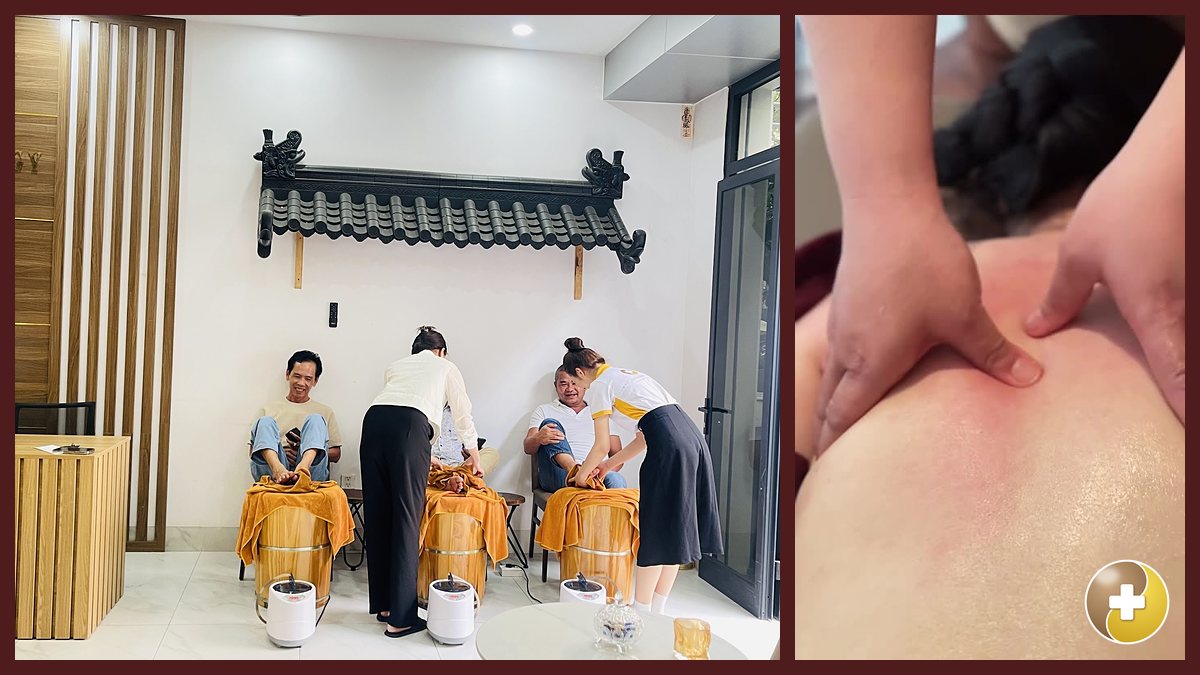
Quick answer: Belching from stress usually comes from shallow breathing and swallowing air when anxious, while the stomach slows down. Vietnamese tradition calls it stuck Liver qi pushing Stomach qi upwards. With swallowing trouble, weight loss or chest pain, get checked at a medical facility. Tong Gia Acupoint Wellness (Huyệt Đạo Tống Gia), Ho Chi Minh City, works by hand on D7–D12.
Want Lương Y Tống Văn Huynh’s team to read your spine and posture in person?
What is belching from stress, and who gets it?
Belching from stress is when you burp again and again, sometimes in long runs, at exactly the moments you feel under pressure: before a meeting, during a deadline week, while waiting for news, after an argument. You have hardly eaten, yet the upper belly feels tight and there seems to be a bubble of air stuck in your throat. Letting it out brings brief relief, then the fullness comes back. On holiday, with a relaxed mind, it happens much less.
From a Western point of view, a belch is the body pushing air from the stomach and oesophagus back out through the mouth. Most of that air was swallowed. Under stress we breathe fast and shallow through the chest, swallow saliva more often, talk quickly, eat in a rush, drink coffee and chew gum, so more air goes down than usual. The autonomic nervous system also changes how the stomach contracts, food stays longer and gas builds up. The Tong Gia training curriculum notes that tension and frustration easily cause bloating, stomach pain and bowel changes, and that "Western medicine also recognises the clear effect of stress on digestion".
In Ho Chi Minh City, Tong Gia Acupoint Wellness (Huyệt Đạo Tống Gia) often sees stress-related belching in:
- Office staff, accountants and sales teams in target season, eating lunch at the screen.
- Expats managing teams across time zones, with late calls and irregular meals.
- Small business owners who worry about cash flow and sleep late.
- Students in exam season, using coffee instead of breakfast.
- People caring for a sick parent, with little time for themselves.
Common causes: why does stress make you burp?
Not everyone who is stressed burps, and not every burp is about stress. In people whose belching follows their pressure levels, we usually see a set of habits together:
- Swallowing air when anxious: shallow chest breathing, frequent swallowing, talking during meals, sucking sweets, chewing gum.
- Eating fast, chewing little: the curriculum notes this makes the stomach grind more and leads to gas.
- Coffee on an empty stomach, fizzy drinks: the first coffee before food, a soda at lunch.
- Skipping meals then overeating, eating late: the stomach works when the body should rest, with more reflux and poorer sleep.
- Sitting hunched for hours: the upper belly is compressed and the diaphragm hardly moves.
- Poor sleep: the mind never switches off, and the burping starts on waking.
The Eastern view: stuck Liver qi pushes Stomach qi upwards
Vietnamese traditional medicine explains stress belching through the relationship between the Liver and the Spleen–Stomach. The Liver "governs free flow", keeping qi moving smoothly, and works with the Spleen and Stomach to process food. The Liver is also tied to emotion: the curriculum says long-held anger makes Liver qi stagnate, and stagnant Liver qi makes a person irritable and unable to relax. In five-element terms, Wood (Liver) controls Earth (Spleen). When Liver qi is stuck, it presses on the Spleen and Stomach, a pattern called Liver–Stomach disharmony. Stomach qi should move downwards; when it rises instead, the curriculum lists belching, nausea, hiccups and reflux. Worry also "harms the Spleen": poor appetite and bloating. In short, stress jams the Liver, and the Stomach can no longer push down, so air comes up. This is the traditional explanation; Western medicine sees the same thing through the autonomic nervous system and air swallowing. The two views complement each other.
Signs that often come with it
| Accompanying sign | Leans towards | Why (per the source) |
|---|---|---|
| Burping when annoyed, tight sides of the ribs, sighing, irritability | Liver qi stagnation | Liver governs free flow and emotion; Wood controls Earth |
| Fullness, slow digestion, burping after meals | Stomach | Stomach "ripens" food; when disturbed, bloating and belching |
| Nausea, hiccups, sour burps, reflux | Rebellious Stomach qi | Stomach qi should descend |
| Bitter taste, trouble with fatty food, fullness under the ribs | Liver–Gallbladder | Bile helps flow and fat digestion |
| Poor appetite, bland taste, tired after eating | Spleen | Worry harms the Spleen |
| Light sleep, palpitations, forgetfulness | Heart–Spleen | Overthinking harms Heart and Spleen |
When to see a doctor
Stress belching is usually harmless, but burping can come with problems that need an endoscopy or tests. The curriculum reminds us that upper abdominal pain can come from the stomach, gallbladder, pancreas or even the heart. Please see a doctor if belching comes with:
- Vomiting blood or coffee-ground material; black or bloody stools.
- Difficulty or pain when swallowing, food feeling stuck.
- Unexplained weight loss, lasting loss of appetite.
- Sudden severe abdominal pain; yellow skin or eyes.
- Anaemia, pale skin, heavy tiredness.
- Sour burps, burning behind the breastbone, dry cough or hoarseness for several weeks.
- Digestive symptoms starting after 50, or a family history of stomach cancer.
Belching with chest pain, pain spreading to the left arm or jaw, breathlessness or sweating: call 115 (Vietnam emergency) immediately. Do not massage.
This is a wellness service, not medical care. Our technicians do not replace endoscopy results and never advise stopping prescribed medication.
The face-reading view: what stress belchers tend to look like
Y Tướng Học (face reading for wellness) teaches that "the appearance is outside, the organs are inside". Part 3 of the curriculum describes a few signs technicians watch for:
- The "Thân" (申) face: wide in the middle, narrow at both ends, with broad cheekbones. The curriculum links it to an overactive Liver–Gallbladder pressing on the Spleen–Stomach, the classic Liver–Stomach disharmony: under stress, stomach pain, reflux, tightness along the ribs, one-sided headaches. On the back, the key zone sits around D7–D9.
- Eyebrows that meet in the middle: a sign of deep Liver qi stagnation, with stress reflux, chest tightness, frequent sighing and a tense face.
- Liver shows in the eyes, nails and tendons: dry tired eyes, irritability, a tight neck and shoulders, cramps.
- Spleen shows in the mouth, lips and muscle: pale lips, bloating, heaviness; the related emotion is worry.
- Muscle that feels hard as wood: qi and blood stagnation from mental pressure, with deep tension in the trapezius and the long back muscles.
This is reference knowledge of the school, used to choose where to check first, not a medical finding and never a judgement of character. More in Eastern face reading for wellness: Q&A.
Spine segments and nerve-reflex zones involved
According to the Tong Gia curriculum, the thoracic spine D1–D12 relates to circulation, breathing and digestion, and the internal organ group, including stomach and digestive complaints, is worked through D1–D12 and L1–L3. For stress belching, technicians pay attention to:
| Segment | Nerve / function | Common signs | Organ (Eastern view) |
|---|---|---|---|
| C1–C7 and D1–D3 | Nervous and emotional group in the school | Tension, poor sleep, stiff neck | Heart, Liver |
| D4–D5 (between shoulder blades) | D1–D12: circulation; Heart and Pericardium back points | Chest tightness, palpitations, sighing | Heart |
| D7–D9 | D1–D12: digestion; Liver back point area | Burping when annoyed, rib tightness | Liver |
| D10 | Gallbladder back point area | Bitter taste, trouble with fats | Gallbladder |
| D11–D12 | Spleen point under T11, Stomach point under T12 | Fullness, belching, poor appetite | Spleen–Stomach |
These are "related" zones for orientation, not a cause. In stress belchers, the mid back often feels warmer, with ropey tight muscle on both sides of D7–D12. Under the curriculum's rule, such excited zones are the ones to work on; cool, inhibited zones are not pressed directly.
The Tong Gia method: spinal nerve-reflex balancing massage
The method was built by Lương Y Tống Văn Huynh, a master of traditional Vietnamese wellness and founder of Tong Gia, with over 13 years in Eastern wellness care, face reading and spinal nerve-reflex balancing. The school sees the head and spine as the root: the head is the central nervous system, the spine carries the autonomic system that runs automatic functions such as digestion. A session for stress belching has five steps:
- Observe: when the burping started, when it happens, any sour burps, bitter taste or poor sleep; face shape, eyebrows, complexion, lip colour, breathing pattern.
- Read the spine by hand: skin temperature, muscle layer, vertebra shape and sensation, left against right, narrowing down to the key point.
- Release the muscles: pushing and rotating for tight bands, light plucking for fibrous spots, then vibration to send a relaxing wave, light to moderate pressure in a steady rhythm.
- Press the right points: Liver, Gallbladder, Spleen and Stomach back points; Zhongwan on the upper belly, gently and never right after a meal; Neiguan on the wrist for nausea and calm; Taichong on the foot to "smooth the Liver"; Zusanli and Gongsun. Work stops once the skin over a key point turns from dry to slightly moist.
- Self-care guidance: slow belly breathing, wrist and foot points, belly rubbing, meal times and pace.
A typical session
A guest comes in after work and burps twice while sitting down, a little embarrassed. The technician asks about work, lunch and sleep, and notices chest breathing and raised shoulders. Face down, the neck and shoulders are stiff and the mid back around D7–D9 is warm and banded. The technician pushes and rotates until the band softens, vibrates in time with the guest's breathing, then presses the Liver and Spleen points. Many people release a long burp right then, after which the upper belly settles and the breath drops into the abdomen. Face up, the technician works Neiguan and Taichong and rubs the belly clockwise. Afterwards guests often say their head is lighter and the belly calm. We do not promise the burping stops after one visit; daily rhythm and eating habits are what keep it away.
Suitable services and prices
- Liver wellness care, 75 minutes: 750,000 VND (about 29 USD). For burping when annoyed, rib tightness, irritability, tight neck.
- Spleen–Stomach wellness care, 75 minutes: 750,000 VND (about 29 USD). For burping with fullness, poor appetite, rushed meals.
- Vietnamese traditional massage, 60 minutes: 450,000 VND (about 17 USD). A good start to release the back and shoulders after a tense week.
See all prices. If jet lag and long flights add to your stress, read jet lag massage in Saigon: Q&A; for the first-time acupressure experience, see acupressure massage in Saigon: Q&A.
Want Lương Y Tống Văn Huynh’s team to read your spine and posture in person?
Self-care at home and prevention
- Slow belly breathing, 4 in and 6 out: 5–10 minutes before meals and when anxious; slower breathing also means less swallowed air.
- Eat slowly, chew well, no work at the table: give each meal 20–30 minutes; keep dinner light, 2–3 hours before bed.
- Press Neiguan and Taichong: Neiguan is two thumb-widths above the wrist crease between the tendons; Taichong is on the top of the foot between the big and second toes. Press gently 1–2 minutes each side.
- Rub around the navel: clockwise 30–50 circles, never straight after a big meal and not during pregnancy.
- Walk gently 10–15 minutes after meals: avoid lying down straight away; cut back on fizzy drinks, gum and coffee on an empty stomach.
Book a session
- District 12: 225 Dương Thị Mười, Phường Tân Chánh Hiệp (Tan Chanh Hiep Ward). Open daily 8:00–19:00.
- Vinhomes Grand Park: Căn T16-21 khu Manhattan, Phường Long Bình, TP. Thủ Đức (Unit T16-21, The Manhattan, Long Binh Ward, Thu Duc City, formerly District 9). Open daily 9:00–20:00.
Call, Zalo or WhatsApp +84 888 264 559, or book online. Please come at least an hour after eating. While you are in Ho Chi Minh City, it is an easy way to experience a Vietnamese traditional method in person. Real ratings and reviews are on each branch's Google Maps profile.
Visit us
- Đông Y Huyệt Đạo Tống Gia Quận 12 (District 12)
225 Dương Thị Mười, Phường Tân Chánh Hiệp, Quận 12, HCMC · 8:00–19:00 daily · 0888 264 559 · Directions on Google Maps - Đông Y Huyệt Đạo Tống Gia Quận 9 (Vinhomes Grand Park, District 9)
Căn T16-21 khu Manhattan, Vinhomes Grand Park, Phường Long Bình, TP. Thủ Đức, HCMC · 9:00–20:00 daily · 0888 264 559 · Directions on Google Maps
Want Lương Y Tống Văn Huynh’s team to read your spine and posture in person?
FAQ
Is belching from stress dangerous? Stress-related burping is usually harmless and eases when you rest. Get checked if it comes with trouble swallowing, weight loss, vomiting blood, black stools, weeks of sour burps, or if it starts after 50. With chest pain, breathlessness or sweating, call 115 at once.
Why do I keep burping all day? Most often from swallowing air: eating fast, talking during meals, shallow breathing when anxious, fizzy drinks. Reflux, gastritis or indigestion can also cause it, so lasting burping should be checked at a medical facility. The Eastern view looks at Stomach qi rising and Liver qi stagnation.
Why does it feel like air is stuck in my throat? A bubble-in-the-throat feeling that eases after a burp often goes with tension and chest breathing. If food sticks, swallowing hurts, you lose weight or stay hoarse, get your oesophagus and stomach checked.
Why is it worse at night? Usually from late dinners, lying down on a full stomach, or a busy mind at bedtime. Eat 2–3 hours before bed, take a short walk after dinner and breathe slowly before sleep. With sour burps or night cough, ask about reflux.
Can massage and acupressure help? They help you relax and breathe deeper, and many guests release trapped air and feel the belly settle during the session. At Tong Gia we release D7–D12 and press Liver, Spleen, Neiguan and Taichong points. It is support, ideally combined with slower meals and enough sleep.
How soon will it ease? It depends on your stress level and habits. Many feel lighter after the first session; steadier change usually takes a few sessions one to two weeks apart, plus home care. We will tell you honestly what we find on your back.
Author: Lương Y Tống Văn Huynh – founder of Huyệt Đạo Tống Gia, a master of traditional Vietnamese wellness with over 13 years in Eastern wellness care, Y Tướng Học (face reading) and spinal nerve-reflex balancing massage.
Updated: 2026-11-16
Related guides
- Recurring stomach pain: why it keeps coming back, when to get checked and the Eastern view of digestion
- Stomach pain and vomiting: the main causes, signs that need urgent care and the Eastern view of rising Stomach qi
- Stomach pain with diarrhea: the main causes, red flags and the Eastern view of digestion
- Dark spots on lips: causes, when to see a doctor, and what Y Tướng Học face reading notices
- Acid reflux with a burning throat: why stomach acid reaches the throat, red flags and the Eastern view of digestion
- Acid reflux and a white tongue: why the coating builds up, when to see a doctor, and what face reading notices
This is a wellness service, not medical care.