
How to make bồ kết herbal hair wash at home, rinse without stinging eyes, and when a Tong Gia head wash makes sense
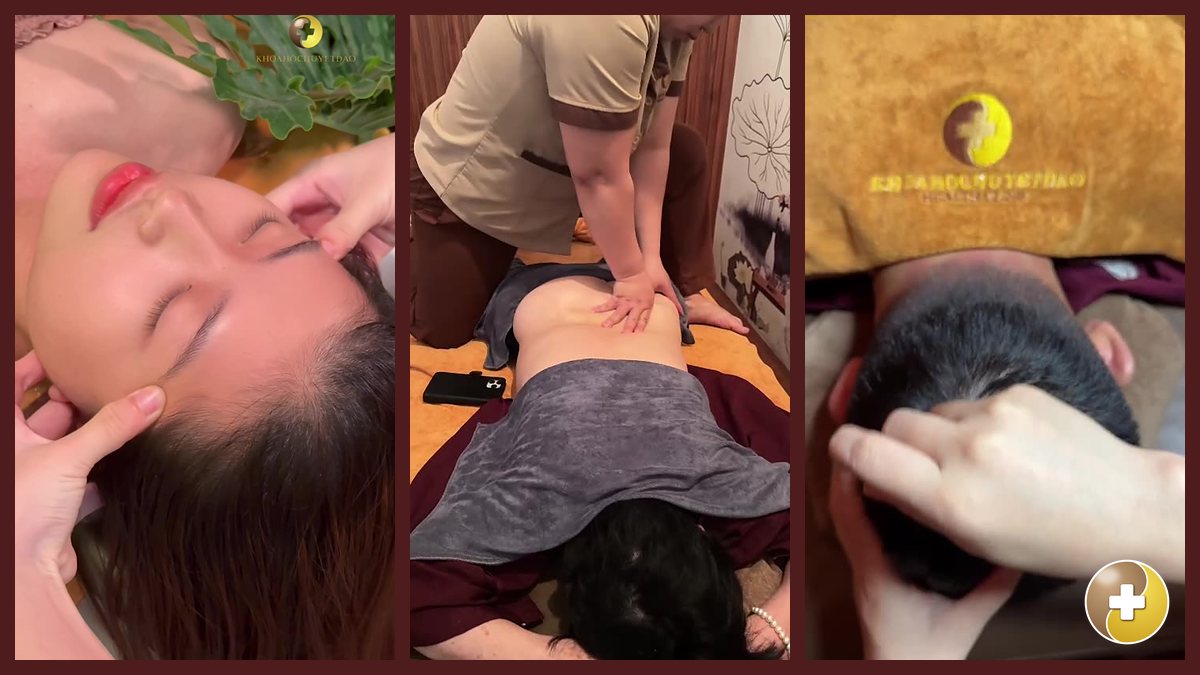
Quick answer: To make bồ kết (honey locust pod) hair wash, toast 8–10 dried pods, simmer them with pomelo peel, lemongrass and holy basil in 2 litres of water for 15–20 minutes, rest 10 minutes, strain well and wash while warm, pouring from crown to nape. Tong Gia in District 12 and District 9 offers herbal washes with neck massage.
Want Lương Y Tống Văn Huynh’s team to read your spine and posture in person?
What is bồ kết hair wash, and why do so many people in Saigon still make it at home?
Bồ kết is the dried pod of the honey locust tree, sold in bundles at every Vietnamese market. Boiled in water, often with pomelo peel, lemongrass and holy basil, it becomes a traditional herbal hair wash. In Western terms, the pod contains saponins, natural compounds that foam lightly when rubbed with water and lift oil and dust off the scalp. The foam is much lighter than commercial shampoo, so hair feels clean and light rather than slippery. The peel and herbs add a fresh scent and a cooling feel.
On a weekend afternoon in many Saigon alleys you can smell pods toasting on a stove. People who make it at home include:
- Office workers in air-conditioned rooms all day, whose scalps get oily without much air.
- Expats and locals who commute by motorbike or Grab bike under a helmet for 30–60 minutes each way.
- Older Vietnamese family members who grew up with the scent and prefer a home-made wash.
- Anyone with a heavy head and stiff neck after work who wants a wash that also feels like a rest.
To be clear from the start: bồ kết is a way to clean and relax, not a fix for hair loss or a scalp condition. If you mainly want to know what a salon-style herbal wash feels like, read our herbal hair wash Q&A and the herbal hair wash experience.
How to make bồ kết hair wash at home: amounts and steps
This makes about 2 litres, enough for one wash of medium-length hair. Halve it for short hair.
| Ingredient | Amount per wash | What it does | Tip |
|---|---|---|---|
| Dried bồ kết pods | 8–10 (long, thick hair: 12–15) | Light foam, lifts oil and dust | Toast until fragrant, never black |
| Pomelo peel | Half a fruit, fresh or dried | Fresh scent | Scrape off most of the white pith |
| Lemongrass | 3–4 stalks | Warm aroma | Bruise and cut into pieces |
| Holy basil (hương nhu) | A small handful, 20–30 g | Herbal scent | Rinse, discard wilted leaves |
| Clean water | 2–2.5 litres | Base | First time, dilute 1:1 |
- Toast the pods over a low flame for 2–3 minutes until they puff slightly and smell nutty; snap them into short pieces.
- Simmer everything in cold water, bring to the boil, then keep it on a gentle simmer for 15–20 minutes. Longer makes the liquid thick and more likely to sting.
- Rest with the lid on for 10–15 minutes.
- Strain through a sieve and then a thin cloth, so no fragments end up tangled in your roots.
- Cool to warm. Test on your wrist; water that is too hot dries the scalp, which then makes more oil.
Use it the same day. Leftovers keep, covered, in the fridge for 2–3 days; throw it out if it smells sour. If your skin is sensitive, patch-test a little behind the ear and wait 24 hours.
Common causes of an oily, itchy, heavy head in Ho Chi Minh City
- Heat, humidity and helmets: the helmet traps heat and sweat, and an unwashed liner presses old oil back onto the scalp.
- Traffic dust: fine dust sticks to scalp oil; one quick wash does not lift it all.
- Product build-up: conditioner at the roots, wax, gel or dry shampoo used for days.
- Washing the wrong way: very hot water, scratching with nails, washing far too often or too rarely.
- Sleeping with wet hair under air conditioning.
- Posture and stress: hours over a phone or laptop tighten the deep muscles at the base of the skull. According to the Tong Gia curriculum, long-term mental pressure can tighten the whole scalp muscle (occipitofrontalis) and the shoulder-lifting muscles, so neck fatigue spreads up into the head. A herbal wash alone will not loosen that.
Signs worth noticing when you wash
- Your head still feels heavy after washing, and the base of the skull aches.
- The scalp feels tender when you touch or brush your hair.
- Heavy dandruff despite regular washing.
- Hair that is dry, brittle or falling more than usual.
- Light sleep and a heavy head on waking.
- Redness or stinging right after a bồ kết wash: stop using it.
At Tong Gia these signs help decide where to start: scalp, base of the skull or shoulders. They are not used to name any illness.
When to see a doctor
If you notice any of the following, please see a doctor (dermatology or neurology) at a medical facility rather than relying on a herbal wash or massage:
- Hair falling out in round patches, or unusually fast thinning.
- A red, burning scalp that weeps or crusts, pus-filled spots or painful swelling.
- Thick scales spreading to the forehead, behind the ears or the neck.
- Intense itching for weeks despite washing.
- Wash water in the eye that still hurts, stays red or blurs vision after rinsing well.
- Heavy hair loss with tiredness, weight loss or pale skin: get checked at a medical facility at the same time.
- A sudden, severe headache unlike any before, with vomiting, fever, stiff neck, weakness or slurred speech: call 115 straight away.
This is a wellness service, not medical care.
The Y Tướng Học view: what hair and scalp say about the organs
Y Tướng Học (face reading for wellness) in the Tong Gia curriculum follows one principle: "the signs show outside, the organs lie inside". For hair and scalp, the curriculum points to three organ systems in Eastern wellness terms (functional systems, not a statement that your physical organs are unwell):
- Kidney (Thận) nourishes the hair: glossy dark hair reflects ample essence and blood; when the Kidney system is weak, hair turns dry, falls or greys early.
- Lung (Phế) governs skin and body hair: with damp-heat in the Liver–Gallbladder or heat in the Spleen–Stomach, sweat turns oily and smelly and the skin itches, which is exactly the greasy scalp of Saigon's hot season.
- Liver (Can) and the Gallbladder meridian: long pressure makes Liver qi stagnate and you struggle to relax; the Gallbladder meridian runs along the sides of the head and shoulders.
Practitioners also look at head shape: a flat back of the skull is read as a sign of weak Kidney essence, often with tight deep muscles at C1–C3; a thin scalp stretched tight over bone leans towards Liver–Kidney yin deficiency and tension headaches. Face reading only helps choose where to feel first; it is never used to judge character or name a disease.
Spine and nerve-reflex areas involved when you wash your hair
In the Tong Gia spinal nerve-reflex balancing curriculum, the cervical vertebrae C1–C7 serve the head, face, neck and arms. Nerve roots leave the spinal cord between the vertebrae, which is where the practitioner's fingers feel. Bending your neck over a basin for ten minutes loads exactly this area.
| Vertebra / area | Nerves, function | Common feeling | Related organ (Eastern view) |
|---|---|---|---|
| C1–C2, under the skull | Upper neck serving the head; deep sub-occipital muscles | Heavy, warm back of the head after bending to wash | Kidney, Liver |
| C3–C7 | Neck, shoulders, arms | Stiff neck, shoulders tight up into the head | Liver governs the sinews; Gallbladder meridian |
| T1–T3 | Upper back | Tension between the shoulder blades | Lung (Phế Du at T3) |
| Crown, Bách hội (GV20, 百会) | Clears the head, calms the mind | Tight head, hard to switch off | Governing Vessel |
The table shows related areas to choose where to work. It is not a finding about any illness.
Want Lương Y Tống Văn Huynh’s team to read your spine and posture in person?
The Tong Gia method: herbal wash plus spinal nerve-reflex balancing
This Vietnamese Eastern wellness method was developed by Lương Y Tống Văn Huynh, a master of traditional Vietnamese wellness and founder of Tong Gia Acupoint Wellness (Huyệt Đạo Tống Gia), with over 13 years in Eastern wellness, Y Tướng Học and spinal nerve-reflex balancing. The wash is the outer layer; helping the neck, shoulders and nervous system settle is the inner layer.
- Observe: helmet hours, washing habits, sleep; scalp, roots, complexion and head shape.
- Read the spine by hand from C1 to C7 and T1–T3, comparing left and right to find "excited" areas: warmer skin, tighter muscle, more tenderness.
- Muscle release of the deep neck and shoulder muscles, building through 5 pressure levels, only on excited areas.
- Lying-down herbal wash: your neck is supported and the water runs back from the hairline, so nothing reaches your eyes.
- Acupressure: gentle hold on Bách hội and the tight points under the skull, stopping when the skin turns from dry to slightly moist.
- Home tips: how to wash without folding your neck, and a 3–5 minute self-massage.
A typical session: the guest is often an office worker who already makes bồ kết at home but still feels a heavy head afterwards. The practitioner finds one side under the skull firmer and warmer, spends about ten minutes releasing it, then moves to the lying wash with warm herbal water and a slow hold on the crown. Many guests doze off at this point.
Suitable services (single-visit prices, see full prices and the Vietnamese head spa page):
- Gội đầu trược khí (herbal hair wash), 45 min: 150,000 VND (about 6 USD). Herbal wash and scalp massage.
- Hair wash with neck and shoulder massage, 60 min: 250,000 VND (about 10 USD). Adds muscle release at C1–C3 and the shoulders.
What guests feel: a cool, lightening scalp, a pleasant ache on tight points under the skull, and often sleepiness at the crown hold. Afterwards most describe a lighter head and an easier neck turn; a few feel mild neck soreness the next day. Tong Gia supports balance; it does not promise an end to hair fall or tension after one wash. For more on the hands-on side, see the Vietnamese head spa Q&A and the neck and shoulder massage Q&A.
Self-care at home and prevention
- No-sting rinsing: wet your hair first, pour from the crown back to the nape, wrap a thin towel along the hairline, keep your eyes closed. If it gets in your eye, rinse with plenty of clean water; do not rub.
- Do not fold your neck: raise the basin to chest height or wash standing in the shower; afterwards roll your shoulders slowly ten times.
- Frequency: oily hair 1–2 bồ kết washes a week, a mild shampoo on other days; dry or coloured hair less often.
- Dry your roots before bed, and let sweat dry for 15–20 minutes after a hot ride before washing.
- 3–5 minute self-massage: fingertips in small circles from forehead to crown, a light press on Bách hội for a few slow breaths, then along the base of the skull.
Booking
- District 12: 225 Dương Thị Mười, Phường Tân Chánh Hiệp, Quận 12 (District 12), daily 8:00–19:00.
- Vinhomes Grand Park: Căn T16-21 khu Manhattan, Phường Long Bình, TP. Thủ Đức (Thu Duc City, former District 9), daily 9:00–20:00.
WhatsApp or Zalo +84 888 264 559 (0888 264 559 inside Vietnam), or book online. You can read genuine reviews on Google Maps from each branch page. Staff mainly speak Vietnamese and reply in English with a translation tool. If you live in or visit Ho Chi Minh City, you are welcome to try this Vietnamese wellness method in person.
Visit us
- Đông Y Huyệt Đạo Tống Gia Quận 12 (District 12)
225 Dương Thị Mười, Phường Tân Chánh Hiệp, Quận 12, HCMC · 8:00–19:00 daily · 0888 264 559 · Directions on Google Maps - Đông Y Huyệt Đạo Tống Gia Quận 9 (Vinhomes Grand Park, District 9)
Căn T16-21 khu Manhattan, Vinhomes Grand Park, Phường Long Bình, TP. Thủ Đức, HCMC · 9:00–20:00 daily · 0888 264 559 · Directions on Google Maps
Want Lương Y Tống Văn Huynh’s team to read your spine and posture in person?
FAQ
How do I make bồ kết hair wash at home? Toast 8–10 dried bồ kết pods, snap them, and simmer with half a pomelo peel, 3–4 lemongrass stalks and a handful of holy basil in 2 litres of water for 15–20 minutes. Rest 10 minutes, strain through cloth and wash while warm.
What does a herbal shampoo actually do? A herbal wash such as bồ kết lifts oil and dust with a light foam and leaves a pleasant scent and a relaxed feeling. It is hygiene and relaxation; it does not replace a check-up at a medical facility for a scalp condition or patchy hair loss.
Does bồ kết stop hair loss? Do not expect it to. In Eastern wellness terms hair relates to the Kidney system and blood, so sleep, food and stress matter more. Heavy or patchy hair loss, or hair loss with tiredness and weight loss, should be checked at a medical facility.
Why does bồ kết sting my eyes, and how do I avoid it? The foam is naturally irritating to eyes. Pour from the crown towards the nape, wrap a thin towel along your hairline and keep your eyes closed. If it gets in, rinse with lots of clean water and do not rub.
Is a scalp massage worth it with a herbal wash? Many people find it the most relaxing part: the scalp muscle and the muscles under the skull let go and the head feels lighter. At Tong Gia, scalp massage always comes with reading and releasing the upper neck, C1–C3.
My scalp hurts when I touch my hair. Why? Tenderness often comes from a scalp muscle and neck muscles that have been tight for a long time, a helmet-heated scalp, or irritation from scratching or hot water. With redness, weeping, pus or a severe headache, get checked at a medical facility.
Author: Lương Y Tống Văn Huynh – founder of Huyệt Đạo Tống Gia, a master of traditional Vietnamese wellness with over 13 years in Eastern wellness care, Y Tướng Học (face reading) and spinal nerve-reflex balancing massage.
Updated: 2026-11-15
Related guides
- How to make bồ kết herbal hair wash at home, rinse without stinging eyes, and when a Tong Gia head wash makes sense
- Frequent headaches in Ho Chi Minh City: five common types, the warning signs, and how Tong Gia can help
- Headache on one side of the head: six common causes, when to worry, and how Tong Gia can help in Ho Chi Minh City
- Scalp detox in Ho Chi Minh City: deep cleaning, scalp massage and neck release at Tong Gia
- Headache when coughing: four common causes, the warning signs, and how Tong Gia supports neck and breathing in Ho Chi Minh City
- Poor brain circulation in Ho Chi Minh City: why you get checked first, and how Tong Gia cares for a stiff neck afterwards
This is a wellness service, not medical care.