
Headache when coughing: four common causes, the warning signs, and how Tong Gia supports neck and breathing in Ho Chi Minh City
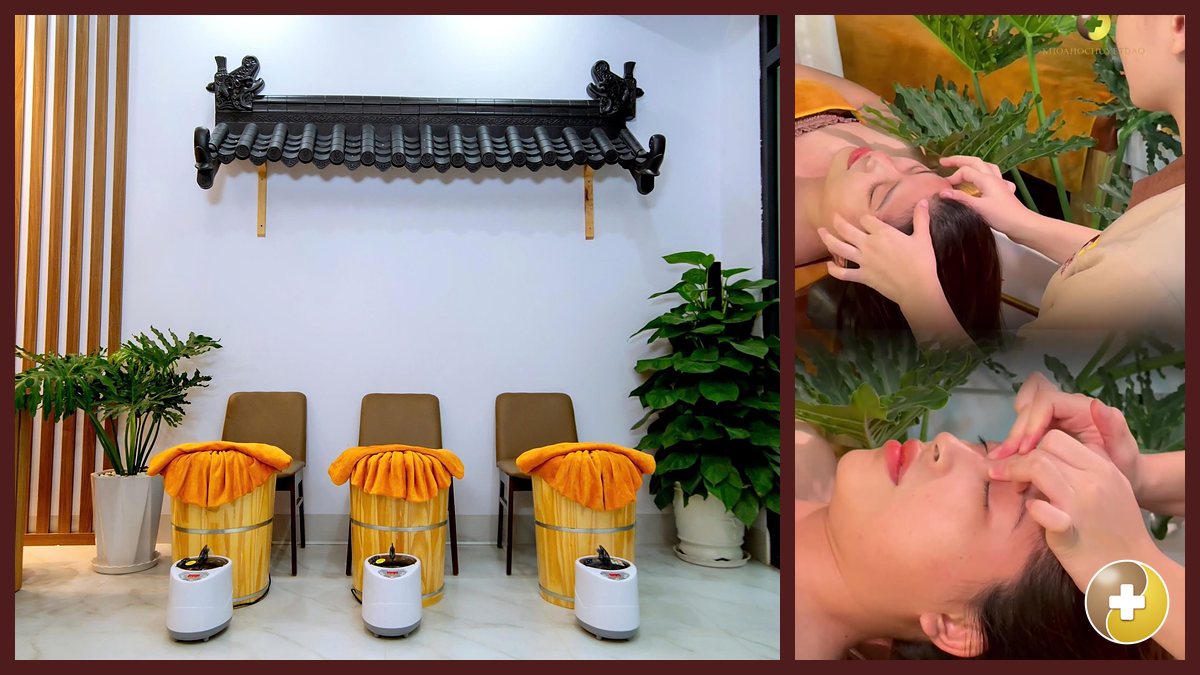
Quick answer: A headache when you cough usually comes from heavy coughing during a cold or sinus infection and from neck muscles strained by repeated coughing; there is also a benign cough headache after 40. A first episode should be checked. Tong Gia in District 12 and District 9, Ho Chi Minh City offers hands-on neck care.
Want Lương Y Tống Văn Huynh’s team to read your spine and posture in person?
Cough headache: what it is in Western terms, and who gets it
A cough headache is a headache that comes on as you cough, or right after a coughing fit, and fades once the coughing stops. Many people also feel it when they sneeze, laugh hard, strain, bend down or lift something heavy. It is a symptom, not one disease. In Western physiology, every strong cough sharply raises pressure in the chest and abdomen for a moment, briefly slowing blood flow back from the head and causing a short rise in pressure inside the skull. Most people feel nothing; but if the pain-sensitive structures around the brain, the neck muscles or the sinuses are already irritated, that brief surge is enough to make the head throb.
Among expats and visitors in Ho Chi Minh City, we often hear about it from:
- People with a cold, flu, sore throat or sinus infection, coughing in bouts for days, with a hammering head each time.
- People with a lingering cough after a cold, or a cough from air-con and traffic fumes, whose neck, shoulder and chest muscles are worn out from coughing.
- Desk workers with a forward head posture whose neck was already tight before the cough began.
- People over 40 who get a few seconds of sharp head pain whenever they cough or sneeze hard, and feel fine otherwise.
- Younger people with cough headache plus dizziness or unsteadiness: this group should get checked early.
For the wider picture of head and neck care, see our headache and dizziness acupressure page.
Common causes: four groups
| Group | Typical feeling | Who | What to do |
|---|---|---|---|
| Coughing during a cold, flu or sinus infection | Achy head, forehead or back of the head, worse the more you cough | Anyone with a respiratory infection and coughing fits | Rest, fluids; high fever or breathlessness needs a medical check |
| Neck and shoulder strain from repeated coughing | Dull, heavy at the back of the skull, rising to the crown, tired neck | People with a long cough, desk workers with a stiff neck | Gentle muscle release, keep the neck warm; cough over 2 weeks needs a check |
| Primary cough headache (benign) | Sudden sharp pain for seconds to minutes as you cough, sneeze or strain, often both sides or the back | Mostly over 40, more men | Still get the first episode checked |
| Secondary cough headache | Longer-lasting pain with dizziness, unsteadiness, fainting, blurred vision | More often under 40 | Get checked early for imaging and assessment |
Coughing during an infection
This is the everyday case. Viral infections bring fever, tiredness, mild dehydration and a blocked nose; congested sinuses already make the forehead and cheeks feel heavy. Each strong cough pushes pressure into the head and face, so the headache pulses with the cough. It usually eases as the cold passes.
Strained neck and shoulder muscles
Coughing works not only the chest and abdominal muscles but also the sternocleidomastoid, the trapezius and the deep muscles under the skull, which brace the head. Coughing hundreds of times a day for a week or two is like a non-stop workout for them: a stiff neck, a heavy back of the head, tiredness when turning. The Tong Gia curriculum notes that long-term strain tightens the occipitofrontalis and levator scapulae, causing neck and shoulder ache that spreads into the head; a long cough is a mechanical strain of exactly this kind.
Primary and secondary cough headache
Medicine describes a specific headache that appears only with coughing, sneezing, laughing, straining or bending: sudden, sharp, often on both sides or at the back, lasting from a second to a few minutes, sometimes longer. It is more common over 40 and usually harmless. A smaller group is secondary, linked to a structural problem inside the skull or where the skull meets the neck, a spinal fluid leak or a blood vessel problem. These cases are more common in younger people, last longer and often come with dizziness, unsteadiness, numb hands or fainting. Because the two groups can look alike, any new cough headache deserves a medical check.
Signs worth noting
- Duration: a few seconds during the cough, or hours afterwards.
- Location: forehead and cheeks (sinus), back of the skull and neck (muscles), the whole head, or one side.
- Companions: fever, blocked nose, sore throat; stiff neck; dizziness, unsteadiness, ringing ears; numb hands; blurred or double vision.
- The cough itself: dry or with phlegm, its colour, how long it has lasted, any wheeze or breathlessness.
- Other triggers: sneezing, straining, bending, lifting; your age; any past head or neck injury.
When to see a doctor
- The first time you get a headache with coughing, sneezing or straining, even if it lasts only seconds.
- Pain lasting hours after coughing, or getting worse over time.
- Dizziness, unsteadiness, numb hands, fainting, blurred or double vision, trouble swallowing.
- A cough lasting over 2 weeks; coughing up blood; high fever with cloudy phlegm; night sweats or a low evening fever that persists.
- Breathlessness at rest, a first-time wheeze, or bluish lips or fingertips.
- Tiredness, pale skin or unexplained weight loss: get checked in parallel.
Call 115 immediately for a sudden, severe "worst ever" headache, or headache with vomiting, stiff neck, confusion, seizure, weakness or numbness on one side, facial droop or slurred speech, or a cough with chest pain, shortness of breath or cold sweat.
This is a wellness service, not medical care. During a fever, an acute cough or any of the signs above, our practitioners will not work and will ask you to get checked first.
The Y Tướng Học view: Lung, Liver and Kidney
Y Tướng Học (face reading for wellness) in the Tong Gia curriculum holds that outer signs reflect the inner organs. A cough headache involves two sides at once: the organ behind the cough and the organs linked with the head. In Eastern theory the Lung governs qi and sends it outward and downward; when this weakens, cough, breathlessness and chest fullness follow. The Lung opens into the nose and guards the skin's defensive qi, so a weak Lung means frequent colds and slow recovery. The curriculum describes Lung qi weakness (weak cough, breathless on effort, quiet voice, dislike of wind, pale face) and Lung yin weakness (dry cough, little sticky phlegm, dry throat, hoarse voice, flushed cheeks in the afternoon). It also describes "Liver fire attacking the Lung" in people who work intensely without balance: dry cough, dry throat, blood pressure that swings under stress. The Kidneys nourish the "sea of marrow", the brain; weak Kidney essence goes with headache, dizziness and ringing ears.
Signs the practitioner looks at: breathing, voice and skin (a healthy Lung shows smooth skin, deep breath and a clear voice); a long, square, firm face linked with the Lung and Large Intestine, prone to sinus trouble, dry cough and tightness around D3; a narrow, creased area between the brows linked with stuck Lung qi and shallow breathing; an upturned nose with loose nostrils, described as an "open gate" for cold; and a flat back of the skull, linked with tight deep muscles at C1 to C3. These are school-based observations to decide where to check first, never a medical conclusion. See Eastern face reading for wellness.
Spine and nerve-reflex areas involved
| Area | Nerves and function | Signs with heavy coughing | Related organ |
|---|---|---|---|
| C1 to C3 | Upper neck nerves, deep muscles under the skull | Sharp pain at the back of the head with each cough, stiff neck | Kidney, Liver |
| C4 to C7, sternocleidomastoid, trapezius | Neck, shoulders, arms; Định Suyễn point beside C7 | Tired neck and shoulders, a catch on deep breaths | Lung governs qi |
| D1 to D3 | Breathing; Phế Du (BL13) beside D3 | Tight upper back, shallow breathing | Lung |
| Upper chest: Trung Phủ, Đản Trung | Accessory breathing muscles | Sore chest after days of coughing | Lung; Đản Trung gathers qi |
| Wrist: Liệt Khuyết (LU7) | Lung meridian on the arm | Cough with a stiff neck | "For head and neck, use Liệt Khuyết" |
The curriculum groups chronic headache with C1 to C7, D1 to D3 and the sacral area, and breathing complaints with D1 to D12 and L1 to L3, always as support, not a replacement for medical care. It also states clearly that acupoints do not act directly on lung tissue.
The Tong Gia method
This Vietnamese Eastern wellness method was developed by Lương Y Tống Văn Huynh, a master of traditional Vietnamese wellness and founder of Tong Gia Acupoint Wellness (Huyệt Đạo Tống Gia), with over 13 years in Eastern wellness, Y Tướng Học and spinal nerve-reflex balancing. For cough headache we only work once the fever has passed and warning signs have been ruled out; what remains is a tight neck, a stiff upper back and shallow breathing.
- Screening: how long the cough has lasted, dry or wet, fever, breathlessness, medical checks, pregnancy, asthma.
- Observation: breathing pattern, voice, colour, the area between the brows, the nostrils, neck posture.
- Reading the spine by hand along C1 to C7 and D1 to D3: skin temperature, muscle layer, vertebra shape and tenderness, left against right.
- Muscle release under the skull, along the sternocleidomastoid and trapezius and between the shoulder blades, building pressure in five levels; the front of the neck always stays light.
- Acupressure: Phế Du and Định Suyễn on the back, light pressure at Trung Phủ and Đản Trung on the chest, Liệt Khuyết at the wrist, and a hold at Bách hội on the crown.
- Breathing: belly breathing on the spot, in through the nose for about 4 seconds, out slowly for about 6.
A typical session: the guest is usually an office worker just over a cold, already checked, still coughing now and then, who says each hard cough sends a jab to the back of the head and the neck feels "like after moving furniture". They breathe high in the chest, shoulders raised. Under the skull both sides are tight, the sternocleidomastoid feels like a taut string, and the upper back around D3 is warm and thick. After gentle release of the neck and upper back, points on the back, wrists and crown, and five minutes of belly breathing, guests usually say the neck has "loosened" and a deep breath no longer catches.
Suitable services (see prices):
- Neck and shoulder care, 60 min: 550,000 VND (about 21 USD), first visit 399,000 VND (about 15 USD).
- Head care, 60 min: 750,000 VND (about 29 USD), when the head feels tense and sleep is poor.
- Lung wellness care, 90 min: 900,000 VND (about 35 USD), adding the upper back, chest and breathing.
Guests feel a sore-but-pleasant ache on the neck and upper back, and a more open chest during breathing. Afterwards many report a lighter head and easier sleep. We do not promise the cough or headache will stop; the aim is to support balance in the neck and upper back. More reading: acupressure massage in Saigon, Q&A and neck and shoulder massage Q&A.
Want Lương Y Tống Văn Huynh’s team to read your spine and posture in person?
Self-care at home and prevention
- Soothe the cough: sip warm water, keep the neck and chest warm, avoid air-con blowing directly on you, gargle warm salt water, stay away from smoke and fumes.
- Cough more gently: sit upright, tuck the chin slightly, support the back of your neck with your palm and use short coughs rather than forcing hard ones.
- Belly breathing for 5 to 10 minutes a day, or pursed-lip breathing when short of breath.
- Self-massage: Liệt Khuyết on the thumb side of the wrist, the sides of the nostrils for 1 to 2 minutes until warm, and gentle circles under the skull.
- Rest: 7 to 8 hours of sleep, and avoid heavy lifting and straining while the cough lasts. A warm herbal steam can feel comforting; see gua sha and herbal steam Q&A.
Booking
- District 12: 225 Dương Thị Mười, Phường Tân Chánh Hiệp, Quận 12 (District 12), daily 8:00–19:00.
- Vinhomes Grand Park: Căn T16-21 khu Manhattan, Phường Long Bình, TP. Thủ Đức (Thu Duc City, former District 9), daily 9:00–20:00.
WhatsApp or Zalo +84 888 264 559 (0888 264 559 in Vietnam), or book online; genuine Google Maps reviews are linked from each branch page. Tell us how long you have been coughing, whether you have a fever and whether you have been checked. If you live in or visit Ho Chi Minh City, come and try this Vietnamese method.
Visit us
- Đông Y Huyệt Đạo Tống Gia Quận 12 (District 12)
225 Dương Thị Mười, Phường Tân Chánh Hiệp, Quận 12, HCMC · 8:00–19:00 daily · 0888 264 559 · Directions on Google Maps - Đông Y Huyệt Đạo Tống Gia Quận 9 (Vinhomes Grand Park, District 9)
Căn T16-21 khu Manhattan, Vinhomes Grand Park, Phường Long Bình, TP. Thủ Đức, HCMC · 9:00–20:00 daily · 0888 264 559 · Directions on Google Maps
Want Lương Y Tống Văn Huynh’s team to read your spine and posture in person?
FAQ
Why do I get a headache when I cough? Usually from heavy coughing during a cold, flu or sinus infection, and from neck muscles strained by repeated coughing. There is also a benign primary cough headache, more common after 40. Rarely there is a cause inside the skull, so a first episode should be checked.
Is a cough headache dangerous? Most are not and pass with the cough. Get checked promptly if the pain lasts hours, or comes with dizziness, unsteadiness, numb hands, fainting or blurred vision; call 115 for a sudden, severe headache with vomiting or a stiff neck.
Why does only one side of my head hurt when I cough? A congested sinus on one side, a tight neck on one side, or an existing migraine made worse by coughing are common reasons. A new one-sided headache with every cough should be assessed.
Why does my head hurt when I lift something heavy? Straining and lifting raise pressure in the chest and head in the same way as coughing. Most cases are harmless, but a first, severe or long-lasting episode needs a medical check.
What helps the back of my head when I cough a lot? Keep your neck warm, sip warm water, support your neck when coughing, rest and use warmth on the neck. Gentle release under the skull and around the upper back can support a softer neck and easier breathing.
Can massage help a cough headache? Massage does not stop a cough, but once the fever has passed and warning signs are ruled out, neck and upper-back release with breathing practice can support a lighter head. During a fever or acute cough, rest and get checked first.
Author: Lương Y Tống Văn Huynh – founder of Huyệt Đạo Tống Gia, a master of traditional Vietnamese wellness with over 13 years in Eastern wellness care, Y Tướng Học (face reading) and spinal nerve-reflex balancing massage.
Updated: 2026-11-15
Related guides
- How to make bồ kết herbal hair wash at home, rinse without stinging eyes, and when a Tong Gia head wash makes sense
- Frequent headaches in Ho Chi Minh City: five common types, the warning signs, and how Tong Gia can help
- Headache on one side of the head: six common causes, when to worry, and how Tong Gia can help in Ho Chi Minh City
- Scalp detox in Ho Chi Minh City: deep cleaning, scalp massage and neck release at Tong Gia
- Headache when coughing: four common causes, the warning signs, and how Tong Gia supports neck and breathing in Ho Chi Minh City
- Poor brain circulation in Ho Chi Minh City: why you get checked first, and how Tong Gia cares for a stiff neck afterwards
This is a wellness service, not medical care.