
Knee pain from sitting too long: why it happens and how to care for it
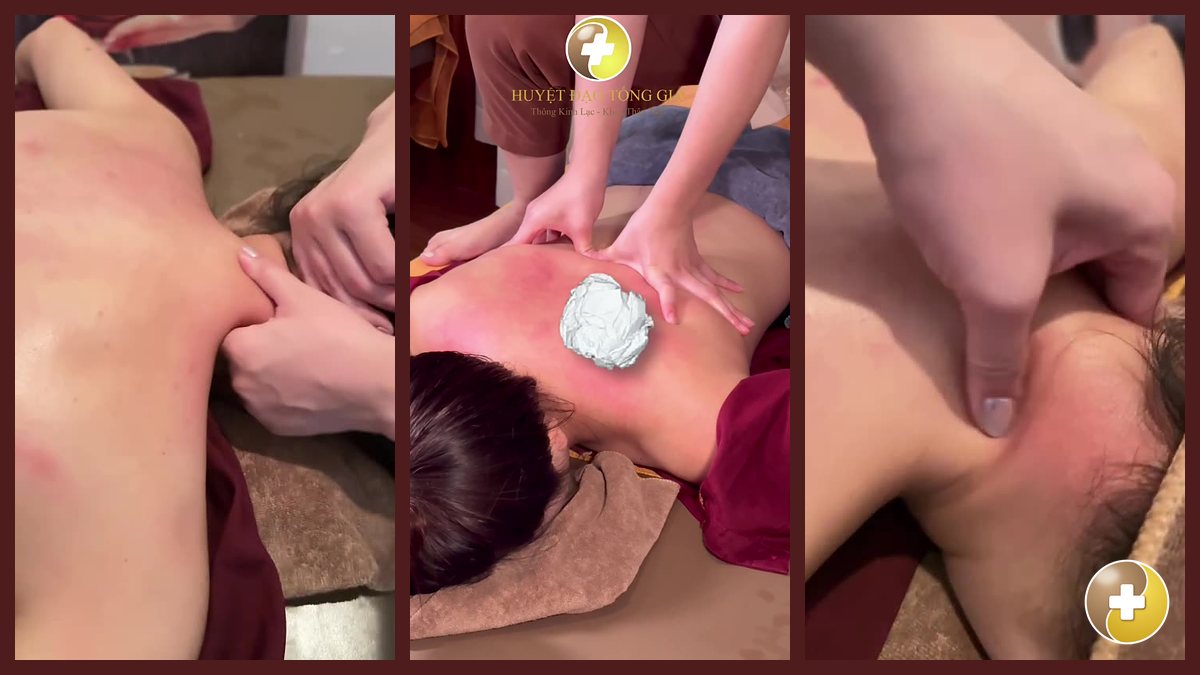
Quick answer: Knee pain from sitting too long usually comes from keeping the knee bent for hours: the kneecap is pressed, thighs and hip flexors tighten and joint fluid barely moves. Standing every 30–45 minutes, a better chair and stretching usually help. Tong Gia in District 12 and District 9, Ho Chi Minh City, cares for the back–hip–knee chain.
Want Lương Y Tống Văn Huynh’s team to read your spine and posture in person?
What is knee pain from sitting too long?
It is a very common Saigon story: a two-hour meeting, an afternoon at the laptop, a film at the cinema, a long bus ride to Vũng Tàu or Đà Lạt, a late evening of online study. When you finally stand up, the knee feels stiff and achy, the first few steps are slow, and sometimes it clicks. After a few minutes of walking it loosens again. That is knee pain from prolonged sitting: pain that appears or grows when the knee stays bent in one position for a long time, and eases once it can straighten and move.
The Western explanation. When you sit, the knee is bent to about 90 degrees or more. In this position the kneecap is pressed into the groove at the front of the thigh bone, so pressure in the kneecap–thigh joint is higher than when you stand. The quadriceps at the front are held on a stretch, while the hamstrings and the hip flexors in the groin are held short. Joint fluid, which is normally spread over the cartilage by movement, hardly moves. Blood from the lower legs returns more slowly because the calf muscles are not pumping. So after a long still period the tissues around the knee become stiff; when you rise, the joint takes load before the muscles have "woken up", and it aches. Medical writers even call this the "movie-goer's sign": front-of-knee pain after sitting with bent knees in a cinema.
| Where it aches after sitting | Often related to | Common in |
|---|---|---|
| Front, around and behind the kneecap | Kneecap–thigh joint pressure, tight quadriceps, kneecap tracking | Younger adults, women, low chairs with deep knee bend |
| Back of the knee | Short hamstrings and calves, chair edge pressing the back of the knee | High chairs with feet off the floor, long road trips |
| Inner knee | Inner tendons and ligament pulled by crossed legs | People who sit cross-legged or with one leg tucked |
| Both knees, whole-joint stiffness | Wear of the knee joint, weak thighs | Middle-aged and older adults, extra body weight |
At Tong Gia Acupoint Wellness (Huyệt Đạo Tống Gia) we hear about it from office staff who sit 8–10 hours a day, software engineers at Quang Trung Software Park and the Saigon Hi-Tech Park, ride-hailing drivers, call-centre teams, teachers marking papers, students and remote workers. For many expats it starts after a long-haul flight and then a week of laptop work in a café.
Common causes: habits, work, posture and environment
- A chair that is too low or too high. A low chair bends the knee past 90 degrees and presses the kneecap; a high chair leaves the feet hanging and the seat edge presses into the back of the knee.
- Crossed legs or one leg tucked under you. This twists the shin bone and pulls the ligaments on one side, so one knee tires more than the other.
- Sitting cross-legged on the floor or squatting. Full knee bend loads the cartilage and the back of the meniscus.
- Two or three hours without standing. Deadlines, video calls, gaming, films. Joint fluid and leg circulation almost stop.
- Weak thighs and glutes. A week at the desk makes them "lazy", so they stop guiding the kneecap along its groove.
- Air-con blowing on your legs. Cold offices, buses and cinemas tighten the muscles around the knee.
- Extra body weight and little exercise. Each extra kilo adds load when you stand up.
- An old knee injury from football, badminton or a motorbike fall, which stiffens quickly when still.
Long sitting also shortens the low-back muscles and hip flexors. Many guests come for the knee, but when we ask, their low back is tired too. Knee, hip and back work as one chain, so care has to follow the chain.
Other signs to watch
- An ache at the front of the knee after 30–60 minutes of sitting that eases when you stretch the leg out.
- Stiffness on standing, a slight limp for a few steps, then smoother walking.
- Grinding or clicking when you rise or bend and straighten the knee.
- Heavy, tingling lower legs or feet after long sitting.
- A tired low back, tight groin or buttock at the same time.
- Knees that feel colder and achier in air-conditioned rooms or on rainy days.
- Mild puffiness around the knee or ankle at the end of the workday that settles overnight.
When to see a doctor
Please see a doctor at a medical facility first, and avoid strong massage on the knee, if you have:
- A knee that is very swollen, hot or red, or fever.
- A knee that locks, cannot straighten, or suddenly gives way.
- Pain after a fall, twist or blow, or you cannot put weight on the leg.
- A swollen, warm, painful calf on one side after a long flight or bus ride: get checked straight away; with shortness of breath or chest pain, call 115.
- Pain at night even when resting, with unexplained weight loss: please get checked at a medical facility alongside any wellness care.
- Numbness or weakness spreading from the low back into the leg.
- No improvement after about two weeks of changing your sitting habits, stretching and warm or cold packs.
If you are being followed for knee arthritis or gout, keep following your doctor's advice and tell the practitioner before the session. This is a wellness service, not medical care.
The Y Tướng Học view: Kidney, Liver and Spleen
In the Tong Gia curriculum, Kidney is a functional system linked to bone, marrow and the "low back – knee" area. When Kidney is weak, people often feel tired knees and low back and get weary standing for long; with Kidney yang weakness the low back and knees feel cold. Three organ systems keep a knee comfortable through long sitting:
- Kidney governs bone: the root of the joints. Tired knees with a cold low back, waking at night to urinate or ringing ears lead us to check the lumbar area closely.
- Liver governs the tendons: healthy Liver means supple tendons and flexible joints; weak Liver means tight muscles, cramps and stiffness. Work stress ("Liver qi stagnation") makes the tendons behind the knee tighten more easily.
- Spleen governs the muscles and limbs: it makes the qi and blood that feed the leg muscles. Irregular meals and long sitting leave the thighs soft and heavy, too weak to support the knee as you stand.
What do the outer signs look like? Y Tướng Học (face reading for wellness) follows the principle "the signs show outside, the organs lie inside". In Tong Gia's face reading, Kidney shows in the ears, hair, bones and low back; thin, soft ear rims and tense muscles around the ear are described with weak Kidney qi, tired knees, cold hands and feet, and early joint wear with creaky joints. Liver shows in tendons, eyes and nails: thin, brittle nails and frequent cramps. Spleen shows in the lips and flesh: soft flesh that stays dented when pressed points to Spleen weakness with damp, a heavy body. This is school-based reference knowledge for choosing where to check, not a replacement for a medical check.
Spine segments and nerve-reflex zones involved
The Tong Gia curriculum links the lumbar spine L1–L5 to digestion, kidneys, urinary and reproductive functions and the legs, and for muscle–bone–joint concerns it works C5–C7, L1–L5 and S1–S5 together. In Western anatomy, the hip flexor (iliopsoas) attaches from T12 to L4; long sitting shortens it, pulling on the low back and hip. Nerve roots L2–L4 supply the quadriceps and the skin at the front of the knee; L4–S1 relate to the glutes, hamstrings and calves.
| Segment | Nerves and function | Signs after long sitting | Related organ (Eastern view) |
|---|---|---|---|
| T12–L1 | Hip flexor attachment, back–lumbar junction | Tight groin, hard to stand straight right away | Spleen, Kidney |
| L2–L4 | Quadriceps, front of thigh and knee | Front-of-knee ache, weak knee when rising | Kidney, Liver |
| L4–L5 | Outer thigh, shin, top of foot | Tired shins, tingling top of foot | Kidney, Liver |
| S1–S2 | Hamstrings, calf, heel | Tight back of knee, heavy calves | Kidney |
| C5–C7 | Shoulders and arms; part of the joint group | Neck and shoulder fatigue at the laptop | Liver |
The table shows relationships to guide care, not conclusions about any illness.
The Tong Gia method: spinal nerve-reflex balancing massage
This is a Vietnamese Eastern wellness method built by Lương Y (master of traditional Vietnamese wellness) Tống Văn Huynh over more than 13 years of practice in Eastern wellness, Y Tướng Học and spinal nerve-reflex balancing. For knee pain from sitting, we do not just rub the knee; we work the whole chain of low back, hip, thigh, back of knee and calf.
- Observation: how you rise from the chair, whether the knees turn in, kneecap position, hip height, foot arches; complexion, ears, lips and nails.
- Reading the spine by hand: feeling skin temperature, gliding along the muscles beside the spine and pressing from T11 down to L5 and S1, comparing left and right. Following the curriculum's "excited zone" principle, we focus on warm, tight, sore areas and do not press directly on "inhibited" areas.
- Muscle release: softening the low-back muscles, glutes and groin, then quadriceps, hamstrings, back of knee and calves, with gradually increasing, "good pain" pressure.
- Acupressure in the right zone: points around the knee and along the leg; the curriculum uses the "screw-press" technique for the knee and hip to help the joint move more smoothly. No strong pressure on a swollen knee.
- Self-care coaching: chair set-up, standing breaks and three desk stretches.
A typical session
A typical session with an accountant who sits almost all day: rising from the waiting chair she pushes on her thighs, and the right knee turns slightly in. Along the spine, the right side of L2–L4 is warmer and the muscle feels like a rope; the right hip flexor is tight and pressing the groin sends an ache down the front of the thigh. The back of the right knee is tight and the calf cooler than the left. The practitioner releases the low back, glutes and groin first, then front and back of the thigh and the calf, and only then works gently around the kneecap with the screw-press technique and a warm herbal compress. At the end she stands and sits five times, feels the first steps lighter, and learns how to lower her chair, support her feet and set a 45-minute standing reminder.
Suitable services and prices
- Low back care, 60 minutes: 550,000 VND (about 21 USD); first visit 399,000 VND (about 15 USD), when the knee ache comes with a tired low back and tight hips.
- Tired, heavy legs care, 60 minutes: 500,000 VND (about 19 USD), when thighs, back of knees and calves feel heavy.
- Herbal compress add-on: 130,000 VND (about 5 USD), for knees that feel cold in air-con.
See the full price list. Related reading: traditional Vietnamese massage Q&A, massage in District 12 for hard-working bodies, back massage in Saigon Q&A and massage for Hi-Tech Park workers.
What guests feel during and after
During the session the sorest spots are usually not the knee itself but the groin, front of the thigh and back of the knee; many people are surprised how tight their hip flexors are. As these soften, the knee feels lighter too. Afterwards many guests find it easier to stand up, with warmer legs and smoother steps; some feel mild thigh soreness for about a day. Results vary by body and knee condition; Tong Gia supports the muscles around the knee and helps rebalance the back–hip–knee chain, without promising the pain will go away.
Want Lương Y Tống Văn Huynh’s team to read your spine and posture in person?
Self-care at home and prevention
- Set your chair right: hips level with or slightly above the knees, feet flat on the floor or a footrest, about two or three fingers between the seat edge and the back of the knee.
- Stand every 30–45 minutes: set a phone timer, walk for one or two minutes, refill your water, take one flight of stairs.
- Straighten the knee at your desk: sit tall, straighten one leg, hold 5 seconds, pull the toes toward you; 10 times each side, plus 10 ankle circles.
- Stretch at the end of the day: front thigh, back thigh and hip flexor (lunge position), 30 seconds each, twice.
- Keep knees warm and thighs strong: a light blanket in a cold office, a warm foot soak at night, slow sit-to-stand from a chair 10–15 times, side-lying leg raises.
Booking
- District 12 branch: 225 Dương Thị Mười, Phường Tân Chánh Hiệp (Tan Chanh Hiep Ward, District 12). Open 8:00–19:00 every day.
- Vinhomes Grand Park branch: Căn T16-21 khu Manhattan, Phường Long Bình, TP. Thủ Đức (Unit T16-21, Manhattan block, Vinhomes Grand Park, Thu Duc City / District 9). Open 9:00–20:00 every day.
Book online or call, Zalo or WhatsApp +84 888 264 559. Tell us which knee aches, how long you sit before it starts, and whether your low back is tired too. After-work time slots are popular with office staff. You can read genuine reviews on Google Maps from each branch page. The method was built by Lương Y Tống Văn Huynh, founder of Tong Gia.
Visit us
- Đông Y Huyệt Đạo Tống Gia Quận 12 (District 12)
225 Dương Thị Mười, Phường Tân Chánh Hiệp, Quận 12, HCMC · 8:00–19:00 daily · 0888 264 559 · Directions on Google Maps - Đông Y Huyệt Đạo Tống Gia Quận 9 (Vinhomes Grand Park, District 9)
Căn T16-21 khu Manhattan, Vinhomes Grand Park, Phường Long Bình, TP. Thủ Đức, HCMC · 9:00–20:00 daily · 0888 264 559 · Directions on Google Maps
Want Lương Y Tống Văn Huynh’s team to read your spine and posture in person?
FAQ
Is knee pain from sitting too long serious? Usually not: it comes from a bent knee and tight thigh and hip muscles, and eases after a few minutes of walking. See a doctor if the knee is hot and swollen, locks, hurts at night or after a fall, or if one calf is swollen and painful.
Why does my knee hurt after sitting at my desk all day? A bent knee raises pressure behind the kneecap, the quadriceps and hamstrings get out of balance, and circulation slows. A chair at the right height, regular standing breaks and thigh strengthening usually make a clear difference.
My knees ache after a long flight. What should I do? Walk around, circle your ankles, drink water and do gentle thigh stretches. If one calf becomes swollen, warm and painful, get checked straight away, and call 115 if you also feel short of breath or chest pain.
Can young people get knee pain from sitting? Yes. Students, gamers and remote workers often feel front-of-knee pain from weak thighs and a kneecap pressed during long bent-knee sitting. Strengthening the thighs and glutes and standing often helps.
Does massage help knee pain from sitting? Massage loosens the low back, hips, thighs and calves, so many people find it easier to stand up afterwards, but Tong Gia does not promise the pain will disappear. If cartilage or ligaments are injured, follow medical advice; massage only supports.
Can I book in English in Ho Chi Minh City? Yes, book online or message us on Zalo or WhatsApp at +84 888 264 559. Staff mainly speak Vietnamese and reply to English messages with a translation tool. Tell us which knee hurts and how long you sit, and we will suggest a 60-minute low back or leg session.
Author: Lương Y Tống Văn Huynh – founder of Huyệt Đạo Tống Gia, a master of traditional Vietnamese wellness with over 13 years in Eastern wellness care, Y Tướng Học (face reading) and spinal nerve-reflex balancing massage.
Updated: 2026-11-15
Related guides
- Knee pain from long walks: why it happens and how Tong Gia cares for it in Ho Chi Minh City
- Knee pain from sitting too long: why it happens and how to care for it
- Herbal foot soak benefits: warm feet, easier sleep, the right temperature and who should skip it
- Sudden knee pain with no injury in Ho Chi Minh City: seven common causes, the warning signs, and how Tong Gia can help
This is a wellness service, not medical care.