
Sudden knee pain with no injury in Ho Chi Minh City: seven common causes, the warning signs, and how Tong Gia can help
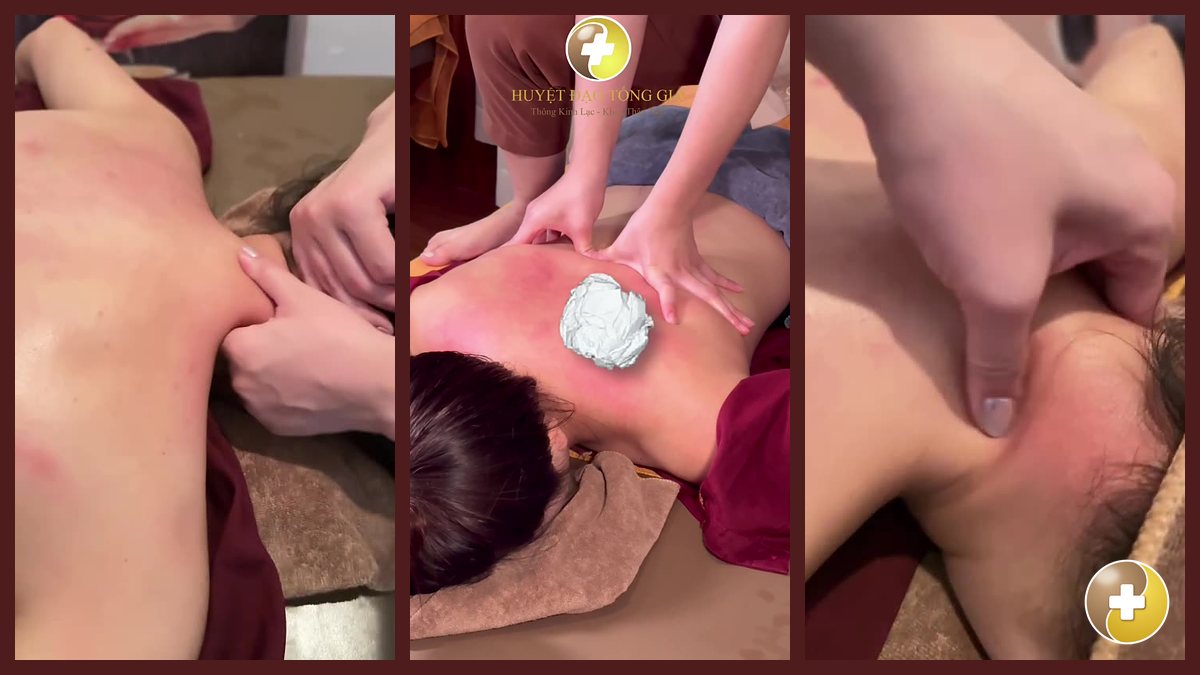
Quick answer: Knee pain out of nowhere usually comes from overload on stairs or in sport, tight or weak thigh muscles from long sitting, age-related wear, gout, a small meniscus strain or pain referred from the lower back. A hot swollen knee or being unable to walk needs a medical check. Tong Gia Acupoint Wellness (Huyệt Đạo Tống Gia), in District 12 and Vinhomes Grand Park (District 9), Ho Chi Minh City, cares for milder cases by hand.
Want Lương Y Tống Văn Huynh’s team to read your spine and posture in person?
What does sudden knee pain with no injury mean?
"Sudden knee pain for no reason" is when a knee starts to hurt and you cannot remember falling, knocking it or twisting it. Some people feel a sharp ache when they step out of bed in the morning; others feel it on the apartment stairs, getting up from a chair or squatting; others have a dull ache in both knees by late afternoon after a day on their feet.
In Western anatomy the knee is one of the body's main weight-bearing joints. It joins the lower end of the thigh bone, the top of the shin bone and the kneecap in front. Smooth cartilage covers the joint surfaces, two crescent-shaped menisci act as cushions in between, ligaments hold it steady, a joint lining makes lubricating fluid, and the tendons of the front thigh, back thigh and calf attach all around it. Overload, wear, inflammation or tightness in any of these can cause pain. "For no reason" usually means small, repeated strains that add up until one day the knee complains.
So there is no single answer to "why does my knee suddenly hurt?" Knee pain is a symptom, not a disease name. Pain at the front of the knee on the stairs is a different story from one hot, red, swollen knee after a night of beer and seafood, and different again from pain travelling down from the lower back.
In Ho Chi Minh City, Tong Gia Acupoint Wellness (Huyệt Đạo Tống Gia) often sees this in people over 40, women after menopause and anyone carrying extra weight; in market sellers and factory staff who stand all shift; in desk workers who sit all week and then run, play football or pickleball at the weekend without warming up; and in older parents living in high-rise apartments who take the stairs. When the weather turns cool or the office air-con runs all day, many people notice their knees more.
Common causes: habits, work, posture and environment
These are the groups that come up most often. They help you picture what is going on, not reach a conclusion; only a medical facility can confirm the cause with an exam, imaging or tests.
- Overload you did not notice. More stairs than usual, long walks on holiday, running distance increased too fast, several days of pickleball or badminton. The kneecap tendon, the front thigh tendon and the cartilage behind the kneecap take repeated load and become irritated, often hurting a few days later. Runners near Thu Duc may like massage after running Q&A.
- Tight or weak muscles around the knee. Sitting all day tightens the hip flexors, hamstrings and calves and weakens the front thigh. The knee loses its "shock absorber", the kneecap tracks off-line, and standing up hurts. Very common in office workers.
- Knee osteoarthritis. Cartilage wears with age, faster with extra weight, after menopause or after years of heavy work. Pain grows with standing and walking, the knee feels stiff for a few minutes in the morning and may creak.
- Arthritis and gout. A swollen, hot, red, very painful knee, sometimes after a meal heavy in beer, seafood or organ meats. Rheumatoid arthritis often affects both sides, with morning stiffness in the small finger joints. This group needs a medical check, and a hot swollen joint should not be massaged.
- Small meniscus or ligament strains. Turning while the foot is planted, standing up quickly from a squat, missing a step. Nothing at the time, then pain a few days later, with a catching, giving-way or locking feeling.
- Pain referred from elsewhere. The lower back, hip and foot all affect the knee. Lumbar nerve roots around L2–L4 supply the front thigh muscles and the skin of the front thigh and inner knee, so irritation there can be felt at the knee. Flat feet, worn shoes or weak hips tilt the leg so one side of the knee takes more load.
- Cold and weather. Air-con blowing on the legs, rainy cool days, standing on cold tiles. Muscles around the knee tighten and it feels stiffer and achier, especially with existing wear.
| Where and how it hurts | Often involves | Typical situation |
|---|---|---|
| Front of the knee, around the kneecap | Kneecap tendon, cartilage behind the kneecap, front thigh | Stairs, squatting, standing up after sitting |
| Inner side | Inner meniscus, inner ligament, wear | Older adults, extra weight, bow legs |
| Outer side | Iliotibial band | Running or cycling distance increased fast |
| Behind the knee, tight | Hamstring and calf tendons, a fluid cyst | Long sitting or standing, a swollen knee |
| Both knees, stiff in the morning | Wear or arthritis | Over 40, women after menopause |
| One knee suddenly hot, red, swollen | Gout, arthritis, infection | After heavy drinking, with fever: get checked |
Other signs to watch
- Swelling: the knee looks bigger than the other, the hollows beside the kneecap fill in.
- Heat or redness around the knee, sometimes with fever or chills.
- Locking: the knee will not straighten until you jiggle it.
- Giving way when stepping down or turning.
- Creaking together with pain when bending and straightening.
- Morning stiffness lasting over 30 minutes, with stiff finger joints too.
- Pain from the lower back or buttock running down the thigh, numbness at the front of the thigh.
- One calf swollen, painful, warm and tight.
Keep a simple note for one to two weeks: which side of the knee, what triggers it, morning or evening, any swelling, what you ate the day before. It helps at a medical check, and Tong Gia practitioners ask the same questions before a session.
When to see a doctor
Please see a doctor first, and hold off on massage around the knee, if any of these apply:
- A very swollen, hot, red knee, especially with fever.
- You cannot stand or walk or put weight on the leg.
- The knee locks and will not straighten, or keeps giving way.
- Pain after a fall or blow, a "pop" inside the knee, or a visibly changed shape.
- One calf swollen, painful, warm and red: get checked straight away, as this can be a blood clot; with chest pain, breathlessness or cold sweats, call 115 (Vietnam's emergency number) at once.
- Night pain that rest does not ease, with unexplained weight loss or lasting tiredness.
- Pain with numbness, leg weakness or bladder changes, or pain running down from the lower back.
- Pain lasting more than two weeks despite rest.
If a doctor is already following you for osteoarthritis, gout or arthritis, keep to that advice and tell the practitioner; during a hot, swollen flare the knee itself is not worked on. This is a wellness service, not medical care.
The Y Tướng Học view: Liver, Kidney and Spleen
Y Tướng Học, the Eastern face- and body-reading tradition taught at Tong Gia, rests on one idea: what is inside shows outside. According to the Tong Gia curriculum, knee pain and weakness in Eastern medicine relate mainly to three organ systems:
- Kidney governs the bones and marrow, and in Eastern medicine it covers bones, ears, hair, teeth, the lower back and knees. The curriculum lists aching lower back, weak tired knees and tiring quickly when standing as Kidney signs. Kidney yang weakness brings cold, aching back and knees and cold hands and feet; Kidney yin weakness brings aching knees with hot palms and soles.
- Liver governs the sinews, nourishing tendons and ligaments. A healthy Liver means supple tendons and flexible joints; a weak one means tight muscles, cramps and stiffness, often with thin nails and dry eyes.
- Spleen governs the muscles and limbs and makes the qi and blood that feed them. When it is weak, the legs feel heavy and the thigh muscles cannot support the knee well.
What can you see? Thin, soft ear rims and a flat bone behind the ear, which the curriculum links to weak Kidney qi with aching back and knees, creaky dry joints and deep aches when the season changes; early dry or thinning hair; a cold lower back; thin ridged nails and dry eyes (Liver); soft cold thighs (Spleen needs support) or thighs hard as wood (stagnation); bow legs, flat feet or always leaning on one leg. The curriculum describes the bony "Vương" face (high cheekbones, skin over bone) as prone to fibrous tendons and early joint wear, needing deep, slow release, and the round "Viên" face as linked to Kidney, with early joint wear from cold and damp when Kidney qi is weak. These are signals for caring for the right person, never labels. See our face-reading wellness page.
Spine segments and nerve-reflex areas involved
The Tong Gia curriculum maps the 33 vertebrae: the neck (C1–C7) serves the head, face, neck and arms; the upper and middle back (D1–D12) serves circulation, breathing and digestion; the lower back (L1–L5) serves digestion, kidneys, urinary and reproductive organs and the legs; the sacrum (S1–S5) serves elimination. For the muscle-bone-joint group the work covers C5–C7, L1–L5 and S1–S5; for the knee the focus is L2–L4 and the sacrum.
| Segment | Nerves / function | Often comes with | Eastern organ |
|---|---|---|---|
| L1–L2 (Kidney back point level) | Kidneys, lower back muscles, upper front thigh | Cold, tired lower back, tiring fast when standing | Kidney governs bones |
| L2–L4 | Femoral nerve: front thigh muscles, skin of front thigh and inner knee | Front and inner knee pain, weak on stairs | Kidney, Liver governs sinews |
| L4–S1 | Sciatic nerve: back thigh, back of knee, calf, foot | Tight back of knee, tired calves | Liver, Kidney |
| S1–S5 | Sacrum and pelvis | Tilted hips, leaning on one leg | Kidney |
| D11–D12 (Spleen and Stomach back points) | Digestion | Heavy legs, soft muscles | Spleen governs limbs |
The curriculum also uses "paired balancing": working the key point on the spine together with a matching point on the limb. For the knee that means the front thigh, the back of the knee, the calf and points around the knee, so a session runs from the lower back all the way to the ankle.
How Tong Gia works: spinal nerve-reflex balancing massage
This is a Vietnamese Eastern wellness method built by Lương Y Tống Văn Huynh, a master of traditional Vietnamese wellness with over 13 years in Eastern wellness care, Y Tướng Học and spinal nerve-reflex balancing. A session for unexplained knee pain follows clear steps:
- Observe and ask: which side, when, any swelling or heat, any heavy meal before it started, any medical check; then ears, nails, thigh muscles, gait and leg alignment.
- Read the spine by hand: skin temperature, muscle padding, the shape of each vertebra and your own sensations, comparing left and right.
- Find the key zone and key point: usually around L2–L4, the sacrum and the hip on the painful side, working only on overactive areas; a hot swollen knee is never worked on directly.
- Muscle release: lower back, buttocks, hip flexors, front and back thigh, back of the knee and calf, in an even "wave" rhythm that builds from one finger according to your feedback.
- Acupressure: the Kidney back point and Ming Men on the lower back, Wei Zhong at the back of the knee, Zu San Li and Yin Ling Quan on the lower leg, Tai Xi at the inner ankle, San Yin Jiao (not during pregnancy).
- Stop at the right moment: when the skin at the key point turns from dry to slightly moist and its temperature moves the right way.
- Home routine: how to stand up, use stairs and do simple thigh exercises for your pattern.
Suitable services (same price at both branches, full list on prices):
- Heavy, tired legs care, 60 minutes: 500,000 VND (about 19 USD). For heavy thighs, calves and knees at the end of the day.
- Lower back care, 60 minutes: 550,000 VND (about 21 USD), first visit 399,000 VND (about 15 USD). When knee pain comes with a tired or cold lower back, or pain from the hip.
- Herbal compress: 130,000 VND (about 5 USD). Added when the knee feels cold and achy in air-con or rain; never on a hot swollen knee.
More on leg work at foot and leg massage and sports recovery massage; parents visiting from overseas may like booking a massage for parents in Vietnam.
A typical session. This is a composite of many sessions, not one guest's story. A market seller near District 12, about 55, had felt pain at the front and inner side of both knees for a few weeks, worse going downstairs and standing up from a squat. There was no heat or swelling, and she had been checked and advised to lose a little weight and strengthen her thighs. The practitioner noticed thin ear rims, weight shifted to the right leg and soft, cool thighs. On the spine, L2–L4 felt cooler than the upper back, the lower back muscles were soft, and a tight band ran along the right hip. The session released the lower back, pressed the Kidney back point and Ming Men, then worked the buttocks, front thighs, the back of the knees and calves, with Wei Zhong, Zu San Li, Yin Ling Quan and Tai Xi, and finished with a warm herbal compress around the knees. At the end she stood up more easily and took the shop's steps with less ache.
How it feels. The most tender spots are often not the knee itself but the lower back, hip, front thigh and back of the knee. As they soften, the knee feels lighter and the legs warmer. Afterwards many guests stand up more easily and walk more smoothly; some feel mild thigh soreness for a day. Results differ with each body, and Tong Gia helps the area rebalance without promising the pain will vanish. More answers in the traditional Vietnamese massage Q&A and the gua sha and herbal steam Q&A.
Want Lương Y Tống Văn Huynh’s team to read your spine and posture in person?
Home care and prevention
- Get up every 45–60 minutes: walk a few minutes, straighten the knees, rise onto your toes ten times.
- Gentle thigh work: sitting on a chair, straighten one leg and hold for 5 seconds, ten times each side, twice a day. Stop if pain increases.
- Fewer knee-unfriendly positions: less squatting, kneeling and long cross-legged sitting; going downstairs, lead with the good leg and hold the rail; cushioned shoes that are not worn down on one side.
- Warmth and weight: keep air-con off your legs, soak your feet in warm water for 15–20 minutes at night (people with diabetes should test the water), and losing a few kilos takes load off the knees.
- Sensible eating: less beer, organ meats and seafood if you have had gout; enough protein and greens. If you worry about a shortage, ask a medical facility rather than guessing.
Book a session
- District 12: 225 Dương Thị Mười, Phường Tân Chánh Hiệp (Tan Chanh Hiep Ward, District 12). Open 8:00–19:00 daily.
- Vinhomes Grand Park, District 9: Căn T16-21 khu Manhattan, Phường Long Bình, TP. Thủ Đức (Unit T16-21, Manhattan zone, Long Binh Ward, Thu Duc City). Open 9:00–20:00 daily.
Book online or call, Zalo or WhatsApp +84 888 264 559. Tell us which knee, which side, since when, whether it is swollen and whether you have had a check. Real guest reviews are on each branch's Google Maps page. Living in or visiting Ho Chi Minh City? Come and try a Vietnamese Eastern wellness method built by Lương Y Tống Văn Huynh.
Visit us
- Đông Y Huyệt Đạo Tống Gia Quận 12 (District 12)
225 Dương Thị Mười, Phường Tân Chánh Hiệp, Quận 12, HCMC · 8:00–19:00 daily · 0888 264 559 · Directions on Google Maps - Đông Y Huyệt Đạo Tống Gia Quận 9 (Vinhomes Grand Park, District 9)
Căn T16-21 khu Manhattan, Vinhomes Grand Park, Phường Long Bình, TP. Thủ Đức, HCMC · 9:00–20:00 daily · 0888 264 559 · Directions on Google Maps
Want Lương Y Tống Văn Huynh’s team to read your spine and posture in person?
FAQ
Why does my knee suddenly hurt for no reason? Knee pain is a symptom, not a disease. Common causes are overload from stairs, walking or sport, tight or weak muscles from long sitting, age-related wear, arthritis or gout, small meniscus or ligament strains, and pain referred from the lower back or hip. A hot swollen knee, being unable to walk, or pain beyond two weeks needs a medical check.
Can a vitamin shortage cause knee pain? Most knee pain comes from overload, weak muscles, wear or inflammation rather than a shortage. Vitamin D and calcium matter for bone health, but only a test at a medical facility can show a shortage, so avoid guessing and self-supplementing.
Should I keep walking with knee pain? If the knee is not hot or swollen, 15–30 minutes of easy walking on flat ground in cushioned shoes usually keeps the joint moving and the thighs stronger. Avoid hills, lots of stairs and long distances while it hurts, and rest and get checked if it swells afterwards.
Is cycling OK with knee pain? Easy cycling with the saddle high enough that the knee is almost straight at the bottom is usually gentler than running. Avoid heavy gears and hills while the knee is sore.
Is knee pain at night a concern? An ache at night after a long day on your feet or in the cold is often tight muscles and wear. Night pain that rest does not ease, or pain with swelling, heat, fever or weight loss, needs a medical check soon.
Does massage help knee pain, and how soon? When pain comes from tight thighs, hips and calves or a cold knee, muscle release and acupressure soften the area and many guests stand up more easily after the first session. Results vary and there is no promise the pain will vanish; a hot swollen knee or pain after a fall should be checked first.
Author: Lương Y Tống Văn Huynh – founder of Huyệt Đạo Tống Gia, a master of traditional Vietnamese wellness with over 13 years in Eastern wellness care, Y Tướng Học (face reading) and spinal nerve-reflex balancing massage.
Updated: 2026-11-15
Related guides
- Knee pain from long walks: why it happens and how Tong Gia cares for it in Ho Chi Minh City
- Knee pain from sitting too long: why it happens and how to care for it
- Herbal foot soak benefits: warm feet, easier sleep, the right temperature and who should skip it
- Sudden knee pain with no injury in Ho Chi Minh City: seven common causes, the warning signs, and how Tong Gia can help
This is a wellness service, not medical care.