
Migraine in young adults: why students and young workers get it and what helps
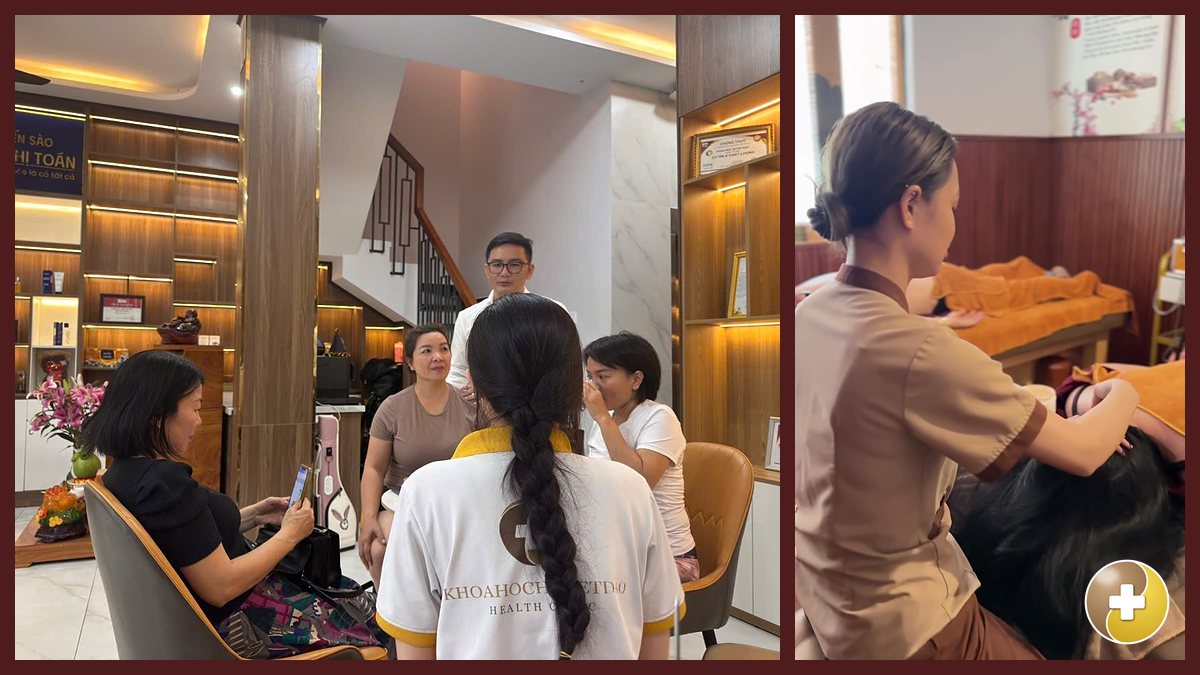
Quick answer: Migraine in young adults is usually linked to short sleep, skipped meals, stress, screens or hormones, and is mostly not dangerous. A sudden explosive headache, facial droop or one-sided weakness means calling 115. Tong Gia Acupoint Wellness in Districts 12 and 9, Ho Chi Minh City helps the neck and temples relax between attacks.
Want Lương Y Tống Văn Huynh’s team to read your spine and posture in person?
What is migraine in young adults?
Tong Gia meets many young people in Ho Chi Minh City, from high school students to university students and new office workers, who describe the same pain: one temple throbbing with the pulse, pain spreading behind the eye, nausea, sensitivity to light, wanting only to lie in a dark room. For some it follows a night of studying, for others a skipped lunch, for others the days before a period. Many think headaches belong to older people, yet migraine often begins in the teens and twenties.
The Western medical view: what people call a "one-sided headache" covers several types. Migraine is usually one-sided (sometimes switching sides), pulsating, moderate to severe, lasting hours to a day or two, with nausea and sensitivity to light and sound; some people get an aura such as flashing lights or a blurred patch of vision beforehand. In Western medicine migraine relates to a sensitive nervous system and blood vessels of the head; it is common in young people, more common in women, and usually has triggers. There are also tension-type headaches (a tight, heavy band at the temples or the back of the head) and headaches that start in the neck, common in people who look down at phones and screens for hours.
This guide helps you recognise which type you have, the triggers common in young people, when to see a doctor urgently and how Tong Gia Acupoint Wellness helps the head, neck and shoulders rebalance. Children under 16 must come with a parent; if they have an underlying condition, parents should ask the medical staff who follow them first.
Common causes: why young people get migraines
- Short or irregular sleep: late-night study, deadlines, gaming; sleeping until noon at weekends can also set off an attack.
- Long screen hours: close focus, bright light and a bent neck tighten the nape and temple muscles.
- Skipped meals and too little water: rushing to class or work, forgetting lunch, sipping little water in Saigon heat.
- Irregular coffee: lots during exams, then stopping suddenly; strong energy drinks or milk tea.
- Stress and the "let-down": attacks during exam season, or right after exams end.
- Hormones in women: attacks before or during a period.
- Environment: harsh sun, weather changes, strong smells such as perfume or smoke, noise, icy air-conditioning followed by heat.
- Posture: lying on the stomach with a phone, wedging the phone between shoulder and ear, a pillow that is too high.
Other signs to watch
- Throbbing pain at one temple or behind one eye, worse with stairs or movement.
- Nausea, vomiting, sensitivity to light and noise.
- Flashing lights, zigzag lines or a blurred patch for 5–60 minutes before the pain (aura).
- A stiff neck, pain rising from the nape to one side of the head.
- Tiredness, yawning, food cravings or irritability a day or two before; drained afterwards.
- Poor sleep, a bitter taste in the morning, dry red eyes.
Keeping a headache diary for 4–8 weeks (time, sleep, meals, periods, screen time, coffee) helps you and medical staff spot your triggers.
When to see a doctor
Most migraines in young people are not dangerous, but please see a doctor or go to emergency straight away if:
- A sudden, explosive "thunderclap" headache peaks within minutes.
- Facial droop, weakness or numbness on one side, slurred speech, sudden vision loss or confusion: call 115 (Vietnam's ambulance line) immediately.
- Headache with fever, stiff neck, rash or forceful vomiting.
- Headache after a head injury, fall or sports collision.
- A new headache that worsens over weeks, wakes you at night or gets worse with coughing or straining.
- An aura lasting more than an hour, or an aura for the first time.
- You need painkillers on many days each month, or attacks often keep you from school or work.
- Crushing chest pain, shortness of breath or cold sweats: call 115 immediately.
- You are pregnant or have heart or blood pressure conditions: ask medical staff before massage or acupressure.
This is a wellness service, not medical care.
The Y Tướng Học view: Liver, Gallbladder and the busy mind
In the Tong Gia curriculum, the Gallbladder channel (Shaoyang) runs along both sides of the head; it regulates qi and eases pain in the head, neck and shoulders, and when disturbed brings headaches, shoulder pain and a bitter taste. The Liver keeps qi flowing: when it stagnates there is irritability and poor sleep; when Liver fire or Liver yang rises, heat surges to the head with dry or red eyes and a bitter mouth in the morning. The curriculum repeatedly links one-sided headache to Liver qi stagnation: too much qi and blood rushing to the head, a nervous system always on edge, vascular headaches and migraine.
For young people who study or work with their minds, the curriculum has a strikingly close description: a quick learner whose weak point is "thinking day and night, so heat stagnates in the Gallbladder channel, causing mild one-sided headaches or trouble sleeping in the Gallbladder hours (11 pm–1 am)".
| Pattern (traditional view) | Typical young person | Headache | Other signs |
|---|---|---|---|
| Liver qi stagnation | Exam or work pressure, bottled-up feelings | One temple, spreading along the sides of the head | Chest tightness, sighing, irritability |
| Liver fire, rising Liver yang | Late nights, short temper, lots of coffee | Tight, hot head, red eyes | Bitter mouth in the morning, dry eyes |
| Gallbladder channel heat from overthinking | Mental work day and night | Mild, recurring one-sided pain | Trouble sleeping 11 pm–1 am |
What can be seen on the outside? Tong Gia's face reading follows "the outer form reflects the inner organs". The curriculum links several features to one-sided headaches:
- A prominent, forward-jutting upper forehead: a sharp mind that creates its own pressure; tendency to Liver qi stagnation and vascular headaches.
- A straight, thin, blade-like nose: Liver qi stagnation with stagnant heat; prone to migraine and a mind that is always braced.
- Wide cheekbones with a narrow forehead and chin: stress brings stomach pain, flank tightness and one-sided headaches along the Gallbladder channel.
- Ears set high: thinking day and night, as described above.
These are traditional concepts, not Western medical terms, used to guide the session and never to judge character.
Spine segments and nerve-reflex areas involved
In the Tong Gia curriculum, C1–C7 relate to the head, face, neck and arms; for chronic headaches the curriculum combines C1–C7, T1–T3 and the sacral area. In Western anatomy, the upper neck nerves and the small muscles below the skull share sensation with the back of the head, so a tight nape can send pain upwards.
| Segment | Nerves and function | In young people with migraine | Related organ |
|---|---|---|---|
| C1–C2 | Head, back of the skull | Hot nape, pain rising to one side of the head | Liver, Gallbladder |
| C3–C7 | Neck, shoulders, arms | Stiff neck, one raised shoulder from phone or bag | Liver (sinews) |
| T1–T3 | Chest, heart, lungs | Shallow breathing, chest tightness under stress | Heart, Lung |
| T7–T9 (Ganshu area) | Mid back, liver and gallbladder | Tight mid back, bitter taste, flank fullness | Liver, Gallbladder |
| Sacral area | Pelvic nerves | Light sleep, tired lower back | Kidney |
How Tong Gia works: spinal nerve-reflex balancing massage
The method was built by Lương Y Tống Văn Huynh, a master of traditional Vietnamese wellness with over 13 years in Eastern wellness, face reading and spinal nerve-reflex balancing. For young people with recurring one-sided headaches, the aim is to help the muscles below the skull, the nape, shoulders, temples and upper back let go and to cool the head and neck, so the body is less "wound up" between attacks. Sessions should be booked on pain-free days; during a severe attack, rest in a dark, quiet room and follow medical advice.
- Observation and questions: type and side of pain, frequency, sleep, meals, coffee, cycle; complexion, eyes, forehead, neck and shoulder posture. Warning signs mean seeing a doctor first.
- Reading the spine by hand: from C1 downwards, comparing both sides; people with migraine are often warm and tight at C1–C2 on the painful side.
- Releasing muscles: below the skull, nape, trapezius, temples and between the shoulder blades, focusing only on "excited" areas (warm, tight, more painful) with an even rhythm.
- Acupressure: Taichong (LR3) for stress, anger, poor sleep and headaches; Xingjian (LR2) when there are signs of Liver fire; Baihui (GV20) to clear the head; Hegu (LI4) only when pregnancy is ruled out; Ganshu and Danshu on the back.
- Self-care coaching: a headache diary, sleep and meal timing, pressing Taichong, neck posture for study and work.
A typical session
A typical session with a 24-year-old office worker who has left-sided migraines two or three times a month and has already been seen by medical staff: the session is booked on a pain-free day. The left shoulder sits higher, the head juts forward, the eyes are dry and red, and there is a bitter taste most mornings and bedtime after midnight. On the spine, C1–C2 on the left is warm and tight, the left trapezius is thick and the mid back around Ganshu is tense. The practitioner works gently on the nape, below the skull and the temples, then the shoulders and mid back, finishing with Taichong on the foot and Baihui. The client learns to keep a headache diary and set the screen at eye level.
Services and prices
- Head care, 60 minutes: 750,000 VND (about 29 USD), when temple pain and a hot nape stand out.
- Neck and shoulder care, 60 minutes: 550,000 VND (about 21 USD); first visit 399,000 VND (about 15 USD).
- Herbal hair wash with neck and shoulder massage, 60 minutes: 250,000 VND (about 10 USD), gentle and student-friendly.
Full prices are on the price list. Read more: Vietnamese head spa, neck and shoulder massage in Ho Chi Minh City, acupressure massage in Saigon and herbal hair wash.
What you feel during and after
Most people feel tenderness at the nape, behind the ear and at the usual painful temple, then a warm, lighter head. Afterwards many say the neck turns more easily, the eyes feel less strained and sleep is deeper that night. Responses differ; Tong Gia supports the body to rebalance and does not promise migraines will stop. Steady sleep, regular meals and follow-up with medical staff remain the core.
Want Lương Y Tống Văn Huynh’s team to read your spine and posture in person?
Home care and prevention
- Regular sleep, weekends included: bed before 11 pm; avoid all-nighters followed by sleeping until noon.
- Regular meals and enough water: no skipped breakfast, carry a water bottle; keep coffee moderate and steady, no sudden changes.
- Rest the eyes and neck: every 30–45 minutes look into the distance for 20 seconds and roll the shoulders; screen at eye level; never wedge the phone between shoulder and ear.
- Press Taichong and Baihui: 1–2 minutes each when tense, with 4–6 breathing.
- Keep a headache diary: 4–8 weeks to find your own triggers, and take it to medical appointments.
Book a session
- District 12: 225 Dương Thị Mười, Phường Tân Chánh Hiệp (Tan Chanh Hiep Ward, District 12). Open 8:00–19:00 daily.
- Vinhomes Grand Park, District 9: Căn T16-21 khu Manhattan, Phường Long Bình, TP. Thủ Đức (Unit T16-21, Manhattan zone, Long Binh Ward, Thu Duc City). Open 9:00–20:00 daily.
Book online or call, Zalo or WhatsApp +84 888 264 559. Tell us the painful side, how often it happens and whether you have seen a doctor; choose a day when you are not in an attack. Children under 16 come with a parent. Real reviews are on each branch's Google Maps page. Studying or working in Ho Chi Minh City? Come and try a Vietnamese Eastern wellness method built by Lương Y Tống Văn Huynh.
Visit us
- Đông Y Huyệt Đạo Tống Gia Quận 12 (District 12)
225 Dương Thị Mười, Phường Tân Chánh Hiệp, Quận 12, HCMC · 8:00–19:00 daily · 0888 264 559 · Directions on Google Maps - Đông Y Huyệt Đạo Tống Gia Quận 9 (Vinhomes Grand Park, District 9)
Căn T16-21 khu Manhattan, Vinhomes Grand Park, Phường Long Bình, TP. Thủ Đức, HCMC · 9:00–20:00 daily · 0888 264 559 · Directions on Google Maps
Want Lương Y Tống Văn Huynh’s team to read your spine and posture in person?
FAQ
Is migraine in young adults dangerous? Usually not; it is often linked to short sleep, skipped meals, stress, screens or hormones. A sudden explosive headache, facial droop, one-sided weakness, slurred speech, fever with a stiff neck or a headache after head injury needs emergency care: call 115.
What should I do for a migraine after a bad night's sleep? Rest in a dark, quiet room, drink water and eat something light if hungry; then keep regular sleep times, weekends included. If attacks come several times a month, see a doctor for proper advice.
Will a stress headache on one side go away by itself? Many ease with rest, sleep and a relaxed neck and shoulders. In the Tong Gia curriculum, the Eastern view links this pattern to Liver qi stagnation; slow breathing and pressing Taichong help you relax. A headache that worsens over weeks needs a doctor.
Why does pain on the left side of my head run down my neck? Often the nape and trapezius on one side are tight from looking down at a phone, wedging it at the ear or carrying a bag on one shoulder; it can also be migraine. With arm numbness or weakness, slurred speech or blurred vision, see a doctor at once.
Are migraines in young women linked to periods? In Western terms, many young women get migraines before or during a period because of hormone changes. A diary over a few cycles shows the pattern; severe or prolonged attacks should be checked by a specialist.
Can acupressure massage help migraines? Many clients feel a lighter neck and temples and sleep more deeply after a session on a pain-free day. It is wellness support, not a replacement for medical care; during a severe attack, rest in a dark room and follow medical advice.
Author: Lương Y Tống Văn Huynh – founder of Huyệt Đạo Tống Gia, a master of traditional Vietnamese wellness with over 13 years in Eastern wellness care, Y Tướng Học (face reading) and spinal nerve-reflex balancing massage.
Updated: 2026-11-17
Related guides
- Why does my head feel heavy? Causes, when to get checked, and how Tong Gia can help in Ho Chi Minh City
- Why do I feel dizzy so often? Causes, when to get checked, and how Tong Gia can help in Ho Chi Minh City
- Dizziness in older adults: common causes, danger signs and safe care
- Dizziness with ringing in one ear: causes, when to get checked, and how Tong Gia can help in Ho Chi Minh City
- Jaw joint (TMJ) pain: causes, when to get checked, and how Tong Gia can help in Ho Chi Minh City
- Migraine in young adults: why students and young workers get it and what helps
This is a wellness service, not medical care.