
Dizziness in older adults: common causes, danger signs and safe care
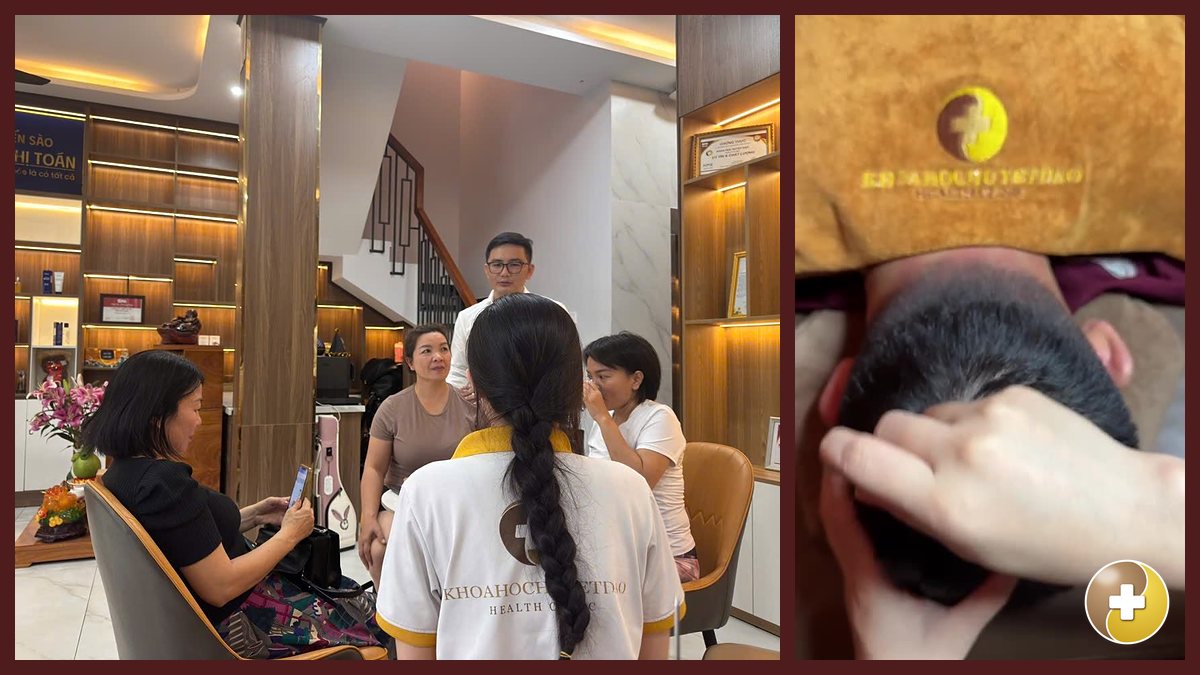
Quick answer: Dizziness in older adults often comes from a blood pressure drop on standing, inner ear problems, dehydration, prescription side effects or a tight neck. With a drooping mouth, one-sided weakness or chest pain, call 115. Tong Gia Acupoint Wellness (Huyệt Đạo Tống Gia), Ho Chi Minh City, offers gentle neck care.
Want Lương Y Tống Văn Huynh’s team to read your spine and posture in person?
What is dizziness in older adults?
Dizziness in older adults covers several feelings: light-headedness as if about to faint, the vision going dark when standing up, the room spinning, or unsteadiness when walking. In Western medicine, balance depends on three systems working together, the inner ear (vestibular system), the eyes, and position signals from the feet and joints, plus a heart and blood vessels that keep enough blood flowing to the brain. In older people all four can weaken at once, which is why dizziness is such a common complaint after sixty-five.
Families in Ho Chi Minh City describe it like this: father sits up quickly in the morning and "the whole room spins"; mother feels faint in a hot kitchen and grabs the table; grandmother stands up from the sofa, everything goes black and once she sat down hard on the floor. Many older people drink little water to avoid getting up at night, while the heat makes them sweat, which makes light-headedness worse. The biggest worry is falling, and sometimes dizziness is an early sign of stroke or heart trouble.
This guide helps families recognise common types of dizziness, the signs that need emergency care, what to do at home, and when gentle hands-on wellness care can help a parent feel more comfortable.
Common causes in older people
In Western medicine, dizziness in older adults usually falls into these groups. Only a medical check with blood pressure, heart tests or blood tests can confirm the cause.
1. Blood pressure drop on standing
Standing up fast from bed or a chair before blood reaches the brain: vision darkens and the head feels light for a few seconds. Common with low water intake, blood pressure or water-pill prescriptions, and long-term diabetes.
2. Inner ear (vestibular) problems
The room spins when rolling over in bed, lying down, sitting up or tipping the head back, for some seconds, sometimes with nausea.
3. Side effects of prescriptions
Older people often take several prescriptions together for blood pressure, diabetes, sleep or pain. A new item or dose change can cause dizziness. Do not stop anything yourself; bring the full list to medical staff for review.
4. Dehydration, anaemia, low blood sugar
Saigon heat, little thirst, light meals, a skipped meal in diabetes; anaemia brings pale skin, tiredness and breathlessness.
5. Neck and upper shoulders
A worn neck spine or tight muscles at the base of the skull from looking down at phones or high pillows can cause dizziness on turning the head, with a stiff neck and headache. See neck cracking when turning the head.
6. Heart, eyes and numb feet
Irregular heartbeat, valve problems, poor eyesight or cataracts, and numb feet from diabetes all affect balance and need medical assessment.
Other signs to watch
- Type: spinning, faint, or unsteady when walking.
- When: standing up, rolling over, turning the neck, after meals, after a prescription.
- How long: seconds, minutes or hours.
- Ringing ears, hearing loss, nausea, headache, stiff neck.
- Palpitations, fast heartbeat, chest tightness, breathlessness, pale skin.
- Numbness or weakness, drooping mouth, slurred speech, double vision.
- Recent prescription changes, poor eating, low water intake, falls.
| Type | Often related to | What to do |
|---|---|---|
| Vision darkens for seconds on standing | Postural blood pressure drop, dehydration | Stand slowly, drink enough, check blood pressure |
| Room spins on rolling over or lying down | Inner ear | Get checked; avoid sudden head turns |
| Dizzy on turning the neck, stiff neck | Neck spine, muscles at the skull base | Get checked; adjust pillow and posture |
| Faint with palpitations or chest tightness | Heart | Get checked soon; call 115 if severe |
| Dizziness with a drooping mouth or one-sided weakness | Stroke | Call 115 at once |
When to see a doctor
- Call 115 (Vietnam emergency) immediately for dizziness with a drooping mouth, weakness or numbness on one side, slurred speech, double vision, inability to walk steadily, or a sudden severe headache. The Tong Gia curriculum notes that in older people a tongue deviating to one side is a danger sign of possible stroke.
- Call 115 for dizziness with chest pain, breathlessness, cold sweat or fainting.
- Dizziness with palpitations or a fast, slow or irregular heartbeat.
- A fall or head knock, especially on blood thinners.
- New dizziness after a prescription change, or blood pressure under 90/60 with faintness.
- Repeated or long-lasting dizziness, heavy vomiting, unable to eat.
- Pale skin, fatigue or weight loss, which need a medical check in parallel.
Please see a doctor or go to hospital for these signs. This is a wellness service, not medical care. Parents followed for blood pressure, heart or diabetes should keep following their medical team.
The Y Tướng Học view: Liver blood, Kidney essence, the "sea of marrow"
According to the Tong Gia curriculum, the Liver stores blood, and Liver blood shortage brings blurred vision, dizziness, dry eyes, brittle nails and cramps. The Kidney governs bones and marrow; when Kidney essence is low, the "sea of marrow" is empty, nourishment to the brain is poor, and headaches, dizziness, ringing ears, poor memory and very light sleep follow. The Heart governs blood vessels and keeps blood pressure up; weak Heart qi brings faintness and darkening vision. In older people all three often decline, so dizziness tends to come with ringing ears, poor sleep, forgetfulness and cold limbs.
Y Tướng Học (face reading for wellness) reads "the outer form reflects the inner organs". The curriculum describes a flat back of the skull as a sign of low Kidney essence, often with deep muscle spasm at the skull base and early wear of the upper neck vertebrae C1 to C3, and blocked qi along the Governor Vessel as linked with balance problems and dizziness on changing position. Very pale or sallow skin suggests weak Heart and Spleen with poor blood production. A long, narrow, thin face suggests weak qi and blood.
The curriculum also describes a face wide at the top and pointed at the chin as "full above, empty below": headaches, poor sleep and high blood pressure above; tired knees and night urination below; on the back, a hot, overactive upper neck at C1 and C2 and a cool lower back. These readings guide care, warming and light for a blood-deficient type, cooling the neck for a "hot above" type, and are never used to name a disease.
Spine segments and nerve-reflex areas involved
The Tong Gia curriculum links the neck vertebrae C1 to C7 with the head, face, neck and arms, and groups balance problems, chronic headache and insomnia under the nervous system, working on C1 to C7, the upper back T1 to T3 and the sacral area together. In Western anatomy, the deep muscles at the base of the skull send many position signals to the brain; when they are tight, balance signals can be disturbed, which is why many people feel dizzy with a stiff neck.
| Segment / area | Function | Typical signs | Related organ (Eastern view) |
|---|---|---|---|
| C1 – C3 | Deep skull-base muscles, blood flow to the brain | Dizzy on turning the neck, headache at the back | Kidney, Liver |
| C4 – C7 | Shoulder muscles, nerve roots to the arms | Tired shoulders, numb hands with faintness | Liver |
| T1 – T3 | Heart and lung area | Palpitations, breathlessness with faintness | Heart, Lung |
| L1 – L3 | Kidney area | Ringing ears, night urination, tired knees | Kidney |
| Sacral area | Sacrum | Combined in the nervous system group | Kidney |
How Tong Gia works: spinal nerve-reflex balancing massage
Tong Gia Acupoint Wellness (Huyệt Đạo Tống Gia) was founded by Lương Y Tống Văn Huynh, a master of traditional Vietnamese wellness with over 13 years in Eastern wellness care, Y Tướng Học and spinal nerve-reflex balancing. With older guests prone to dizziness, safety comes first: ask about blood pressure, medical results and prescriptions; never twist or crack the neck or tip the head back suddenly; after any change of position, let the guest sit for a few minutes and stand with support.
- Observe: skin colour, lips, nails, the shape of the head and back of the skull, gait; ask which type of dizziness occurs and when.
- Read the spine by hand: light contact over the skull base, neck, upper back and lower back for temperature, muscle layer and vertebra shape; hot, tight neck areas are released first.
- Release muscles: skull base, shoulders and upper back with light, even pressure, often seated or side-lying if lying flat makes the guest dizzy.
- Press points: from the curriculum, Baihui at the crown, used in Eastern tradition to clear the head and calm the mind (the curriculum notes that claiming it lowers blood pressure is an overstatement), and Neiguan for calm and mild palpitations.
- Home care: how to stand up safely and how to massage points gently at home.
A typical session: a son brings his mother of nearly seventy-five, dizzy on waking and when turning her neck, with a stiff neck and light sleep; her heart and blood pressure have been checked and she was told to drink enough and stand slowly. The practitioner seats her in a chair with back support, finds hot, tight muscles at the skull base, uneven shoulders and slightly pale skin, releases the neck, shoulders and upper back lightly, presses Baihui and Neiguan gently, and never turns the neck. Afterwards she sits, drinks warm water and stands with support. Many older guests say the neck feels lighter, the head clearer and sleep easier; results vary.
Suitable services: Neck and shoulder care 60 minutes, 550,000 VND (about 21 USD), first visit 399,000 VND (about 15 USD); Head care 60 minutes, 750,000 VND (about 29 USD); Eastern massage 60 minutes, 450,000 VND (about 17 USD). Full price list. Also read booking a massage for parents in Vietnam, frequent headaches: common causes and acupressure for sleep in Saigon.
Want Lương Y Tống Văn Huynh’s team to read your spine and posture in person?
Home care and prevention
- Stand up in three steps: lie a moment after waking, sit on the edge of the bed and count slowly to thirty, then stand holding something solid.
- Spread water through the day: drink more in the morning and at noon, less in the evening to limit night trips; regular meals, no skipped meals with diabetes.
- Look after the neck: a medium pillow, less looking down at phones, no sharp tipping back of the head when hanging laundry or washing hair.
- Gentle point massage: from the Tong Gia curriculum, press Neiguan lightly for one to two minutes on each side when tense or mildly fluttery; sleep before 11 p.m.
- A fall-safe home: night lights from bed to bathroom, rails, non-slip mats, a shower chair; bring the full prescription list for regular review.
Book a session
- District 12: 225 Dương Thị Mười, Phường Tân Chánh Hiệp (Tan Chanh Hiep Ward, District 12). Open 8:00–19:00 daily.
- Vinhomes Grand Park, District 9: Căn T16-21 khu Manhattan, Phường Long Bình, TP. Thủ Đức (Unit T16-21, Manhattan zone, Long Binh Ward, Thu Duc City). Open 9:00–20:00 daily.
Book online or call, Zalo or WhatsApp +84 888 264 559. Tell us your parent's age, the type of dizziness, whether it has been checked, any blood pressure, heart or diabetes conditions, and whether they need help walking. Real guest reviews are on each branch's Google Maps page. Visiting Ho Chi Minh City with family? Come and try a Vietnamese Eastern wellness method built by Lương Y Tống Văn Huynh.
Visit us
- Đông Y Huyệt Đạo Tống Gia Quận 12 (District 12)
225 Dương Thị Mười, Phường Tân Chánh Hiệp, Quận 12, HCMC · 8:00–19:00 daily · 0888 264 559 · Directions on Google Maps - Đông Y Huyệt Đạo Tống Gia Quận 9 (Vinhomes Grand Park, District 9)
Căn T16-21 khu Manhattan, Vinhomes Grand Park, Phường Long Bình, TP. Thủ Đức, HCMC · 9:00–20:00 daily · 0888 264 559 · Directions on Google Maps
Want Lương Y Tống Văn Huynh’s team to read your spine and posture in person?
FAQ
Is dizziness in older adults dangerous? Common causes are a blood pressure drop on standing, inner ear problems, dehydration and a tight neck; these are rarely an emergency but often lead to falls. It is dangerous with a drooping mouth, one-sided weakness, slurred speech, chest pain or fainting: call 115 at once.
What should I do when my elderly parent feels dizzy? Help them sit or lie down straight away to avoid a fall and give a little water. Then get blood pressure, heart, inner ear and blood sugar checked and have prescriptions reviewed. At home, stand up slowly, spread water through the day and make the home slip-safe.
Why do older people feel dizzy when getting out of bed? Usually a postural blood pressure drop from sitting up too fast, an inner ear problem when rolling over, or mild dehydration after the night. Lie a moment, sit on the edge of the bed, then stand. If it happens often, get checked.
Is massage safe for an older person with dizziness? Gentle work on the neck, shoulders and upper back can be fine after a medical check with no stroke or heart warning signs. No neck twisting or sudden head tilting, and help when standing up. Tong Gia asks about blood pressure and medical results first.
Can acupressure help an older person feel less dizzy? In Eastern tradition, Baihui is used to clear the head and calm the mind and Neiguan for calm and mild palpitations, while releasing the skull-base muscles eases the neck. Acupressure only supports comfort; it does not replace finding the cause medically.
Author: Lương Y Tống Văn Huynh – founder of Huyệt Đạo Tống Gia, a master of traditional Vietnamese wellness with over 13 years in Eastern wellness care, Y Tướng Học (face reading) and spinal nerve-reflex balancing massage.
Updated: 2026-11-17
Related guides
- Why does my head feel heavy? Causes, when to get checked, and how Tong Gia can help in Ho Chi Minh City
- Why do I feel dizzy so often? Causes, when to get checked, and how Tong Gia can help in Ho Chi Minh City
- Dizziness in older adults: common causes, danger signs and safe care
- Dizziness with ringing in one ear: causes, when to get checked, and how Tong Gia can help in Ho Chi Minh City
- Jaw joint (TMJ) pain: causes, when to get checked, and how Tong Gia can help in Ho Chi Minh City
- Migraine in young adults: why students and young workers get it and what helps
This is a wellness service, not medical care.