
Why does my head feel heavy? Causes, when to get checked, and how Tong Gia can help in Ho Chi Minh City
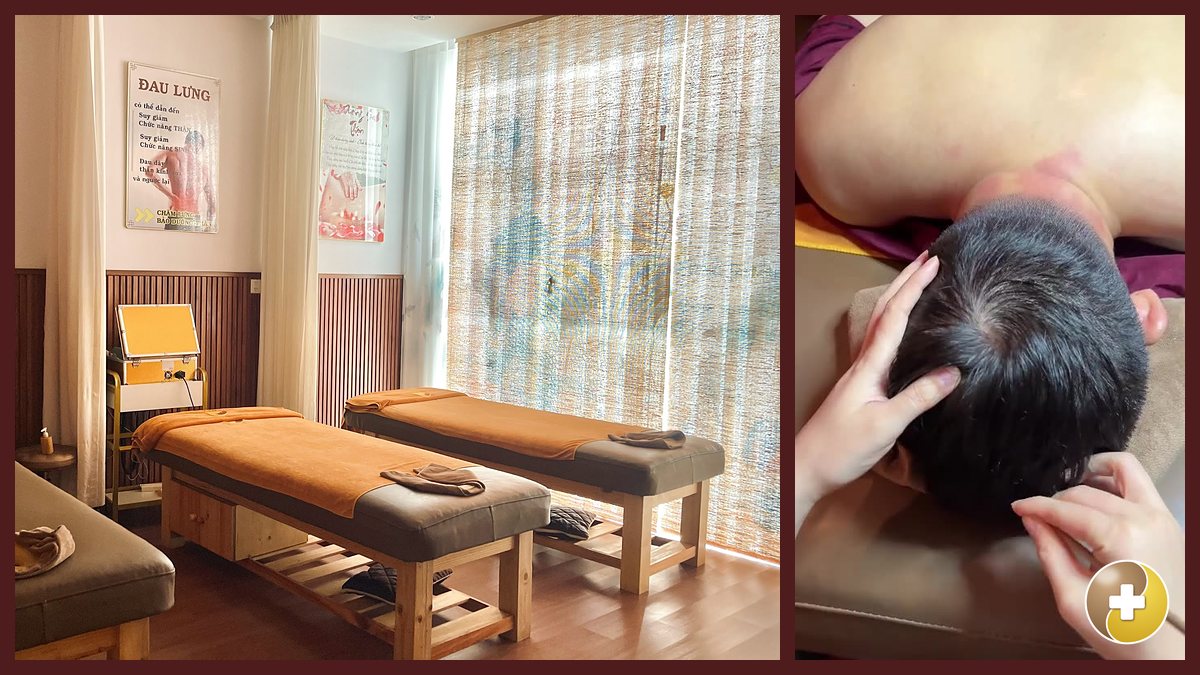
Quick answer: A heavy head usually comes from tight neck and scalp muscles, short or shallow sleep, sinuses, eye strain, changes in blood pressure or blood sugar, low fluids, stress or alcohol. Most cases are harmless, but lasting heaviness should be checked. Tong Gia in District 12 and District 9, Ho Chi Minh City offers hands-on head and neck care.
Want Lương Y Tống Văn Huynh’s team to read your spine and posture in person?
A heavy head feeling: what it means in Western terms, and who gets it
A heavy head feeling is when your head seems to wear a tight cap or carry a weight on the crown, forehead or back of the head, your mind feels foggy and slow, yet it is not exactly a sharp pain. Some people call it a "thick head" or a slightly drunk, floaty feeling; others feel heaviness with mild giddiness, heavy eyes or a tired neck. It is a sensation, not the name of a disease. In Western terms, head heaviness usually comes from structures around the skull: tight muscles of the forehead, temples, crown and neck; blocked sinuses; overworked eyes; or a brief dip in how well the brain is supplied because of poor sleep, low fluids, or changes in blood pressure or blood sugar.
Most heavy-head days are harmless, much like a mild tension-type headache. But persistent heaviness can be a sign that the body is overloaded: weeks of shallow sleep, rising blood pressure, anaemia or long stress. So the better question is not only "why is my head heavy" but "what comes with it, and when".
At Tong Gia Acupoint Wellness (Huyệt Đạo Tống Gia) in Ho Chi Minh City, people who mention a heavy head are often:
- Office workers on screens 8–10 hours in sealed air-conditioned rooms, drinking little water and plenty of coffee.
- Shift workers and online sellers sleeping late and at irregular hours.
- People with frequent blocked noses or sinus trouble, especially in humid weather or dusty traffic.
- Middle-aged adults with fluctuating blood pressure, extra weight, rich food and little exercise.
- Anyone coming out of a stressful period: deadlines, exams, caring for a sick relative.
For our overall approach to head complaints, see headache and dizziness acupressure.
Common causes: seven groups behind a heavy head
| Cause group (Western view) | Typical heaviness | Often comes with |
|---|---|---|
| Tight neck and scalp muscles | Like a band around the head, heavy at the back rising to the crown | Stiff neck and shoulders, worse after long sitting |
| Short or shallow sleep | Foggy and slow all day | Daytime sleepiness, poor focus; loud snoring or pauses in breathing at night |
| Sinuses | Heavy forehead, cheeks and around the eyes; worse bending forward | Blocked or runny nose, reduced smell |
| Eye strain | Heavy forehead and eyes by afternoon | Tired, dry eyes, blurred vision |
| Blood pressure, blood sugar, low fluids | Heaviness with light-headedness | High or low blood pressure, hunger, thirst, heavy sweating |
| Stress and anxiety | A head that "never switches off" | Poor sleep, palpitations, shallow breathing, jaw clenching |
| Alcohol, coffee, environment | After drinking, when skipping coffee, in stuffy rooms | Dry mouth, fatigue, closed air-conditioned rooms with strong smells |
Tight neck and scalp muscles are what Tong Gia sees most in office workers: with the head pushed forward, the sub-occipital muscles, trapezius and scalp muscles work all day to hold it up, and long tightness feels like heaviness or a band. The Tong Gia curriculum notes that long mental pressure tightens the occipital–frontal scalp muscles and the shoulder elevators, spreading neck fatigue to the head. Sleep matters just as much: fewer than six hours for several nights, broken sleep or waking often leaves the head heavy the next day; loud snoring with pauses in breathing and daytime sleepiness should be checked. Sinus pressure gives a heavy forehead and cheeks that feel worse when bending down and in humid mornings. Eyes that focus close for hours, or old glasses, make the brow and eye muscles tense up by afternoon.
The curriculum also records that high blood pressure often has no symptoms but may bring headache, dizziness and ringing ears, and that low blood pressure with dizziness or fainting should be checked. Skipping meals and sweating in the sun without enough water add heaviness and a floaty feeling. Stress keeps the body on alert, with tight muscles and shallow breathing, until heaviness becomes the background. Alcohol, coffee and stuffy rooms complete the list: a morning after drinking, a sudden stop to heavy coffee, closed air-conditioned spaces, or cold air blowing straight on the neck.
Signs worth noting
- Where: forehead, crown, back of the head, temples, whole head.
- When: on waking, early afternoon, evening, after meals, when bending or lying down.
- Extras: giddiness, nausea, stiff neck, blocked nose, tired eyes, palpitations, poor sleep.
- Habits: sleep hours, coffee, water, alcohol, screen time, how airy your workspace is.
- Numbers: if you have a home blood pressure monitor, measure during a heavy spell and on a normal day.
When to see a doctor
An occasional heavy head after a short night is usually nothing to worry about. Please see a doctor if:
- The heaviness lasts for weeks, keeps getting clearer, or its pattern changes.
- It comes with very high blood pressure readings, giddiness or fainting.
- It comes with loud snoring, breathing pauses at night or heavy daytime sleepiness.
- Forehead and cheek heaviness comes with fever, thick nasal discharge for many days or upper tooth pain.
- It follows a knock to the head, even a light one.
- It comes with tiredness, pale skin, palpitations or unexplained weight loss: get checked in parallel.
- It started after a change in a prescribed product you take: ask the health professional who prescribed it.
Call 115 immediately if heaviness turns into a sudden, severe "worst ever" headache, or comes with vomiting, high fever, stiff neck, confusion, seizure, weakness or numbness on one side, a drooping face, slurred speech or double vision, or with chest pain, shortness of breath or cold sweat.
This is a wellness service, not medical care. If you are under medical follow-up, keep following that advice; a Tong Gia session is supportive relaxation only.
The Y Tướng Học view: organs and body signs linked with a heavy head
Y Tướng Học (face reading for wellness) follows the principle "the signs show outside, the organs lie inside". For heaviness the curriculum points to three directions. The Spleen and "dampness": the Spleen transforms food and fluids and lifts the clear upward; the curriculum says an overloaded Spleen and Stomach produce "dampness", making the body feel heavy and digestion slow, and weak lifting brings dizziness. Many guests feel this heaviness most in the head, especially after oily meals or on humid days. Liver yang: when pressure makes the scalp tight, the curriculum describes rising Liver yang with crown pain or fluctuating blood pressure, often with a hot face and irritability. The Kidney and the "sea of marrow": when Kidney essence is short, the brain is poorly nourished, with headache, dizziness, ringing ears, poorer memory and light sleep.
Signs the curriculum links with heaviness include: a swollen tongue with tooth marks on the edges (Spleen weakness with dampness; chronic fatigue, "brain fog", a heavy body, slow digestion); puffy, dark eyelids (the eyelids belong to the Spleen; slower fluid metabolism, heaviness, poor focus); more flesh than bone, soft and puffy (always heavy and tired); a square, full "Điền" face (earth type, prone to damp stagnation with tight lower-back muscles at D11–D12); and a round, straight head under heavy pressure with a tight scalp (Liver yang, crown heaviness). This is school-based reference knowledge to choose where to feel first, confirmed by hand on the spine and never used to judge anyone. See Eastern face reading for wellness: Q&A.
Spine and nerve-reflex areas involved
In Tong Gia's spinal nerve-reflex balancing curriculum, C1–C7 relates to the head, face, neck and arms, D1–D12 to circulation, breathing and digestion, L1–L5 to digestion, kidneys and legs, and the sacral area to elimination. The nervous-system group combines C1–C7, D1–D3 and the sacral area; the internal-organ and metabolism group, which includes blood pressure and digestion, combines D1–D12 and L1–L3. Both come with the reminder that this supports and does not replace medical care.
| Spinal area | Nerve and function | Typical complaints | Related organ (Eastern view) |
|---|---|---|---|
| C1–C3 | Upper neck, head; deep sub-occipital muscles | Heaviness from the back of the head to the crown, hot stiff neck | Liver (Liver yang), Kidney |
| C4–C7 | Neck, shoulders, arms | Heavy head with stiff neck and shoulders | Liver governs the sinews |
| D1–D3 | Circulation, breathing | Shallow breathing, tension between the shoulder blades | Heart, Lung |
| D11–D12 | Digestive area (Spleen and Stomach Shu) | Heaviness after meals, bloating, heavy body | Spleen, Stomach |
| Sacral area | Elimination, lower pelvis | Cold lower back, fatigue, light sleep | Kidney |
These are "related" areas for choosing where to work, not causes. For neck tension in general, see neck and shoulder massage in Saigon: Q&A.
The Tong Gia method for a heavy head
The method was built by Lương Y Tống Văn Huynh, master of traditional Vietnamese wellness and founder of Tong Gia, over more than 13 years of Eastern wellness practice, Y Tướng Học and spinal nerve-reflex balancing. Unlike a simple relaxing head rub, the practitioner looks for where your heaviness is "anchored", in the neck, the upper back or the digestive area of the back, and helps rebalance it:
- Observation and questions: when and where it feels heavy, sleep, food, coffee, blood pressure, whether you have been checked; a look at the tongue, eyelids, build and complexion. Warning signs mean no session and a referral to get checked.
- Reading the spine by hand: skin temperature, the muscle layer, vertebra shape and sensitivity, comparing left and right along C1–C7, D1–D3 and D11–D12.
- Muscle release: sub-occipital muscles, trapezius, shoulder elevators and the muscles beside the upper spine, building pressure gradually and working only on over-active areas.
- Acupressure on the right areas: along the neck hairline, both temples and a gentle hold on Bách hội (GV20, 百会) at the crown, where the midline of the head meets the line joining the tops of the ears, to clear the head and calm the mind; for a heavy body and bloating, also the mid to lower back around the Spleen and Stomach Shu areas. Work stops when the skin at the key point turns from dry to slightly moist.
- Home-care advice: sleep times, water, eye breaks, sitting posture, coffee timing and a short self-massage.
A typical session: the guest is often an office worker in their late thirties whose head feels like a tight cap almost every afternoon, foggy, slow to fall asleep, with normal blood pressure at a recent check. The practitioner notes a square face, a slightly rounded build, puffy eyelids and tooth marks on the tongue. Face down, the band of muscle under the skull is hard, both trapezius muscles are warm, and the lower back around D11–D12 is tight in a broad patch. The first part goes to the neck and shoulders, the second to the lower back, then, face up, the temples and a few slow breaths on Bách hội. Guests often say the head feels "light, like just after a hair wash".
Suitable services (see prices; 1 USD ≈ 26,000 VND):
- Head care 60 minutes: 750,000 VND (about 29 USD). For long-lasting heaviness and a tense head at night.
- Head wash with neck and shoulder massage 60 minutes: 250,000 VND (about 10 USD). For mild heaviness after work.
- Spleen and Stomach wellness 75 minutes: 750,000 VND (about 29 USD). For heaviness with a heavy body, bloating and slow digestion.
What guests feel: tight spots in the neck and back feel tender but pleasant; many doze off during the head work. Afterwards most report a lighter, clearer head and easier sleep; a few feel mild muscle tiredness the next day. Tong Gia supports and helps rebalance; it does not promise that heaviness will go, and asks you to get checked if it changes or persists. You may also enjoy our Vietnamese head spa.
Want Lương Y Tống Văn Huynh’s team to read your spine and posture in person?
Self-care at home and prevention
- Sleep regularly: 7–8 hours, in bed before 23:00, phone away 30 minutes before sleep, an airy bedroom.
- Water and meals: sip water through the day, more in the heat; do not skip breakfast; a light dinner with less fried and sweet food; less alcohol; coffee before 14:00.
- Rest your eyes and neck: a few minutes away from the screen every hour, look into the distance, screen at eye level, slow shoulder rolls.
- Fresh air: open the windows daily, avoid air-conditioning blowing on your neck, keep your nose clear in humid weather.
- Self-massage 3–5 minutes: circle your fingertips from the forehead to the temples, behind the ears and down to the neck hairline, then press Bách hội gently for a few breaths. If heaviness turns into severe pain or comes with neurological signs, do not self-massage; get checked. Sleep tips are in acupressure for sleep.
Booking
- District 12: 225 Dương Thị Mười, Phường Tân Chánh Hiệp, Quận 12 (District 12), daily 8:00–19:00.
- Vinhomes Grand Park: Căn T16-21 khu Manhattan, Phường Long Bình, TP. Thủ Đức (Thu Duc City, former District 9), daily 9:00–20:00.
WhatsApp or Zalo +84 888 264 559 (0888 264 559 in Vietnam), or book online; genuine Google Maps reviews are linked from each branch page. Tell us when and where your head feels heavy and whether you have been checked. If you live in or visit Ho Chi Minh City, come and try this Vietnamese method.
Visit us
- Đông Y Huyệt Đạo Tống Gia Quận 12 (District 12)
225 Dương Thị Mười, Phường Tân Chánh Hiệp, Quận 12, HCMC · 8:00–19:00 daily · 0888 264 559 · Directions on Google Maps - Đông Y Huyệt Đạo Tống Gia Quận 9 (Vinhomes Grand Park, District 9)
Căn T16-21 khu Manhattan, Vinhomes Grand Park, Phường Long Bình, TP. Thủ Đức, HCMC · 9:00–20:00 daily · 0888 264 559 · Directions on Google Maps
Want Lương Y Tống Văn Huynh’s team to read your spine and posture in person?
FAQ
Why does my head feel heavy? Common reasons are tight neck and scalp muscles, short or shallow sleep, sinus congestion, eye strain, changes in blood pressure or blood sugar, low fluids, stress and alcohol. If it turns into a sudden severe headache with weakness or slurred speech, call 115 at once.
Why does my head feel heavy all day? It is common in people who sleep poorly for many nights, sit at screens with the head pushed forward, drink little water and live with long stress. If it lasts for weeks or comes with high blood pressure or giddiness, get checked.
Why do I get a heavy head with a tired neck? This is typical for office workers: tight sub-occipital, trapezius and shoulder muscles pull heaviness from the neck up into the head. Hourly neck stretches, a better screen position and neck muscle release can support a lighter head.
What should I do about a heavy head from lack of sleep? Go to bed earlier at a regular time rather than sleeping in very late, cut afternoon coffee and put the phone away before sleep. Loud snoring, breathing pauses or heavy daytime sleepiness are reasons to have your sleep checked.
Is a heavy, floaty, slightly dizzy head dangerous? It is often due to poor sleep, hunger, low fluids or blood pressure swings, but measure your blood pressure and keep track. Frequent giddiness, fainting, palpitations or pale skin need a check; weakness on one side, a drooping face or chest pain need 115.
Can massage help a heavy head? When tight muscles, stress and fatigue are behind it, neck muscle release and head acupressure can support a lighter head and easier sleep. At Tong Gia the practitioner asks carefully, reads the spine first and does not work when warning signs are present.
Author: Lương Y Tống Văn Huynh – founder of Huyệt Đạo Tống Gia, a master of traditional Vietnamese wellness with over 13 years in Eastern wellness care, Y Tướng Học (face reading) and spinal nerve-reflex balancing massage.
Updated: 2026-11-17
Related guides
- Why does my head feel heavy? Causes, when to get checked, and how Tong Gia can help in Ho Chi Minh City
- Why do I feel dizzy so often? Causes, when to get checked, and how Tong Gia can help in Ho Chi Minh City
- Dizziness in older adults: common causes, danger signs and safe care
- Dizziness with ringing in one ear: causes, when to get checked, and how Tong Gia can help in Ho Chi Minh City
- Jaw joint (TMJ) pain: causes, when to get checked, and how Tong Gia can help in Ho Chi Minh City
- Migraine in young adults: why students and young workers get it and what helps
This is a wellness service, not medical care.