
Dizziness with ringing in one ear: causes, when to get checked, and how Tong Gia can help in Ho Chi Minh City
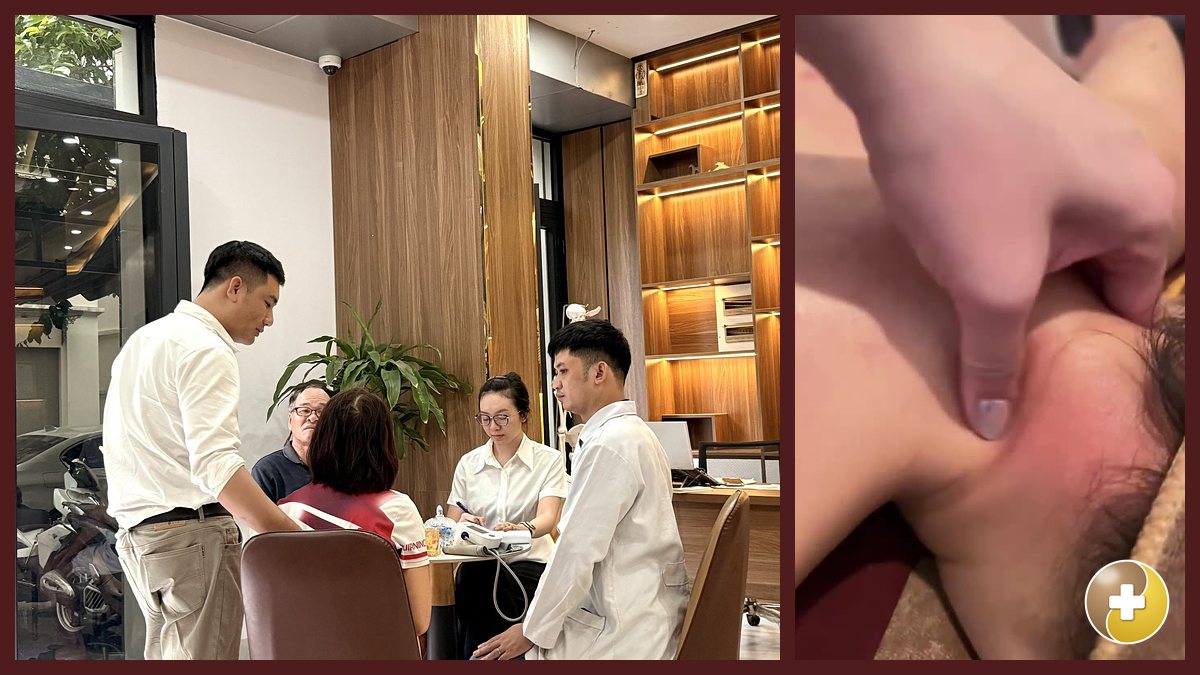
Quick answer: Dizziness with ringing in one ear usually comes from the inner ear (Ménière-type attacks, inflammation), sudden hearing loss, earwax, a blocked Eustachian tube, a tight neck or jaw, or blood pressure. Sudden hearing loss needs a same-day check. Tong Gia in District 12 and District 9, Ho Chi Minh City offers hands-on head and neck care.
Want Lương Y Tống Văn Huynh’s team to read your spine and posture in person?
Dizziness with ringing in one ear: what it means in Western terms, and who gets it
Dizziness with ringing in one ear means you feel giddy, spinning or unsteady while one ear hums, buzzes or feels blocked, and the other ear seems normal. Many people also describe that ear as full, pressured or slightly muffled. This is a group of symptoms, not the name of one disease. In Western medicine, each inner ear holds two neighbouring parts: the cochlea for hearing and the vestibular system for balance. They share the same inner-ear fluid, the same blood supply and the same nerve to the brain. So when one inner ear is disturbed, ringing and dizziness often appear together on that side.
It helps to tell three feelings apart. True vertigo is a spinning sensation, either you or the room, and usually points to the inner ear. Light-headedness feels like you might faint and is more often linked to blood pressure, blood sugar or anaemia. Unsteadiness is a wobbly feeling when walking. Ringing in one ear plus spinning vertigo is the pattern that should be checked by an ear, nose and throat (ENT) service soon, because a few causes need prompt attention.
At Tong Gia Acupoint Wellness (Huyệt Đạo Tống Gia) in Ho Chi Minh City, the people who mention this pattern are often:
- Office workers and developers sitting long hours with the head pushed forward, phone clamped on one shoulder, earphones in all day.
- Motorbike commuters on long, noisy routes with wind hitting one side and a tight helmet.
- Factory and high-tech park staff working near machines, on night shifts, short of sleep.
- People just after a cold, blocked nose or a flight.
- Middle-aged and older adults with high blood pressure, tired lower back and knees, or waking at night to pass urine.
If your ringing comes mainly with headaches, see our page on headache and dizziness acupressure. For how acupressure works at Tong Gia in general, read acupressure massage in Saigon: questions and answers.
Common causes: six groups behind dizziness with one-sided ear ringing
This table helps you recognise your pattern so you can describe it clearly when you get checked. It is not for self-labelling.
| Cause group (Western view) | Typical feeling | Often comes with | How soon to get checked |
|---|---|---|---|
| Inner-ear fluid disorder (Ménière-type) | Spinning attacks lasting tens of minutes to hours; one ear rings, feels full and muffled during the attack | Nausea, vomiting, need to lie still; repeated attacks | See ENT soon |
| Inner-ear or vestibular nerve inflammation | Strong spinning for hours to days, often after a cold or flu | Unsteady walking; sometimes ringing and hearing loss on one side | See a doctor soon |
| Sudden hearing loss in one ear | Waking up with one ear dull, blocked and much quieter | Sometimes dizziness | Same day |
| Outer ear, middle ear, Eustachian tube | Humming, blocked ear, mild giddiness | Earwax, middle-ear infection, blocked nose, after flying | If it lasts, hurts or discharges |
| Neck, jaw and posture | Giddy when turning the neck; buzzing that changes with jaw clenching | Stiff neck on one side, tired shoulders, night-time teeth grinding | If not easing after a few weeks |
| Blood pressure, circulation, long fatigue | Light-headed, pulsing sound in the ear | High or low blood pressure, poor sleep, stress, anaemia | Check blood pressure, get assessed |
Inner-ear fluid disorders cause repeated spinning attacks with ringing, fullness and muffled hearing on one side; between attacks you may feel almost normal, but hearing on that side can slowly drop over years. ENT follow-up is needed, and people are usually advised to reduce salt and coffee, sleep enough and lower stress. Inflammation of the inner ear or vestibular nerve often follows a viral illness and brings strong vertigo; if the hearing part is involved, ringing and hearing loss may join in. Sudden hearing loss is the one to remember: if one ear suddenly goes dull over hours or on waking, get checked within the first one to three days, without waiting or pressing points on yourself.
Ear canal and Eustachian tube problems such as wax, water after swimming, middle-ear infection or a tube blocked by a cold or flight can make one ear hum and feel full, with mild giddiness. Neck, jaw and posture is the group Tong Gia sees most in office workers and riders: deep muscles under the skull, the muscles beside the neck and the chewing muscles share nerve links with the ear and balance system, and when one side stays tight, some people notice buzzing that changes when they turn or clench, plus a wobbly feeling. The Tong Gia curriculum notes that long mental pressure tightens the scalp and neck muscles, and that a hot, over-active upper neck (C1–C2) often goes with headache and balance complaints. Finally, the curriculum records that high blood pressure often has no symptoms but can bring headache, dizziness and ringing in the ears.
Signs worth noting
- Which ear: always the same side or switching; is hearing on that side lower, is it full, painful or discharging.
- Type of dizziness: spinning, faint-feeling, or unsteady walking.
- Timing: seconds, minutes, hours or all day; triggered by turning the neck, standing up fast or changing position.
- Sound: high cicada-like hum, wind-like roar, watery bubbling, or pulsing in time with your heartbeat.
- Extras: nausea, one-sided headache, stiff neck, sore jaw, blocked nose on one side.
- Habits: sleep times, coffee, salty food, earphone hours, noise at work.
When to see a doctor
Dizziness with ringing in one ear should be checked by an ENT service at least once. Please see a doctor soon if:
- Hearing in one ear drops suddenly or the ear feels completely blocked within hours or on waking: go the same day.
- Spinning attacks keep returning with ringing and fullness in the same ear.
- One-sided ringing lasts for weeks and hearing on that side slowly drops.
- There is ear pain, discharge or blood from the ear, or fever.
- The dizziness follows a knock to the head, even a light one, or you have very high blood pressure readings.
- It comes with tiredness, pale skin, palpitations or unexplained weight loss: get checked in parallel.
Call 115 immediately if dizziness starts suddenly with weakness or numbness on one side, a drooping face, slurred speech, double vision, inability to walk, or a sudden "worst ever" headache; or with chest pain, shortness of breath, cold sweat or fainting.
This is a wellness service, not medical care. If you are under medical follow-up, keep following that advice; a Tong Gia session is supportive relaxation only.
The Y Tướng Học view: organs and face signs linked with ear ringing and dizziness
Y Tướng Học (face reading for wellness) in the Tong Gia curriculum rests on the principle "the signs show outside, the organs lie inside". For ringing ears with dizziness it points to three directions. First, the Kidney opens into the ears: the Kidney stores essence and produces marrow, and the brain is called the "sea of marrow". The curriculum lists ringing, slowly reducing hearing and dizziness as ear-area signs of weakened Kidney function, and says that when Kidney essence is short the "sea of marrow" is empty, bringing headache, dizziness, ringing and very light sleep. Second, the Liver stores blood; Liver blood deficiency brings blurred vision and dizziness, and the Shaoyang channel runs around the ear and the sides of the head. Third, the Spleen lifts the clear upward; when this weakens, dizziness is a listed sign.
Face and ear signs the curriculum links with this pattern include: thin, soft ear rims with a flat bone behind the ear and tight muscles around it (Kidney qi weakness: sore back and knees, feeling cold, night urination, ringing or early hearing loss); ears that stick forward like flags (more middle-ear trouble and ringing in windy weather); very thin, paper-fan ears with a raised inner rim (chronic cicada-like ringing and poor sleep); and a sunken or dull forehead or back of the head (Kidney essence shortage, balance complaints and dizziness when changing posture, tight deep muscles at C1–C3). All of this is school-based reference knowledge used to choose where to feel first; it is then confirmed by hand along the spine and is never used to judge anyone or name a disease. For more, read Eastern face reading for wellness: Q&A.
Spine and nerve-reflex areas involved
In Tong Gia's spinal nerve-reflex balancing curriculum, the cervical spine C1–C7 relates to the head, face, neck and arms; the thoracic spine D1–D12 to circulation, breathing and digestion; the lumbar spine L1–L5 to digestion, kidneys, urinary tract and legs; the sacral area to elimination. For the nervous-system group, which includes balance complaints, the curriculum combines C1–C7, upper back D1–D3 and the sacral area, with the reminder that this supports and does not replace medical care.
| Spinal area | Nerve and function | Typical complaints | Related organ (Eastern view) |
|---|---|---|---|
| C1–C3 (hairline, behind the ear) | Upper neck serving the head and face; deep sub-occipital muscles | Giddy when turning, hot stiff neck on one side, buzzing | Kidney (sea of marrow), Liver |
| C4–C7 | Neck, shoulders, arms | One tired shoulder, stiffness rising behind the ear | Liver governs the sinews |
| D1–D3 | Circulation, breathing | Tension between the shoulder blades, shallow breathing, palpitations | Heart, Lung |
| Around L2 (Kidney Shu area) | Lower back, kidneys, urinary tract | Cold, tired lower back; night urination | Kidney |
| Sacral area | Elimination, lower pelvis | Cold lower back and feet | Kidney |
The table shows "related" areas for choosing where to work; it does not state causes. For neck and shoulder tension in general, see neck and shoulder massage in Saigon: Q&A.
The Tong Gia method for dizziness and one-sided ear ringing
The method was built by Lương Y Tống Văn Huynh, master of traditional Vietnamese wellness and founder of Tong Gia, over more than 13 years of Eastern wellness practice, Y Tướng Học and spinal nerve-reflex balancing. It follows "three No's": no chemicals or herbs taken by mouth or injection, no needles, no rough force. A session includes:
- Observation and questions: which ear, what kind of dizziness, whether you have seen ENT, blood pressure and sleep; a look at the ears, forehead, back of the head and complexion. If any warning sign from the section above is present, we do not work and ask you to get checked first.
- Reading the spine by hand: pressing, stroking and rolling to read skin temperature, the muscle layer, the shape of each vertebra and sensitivity, comparing left with right along C1–C7, D1–D3 and the lower back.
- Muscle release: softening the sub-occipital muscles, the muscles around the ear, the side of the neck and the trapezius on the tight side, starting light and building gradually, focusing only on over-active areas. If you feel dizzy, you stay sitting or lying still and change position slowly.
- Acupressure on the right areas: gentle holds on Bách hội (GV20, 百会) at the crown, where the midline of the head meets the line joining the tops of the ears, to clear the head and calm the mind; for Kidney-type signs, warming the lower back and pressing Thái khê (KI3, 太溪) in the hollow between the inner ankle bone and the Achilles tendon. Work stops when the skin at the key point turns from dry to slightly moist.
- Home-care advice: standing up slowly, neck posture, sleep times, earphone volume, foot rubbing and a warm foot bath at night.
A typical session: the guest is often an office worker in their forties who has felt wobbly on standing for a few months, with a cicada-like hum in the right ear in the afternoons, already checked by ENT and told to monitor and cut coffee. The practitioner notices the right shoulder sits higher, the head tilts slightly right and the eye area looks dark. Lying face down, the area under the skull on the right is warmer and the muscle behind the right ear feels like a cord, while the lower back is cooler than normal. Most of the time goes to light-to-medium release on the right side, then balancing the left, warming the lower back and pressing Thái khê on both ankles, finishing with Bách hội. Guests usually say the ear feels "quieter", the head lighter and standing up steadier.
Suitable services (see prices; 1 USD ≈ 26,000 VND):
- Head care 60 minutes: 750,000 VND (about 29 USD). Time for the head, back of the neck, around the ears and head points.
- Kidney wellness 75 minutes: 750,000 VND (about 29 USD). For ringing with tired back and knees, feeling cold, night urination.
- Head wash with neck and shoulder massage 60 minutes: 250,000 VND (about 10 USD). Herbal wash plus neck release after a long day.
What guests feel: the tight spots under the skull and behind the ear feel tender but pleasant; many get sleepy during the crown hold. Afterwards most report a lighter head, easier neck turning and deeper sleep; a few feel a slightly tired neck the next day. Tong Gia supports and helps rebalance; it does not promise to stop ringing or dizziness, and always asks you to get checked if the sound or your hearing changes. Many guests also like our Vietnamese head spa.
Want Lương Y Tống Văn Huynh’s team to read your spine and posture in person?
Self-care at home and prevention
- During an attack: sit or lie down somewhere safe, fix your eyes on one point, breathe slowly; do not ride or climb; get up in three steps: lying, sitting, then standing.
- Protect your ears: moderate earphone volume, ear breaks every hour, avoid long loud noise, no deep cotton-bud cleaning, deal with a blocked nose before flying or diving.
- Eat and sleep regularly: bed before 23:00, 7–8 hours; less salt, coffee and alcohol; drink enough water in the heat; do not skip meals.
- Keep the neck straight: screen at eye level, earphones instead of a phone on the shoulder, slow shoulder rolls every hour.
- Evening Kidney care from the Tong Gia curriculum: rub the soles around Dũng tuyền (KI1, 涌泉) 3–5 minutes each, press Thái khê gently 1–2 minutes each side, and soak the feet in warm water 15–20 minutes before bed (test the temperature carefully if you have diabetes). Good sleep habits are covered in acupressure for sleep.
Booking
- District 12: 225 Dương Thị Mười, Phường Tân Chánh Hiệp, Quận 12 (District 12), daily 8:00–19:00.
- Vinhomes Grand Park: Căn T16-21 khu Manhattan, Phường Long Bình, TP. Thủ Đức (Thu Duc City, former District 9), daily 9:00–20:00.
WhatsApp or Zalo +84 888 264 559 (0888 264 559 in Vietnam), or book online; genuine Google Maps reviews are linked from each branch page. Tell us which ear rings, what the dizziness feels like and whether you have been checked. If you live in or visit Ho Chi Minh City, come and try this Vietnamese method.
Visit us
- Đông Y Huyệt Đạo Tống Gia Quận 12 (District 12)
225 Dương Thị Mười, Phường Tân Chánh Hiệp, Quận 12, HCMC · 8:00–19:00 daily · 0888 264 559 · Directions on Google Maps - Đông Y Huyệt Đạo Tống Gia Quận 9 (Vinhomes Grand Park, District 9)
Căn T16-21 khu Manhattan, Vinhomes Grand Park, Phường Long Bình, TP. Thủ Đức, HCMC · 9:00–20:00 daily · 0888 264 559 · Directions on Google Maps
Want Lương Y Tống Văn Huynh’s team to read your spine and posture in person?
FAQ
What causes dizziness with ringing in one ear? Common causes are inner-ear disorders such as Ménière-type attacks or inner-ear inflammation, sudden hearing loss, earwax or a blocked Eustachian tube, tight neck or jaw muscles, and blood pressure problems. If hearing in one ear drops suddenly, get checked the same day.
Can the cochlea cause dizziness? The cochlea and the balance organ sit side by side in the inner ear and share fluid and a nerve. When one inner ear is disturbed, you can get ringing, muffled hearing and spinning together. An ENT check is needed to find out why.
Can a blocked nose cause ringing in one ear? Yes, it can. The Eustachian tube links the middle ear to the throat; a cold or sinus problem can block it, making one ear hum and feel full with mild giddiness. Ear pain, fever, discharge or long-lasting ringing should be checked.
Is dizziness with ear ringing dangerous? Most cases are not immediately dangerous, but you should find out the cause. Call 115 at once if it comes with weakness or numbness on one side, a drooping face, slurred speech, double vision, a sudden severe headache, chest pain or breathlessness.
What helps one-sided headache at the back of the head with ringing ears? Rest, regular sleep, less coffee, a better screen and neck position and gentle neck stretches each hour. This pattern often goes with tight neck and ear muscles; if pain grows, hearing drops or you have fever and a stiff neck, see a doctor.
Can acupressure help dizziness and ringing ears? When tight neck muscles, stress and fatigue play a part, muscle release and head and neck acupressure can support a lighter head and easier sleep. It does not replace an ENT check; at Tong Gia we ask carefully first and do not work if warning signs are present.
Author: Lương Y Tống Văn Huynh – founder of Huyệt Đạo Tống Gia, a master of traditional Vietnamese wellness with over 13 years in Eastern wellness care, Y Tướng Học (face reading) and spinal nerve-reflex balancing massage.
Updated: 2026-11-17
Related guides
- Why does my head feel heavy? Causes, when to get checked, and how Tong Gia can help in Ho Chi Minh City
- Why do I feel dizzy so often? Causes, when to get checked, and how Tong Gia can help in Ho Chi Minh City
- Dizziness in older adults: common causes, danger signs and safe care
- Dizziness with ringing in one ear: causes, when to get checked, and how Tong Gia can help in Ho Chi Minh City
- Jaw joint (TMJ) pain: causes, when to get checked, and how Tong Gia can help in Ho Chi Minh City
- Migraine in young adults: why students and young workers get it and what helps
This is a wellness service, not medical care.