
Shortness of breath at night in bed: what night-time breathing tells you, when to see a doctor, and how Tong Gia helps
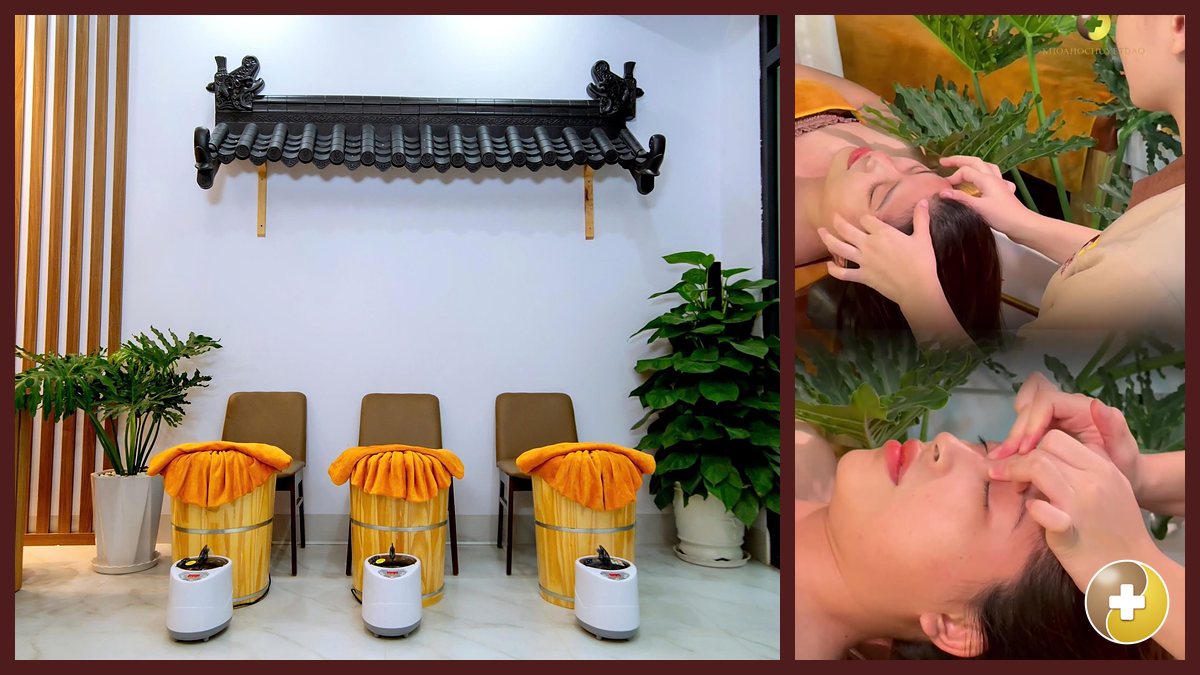
Quick answer: Breathlessness at night often comes from a blocked nose, snoring and sleep apnoea, reflux, asthma, a dry dusty room or anxiety; heart and lung disease are possible too. Needing extra pillows, sudden breathlessness or chest pain need a doctor now. Tong Gia Acupoint Wellness (Huyệt Đạo Tống Gia) in Ho Chi Minh City relaxes shoulders and chest.
Want Lương Y Tống Văn Huynh’s team to read your spine and posture in person?
Shortness of breath at night in bed: what is happening?
Some people lie down and their nose blocks at once, so they breathe through the mouth. Others fall asleep, then wake with a jolt, short of breath, and sit up to gulp air. Others wake in the morning with a heavy chest and a dry, sore throat, as if they never got enough air all night. In Ho Chi Minh City this is common in the rainy season and in the hot months when the air-con runs all night.
The Western view: breathing works differently lying down. In sleep the muscles that keep the throat open relax; the tongue and soft palate fall back and narrow the airway, more so with a blocked nose, large tonsils, extra weight or a thick neck. Lying flat, mucus from the nose and sinuses runs down the throat, and stomach acid rises more easily, especially after a late meal. For the heart, lying flat sends more blood from the legs back to the chest; a healthy heart copes, but a weak heart lets fluid build up in the lungs, causing breathlessness when lying flat and the need for extra pillows. Anxiety or panic can also flare in the middle of the night, bringing fast breathing and a tight chest even when heart and lungs are fine.
So breathlessness in sleep is a symptom with many sources, from simple ones such as a dusty dry bedroom or a blocked nose, to ones that need prompt medical care such as sleep apnoea, asthma or heart and lung disease. Tong Gia Acupoint Wellness (Huyệt Đạo Tống Gia) hears about it from office workers sleeping at 18–20°C, factory staff breathing dust all day, drivers who nap sitting up, people who drink and eat late, new mothers lying on one side for hours and anyone going through a long stressful period.
Common causes, group by group
This table helps you understand your situation and describe it clearly to a doctor. It is not for drawing your own conclusions.
| Cause group | Examples | Typical pattern |
|---|---|---|
| Nose and sinuses | Blocked nose at night, allergic rhinitis, sinusitis, deviated septum | Mouth breathing, dry throat on waking |
| Snoring, sleep apnoea | Extra weight, thick neck, large tonsils, evening alcohol | Loud snoring, pauses noticed by a partner, gasping |
| Reflux | Late meals, lying down full, alcohol, coffee | Cough, burning behind the breastbone, hoarse voice in the morning |
| Asthma, allergy | Mattress dust, pet hair, mould, uncleaned air-con | Wheeze, cough at night or early morning |
| Heart | Heart failure, rhythm problems, long-term high blood pressure | Breathless lying flat, extra pillows, swollen ankles |
| Lungs | COPD, pneumonia, years of smoke exposure | Long-lasting cough with phlegm, fever |
| Anxiety at night | Work pressure, night-time panic | Waking with fast breathing, racing heart, fear |
| Bedroom and posture | Closed, dry, dusty room; pillow too low or too high | Heavy chest, stiff neck, better in another room |
The Tong Gia curriculum lists habits that tire the lungs: smoke, including second-hand smoke, paralyses the tiny cleaning hairs so mucus and dust collect; dust, fine particles and cooking smoke irritate the airways; shallow breathing and a slumped posture leave the diaphragm underused, so the lungs never fully open. It also notes that late eating makes the stomach work when the body should rest, which encourages reflux.
A blocked nose: the cause people ignore
According to the curriculum, the nose warms, moistens and filters the air; Eastern medicine says the Lung "opens into the nose". A blocked nose forces mouth breathing, so dry cold air hits the throat directly: sore throat in the morning, heavy chest, shallow sleep.
Signs that often come with it
Under weakened lung function the Tong Gia curriculum lists, for sleep: breathless when lying down, snoring, pauses in breathing, waking from coughing. Under weakened heart function it lists breathlessness on stairs, breathlessness lying down needing extra pillows, waking because of breathlessness, night cough and ankle swelling by evening. One sign alone is not enough to conclude anything; Western medicine needs examination, X-ray, breathing tests, ECG or heart ultrasound when needed.
- Only breathless when the nose is blocked, better on your side: points towards nose and posture.
- Loud snoring with pauses, morning headache, daytime sleepiness: suggests sleep apnoea; get assessed.
- Dry cough, burning chest, sour taste at night: think of reflux.
- Wheeze and chest tightness in episodes: get checked for asthma.
- Needing two or three pillows, swollen ankles, breathless on stairs: see a heart specialist soon.
- Waking with fast breathing and fear that passes in minutes: may be anxiety, but heart and lungs should be checked first.
When to see a doctor
The curriculum says that with any of these signs the practitioner does not work and advises a medical check first:
- Crushing chest pain, shortness of breath, sweating: call 115.
- Sudden breathlessness, or breathlessness at rest needing to sit up to breathe.
- Blue lips or fingertips.
- Wheezing or noisy breathing for the first time; coughing blood.
- High fever with cough and cloudy phlegm; a cough lasting over two weeks.
- Night sweats, low fever in the afternoons, unexplained weight loss.
- Ankles swelling more and more, fast weight gain, breathless lying flat.
- Snoring with pauses and nodding off in the daytime, especially while driving.
If you have asthma, COPD or heart disease and use prescribed inhalers or other prescriptions, keep following your doctor's plan. This is a wellness service, not medical care.
The Eastern and face-reading view
In the Tong Gia curriculum, the Lung governs qi, opens into the nose and regulates the water passages. Spleen and Lung are linked as "Earth generates Metal": the Spleen sends refined essence up to the Lung, and "the Spleen produces phlegm, the Lung stores it", so a weak Spleen brings damp phlegm and breathlessness. The Heart governs blood and vessels; when Heart qi is weak, the curriculum lists breathlessness on effort and when lying down. Stress blocks Liver qi and tightens the chest.
| Eastern pattern | Signs in the curriculum | Direction |
|---|---|---|
| Lung qi deficiency | Weak cough, breathless on effort, soft voice, sweats easily, catches colds, pale face | Support Lung qi and Spleen; belly breathing, keep warm |
| Lung yin deficiency | Dry cough, dry throat, hoarse voice, red cheeks, night sweats | Moisten the Lung; enough water, avoid dry air and spicy food |
| Spleen weakness with phlegm | Heavy body, much phlegm, sticky mouth, thick tongue coating | Strengthen Spleen; less sweet and fatty food, light dinner |
| Liver qi stagnation | Tension at bedtime, chest tightness, sighing | Ease the Liver; slow breathing, release shoulders and chest |
These are traditional concepts, not Western disease names. In Y Tướng Học ("the signs show outside, the organs lie inside"), a long but square face (the "Đồng" type) belongs to Metal and the Lung, prone to sinus trouble, asthma and dry cough, with tightness around D3 that affects breathing. A pale face points to weak Lung qi, red cheeks in the afternoon to Lung yin deficiency. A soft, heavy build ("more flesh than bone") is linked in the curriculum to Spleen weakness with damp phlegm; in Western terms, extra weight is also common in people who snore and have sleep apnoea. Blue lips are not a face-reading matter but a reason to see a doctor at once. See our face-reading wellness Q&A.
Spine segments and nerve-reflex zones involved
According to the curriculum, C1–C7 relates to head, face, neck and arms; D1–D12 to circulation, breathing and digestion. Định suyễn (EX-B1, 定喘) lies 0.5 cun beside the spine below C7; Phế du (BL13, 肺俞) below T3; the Pericardium and Heart points below T4 and T5; Tỳ du (BL20, 脾俞) below T11, each 1.5 cun out.
| Segment / zone | Function | Typical sign | Eastern organ |
|---|---|---|---|
| C1–C3 | Head, face, nose and throat | Blocked nose, heavy head on waking | Lung (opens into the nose) |
| C4–C7 (EX-B1) | Neck, shoulders, accessory breathing muscles | Braced shoulders, chest breathing | Lung |
| D1–D3 (BL13) | Breathing, upper back | Shallow breathing, night cough | Lung |
| D4–D5 (BL14, BL15) | Circulation, chest | Chest tightness, palpitations on waking | Pericardium, Heart |
| D11–D12 (BL20, BL21) | Digestion | Bloating, sour reflux lying down, phlegm | Spleen, Stomach |
"Related" means a zone to check, not a conclusion about disease. Following the curriculum's 8 principles, the practitioner compares both sides and works only on "excited" zones (warmer skin, tight muscle, more tenderness).
The Tong Gia method: spinal nerve-reflex balancing massage
This traditional Vietnamese method was built by Lương Y Tống Văn Huynh, a master of traditional Vietnamese wellness and founder of Tong Gia, with over 13 years in Eastern wellness, Y Tướng Học and spinal nerve-reflex balancing. For guests who have been checked and have no warning signs, the aim is to relax the shoulders, upper back and chest so the diaphragm and ribcage move more freely, support Lung qi and the Spleen, and ease tension. The curriculum is clear that acupoints do not act directly on lung tissue.
- Screening and observation: asthma, lung or heart conditions, pregnancy, fever, long cough, current prescriptions; when breathlessness comes, in which position, snoring or pauses. Any warning sign means no session and a referral to a doctor. Then we watch resting breathing (shallow, chest or belly), voice, colour and posture.
- Reading the spine by hand: skin temperature, muscle layer, vertebra shape and tenderness from C1 down, left against right.
- Muscle release: shoulders, neck, upper back and chest, steady rhythm, gradually increasing pressure, stopping when the skin at the key point turns from dry to slightly moist.
- Acupressure on the right zone: Phế du and Định suyễn on the back; gentle Trung phủ (LU1, 中府) and Đản trung (CV17, 膻中) on the chest; Xích trạch (LU5, 尺泽), Liệt khuyết (LU7, 列缺), Thái uyên (LU9, 太渊) on the arm; Nội quan (PC6, 内关) for chest tightness. Hợp cốc (LI4, 合谷) only when pregnancy is ruled out.
- Breathing practice: a few minutes of belly breathing or pursed-lip breathing during the session, plus advice on sleep position, bedroom and dinner time.
A typical session
A typical session with an office worker who sleeps with air-con all night, gets a blocked nose lying down and wakes breathless with a heavy chest. An ear-nose-throat check found allergic rhinitis and they use the prescribed spray. They breathe mainly with the chest, shoulders raised, face slightly pale. The muscles beside D1–D3 are thick, the area below the nape warm. The practitioner releases neck, shoulders and upper back, presses Phế du and Định suyễn, works gently on chest and arms, then on the nose and sinus area, and ends by practising belly breathing together. The guest is reminded to clean the air-con filter, keep the temperature moderate and wash pillowcases weekly.
Services and prices
- Lung wellness session, 90 min: 900,000₫ (about US$35), for shallow breathing, breathlessness, night cough.
- Nose and sinus care, 60 min: 350,000₫ (about US$13.50), when night breathing trouble comes mainly from a blocked nose.
- Eastern massage, 60 min: 450,000₫ (about US$17), when tension at bedtime and tight shoulders are part of the picture.
See all services on our prices page, and more in acupressure for sleep in Saigon, acupressure massage in Saigon and neck and shoulder massage Q&A.
What you may feel
Many guests feel tenderness in the shoulders and between the shoulder blades at first, then the chest seems to loosen and breathing drops towards the belly. During nose care some notice the nose opening and a little runny nose. Afterwards many say that night they breathe more easily lying down, mouth-breathe less and sleep more calmly. Responses vary; Tong Gia supports the body in rebalancing and does not replace medical checks or prescribed care.
Want Lương Y Tống Văn Huynh’s team to read your spine and posture in person?
Self-care at home and prevention
- Belly breathing every evening: in through the nose for about 4 seconds, belly rising; out slowly for about 6 seconds, 5–10 minutes before sleep. For mild breathlessness, breathe out through loosely closed lips.
- Adjust position and pillow: people who snore, have a blocked nose or reflux are often more comfortable on their side with the head slightly raised; the pillow should neither tip the head back nor bend the neck forward.
- Clean, not-too-dry bedroom: service the air-con regularly, avoid very low temperatures, wash bedding weekly, keep pets off the bed, avoid smoke and incense in a closed room.
- Light dinner 2–3 hours before bed: less alcohol, fried food and evening coffee to reduce reflux and snoring.
- Enough water by day, keep the neck and chest warm on cool nights, about 30 minutes of moderate movement daily, gradual weight loss if needed.
Book a session
- District 12: 225 Dương Thị Mười, Tân Chánh Hiệp Ward (address in Vietnamese for taxis). Open 8:00–19:00 daily.
- Vinhomes Grand Park, District 9: Unit T16-21, Manhattan zone, Long Bình Ward, Thủ Đức City. Open 9:00–20:00 daily.
Call, Zalo or WhatsApp +84 888 264 559, or book online. Tell us when the breathlessness comes, which position makes it worse, whether you have been checked and any results. Real ratings and reviews are on each branch's Google Maps profile.
Visit us
- Đông Y Huyệt Đạo Tống Gia Quận 12 (District 12)
225 Dương Thị Mười, Phường Tân Chánh Hiệp, Quận 12, HCMC · 8:00–19:00 daily · 0888 264 559 · Directions on Google Maps - Đông Y Huyệt Đạo Tống Gia Quận 9 (Vinhomes Grand Park, District 9)
Căn T16-21 khu Manhattan, Vinhomes Grand Park, Phường Long Bình, TP. Thủ Đức, HCMC · 9:00–20:00 daily · 0888 264 559 · Directions on Google Maps
Want Lương Y Tống Văn Huynh’s team to read your spine and posture in person?
FAQ
Why do I feel short of breath at night in bed? Common reasons are a blocked nose or sinusitis, snoring and sleep apnoea, reflux, asthma or allergy, a dry dusty bedroom or anxiety; heart and lung disease are also possible. Needing extra pillows, sudden breathlessness, chest pain or blue lips need urgent medical care.
Why do I wake up short of breath in the morning? Often from mouth breathing due to a blocked nose, dry air-con, night reflux, snoring pauses or a poor sleeping position. If it happens most mornings, or with wheeze, phlegm, swollen ankles or breathlessness on effort, get your lungs and heart checked.
What helps a blocked nose that makes it hard to breathe at night? Sleep on your side with the head slightly raised, keep the room dust-free and not too cold, and rinse the nose with saline as advised by a pharmacist or doctor. A long-lasting one-sided block, nosebleeds or fever need an ENT check.
Can stress make it hard to breathe when I sleep? Yes. Stress can cause shallow breathing, a tight chest and sometimes waking with fast breathing and a racing heart. Still, heart and lungs should be checked before blaming stress. Slow belly breathing before bed helps you relax.
Can massage help with breathing problems at night? Only after a medical check with no warning signs. Massage relaxes shoulders, upper back and chest so breathing feels easier. Tong Gia offers a Lung wellness session (90 min, 900,000₫) and nose and sinus care (60 min, 350,000₫). It does not replace medical care.
Author: Lương Y Tống Văn Huynh – founder of Huyệt Đạo Tống Gia, a master of traditional Vietnamese wellness with over 13 years in Eastern wellness care, Y Tướng Học (face reading) and spinal nerve-reflex balancing massage.
Updated: 2026-11-17
Related guides
- Driving stress in Saigon traffic: why jams lock up the body and shorten the temper, and how to unwind after the wheel
- Student stress: why your body goes into alarm mode in exam season and how to ease it
- Nervous tension explained: what stress does in the body, how Eastern medicine sees it, and how to return to rest
- Exam stress before tests: what your child's body is doing and how to help them walk in calmer
- Trouble sleeping after giving birth: why you are exhausted yet wide awake
- Insomnia and "weak kidneys": what Eastern and Western medicine say, why you wake at night, and how to care for it
This is a wellness service, not medical care.