
What is muscle release? How it feels, who it suits and when to skip it
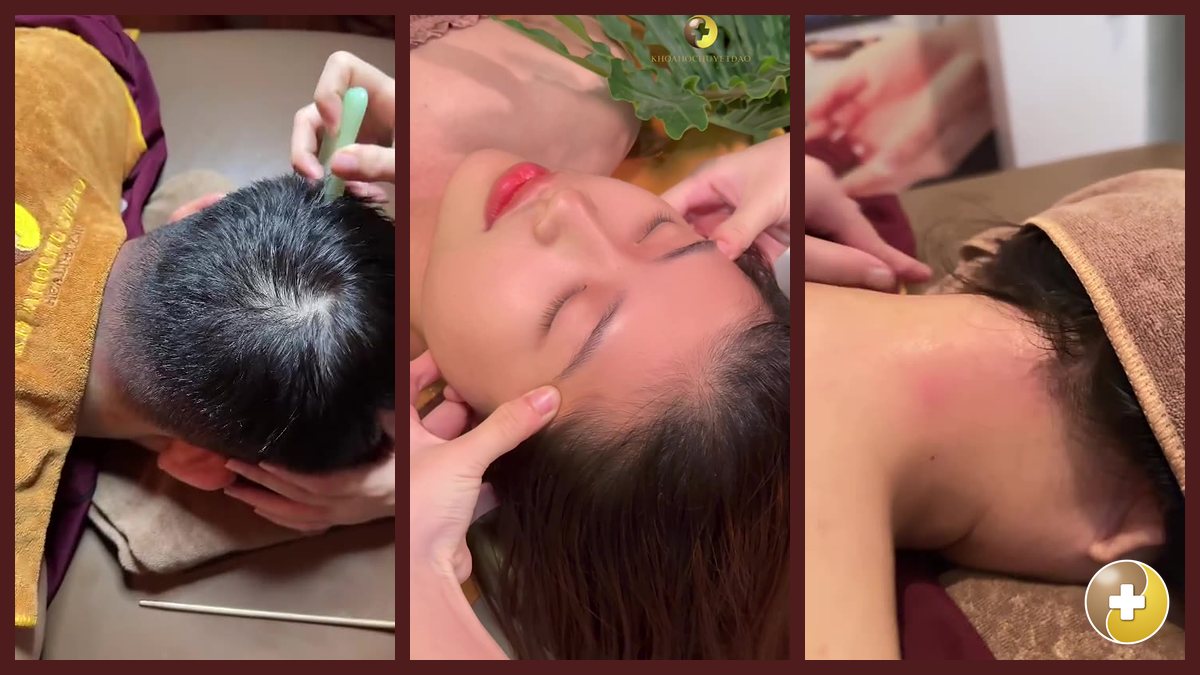
Quick answer: Muscle release means pressing deeply and slowly with fingers and palms into contracted muscle bands and the fascia around them so they lengthen and soften. It feels achy and tight, then lighter, never sharp. Huyệt Đạo Tống Gia in District 12 and District 9 reads the spine first, then releases; neck and shoulder care is 550,000 VND for 60 minutes.
Quick answer: Muscle release is a hands-on technique of slow, deep pressure on tight bands of muscle and the fascia around them so they lengthen and soften. It differs from a relaxing massage in pressure, pace and the search for the exact "locked" spot. At Tong Gia Acupoint Wellness in District 12 and District 9, Ho Chi Minh City, each muscle release session starts with reading the spine by hand.
Want Lương Y Tống Văn Huynh’s team to read your spine and posture in person?
What is muscle release, in Western medical terms?
Muscle release uses the fingers, palm or forearm to press deep and move very slowly into a tight band of muscle and its fascia, the thin sheath that wraps each muscle and links muscle groups together. When a muscle stays contracted, the fascia tightens with it and feels like a taut cord, a board or a hard knot under the skin. The practitioner holds pressure on that exact spot long enough for it to let go, instead of gliding over the whole back.
In Western terms, long-term muscle tightness usually comes from three things together: holding one posture too long, reduced blood flow so metabolic waste builds up and causes fatigue, and a nervous system that "gets used to" keeping the muscle tense. Tender knots that refer pain elsewhere, often called trigger points, can form inside the muscle. Slow, deep, sustained pressure stimulates the stretch sensors in muscle and tendon, which signal the spinal cord to let the muscle relax; blood returns more freely and the layers of fascia glide more easily. That is why after well-targeted release many people find the neck turns further, the shoulders drop and the head feels lighter.
In Ho Chi Minh City, Tong Gia sees three main groups: office staff under air-con for 8–10 hours, heads bent over phones; people who run, lift, play badminton or pickleball and wake with a heavy dominant shoulder; and manual workers such as factory staff, nail and hair technicians and drivers, whose forearms and mid-back stay tense all day.
| Feature | Relaxing massage | Muscle release |
|---|---|---|
| Pressure | Light to medium, even | Deep, building layer by layer |
| Pace | Smooth, continuous strokes | Slow, pausing on tight spots |
| Goal | Whole-body relaxation, sleep | Soften the tight band and fascia exactly where it is locked |
| Before starting | Usually begins straight away | Reads the muscles and spine to find where to work |
| Feeling | Soothing throughout | Achy on tight spots, then lighter; never sharp |
Common causes of tight neck and shoulder muscles
- Looking down at phones and low screens: a head held a few centimetres forward multiplies the load on the back of the neck.
- Air-con on the neck: cold makes muscles contract to hold heat.
- Long motorbike rides and heavy helmets: the neck and trapezius brace the whole way.
- Training: heavy shoulder work, one-sided badminton, skipping the cool-down stretch.
- Repetitive work: typing, nail work, hairdressing, carrying, a one-strap backpack.
- Stress and poor sleep: shoulders creep up, the jaw clenches, muscles never rest.
In Vietnamese traditional wellness, the Tong Gia training says the Liver system "governs the tendons": when balanced, tendons and joints stay supple; when weak, muscles stiffen, cramp and lose flexibility. The Liver also keeps energy flowing; long anger or pressure makes it stagnate, so it is hard to relax. The Spleen system nourishes muscles and limbs. These are functional ideas, not a sign that your liver or stomach is unwell.
Signs that often come with it
- A stiff neck that makes you turn your whole body to look sideways.
- A hard knot on the shoulder blade that sends pain up into the head or down the arm.
- Headaches at the back of the head or temples after long work.
- Tired forearms and stiff fingers after typing or nail work.
- A stiff, "numb-feeling" neck on waking that eases with movement.
- Tingling or numbness running into the fingers, or a weak hand: this is more than tight muscle; get checked first.
When to see a doctor
Please see a doctor at a medical facility, and skip muscle release for now, if you have:
- Numbness or weakness in an arm or leg, dropping things, unsteady walking.
- Electric pain shooting down an arm or leg.
- A swollen, hot, red area, or fever.
- Pain after a fall, accident or knock to the neck.
- A sudden severe headache, or a stiff neck with fever and vomiting.
- Dark, tea-coloured urine after hard training with widespread muscle pain: go now.
- Ongoing fatigue, weight loss or unexplained aches all over: get checked alongside any wellness care.
- Chest tightness, breathlessness or cold sweats with pain spreading to the left shoulder or jaw: call 115 immediately.
This is a wellness service, not medical care.
Face reading (Y Tướng Học): what your build says about how muscles tighten
Vietnamese face reading says "the signs show outside, the organs lie inside". In the Tong Gia approach, face shape and muscle texture help choose the right technique, because not everyone needs deep pressure:
- Muscles hard as wood, dry and tender: the training calls this stagnation from high mental pressure, chronic deep spasm in the trapezius and the long back muscles, tension headaches, and a risk of fibrous bands if not released in time.
- "Vương" (王) face, bony with high cheekbones: fibrous muscle stuck around the joints; the training uses Bật (cross-fibre flicking) and deep pushing to free it.
- "Mục" (目) face, long, narrow and thin: low energy and blood, thin back muscles; deep pressure does not suit; gentle vibration and light kneading instead.
- "Phong" (風) face, very wide jaw: uneven back tension and pain that moves around; the practitioner works with movement to catch the key point.
- "Thân" (申) face, wide cheekbones, narrow forehead and pointed chin: under stress the mid-back bands contract.
These are hints for choosing area and technique, never a verdict on your health or character.
Spine and nerve-reflex zones involved
In the Tong Gia framework, C1–C7 serve the head, face, neck and arms; D1–D12 relate to circulation, breathing and digestion; L1–L5 to the legs. For neck and shoulder aches and tingling hands, the training combines C5–C7, L1–L5 and S1–S5.
| Tight muscle group | Spinal segment, nerves | Typical feeling | Related organ system |
|---|---|---|---|
| Suboccipitals, side-neck muscles | C1–C3; head, face | Headache at the back of the head, tired eyes | Liver (eyes, tendons) |
| Upper trapezius, levator scapulae | C3–C7; neck, shoulders | Stiff neck, raised shoulders | Liver (stagnation under stress) |
| Forearm and hand muscles | C5–C7; arms | Tired forearms, stiff fingers | Spleen (muscles and limbs) |
| Between the shoulder blades, rhomboids | D1–D6; breathing, circulation | Board-stiff upper back, shallow breathing | Lung, Liver |
The Tong Gia method: spinal nerve-reflex balancing massage
Muscle release at Tong Gia is part of the method developed by Tống Văn Huynh, founder of Tong Gia and a master of traditional Vietnamese wellness with over 13 years in Eastern wellness, face reading and spinal nerve-reflex balancing. Its three "no" rules are no needles, nothing invasive and no rough force. A session goes like this:
- Screening: how long it has hurt, any hand numbness or weakness, fever, falls or a fresh injury. Warning signs mean no session.
- Observation: how you stand, shoulder and hip levels, head position, complexion.
- Reading the spine by hand: skin temperature, the muscle layer, the shape of each vertebra and tender points, left against right; work focuses on "excited" areas (warmer, tighter, more tender).
- Muscle release: pushing and rolling thick, immobile muscle; cross-fibre flicking of fibrous bands; vibration for soft, depleted tissue; slow stroking along grooves. Pressure builds through five levels, from one finger to full body weight, as you respond.
- Acupressure on the key neck, shoulder and arm points, stopping when the skin there turns from dry to slightly moist.
- Home coaching: two or three stretches for the area just worked.
Services: neck and shoulder care 60 minutes, 550,000 VND (about 21 USD), first visit 399,000 VND (about 15 USD); neck–shoulder or lower-back care 90 minutes, 750,000 VND (about 29 USD); an extra 30 minutes for one area, 199,000 VND (about 8 USD). See the price list, the neck and shoulder massage page, a neck and shoulder session in Saigon and neck and shoulder questions.
A typical session
One evening at the Vinhomes Grand Park branch, a software engineer from the Hi-Tech Park who plays badminton at weekends said his right shoulder was stiff, turning his head right felt blocked, and afternoons brought headaches at the back of his head. No hand numbness, no falls. His head sat forward and his right shoulder rode higher. Along the spine, the skin at C5–C7 on the right was warmer, the right levator scapulae was a taut cord, and a knot inside the right shoulder blade sent pain up into the neck. The practitioner pushed and rolled the upper trapezius, flicked across the levator, stroked slowly along the inner edge of the shoulder blade and pressed the neck and shoulder points, moving from fingertip to full palm as the muscle let go. At the end he could turn his head further, and he left with a levator stretch and advice to raise his screen.
What you feel during and after
An achy, pressing feeling on tight spots is normal: achy as pressure goes in, lighter as it comes off. The Tong Gia training calls it a "comfortable ache". It should never be sharp or make you hold your breath; say so and the pressure will ease. Afterwards the shoulders drop, the neck turns more freely and many sleep better; the next day may feel mildly sore, like after a workout. Everyone responds differently, and Tong Gia does not promise the pain will vanish after one session.
Not yet: in the first 48 hours after an acute injury, on swollen, hot or bruised areas, with a suspected fracture, soon after surgery, over open wounds or with a fever.
Want Lương Y Tống Văn Huynh’s team to read your spine and posture in person?
Self-care at home and prevention
- Warm compress for 10–15 minutes on tight areas, but not on swollen or hot ones.
- Move every 45 minutes: stand, roll the shoulders back ten times, tip the head back gently and tuck the chin.
- Raise screens and phones to eye level; use a backrest and let the shoulders drop while typing.
- After training: walk slowly for 5–10 minutes, stretch lightly, drink enough water; avoid heavy shoulder work on consecutive days. Runners can read massage after running in Thu Duc.
- Calm the mind: a few minutes of slow belly breathing before bed helps the shoulders stop bracing.
How to book
Tong Gia Acupoint Wellness has two branches in Ho Chi Minh City, open every day, with real customer reviews on Google Maps:
- District 12: 225 Dương Thị Mười, Phường Tân Chánh Hiệp (Tan Chanh Hiep Ward, District 12). Open 8:00–19:00 daily.
- District 9 – Vinhomes Grand Park: Căn T16-21 khu Manhattan, Phường Long Bình, TP. Thủ Đức (unit T16-21, Manhattan zone, Long Binh Ward, Thu Duc City). Open 9:00–20:00 daily.
Call, Zalo or WhatsApp +84 888 264 559, or book online. When booking, note which area is tight and whether your hands feel numb, so the team can suggest 60 or 90 minutes.
Visit us
- Đông Y Huyệt Đạo Tống Gia Quận 12 (District 12)
225 Dương Thị Mười, Phường Tân Chánh Hiệp, Quận 12, HCMC · 8:00–19:00 daily · 0888 264 559 · Directions on Google Maps - Đông Y Huyệt Đạo Tống Gia Quận 9 (Vinhomes Grand Park, District 9)
Căn T16-21 khu Manhattan, Vinhomes Grand Park, Phường Long Bình, TP. Thủ Đức, HCMC · 9:00–20:00 daily · 0888 264 559 · Directions on Google Maps
Want Lương Y Tống Văn Huynh’s team to read your spine and posture in person?
FAQ
What is muscle release? Muscle release is a hands-on technique of slow, deep pressure on tight bands of muscle and the fascia around them so they lengthen and soften. Compared with a relaxing massage, the pressure is deeper, the pace slower and the work focused on the exact tight spot.
Does muscle release hurt? Tight spots feel achy as pressure goes in and lighter as it comes off. It should never be sharp or stabbing; tell the practitioner and they will ease off.
Should I get muscle release for a strained shoulder? Shoulder tightness from sitting, phone use or training often suits it. Within 48 hours of an injury, with a hot swollen shoulder, or with arm numbness or weakness, get checked at a medical facility first.
What should I do for shoulder pain after the gym? Rest heavy shoulder work for a few days, use warmth if there is no swelling, stretch gently and walk. Once the acute pain settles, muscle release helps the shoulder soften. Sharp pain, swelling, weakness or dark urine after training need a medical check.
Why does my neck feel stiff and numb? Usually tight neck and shoulder muscles from posture, air-con or stress, easing as you move. Numbness into the fingers, a weak hand, a severe headache or fever need a medical check.
How much is neck and shoulder muscle release at Tong Gia? Neck and shoulder care is 550,000 VND (about 21 USD) for 60 minutes, 399,000 VND (about 15 USD) on your first visit; 90 minutes is 750,000 VND (about 29 USD); an extra 30 minutes for one area is 199,000 VND (about 8 USD).
Author: Lương Y Tống Văn Huynh – founder of Huyệt Đạo Tống Gia, a master of traditional Vietnamese wellness with over 13 years in Eastern wellness care, Y Tướng Học (face reading) and spinal nerve-reflex balancing massage.
Updated: 2026-11-15
Related guides
- Neck and shoulder muscle strain: how it differs from everyday stiffness, what to do in the first 48 hours and when massage makes sense in Ho Chi Minh City
- Trigger points: why a knot in the shoulder or hip sends pain to the head or leg, and how Tong Gia finds and releases it in Ho Chi Minh City
- What is muscle release? How it feels, who it suits and when to skip it
This is a wellness service, not medical care.
Questions customers often ask
How is muscle release different from a relaxing massage?
A relaxing massage uses light to medium pressure in smooth, continuous strokes to loosen the whole body. Muscle release goes deeper layer by layer, moves slowly and stays longer on stiff spots to soften the muscle and fascia exactly where it is locked. Before starting, the technician reads the muscles and the spine to find the area that needs work.
When should I not have muscle release yet?
Wait during the first 48 hours after an acute injury such as a fall, a cricked neck or a twisted ankle; when the area is swollen, hot, red or bruised, or a fracture is possible; too soon after surgery; with open wounds or a fever. Numbness or weakness in the limbs, or pain shooting like an electric shock, should be checked by a doctor first.
Who usually needs muscle release?
In Ho Chi Minh City, Tong Gia often sees office workers who sit in air conditioning for 8–10 hours and look down at phones until the neck and shoulder blades stiffen; runners and people who play gym, badminton or pickleball who wake with a sore dominant shoulder or heavy calves; and people doing repetitive work like typing, nail care or long motorbike rides.
What should I do at home after a muscle release session?
Apply warmth for 10–15 minutes to areas that still feel stiff, but never to swollen, hot spots. Every 45 minutes, stand up, roll your shoulders back 10 times and tuck your chin in; raise your screen and phone to eye level. After exercise, walk slowly for 5–10 minutes, stretch gently, drink enough water and avoid heavy shoulder training two days in a row.
Why does one person need deep pressure while another needs a light touch?
According to Y Tướng Học in the Tống Gia curriculum, muscle quality differs: muscles that feel hard like wood often need pushing, rotating and plucking techniques, while people with a long, thin face and a thin layer of muscle along the spine do not suit deep pressure and get gentle vibration instead. So the technician observes and feels the muscle before choosing the pressure.