
Always tired and sleepy: why sleeping more does not fix it, when to get checked, and how Tong Gia helps
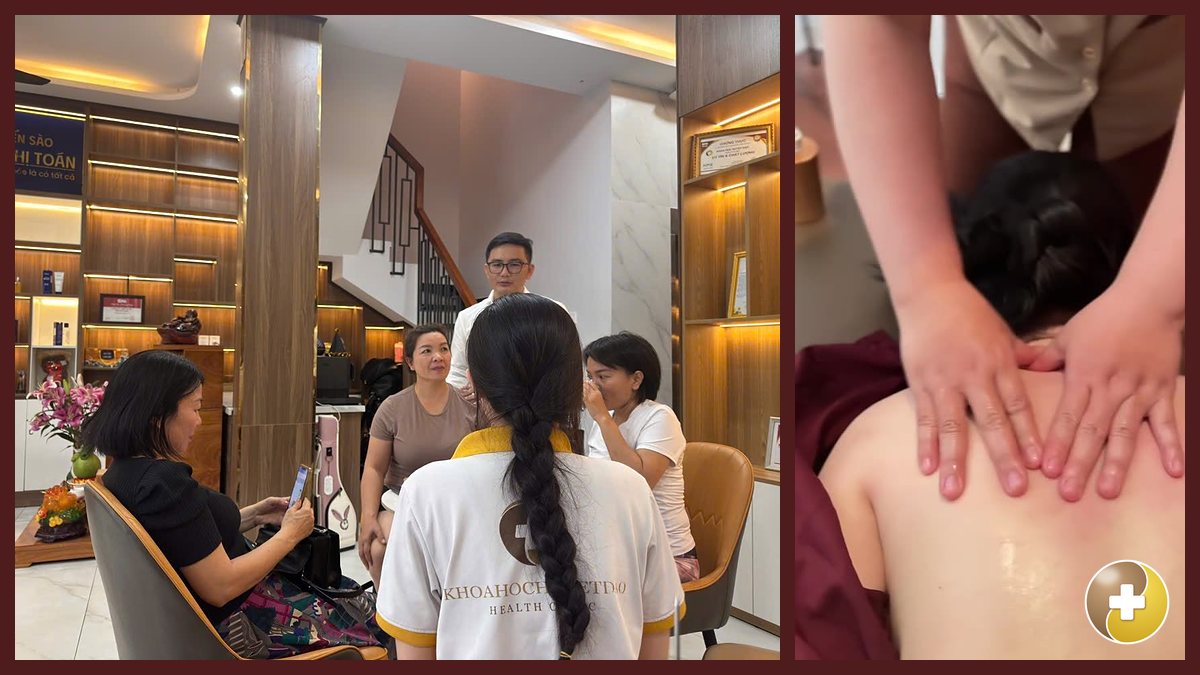
Quick answer: Constant tiredness and sleepiness usually come from short or broken sleep, snoring and apnoea, an irregular schedule, skipped meals or little movement; anaemia, thyroid, blood sugar, recent illness or stress are possible too. Lasting over 2–3 weeks, see a doctor. Tong Gia Acupoint Wellness (Huyệt Đạo Tống Gia) in Ho Chi Minh City helps the body feel lighter.
Want Lương Y Tống Văn Huynh’s team to read your spine and posture in person?
Always tired and sleepy: what is going on?
Yawning by nine, eyes closing at your screen by ten, head on the desk after lunch, collapsing on the sofa after work, early night, and still sluggish the next morning. Some people feel tired, achy all over and sleepy all day even after a ten-hour weekend lie-in. Many expats in Ho Chi Minh City ask Tong Gia Acupoint Wellness (Huyệt Đạo Tống Gia) the same question: why am I always tired and sleepy, even when I sleep a lot?
The Western view: daytime alertness rests on three things. First, the amount and quality of sleep: too little sleep, or enough hours broken up by snoring, breathing pauses or frequent waking, means the brain never truly rests. Second, the body clock, which uses light, meal times and sleep times to know when to be awake; shift work, late nights and late mornings, or a dark office all day push it off track. Third, energy supply and general health: anaemia, an underactive thyroid, swinging blood sugar, dehydration, recovery after illness or a long period of low mood all bring tiredness and sleepiness that more sleep does not fix.
So being tired and sleepy is a symptom, not a disease name. In Saigon we see it in office staff under air-con with little daylight, shift workers in industrial parks, ride-hailing drivers working late, students before exams, new parents, people just over flu or dengue, and people in their forties whose "battery" drains faster. Heat and humidity add to it; long-haul travellers often meet the same feeling, see our jet lag massage Q&A.
Common causes, group by group
This table helps you understand the picture and explain it to a doctor. It is not for drawing your own conclusions.
| Cause group | Examples | Clue |
|---|---|---|
| Short or light sleep | Under 6 hours, phone in bed, noisy or hot room | Better after a weekend lie-in, tired again on Monday |
| Snoring, sleep apnoea | Extra weight, thick neck, evening alcohol | Tired despite enough hours, morning headache |
| Body clock shift | Night shifts, late nights, little daylight | Sleepy at the wrong times, alert at night |
| Eating habits | No breakfast, heavy rice lunch, sugary drinks, little water | Slump after meals, shaky when hungry |
| Anaemia | Low iron, heavy periods, strict diets | Pale skin, dizziness, breathless on stairs |
| Thyroid, blood sugar | Underactive thyroid, diabetes | Cold, weight gain, dry skin; or thirst and frequent urination |
| After illness | Flu, viral fever, dengue | Fatigue for weeks after the fever |
| Mood, stress | Long pressure, burnout, sadness | Tired from waking, loss of interest |
| Current prescriptions | Some anti-allergy, sedative or blood pressure prescriptions | Sleepiness began after starting it |
| Inactivity, environment | Sitting all day, stuffy room, heat | Heavy body, more alert after a short walk |
The Tong Gia curriculum describes the Spleen and Stomach as the body's "kitchen and pantry": they decide whether qi and blood are sufficient, whether muscles are firm or weak, whether energy is alert or sluggish. Habits that tire them include late eating, skipping meals, eating fast, overeating rich food (which in Eastern terms creates "damp": heaviness, slow digestion) and constant worrying.
Sleeping a lot but still tired
Many people think more sleep is the answer. In Western terms, long but irregular sleep, daytime sleep to make up for nights, or sleep broken by repeated airway blockage can leave you heavier on waking. Ongoing fatigue that more sleep does not relieve is a reason to look for the cause.
Signs that often come with it
The curriculum lists, under weakened Spleen and Stomach function: tiredness and sleepiness after meals, worrying; tired limbs, soft weak muscles, reluctance to move; sallow skin, frequent minor illness. Under Kidney yang deficiency: feeling cold, cold hands and feet, cold aching lower back and knees, fatigue and sluggishness. Under weak Heart qi: palpitations, breathlessness on effort, tiredness, easy sweating, pale face. One sign alone proves nothing.
- With bloating, poor appetite, loose stools: look at digestion and meal times.
- With feeling cold, weight gain, dry skin: a thyroid check is sensible.
- With pale skin, dizziness, a racing heart on effort: a blood test is sensible.
- With thirst, frequent urination, weight loss: check blood sugar.
- Tired, achy and sleepy after a fever: recovery takes time; see a doctor if it drags on.
- Loud snoring with pauses: get your sleep assessed.
When to see a doctor
- Nodding off while driving, operating machines or talking: get checked soon and avoid long drives meanwhile.
- Tired and sleepy for more than 2–3 weeks despite 7–8 hours of sleep, affecting work.
- With unexplained weight loss, ongoing fever, night sweats or swollen glands.
- With pallor, breathlessness, black stools or very heavy periods.
- With strong thirst and frequent urination; or feeling cold, puffy face, constipation.
- With sadness, loss of interest or feeling worthless: talk to a mental health professional.
- Crushing chest pain, breathlessness, sweating: call 115. Facial droop, one-sided weakness, slurred speech or being hard to wake: call 115.
- Sleepiness that began with a new prescription: ask the prescriber, do not stop on your own.
With signs of anaemia, weight loss or long-lasting fatigue, get checked alongside any wellness care. This is a wellness service, not medical care.
The Eastern and face-reading view
In the Tong Gia curriculum, Spleen and Stomach form a system that makes qi and blood: the Stomach receives food, the Spleen transforms it into refined essence and distributes it as qi and blood to organs, muscles and limbs. The Spleen is the root of acquired energy, the Kidney the root of inborn energy, and they nourish each other. The Spleen makes blood, the Heart governs it; heavy worrying harms both, bringing poor appetite, poor sleep, palpitations and forgetfulness.
| Eastern pattern | Signs in the curriculum | Direction |
|---|---|---|
| Spleen qi deficiency | Poor appetite, bloating after meals, fatigue, reluctance to talk, sallow face | Strengthen Spleen; regular, easy-to-digest meals |
| Spleen weakness with damp | Heavy, tired body; full belly; sticky mouth; thick greasy tongue coating | Resolve damp; less sweet and fatty food |
| Kidney yang deficiency | Feeling cold, cold limbs, cold aching lower back, sluggishness, night urination | Warm the Kidney; keep warm, sleep before 11pm |
| Heart and Spleen both weak | Very pale or sallow skin, dizziness, breathlessness, palpitations, poor sleep | Nourish blood, strengthen Spleen, calm the mind |
These are traditional concepts, not Western disease names. Y Tướng Học says "the signs show outside, the organs lie inside". The curriculum describes a swollen tongue with tooth marks on the edges as belonging to people who tire easily, feel sluggish and avoid exercise, with Spleen weakness, retained damp and a chronic "brain fog". A soft, heavy build ("more flesh than bone") is linked to Spleen weakness with damp phlegm and constant heaviness. A square, full face (the "Điền" type) belongs to Earth and the Spleen, often with a thick, tight muscle band around D11–D12. Very pale or sallow skin suggests the source of blood is running low. Read more in our face-reading wellness Q&A. This is reference knowledge, never a judgement of anyone.
Spine segments and nerve-reflex zones involved
According to the curriculum, C1–C7 relates to head, face, neck and arms; D1–D12 to circulation, breathing and digestion; L1–L5 to digestion, kidneys, urinary and reproductive function and legs. Tỳ du (BL20, 脾俞) lies below T11, Vị du (BL21, 胃俞) below T12, Thận du (BL23, 肾俞) below L2, each 1.5 cun out; Mệnh môn (GV4, 命门) sits in the hollow below L2.
| Segment / zone | Function | Typical sign | Eastern organ |
|---|---|---|---|
| C1–C3 | Head, alertness | Heavy head, drooping eyes, stiff neck from sitting | Kidney (marrow), Liver |
| D4–D5 (BL15) | Circulation | Breathless or fluttery on light effort | Heart |
| D11–D12 (BL20, BL21) | Digestion | Slump after meals, bloating, heaviness | Spleen, Stomach |
| L2 (BL23, GV4) | Kidney, urinary | Cold aching lower back, sluggishness | Kidney |
| Sacral zone | Pelvis, legs | Heavy legs, reluctance to walk | Kidney, Spleen |
"Related" means a zone to check, not a conclusion about disease. Following the curriculum's 8 principles, the practitioner compares both sides and works only on "excited" zones (warmer skin, tight muscle, more tenderness), not directly on "inhibited" ones.
The Tong Gia method: spinal nerve-reflex balancing massage
This traditional Vietnamese method was built by Lương Y Tống Văn Huynh, a master of traditional Vietnamese wellness and founder of Tong Gia, with over 13 years in Eastern wellness, Y Tướng Học and spinal nerve-reflex balancing. For guests whose warning signs have been ruled out, the aim is to strengthen the Spleen, warm the Kidney, open the channels of back and legs and help qi and blood flow so the body feels lighter. The curriculum notes that acupoints do not act directly on the stomach lining or kidney cells.
- Screening and observation: sleep hours and quality, snoring, meal times, periods, recent illness, test results, prescriptions, pregnancy. Then tongue, skin colour, build and gait.
- Reading the spine by hand: skin temperature, muscle layer, vertebra shape and tenderness from C1 to the sacrum.
- Muscle release: neck, upper back, the muscle band at D11–D12 and the lower back, with steady rhythm and the 5 pressure levels.
- Acupressure on the right zone: Tỳ du, Vị du, Thận du, warming Mệnh môn; Túc tam lý (ST36, 足三里), Âm lăng tuyền (SP9, 阴陵泉) and Tam âm giao (SP6, 三阴交, not in pregnancy) on the legs; gentle Khí hải (CV6, 气海) on the belly; finishing at Bách hội (GV20, 百会).
- Home guidance: pressing Túc tam lý, circling the belly, meal and sleep times, a morning walk.
A typical session
A typical session with an accountant in her mid-thirties who has felt tired and sleepy for months and needs coffee every afternoon. Her blood tests were normal. She skips breakfast, eats a big office lunch and goes to bed after midnight. Her tongue is slightly swollen with tooth marks, her face sallow. The muscle band at D11–D12 is thick and tender, the lower back cool. The practitioner releases neck and back, focuses on the Spleen and Stomach points, warms the lower back, presses Túc tam lý and finishes with the head. She is advised to eat breakfast before nine, keep lunch moderate, take a short walk after lunch instead of a long desk nap and sleep before 11:30pm.
Services and prices
- Spleen and Stomach wellness session, 75 min: 750,000₫ (about US$29), for tiredness with poor appetite, bloating, heaviness.
- Full-body care, 120 min: 950,000₫ (about US$37), for fatigue with aches all over.
- Eastern massage, 60 min: 450,000₫ (about US$17), a first visit.
Full list on our prices page; see also full-body massage 120 minutes Q&A, acupressure massage in Saigon and acupressure for sleep in Saigon.
What you may feel
Many guests feel tenderness in the mid-back and the calf when Túc tam lý is pressed, then warmth spreading from the lower back to the legs; quite a few take a short nap on the table. Afterwards they often describe a lighter body, clearer head and calmer stomach, with deeper sleep that night. Responses vary; Tong Gia supports the body in rebalancing and does not promise an end to fatigue, since sleep, meals and movement still need your attention.
Want Lương Y Tống Văn Huynh’s team to read your spine and posture in person?
Self-care at home and prevention
- Fixed sleep and wake times, weekends included; asleep before 11pm; naps of 15–30 minutes; no long daytime catch-up sleep.
- Morning light and movement: 10–15 minutes walking outdoors in early sun tells the body clock it is time to be awake; the curriculum suggests about 30 minutes of moderate activity daily.
- Regular meals, no skipped breakfast: eat slowly, chew well, take 20–30 minutes per meal; moderate lunch, fewer sweets and soft drinks; light dinner 2–3 hours before bed; enough water.
- Press Túc tam lý daily: 3 cun below the outer knee eye, one finger-width from the shin bone; gently 1–2 minutes each side until you feel mild fullness.
- Circle the belly clockwise around the navel 30–50 times, not right after a big meal and not in pregnancy; if your lower back feels cold, rub both sides warm 50–100 times in the evening.
Book a session
- District 12: 225 Dương Thị Mười, Tân Chánh Hiệp Ward (address in Vietnamese for taxis). Open 8:00–19:00 daily.
- Vinhomes Grand Park, District 9: Unit T16-21, Manhattan zone, Long Bình Ward, Thủ Đức City. Open 9:00–20:00 daily.
Call, Zalo or WhatsApp +84 888 264 559, or book online. Tell us how long you have felt tired, how many hours you sleep, your meal pattern and any test results. Real ratings and reviews are on each branch's Google Maps profile.
Visit us
- Đông Y Huyệt Đạo Tống Gia Quận 12 (District 12)
225 Dương Thị Mười, Phường Tân Chánh Hiệp, Quận 12, HCMC · 8:00–19:00 daily · 0888 264 559 · Directions on Google Maps - Đông Y Huyệt Đạo Tống Gia Quận 9 (Vinhomes Grand Park, District 9)
Căn T16-21 khu Manhattan, Vinhomes Grand Park, Phường Long Bình, TP. Thủ Đức, HCMC · 9:00–20:00 daily · 0888 264 559 · Directions on Google Maps
Want Lương Y Tống Văn Huynh’s team to read your spine and posture in person?
FAQ
Why am I always tired and sleepy? Common reasons are short or broken sleep, snoring and sleep apnoea, an irregular schedule, skipped breakfast or heavy lunches and little movement; anaemia, thyroid problems, blood sugar, recent illness or long stress are also possible. If it lasts over 2–3 weeks or you nod off while driving, see a doctor.
Is feeling very sleepy and tired every day a problem? A few days after late nights is usually fine. Sleepiness despite enough sleep, or with weight loss, pallor, thirst, sadness or dozing at work or at the wheel, needs a medical check.
Why do I sleep a lot but still feel tired? Sleep may be broken by snoring, breathing pauses or frequent waking, timing may be irregular, daylight may be lacking, or there may be an issue such as anaemia, thyroid trouble or low mood. If more sleep does not help, look for the cause.
Why do I feel tired, achy all over and sleepy? This often follows flu, viral fever, overwork, short sleep or long stress. With fever, swollen glands, weight loss, strong muscle pain or symptoms beyond two weeks, see a doctor. Rest, fluids and gentle massage help recovery.
Can acupressure massage help with constant tiredness? Once warning signs are ruled out, acupressure helps you relax and improves circulation, and many guests feel lighter and clearer. Tong Gia offers a Spleen and Stomach session (75 min, 750,000₫) and full-body care (120 min, 950,000₫). It does not replace tests or medical care.
Author: Lương Y Tống Văn Huynh – founder of Huyệt Đạo Tống Gia, a master of traditional Vietnamese wellness with over 13 years in Eastern wellness care, Y Tướng Học (face reading) and spinal nerve-reflex balancing massage.
Updated: 2026-11-17
Related guides
- Driving stress in Saigon traffic: why jams lock up the body and shorten the temper, and how to unwind after the wheel
- Student stress: why your body goes into alarm mode in exam season and how to ease it
- Nervous tension explained: what stress does in the body, how Eastern medicine sees it, and how to return to rest
- Exam stress before tests: what your child's body is doing and how to help them walk in calmer
- Trouble sleeping after giving birth: why you are exhausted yet wide awake
- Insomnia and "weak kidneys": what Eastern and Western medicine say, why you wake at night, and how to care for it
This is a wellness service, not medical care.