
Cervicobrachial syndrome: why neck pain travels into the shoulder and arm, which signs need a doctor, and how Tong Gia's hands-on wellness care fits in Ho Chi Minh City
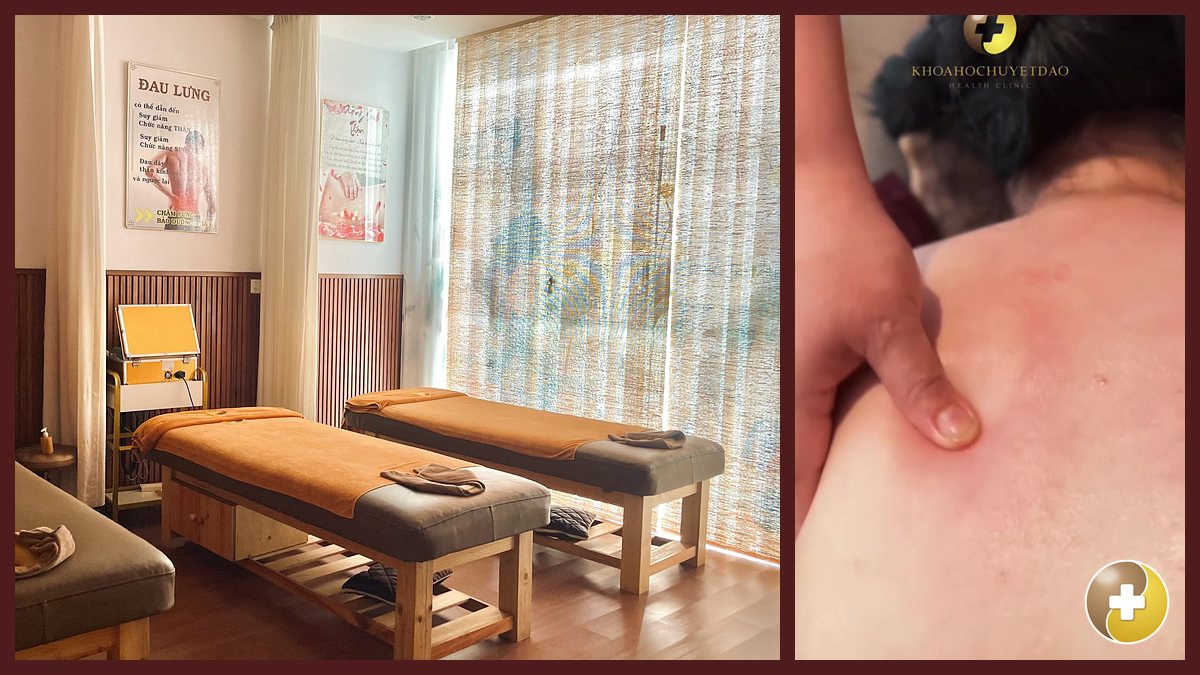
Quick answer: Cervicobrachial syndrome is the umbrella name for pain running from the neck into the shoulder and arm, sometimes with tingling fingers, because a cervical nerve root is irritated by wear, tight muscles or posture. Arm weakness or spreading numbness needs a doctor first. Tong Gia in Districts 12 and 9, Ho Chi Minh City, works by hand.
Want Lương Y Tống Văn Huynh’s team to read your spine and posture in person?
What is cervicobrachial syndrome?
Cervicobrachial syndrome (in Vietnamese, hội chứng cổ vai cánh tay) describes a group of symptoms that come together: pain, aching or stiffness in the neck that runs down into the shoulder and the arm, sometimes as far as the forearm and fingers, often with numbness, pins and needles, or a feeling that the hand is weaker than usual. It is not one specific disease. It is a name for the route the pain takes: it starts in the cervical spine and follows the nerves out to the shoulder and arm.
In Western anatomy, the neck has seven vertebrae with discs between them. On each side there are small openings where nerve roots leave the spinal cord and join to form the nerves of the shoulder, arm and hand. When discs thin with age, when bony spurs form at the edges of the vertebrae, when a disc bulges backwards, or simply when tight neck and shoulder muscles pull the vertebrae out of their easy alignment, those openings narrow and the nerve root gets irritated. Whichever root is affected, the skin and muscles it supplies feel the pain or tingling. In common anatomical teaching, the C5 root relates to the shoulder and outer upper arm, C6 runs towards the thumb, C7 to the middle finger and C8 to the little finger, which is why medical staff ask exactly which fingers are numb.
It is classically a condition of people over forty, but in Ho Chi Minh City we see more and more younger expats with it: remote workers on a laptop all day, developers and designers, teachers who look down at marking for hours, people who ride a scooter across the city every day, parents carrying toddlers, and gym-goers who load heavy weights on the shoulders. Many start with ordinary shoulder stiffness and only months later notice tingling into the hand while washing dishes or after a long ride.
Common causes: habits, work, posture and environment
- Wear and age: discs slowly lose water, spurs grow, ligaments thicken. This is natural, but long hours in a poor posture bring it on earlier. Not everyone with wear has pain; pain usually flares when the surrounding muscles are already tight and no longer support the vertebrae well.
- Head-forward posture: every time the head drifts forward to read a screen or a phone, the muscles at the back of the neck brace to hold it, and the lower neck takes more bending load. Years of this "text neck" shape are a common background in younger people.
- Repetitive work: sewing, nail and hair work with the arms held out front, painting or electrical work looking up, carrying loads on the shoulder, gripping a steering wheel for hours.
- Sleep: a pillow that is too high bends the neck all night; sleeping on one arm; napping face-down on a desk. Waking up with a numb hand that needs shaking is a typical story.
- Cold air and stress: air conditioning blowing on the back of the neck and the jump from midday heat into a cold room tighten muscles. According to the Tong Gia curriculum, long-term mental pressure tightens the occipital and frontal muscles and the levator scapulae, giving chronic neck and shoulder aching that spreads into the head.
Other signs to watch
- Pain following one line from the neck over the shoulder and down the outer arm, usually on one side.
- Numbness, tingling or a crawling feeling in the fingers that changes with neck position, often worse after looking down or tilting the head back.
- A stiff neck where turning or tilting towards the painful side increases the tingling.
- A tired arm, weaker grip, fatigue when writing or typing.
- Pain between the shoulder blades and tightness in the upper back.
- A heavy head, aching at the base of the skull, tired eyes, poor sleep.
- One hand feeling colder than the other.
If there is only neck and shoulder aching, with normal strength and no tingling, it is usually muscular. Once tingling runs into the fingers, a nerve root is being irritated and a medical check is worthwhile.
When to see a doctor
With cervicobrachial syndrome, seeing a doctor at a hospital or medical facility before any massage is sensible, to know where the nerve root is affected and how much. Go immediately if you have:
- Neck or left shoulder pain running into the left arm with chest tightness, shortness of breath or cold sweats: call 115, this can be the heart.
- Clear weakness in the arm or hand, dropping things, or hand muscles that look thinner than the other side.
- Numbness that keeps spreading or affects both hands.
- Clumsy hands, trouble with buttons, unsteady walking, weak legs or bladder changes: the spinal cord in the neck may be involved.
- Pain after a traffic accident, fall or blow to the neck.
- Severe pain at night while lying still, with fever, weight loss or lasting fatigue: get checked alongside any wellness care.
- A sudden severe headache, slurred speech, drooping face or one-sided weakness: call 115.
Medical staff can examine the nerves and order imaging if needed. If a doctor is already following your neck, keep to their advice, bring any results with you and tell our practitioner before the session. This is a wellness service, not medical care.
The Y Tướng Học view: the Liver feeds the sinews, the Spleen feeds the muscles
Y Tướng Học (face reading for wellness) at Tong Gia follows two lines: "the signs show outside, the organs lie inside" and "the organs are the cause, the signs are the effect". The pain shows in the neck, shoulder and arm, but the curriculum points to the organs behind it.
The Liver governs the sinews. In Eastern medicine the Liver nourishes tendons and ligaments. Balanced, it keeps them supple and the joints mobile; weak, it brings spasm, cramps, twitching and stiffness. The Liver stores blood and sends it to muscles and tendons during activity. Constant late nights leave the neck and shoulder sinews under-nourished, so they shorten and pull on the vertebrae.
The Spleen governs the flesh and the limbs. The curriculum notes that the Spleen and Stomach produce qi and blood and feed the muscles; when the Spleen is weak the arms and legs feel tired, the muscles slack and weak. Skipped breakfasts, irregular meals and constant worry often go with soft neck muscles that cannot hold the head, so the discs and ligaments carry more load.
Channels along the arm. The curriculum describes the Small Intestine channel running along the outer edge of the arm up to the shoulder, neck and face; the Heart channel along the inner arm to the little finger; the Pericardium channel along the middle of the inner arm to the middle finger; and the Lung channel along the inner arm to the thumb. The line your pain or tingling follows hints which channel is congested and guides where the practitioner works.
What can be seen. According to the curriculum, a high, bony nose bridge with little flesh (Cô Phong nose) goes with Liver-Kidney yin deficiency: tight, knotted sinews, chronic neck and shoulder aching and early-drying discs. Prominent cheekbones relate to the Liver and Gallbladder, with a very tight trapezius. The Vương (王) face shows uneven vertebrae and fibrous muscle near the joints; the Mục (目) face shows thin spinal muscles and sunken vertebrae. None of this is used to name a disease; it tells the practitioner whether you need softening of tight tissue or gentle support for a depleted body. More on the face reading for wellness page and in Eastern face reading for wellness in Vietnam: Q&A.
Spine segments and nerve-reflex areas involved
The Tong Gia curriculum maps C1–C7 to the head, face, neck and arms. Nerve roots leave through the gaps between vertebrae, which is where the practitioner's fingers read. For the muscle-bone-joint group, which includes neck pain and numb hands and feet, the curriculum combines C5–C7 with L1–L5 and S1–S5, because the spine is one axis: when the lower back is uneven, the neck compensates.
| Segment / area | Nerves and function | Typical signs | Related organ (per curriculum) |
|---|---|---|---|
| C1–C3 (base of skull) | Suboccipital muscles; head and face | Heavy head, ache at the skull base, tired eyes | Liver, Kidney |
| C4–C5 | Roots to shoulder and outer upper arm (Western anatomy) | Shoulder-top pain, tired upper arm, hard to raise the arm | Liver governs sinews |
| C6–C7 | Roots to forearm, thumb, middle finger (Western anatomy) | Tingling fingers, tired forearm, weaker grip | Liver, Spleen; muscle-joint group C5–C7 |
| T1–T3 (upper back) | Between the shoulder blades; breathing | Pain between shoulder blades, shallow breathing | Lung (T3), Heart |
| L1–L5, S1–S5 | Lower back and sacrum, the base of the axis | Tired lower back, pain after long sitting | Kidney; combined in the muscle-joint group |
The table is a map for orientation, not a way to label a condition yourself. Reading by hand, the practitioner checks four things: skin temperature, the muscle layer, the shape of each vertebra and how you feel under pressure.
How Tong Gia works: spinal nerve-reflex balancing massage
Tong Gia Acupoint Wellness (Huyệt Đạo Tống Gia) was founded by Lương Y Tống Văn Huynh, a master of traditional Vietnamese wellness with over 13 years in Eastern wellness care, Y Tướng Học and spinal nerve-reflex balancing. It is a Vietnamese Eastern method carried out entirely by hand. For cervicobrachial syndrome there is no neck cracking and no jerking; pressure builds slowly and the practitioner watches your response the whole time.
- Observe and ask: head position, shoulder height, complexion, lips, nose and cheekbones; which fingers tingle, your work, sleep, meals and any medical results. If you have a red-flag sign and have not seen a doctor, we will ask you to go first.
- Read the spine by hand: from C1 down the upper back and the lower back, comparing right and left, finding the "excited" zone (warm skin, contracted muscle, more tenderness) to focus on, while not working directly on inhibited areas.
- Muscle release: trapezius, levator scapulae, the muscles beside the cervical spine, the shoulder and the arm along the line of pain. Per the curriculum, taut fibrous bands get plucking across the fibres; soft, thick or depleted tissue gets vibration to settle it.
- Acupressure on the right zone: pain that spreads into the arm is the "wide, radiating" type, so the curriculum uses double adjustment, working the key point on the neck together with a matching point on the shoulder or arm. Work stops when the skin over the key point turns from dry to slightly moist.
- Home guidance: pillow, screen height, scooter posture and a few gentle neck and shoulder moves.
A typical session: a ride-hailing driver in his fifties came to the Vinhomes Grand Park branch with neck pain into the right shoulder and tingling in the thumb and index finger after long rides. He had already been checked at a medical facility, where staff described wear in the cervical spine and agreed to gentle massage. His head sat forward, the right shoulder high. Reading the spine found a warm, rope-like band at the right C5–C7 area and an uneven lower back. The practitioner released the neck and shoulder, worked the lower back, then did double adjustment of neck and arm. Afterwards turning the head was easier, the hand felt warmer and the tingling settled; he was told to go straight back to the medical facility if the hand became weaker.
| Service | Length | Price (VND) | Approx. USD |
|---|---|---|---|
| Neck and shoulder care | 60 min | 550,000 (first visit 399,000) | about $21 (first visit about $15) |
| Neck and shoulder care | 90 min | 750,000 | about $29 |
| Extra area (adding the arm) | +30 min | 199,000 | about $8 |
See the prices page and the neck and shoulder massage page. During the session you will feel the tight spot at the base of the neck found precisely, a "good hurt", sometimes a light tingle running down the arm and fading; afterwards the neck feels lighter, the hand warmer, and many people sleep noticeably better that night. Mild soreness for a day or two is normal. We do not promise the tingling will be gone after one visit: a neck loaded for years needs time, new habits and the follow-up checks recommended by medical staff. More in neck and shoulder massage in Ho Chi Minh City: Q&A and acupressure massage in Saigon: Q&A.
Want Lương Y Tống Văn Huynh’s team to read your spine and posture in person?
Home care and prevention
- Raise the screen to eye level and lift the phone instead of looking down; every 45–60 minutes stand up and gently draw the chin back 10 times.
- Get the pillow right: on your back, it should support the neck's curve without propping the head up; on your side, it should be about the width of your shoulder so the neck stays level. Do not sleep on the numb arm.
- Warmth on the back of the neck and shoulders for 10–15 minutes in the evening when the ache is dull and there is no swelling; keep air conditioning off the neck.
- Never crack or forcefully shake your own neck, and do not let untrained people pull or twist it while your hand is tingling.
- Regular meals and sleep before 11 pm: fed muscles hold the head, rested sinews stay supple. On long scooter rides, stop and relax the shoulders every 30–40 minutes.
For one-sided pain, see also right-side neck and shoulder pain.
Book a session
- District 12: 225 Dương Thị Mười, Phường Tân Chánh Hiệp (Tan Chanh Hiep Ward, District 12). Open 8:00–19:00 daily. Convenient from District 12, Go Vap, Hoc Mon and Tan Binh.
- Vinhomes Grand Park, District 9: Căn T16-21 khu Manhattan, Phường Long Bình, TP. Thủ Đức (Unit T16-21, Manhattan zone, Long Binh Ward, Thu Duc City). Open 9:00–20:00 daily. Convenient from Thu Duc, District 9 and District 2.
Book online or call, Zalo or WhatsApp +84 888 264 559. Tell us which fingers tingle, whether you have seen a doctor, and bring any scan results. Check the real ratings and reviews on each branch's Google Maps profile. Visiting Ho Chi Minh City? Come and try a Vietnamese Eastern wellness method built by Lương Y Tống Văn Huynh.
Visit us
- Đông Y Huyệt Đạo Tống Gia Quận 12 (District 12)
225 Dương Thị Mười, Phường Tân Chánh Hiệp, Quận 12, HCMC · 8:00–19:00 daily · 0888 264 559 · Directions on Google Maps - Đông Y Huyệt Đạo Tống Gia Quận 9 (Vinhomes Grand Park, District 9)
Căn T16-21 khu Manhattan, Vinhomes Grand Park, Phường Long Bình, TP. Thủ Đức, HCMC · 9:00–20:00 daily · 0888 264 559 · Directions on Google Maps
Want Lương Y Tống Văn Huynh’s team to read your spine and posture in person?
FAQ
Is cervicobrachial syndrome dangerous? Most cases are pain and tingling from an irritated cervical nerve root, not life-threatening but easy to drag on if posture stays the same. It becomes urgent with arm weakness, thinning hand muscles, numbness in both hands, unsteady walking or bladder changes: see a doctor straight away.
Can I get a massage with cervicobrachial syndrome? Yes, once a doctor has checked you and sees no need for urgent care. Tong Gia uses hands-on muscle release and acupressure with gradually increasing pressure and no neck cracking, helping the neck and shoulder muscles relax. With arm weakness or spreading numbness, see a doctor first.
Why does my neck pain go down into my right arm? Usually tight right-side neck and shoulder muscles, or an irritated nerve root in the lower neck, common in heavy mouse users and scooter riders. If it comes with tingling fingers or a weaker hand, get checked by a doctor. Our page on right-side neck and shoulder pain goes into more detail.
My hand goes numb from neck and shoulder tension. What can I do at home? Start with posture: screen at eye level, the right pillow, not sleeping on the arm, breaks every hour. Use warmth on the back of the neck in the evening. If numbness lasts more than 1–2 weeks, spreads, or the hand weakens, see a doctor; once cleared, a neck and shoulder session helps the muscles let go.
How long does cervicobrachial syndrome take to settle? It depends on the cause and your habits. Many guests feel a lighter neck and warmer hand after the first session, but lasting change usually needs a few sessions about a week apart and a better work setup. We do not promise results, and follow-up with your doctor is still recommended.
What is the right pillow for cervicobrachial syndrome? On your back, a pillow that fills the curve of the neck without lifting the head too high; on your side, one about as high as your shoulder width so the neck stays level with the spine. Avoid sleeping face-down with the neck twisted or lying on the numb arm.
Author: Lương Y Tống Văn Huynh – founder of Huyệt Đạo Tống Gia, a master of traditional Vietnamese wellness with over 13 years in Eastern wellness care, Y Tướng Học (face reading) and spinal nerve-reflex balancing massage.
Updated: 2026-11-16
Related guides
- Self-massage for neck and shoulder pain at home: 6 safe steps, how firm to press and when to stop
- Right-side neck and shoulder pain: why only one side hurts, which signs need a doctor, and how Tong Gia works with it in Ho Chi Minh City
- Choosing a reliable neck and shoulder massage place in Ho Chi Minh City: 7 things to check before you book
- Neck and shoulder cupping: where the cups go, how it feels and when to skip it
- Cervicobrachial syndrome: why neck pain travels into the shoulder and arm, which signs need a doctor, and how Tong Gia's hands-on wellness care fits in Ho Chi Minh City
- Head, neck and shoulder acupressure massage: why the head and neck belong in one session
This is a wellness service, not medical care.