
Head, neck and shoulder acupressure massage: why the head and neck belong in one session
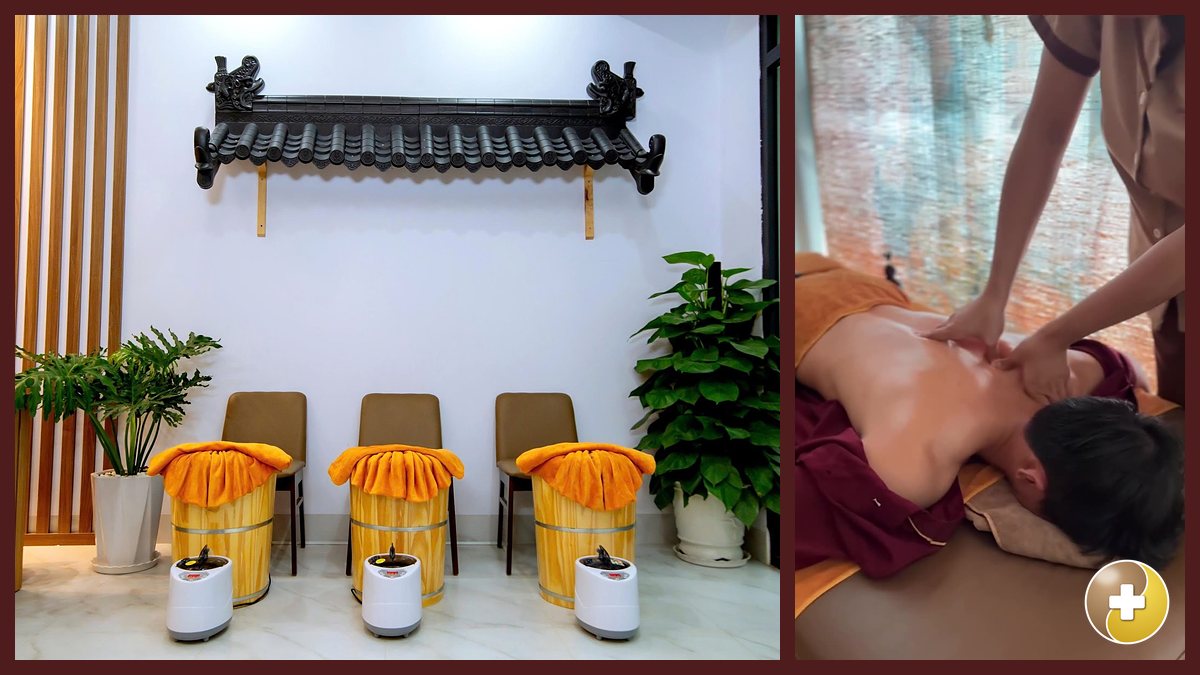
Quick answer: A head, neck and shoulder acupressure massage works the scalp, skull base, neck and shoulders in one flow, because the skull-base muscles, trapezius and neck vertebrae C1–C7 are linked, so a stiff neck often brings a heavy head. Tong Gia Acupoint Wellness in District 12 and District 9, Ho Chi Minh City, reads the spine by hand first.
Want Lương Y Tống Văn Huynh’s team to read your spine and posture in person?
What is a head, neck and shoulder acupressure massage, and why do the head and neck go together?
A head, neck and shoulder acupressure massage is one continuous session that works from the scalp, down the base of the skull, along both sides of the neck to the shoulder blades and upper back. It combines massage, which helps tight muscles let go, with acupressure, which brings sensation to the exact spot that needs it. Many people book a "neck and shoulder massage" and still leave with a heavy head, or book a "head massage" and still have a stiff neck. The reason is anatomy: the muscles of the head and neck are not separate units.
In Western medical terms, at the back of the head sits a small group called the suboccipital muscles, running from the base of the skull to the top two neck vertebrae. Over the skull lies the scalp muscle sheet (the occipital and frontal muscles joined by a flat tendon across the crown). The sides of the neck carry the sternocleidomastoid and scalene muscles, and from the neck down to the shoulders run the trapezius and levator scapulae. When the trapezius and suboccipitals stay tight for weeks, they pull on the scalp sheet. You feel a band-like headache, an ache at the back of the head that spreads to the temples, and tired eyes. Western medicine usually groups this under tension-type headache. Working only the head and skipping the neck, or only the shoulders and skipping the skull base, tends to give partial relief.
The Tong Gia training goes one step further. The method of Tong Gia Acupoint Wellness (Huyệt Đạo Tống Gia) grew out of a Vietnamese heritage called "Working the Head and the Spine". It regards the head and spine as the root: the head is the centre of the central nervous system (awareness, thinking, command), while the spine is the axis of the autonomic nervous system (keeping automatic functions running). A head, neck and shoulder session is therefore not just rubbing away fatigue; it is an ordered sequence from the head down through the neck vertebrae C1–C7 and the upper back.
In Ho Chi Minh City we see three main groups asking for this session: office staff in District 12, Go Vap and Thu Duc who sit at a screen for 8–10 hours and leave with a head that feels like a tight hat; riders and drivers who spend the day on a motorbike under a helmet, the neck bracing all the way; and people doing heavy mental work, such as accountants or software engineers at the Saigon Hi-Tech Park, whose head keeps "running" at night. Expats often add a fourth reason: a long-haul flight followed by days of laptop work in a hotel room.
How is it different from a hair-wash massage or a standard neck and shoulder massage?
| Point | Hair-wash massage | Neck and shoulder massage | Head, neck and shoulder acupressure |
|---|---|---|---|
| Area | Scalp, a little neck | Neck, shoulders, upper back | Scalp, skull base, neck, shoulders, upper back in one flow |
| Before starting | Starts straight away | Asks where it aches | Looks at head and shoulder posture; reads the neck vertebrae by hand |
| Pressure | Light, soothing | Medium to deep | Layered: light on the head, deeper on the trapezius |
| Suits you when | You want to unwind and wash your hair | Shoulder stiffness is the main issue | A stiff neck comes with a heavy head, an ache at the skull base, tired eyes |
Common causes of a heavy head and a stiff neck and shoulders
- Head pushed forward at a screen or phone: an adult head weighs about 4.5–5 kg. Each time it drifts forward, the muscles at the back of the neck carry many times that load, and the suboccipitals tighten to keep the eyes level.
- Air-con blowing on the back of the neck: cold makes muscle contract to hold heat, and many people sit under a vent all day without noticing.
- Long motorbike rides with a helmet: the neck holds the head against wind and vibration, so the upper trapezius never rests.
- Stress and jaw clenching: shoulders creep up, the jaw and temple muscles tense, and the sides of the head ache.
- Poor sleep or the wrong pillow height: neck muscles work all night, and you wake stiff and foggy.
- Eye strain: long close-up focus tightens the muscles around the eyes and forehead, which adds to a stiff neck by late afternoon.
In Vietnamese traditional wellness, the Tong Gia training points to three functions when the head and neck are uncomfortable together. The Liver system keeps energy flowing; long pressure or anger makes it stagnate, so it is hard to relax and sleep. The Liver also governs the tendons (when weak, muscles stiffen and cramp) and opens into the eyes (weak Liver blood shows as dry, blurry eyes). The Kidney system governs bone, produces marrow and connects to the brain; the training calls the brain "the sea of marrow", and when it is not full a person tends toward headaches, dizziness, ringing ears and light sleep. These are functional ideas from Eastern wellness, not a sign that your liver or kidneys are unwell.
Signs that often come with it
- A band-like headache around the forehead, temples or back of the head, worse in the afternoon.
- Pressing the hollow under the skull feels sore and sends an ache to the crown or behind the eyes.
- The neck is hard to turn; you rotate your whole body to look sideways.
- A hard knot on the shoulder blade; one shoulder sits higher than the other.
- Tired, dry eyes; the screen blurs after long work.
- Trouble falling asleep, light sleep, still foggy in the morning.
- Mild dizziness when tilting the head back or standing up fast: if it keeps happening, get checked before a session.
When to see a doctor
Most headaches with a stiff neck come from muscle, but please see a doctor at a medical facility first, and skip massage for now, if you have:
- A sudden, severe headache, "the worst I have ever had".
- A stiff neck with high fever, vomiting, light sensitivity or drowsiness.
- A drooping face, slurred speech, weakness or numbness on one side, or sudden blurred vision: call 115 immediately.
- Chest tightness, breathlessness or cold sweats with pain spreading to the left shoulder or jaw: call 115 immediately.
- Headache after a fall or a knock to the head or neck.
- Numbness or weakness in an arm, dropping things, or electric pain running down the arm.
- Headache with very high blood pressure or blurred vision.
- A new kind of headache after age 50, or with weight loss and ongoing fatigue: get checked alongside any wellness care.
This is a wellness service, not medical care. If you take medication prescribed by a medical facility, keep taking it; a session only supports relaxation. A fuller checklist is on our headache and dizziness acupressure page.
The face-reading view: Liver, Kidney and the shape of the head and neck
Y Tướng Học (face reading for wellness) holds that "the signs show outside, the organs lie inside". Following the Tong Gia training, before touching you the practitioner looks at the shape of your head, your face and the feel of your muscles to decide where to read more carefully. For people with a heavy head and stiff neck, a few patterns come up often:
- A flat back of the head: the occipital area looks flat in profile. The training links this to weaker Kidney energy, often with deep tightness in the muscles at the skull base and the upper neck, C1–C3.
- A bony head with thin scalp: the ridges of the skull are easy to feel and the scalp sits tight on the bone. The training describes dryness of Liver and Kidney, tight tendons and headaches from deep tension in the whole scalp sheet and the neck. This person needs light pressure on the head.
- A pointed crown: energy tends to rush upward; the training notes a quick temper, heat rising to the head, dry eyes and throbbing headaches.
- The "Giáp" (甲) face: wide forehead, pointed chin. In the training, the upper neck C1–C2 tends to run warm and overactive, linked with dizziness-type headaches.
- Firm muscle that has turned wood-hard: Liver energy is "knotted", the trapezius and long back muscles tighten deep down, and tension headaches are common.
Complexion matters too: a sunken spot between the eyebrows with vertical lines and a tight face is linked in the training to deep stress and tension in the face and neck. These signs only guide where to work and how hard to press. They are not a health verdict and are never used to judge anyone's character.
Vertebrae and nerve-reflex zones involved
In the Tong Gia training, the neck vertebrae C1–C7 serve the head, face, neck and arms, and the thoracic vertebrae D1–D12 relate to circulation, breathing and digestion. For the nerve and mind group (long-standing headaches, poor sleep, dizziness) the training works C1–C7, the upper back D1–D3 and the sacral area together; for the muscle and joint group (neck and shoulder aches, tingling hands) it works C5–C7, L1–L5 and S1–S5. The spinal cord runs inside the spinal canal and the nerve roots leave through the gaps between vertebrae, which is where the fingertips search when reading the spine.
| Vertebra / zone | Nerve, function | Common signs | Related organ system |
|---|---|---|---|
| Head, skull base | Central nervous system: awareness, command | Heavy head, tight scalp, poor focus | Kidney (brain as sea of marrow), Heart (houses the mind) |
| C1–C3 | Head, face; suboccipital muscles | Ache at the skull base spreading up, tired eyes, mild dizziness | Liver (opens into the eyes), Kidney |
| C4–C7 | Neck, shoulders, arms | Stiff neck, raised shoulders, tired arms | Liver (governs tendons) |
| D1–D3 | Upper back; circulation, breathing | Tightness between the shoulder blades, shallow breathing under stress | Lung, Heart |
| Sacral area | Worked with the nerve and mind group | Tense people who sleep lightly | Kidney |
The table shows "related to" in the training, not a medical finding.
The Tong Gia method: spinal nerve-reflex balancing massage
At Tong Gia, a head, neck and shoulder acupressure massage follows the method developed by Lương Y (master of traditional Vietnamese wellness) Tống Văn Huynh, the founder, over more than 13 years of work in Eastern wellness, Y Tướng Học and spinal nerve-reflex balancing. It is a Vietnamese Eastern-wellness method, and visitors to Ho Chi Minh City are warmly welcome to try it. Its core skill is the sensing hand: the soft pads of the fingertips apply gentle, flexible pressure to the central nervous system (the head) and the autonomic nervous system (the spine). The training sets three "No" rules: no needles, nothing invasive, no rough force. A session runs like this:
- Questions and safety screening: how long the headaches have lasted; any fever, fall, arm numbness, high blood pressure or pregnancy. Any warning sign means no session and advice to get checked.
- Observation: head posture (forward or tilted), shoulder height, complexion, the area between the brows, following "the signs show outside, the organs lie inside".
- Reading the neck and upper back by hand: press-and-lift to feel skin temperature, glide along the groove of the spine, probe the muscle layer, roll each vertebra C1–C7 and D1–D3, comparing left and right. The training works only on "excited" zones (warmer skin, tight muscle, more tenderness) and never presses directly on "inhibited" ones.
- Neck and shoulder muscle release: push-and-rotate for a thick trapezius, plucking across a taut levator scapulae, slow stroking along the inner edge of the shoulder blade. Pressure rises through 5 pressure levels, from one fingertip to the whole palm, following your response.
- Skull base and scalp: fingers move slowly along the base of the skull and beside C1–C2, then over the scalp, temples and forehead with light pressure in an even "wave".
- Acupressure on the right points, ending at Bách hội: the points found while reading are pressed in turn; the training finishes with Bách hội (GV20, 百会) at the crown to clear and calm the mind in Eastern terms. Work stops when the skin at the key point turns from dry to slightly moist.
- Self-care tips: two or three moves suited to the area just worked.
Services that fit a heavy head and stiff neck
- Neck and shoulder care, 60 minutes: 550,000 VND (about 21 USD), first visit 399,000 VND (about 15 USD), when the neck and shoulders are the main problem.
- Head care, 60 minutes: 750,000 VND (about 29 USD), when headache, a tight head or poor sleep stands out more than shoulder stiffness.
- Hair wash with neck and shoulder massage, 60 minutes: 250,000 VND (about 10 USD), for a gentle, relaxing option.
See the service page neck and shoulder massage, common questions in neck and shoulder massage in Saigon: Q&A, how acupressure feels in acupressure massage in Saigon: Q&A, and a lighter scalp option in Vietnamese head spa in Saigon. All prices: price list.
What a typical session looks like
One afternoon at the District 12 branch, the guest was an accountant working near Quang Trung Software Park. For several weeks, around 3–4 pm, her head felt like it was under a tight hat, with an ache at the back of the head spreading to the temples, and she slept badly. No fever, no fall, no arm numbness. The practitioner saw her head pushed forward, the right shoulder raised, and vertical lines between the brows. Reading the spine, the skin over C1–C2 and C6–C7 on the right was warmer than the left, the suboccipitals felt like a hard strip, and one point inside the right shoulder blade sent an ache up the neck. The practitioner released the trapezius and levator scapulae first, moved up to the skull base only once the shoulders softened, then worked the scalp and temples lightly and finished at Bách hội. She said her head felt "like taking off a tight hat" and turning right was easier. She was advised to raise her screen to eye level and redirect the air-con vent away from her neck.
How it feels during and after
On the shoulders and neck you usually feel a dull, achy pressure on tight spots that eases as you breathe; the Tong Gia training calls this a "pleasant ache" used to let the body adjust itself. On the head the pressure is lighter; many people feel warm and drowsy, and some fall asleep. You should never feel sharp pain or faintness; just say so and the pressure comes down. Afterwards most guests report a lighter head, clearer eyes, lower shoulders and easier sleep that night; the next day the shoulders may feel slightly sore, like after exercise. Everyone responds differently, and Tong Gia does not promise that pain will be gone after one visit; the aim is to help muscles let go and rebalance.
Want Lương Y Tống Văn Huynh’s team to read your spine and posture in person?
Self-care at home and prevention
- Chin tucks, 10 times an hour: eyes level, draw the chin straight back as if making a double chin, hold 3 seconds. This takes load off the skull-base muscles.
- Gentle skull-base pressure: place both thumbs in the hollows under the skull on each side of the neck and circle slowly for 1–2 minutes, firm enough to feel a mild ache. Skip it during a severe headache.
- Warm compress on the neck for 10–15 minutes in the evening; keep air-con from blowing on your neck and carry a light scarf for the office.
- Screen and phone at eye level; every 20 minutes look far away for 20 seconds.
- Enough sleep and the right pillow: your pillow should keep the head in line with the spine.
Book a session
Tong Gia has 2 branches in Ho Chi Minh City, open every day, with real guest reviews on Google Maps:
- District 12: 225 Dương Thị Mười, Phường Tân Chánh Hiệp (Tan Chanh Hiep Ward, District 12). Open 8:00–19:00 daily.
- Vinhomes Grand Park, District 9: Căn T16-21 khu Manhattan, Phường Long Bình, TP. Thủ Đức (Unit T16-21, The Manhattan, Long Binh Ward, Thu Duc City). Open 9:00–20:00 daily.
Call, message on Zalo or WhatsApp +84 888 264 559, or book online. When booking, mention whether headache or shoulder stiffness is the main issue and whether you have dizziness or arm numbness, so the practitioner can suggest neck and shoulder care or head care.
Visit us
- Đông Y Huyệt Đạo Tống Gia Quận 12 (District 12)
225 Dương Thị Mười, Phường Tân Chánh Hiệp, Quận 12, HCMC · 8:00–19:00 daily · 0888 264 559 · Directions on Google Maps - Đông Y Huyệt Đạo Tống Gia Quận 9 (Vinhomes Grand Park, District 9)
Căn T16-21 khu Manhattan, Vinhomes Grand Park, Phường Long Bình, TP. Thủ Đức, HCMC · 9:00–20:00 daily · 0888 264 559 · Directions on Google Maps
Want Lương Y Tống Văn Huynh’s team to read your spine and posture in person?
FAQ
What does a head, neck and shoulder acupressure massage do? It helps the trapezius, the muscles at the base of the skull and the scalp sheet let go, so blood moves more freely around the head and neck. Many people feel a lighter head, a neck that turns further and easier sleep. It is wellness care and does not replace seeing a doctor when warning signs appear.
I get headaches with a stiff neck after long laptop days in Saigon. Will this help? If the headache builds in the afternoon, the back of the neck feels sore when pressed, and there is no fever or arm weakness, a session may help you relax. A sudden severe headache, a stiff neck with fever, a drooping face or weak limbs need a doctor straight away.
Which acupressure points do you use for a heavy head? Following the Tong Gia training, the practitioner does not use a fixed recipe. They read the neck vertebrae C1–C7 to find the key points, press those, and usually finish at Bách hội (GV20) on the crown to calm the mind. At home you can gently press the hollows under your skull.
Is it normal to feel sore after a neck massage? Feeling slightly sore, like after exercise, for about a day is common when muscles have been tight for a long time. If pain grows, or you get arm numbness, swelling or a severe headache, see a doctor. At Tong Gia pressure rises step by step, so tell us any time it feels sharp.
How long is a session and how much does it cost? Neck and shoulder care, 60 minutes, is 550,000 VND (about 21 USD), or 399,000 VND (about 15 USD) on a first visit. Head care, 60 minutes, is 750,000 VND (about 29 USD). A hair wash with neck and shoulder massage, 60 minutes, is 250,000 VND (about 10 USD).
Do the practitioners speak English, and how do I book? Message +84 888 264 559 on WhatsApp or Zalo, or book online at /dat-lich. Write in English and describe where it hurts; we will reply with a time at District 12 or Vinhomes Grand Park, District 9, and keep the session simple to follow.
Author: Lương Y Tống Văn Huynh – founder of Huyệt Đạo Tống Gia, a master of traditional Vietnamese wellness with over 13 years in Eastern wellness care, Y Tướng Học (face reading) and spinal nerve-reflex balancing massage.
Updated: 2026-11-16
Related guides
- Self-massage for neck and shoulder pain at home: 6 safe steps, how firm to press and when to stop
- Right-side neck and shoulder pain: why only one side hurts, which signs need a doctor, and how Tong Gia works with it in Ho Chi Minh City
- Choosing a reliable neck and shoulder massage place in Ho Chi Minh City: 7 things to check before you book
- Neck and shoulder cupping: where the cups go, how it feels and when to skip it
- Cervicobrachial syndrome: why neck pain travels into the shoulder and arm, which signs need a doctor, and how Tong Gia's hands-on wellness care fits in Ho Chi Minh City
- Head, neck and shoulder acupressure massage: why the head and neck belong in one session
This is a wellness service, not medical care.