
Heart racing after a big meal: the link between stomach and heart, when to get checked, and how Tong Gia helps Heart and Spleen settle
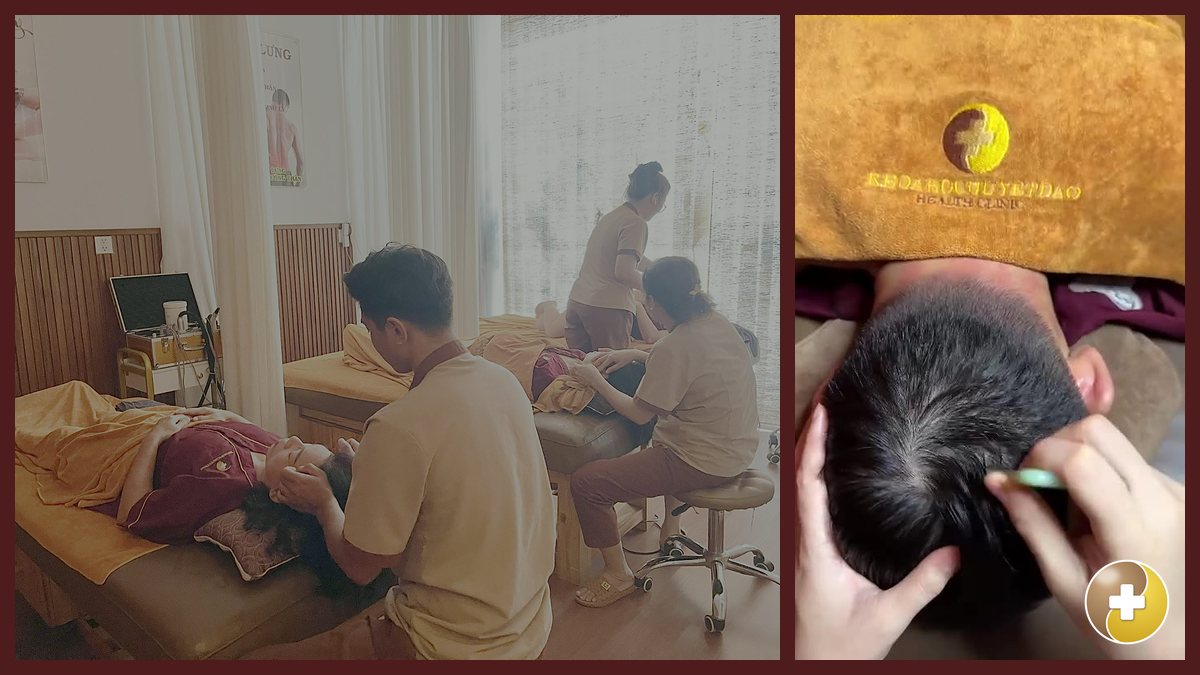
Quick answer: A racing heart after a big meal usually comes from a full stomach pushing on the diaphragm, blood flowing to digestion, a sugary or salty meal, alcohol, coffee or reflux. With chest pain, dizziness or breathlessness, get checked. Tong Gia Acupoint Wellness (Huyệt Đạo Tống Gia) in Ho Chi Minh City works by hand on D4–D5 and D11–D12.
Want Lương Y Tống Văn Huynh’s team to read your spine and posture in person?
Heart racing after a big meal: what is happening?
You finish a big office lunch, stand up and feel your heart thumping. After a wedding banquet or a weekend dinner with drinks, you lie down and hear it pounding. For some people one bubble tea after rice is enough to bring a fast heart and a hot face. It is common, and many people wonder whether it means a heart problem.
The Western medical view: the Tong Gia curriculum describes the heart as the pump and dispatch centre of the circulation, sending blood to each organ as needed. After a meal the stomach and gut need more blood to digest and absorb, so the heart pumps a little more and the rate rises slightly. That is normal. The curriculum also notes that the stomach stretches when you eat, holds about 1–1.5 litres when full and keeps food for about 2–4 hours; it sits under the diaphragm on the left, while the heart sits on top of the diaphragm. A very full stomach can push the diaphragm up, breathing becomes shallow, and you notice your heartbeat much more.
So a racing heart after eating is mostly the body reacting to a meal that was too much: too big, too fast, too sweet, too salty, or paired with alcohol or coffee. But the curriculum adds an important warning: pain in the upper stomach area can come from the stomach, gallbladder, pancreas, or even the heart. A fast heart after food with chest tightness, dizziness or breathlessness should never be written off as "just a full stomach".
In Ho Chi Minh City, Tong Gia hears this from office workers who skip breakfast and then eat a huge late lunch, engineers who finish a rice box in ten minutes, people at weekend parties, shift workers who eat late, older people who stand up quickly after a big lunch, and anyone who eats while still thinking about work.
Common causes, group by group
| Group | Examples | Often comes with |
|---|---|---|
| Too much, too fast | Making up for a skipped meal, eating in ten minutes | Tight belly, shallow breathing, mild chest heaviness |
| Lots of sugar and refined starch | Big portions of rice, cakes, bubble tea, soft drinks | Hot face, sleepiness, then hunger and shakiness |
| Salty, fatty food | Fried food, hotpot, barbecue, strong sauces | Thirst, heavy stomach, slow digestion |
| Alcohol, coffee, strong tea with or after meals | Drinks at dinner, coffee right after lunch | Clearly faster heart, flushed face, poor sleep |
| Reflux | Lying down after eating, late meals | Sour burps, burning behind the breastbone, dry cough |
| Blood pressure dropping after meals in some older people | Big meals, standing up quickly | Dizziness, blurred vision, tiredness |
| Causes outside the heart | Anaemia, overactive thyroid, swings in blood sugar | Pale skin, weight loss, tremor, sweating |
| Heart problems | Coronary artery disease, rhythm problems | Chest tightness, pain to the left arm or jaw, irregular beat |
The curriculum's list of habits that tire the digestive system fits closely: eating fast and chewing little makes the stomach work harder and leads to bloating and overeating; very full, fatty meals overload the Spleen and Stomach and create "dampness" in the traditional view, leaving you heavy and slow; late meals make the stomach work when the body needs rest, favouring reflux and poor sleep; alcohol irritates the stomach lining; and worry "injures the Spleen". On the heart side, it notes that salty, fatty food raises blood pressure and blood fats, and alcohol raises blood pressure and makes rhythm problems more likely.
Signs that often come with it
- Bloating, burping, a tight belly: points to digestion, the Spleen and Stomach.
- Heavy sleepiness after meals: the curriculum lists "tired after eating, sleepy after eating, prone to worry" as Spleen signs.
- Burning behind the breastbone, sour taste, coughing when lying down: suggests reflux.
- Dizziness on standing after a meal: check your blood pressure and get checked if it repeats.
- Chest heaviness, breathlessness when walking after food, pain to the left arm or jaw: needs a heart check without delay.
- Irregular or skipped beats: one of the curriculum's signs of reduced heart function, along with swollen ankles in the evening and breathlessness on stairs. One sign alone proves nothing.
A simple trick: for one or two weeks, note what you ate, how fast, how full you felt, any alcohol, coffee or bubble tea, and how long after the meal the racing came, with your pulse. Many people see the pattern within days, and the notes help your doctor too.
When to see a doctor
The curriculum's first rule for the Heart: chest pain, breathlessness or signs of stroke mean call 115 (the emergency number in Vietnam) immediately, with no massage and no acupressure.
- Crushing chest pain, shortness of breath, sweating or nausea after a meal: call 115. Do not assume it is "just the food".
- Chest pain lasting more than 5–10 minutes, or spreading to the left arm, shoulder, neck or jaw.
- Fainting or near-fainting after eating; racing heart with dizziness.
- Facial droop, one-sided weakness, slurred speech: signs of stroke, call 115.
- Severe upper abdominal pain, vomiting blood or black stools: go to emergency.
- Racing after every meal, even small ones, with weight loss, tremor, pallor or great tiredness: get checked alongside any wellness care.
If you have a stent or pacemaker, take blood thinners, or are pregnant, ask your doctor before massage, and keep following any plan you have for heart, blood pressure or blood sugar. This is a wellness service, not medical care.
The Eastern and face-reading view
The Eastern view sees "my heart races when I eat" as a thread between two systems, Heart and Spleen-Stomach. In the curriculum, the Spleen and Stomach are the root of postnatal life: the Stomach receives food, the Spleen turns it into essence and makes qi and blood. Stomach qi should move down; when it rises, belching, hiccups and reflux follow. The Heart governs blood while the Spleen makes and holds it, and too much worry harms the Spleen and drains Heart blood, bringing palpitations, poor sleep and a weak appetite. The Heart is also paired with the Small Intestine, which receives food from the Stomach. In other words, a heavy meal tires not only the belly but can unsettle the Heart.
Y Tướng Học (face reading for wellness) holds that "what is inside shows outside". Practitioners notice pale or dry lips and a sticky, bland taste (Spleen); a puffy tongue with tooth marks and a thick greasy coating (Spleen dampness) or a red tongue tip (Heart fire); a square, fleshy "earth-type" face, which the curriculum links to dampness, bloating and slow digestion, with large tight patches at D11–D12; a large, broad nose, linked to a strong but easily overheated digestion with reflux and heartburn; a crooked nose bridge, linked to a weak, irritated digestion; and puffy eyelids, linked to fluid and fat building up. This is reference knowledge for choosing where to work on the back, not a judgement. More in Eastern face reading for wellness.
Spine segments and nerve-reflex zones involved
The curriculum maps the thoracic spine (D1–D12) to circulation, breathing and digestion, and the lumbar spine (L1–L5) to digestion, kidneys and the lower body. For the internal-organ and metabolic group it focuses on D1–D12 and L1–L3. Two pairs of back points matter here: Jueyinshu below T4 and Xinshu below T5 for the Heart group, and Pishu below T11 and Weishu below T12 for the Spleen and Stomach.
| Segment | Function | Common sign | Organ (Eastern view) |
|---|---|---|---|
| D1–D3 | Upper back, breathing | Shallow breathing with a full belly | Lung, Heart |
| D4–D5 (Jueyinshu, Xinshu) | Circulation | Palpitations after meals | Pericardium, Heart |
| D11–D12 (Pishu, Weishu) | Digestion | Bloating, burping, tired after eating | Spleen, Stomach |
| L1–L3 | Lower digestion, metabolism | Lower belly distension, tired lower back | Spleen, Kidney |
Practitioners compare left with right and work only on "excited" zones (warmer, tighter, more tender), never directly on cooler "inhibited" ones.
The Tong Gia method: spinal nerve-reflex balancing massage
The method was built by Lương Y Tống Văn Huynh, a master of traditional Vietnamese wellness and founder of Tong Gia, with over 13 years in Eastern wellness, Y Tướng Học and spinal nerve-reflex balancing. The curriculum is clear that acupoints do not act directly on the heart muscle, coronary arteries or stomach lining; they help regulate qi and blood in the traditional view.
- Timing and screening: the curriculum advises working on the digestive area about 1–2 hours after eating, never right after a big meal. History of heart, blood pressure and blood sugar, stents, pacemaker, blood thinners, pregnancy, recent abdominal surgery.
- Observation: lips, tongue, complexion, face shape, belly; eating speed, alcohol, coffee.
- Reading the spine by hand from D1 to L3: skin temperature, muscle layer, vertebra shape, sensation.
- Muscle release and acupressure: light, even pressure; Xinshu, Jueyinshu, Pishu and Weishu on the back; Neiguan and Shenmen on the wrist; Zusanli and Gongsun on the leg; only gentle circles around the navel on the belly, and none in pregnancy.
- Home guidance: eating habits, a walk after meals, self-pressing Neiguan and Zusanli.
A typical session
An office worker whose heart races and chest feels heavy half an hour after lunch, already checked and told the heart is fine, books for 3 p.m., almost two hours after eating. Lunch usually takes ten minutes, with a bubble tea. The tongue is puffy with tooth marks and a red tip; the muscles beside D11–D12 are hard in a wide patch and D4–D5 is warmer than its surroundings. After back work from top to bottom, wrist and leg points and gentle belly circles, many clients notice a soft gurgling belly, deeper breathing and a lighter chest. Results vary; Tong Gia does not promise the racing will stop, because how you eat remains the main lever.
Suitable services and prices
- Spleen and stomach wellness care, 75 min: 750,000 VND (about 29 USD), when racing comes with bloating, burping and tiredness after meals.
- Heart wellness care, 75 min: 750,000 VND (about 29 USD), when palpitations, poor sleep and worry dominate.
- Traditional Vietnamese massage, 60 min: 450,000 VND (about 17 USD), a gentle first visit.
Full list on prices. See also acupressure massage in Saigon: Q&A and traditional Vietnamese massage Q&A.
Want Lương Y Tống Văn Huynh’s team to read your spine and posture in person?
Self-care at home and prevention
- Eat slowly and stop at satisfied, not stuffed; do not skip meals and then overeat.
- Walk gently after eating: the curriculum suggests a slow 10–15 minutes and no lying down or hard exercise straight after. Do not rub your belly right after a big meal; wait 1–2 hours.
- Keep coffee, bubble tea and alcohol away from meals; cut back on sweet, salty and fried food; eat dinner a few hours before bed.
- Press Neiguan and Zusanli: Neiguan is two thumb-widths above the wrist crease between the tendons; Zusanli is three thumb-widths below the outer knee eye, one finger-width from the shin bone. 1–2 minutes each side.
- Slow 4–6 breathing when the racing comes: sit upright, in for 4 seconds, out for 6. Long term: under 5 g of salt a day, about 150 minutes of exercise a week, regular blood-pressure checks.
Thinking of a longer session? Read full-body massage 120 minutes: Q&A.
Book a session
- District 12: 225 Dương Thị Mười, Tân Chánh Hiệp Ward (address in Vietnamese for taxis). Open 8:00–19:00 daily.
- Vinhomes Grand Park, District 9: Unit T16-21, Manhattan zone, Long Bình Ward, Thủ Đức City. Open 9:00–20:00 daily.
Call, Zalo or WhatsApp +84 888 264 559, or book online. Choose a time 1–2 hours after a meal, and tell us which meals trigger the racing and any check results. Real ratings and reviews are on each branch's Google Maps profile.
Visit us
- Đông Y Huyệt Đạo Tống Gia Quận 12 (District 12)
225 Dương Thị Mười, Phường Tân Chánh Hiệp, Quận 12, HCMC · 8:00–19:00 daily · 0888 264 559 · Directions on Google Maps - Đông Y Huyệt Đạo Tống Gia Quận 9 (Vinhomes Grand Park, District 9)
Căn T16-21 khu Manhattan, Vinhomes Grand Park, Phường Long Bình, TP. Thủ Đức, HCMC · 9:00–20:00 daily · 0888 264 559 · Directions on Google Maps
Want Lương Y Tống Văn Huynh’s team to read your spine and posture in person?
FAQ
Why does my heart race after a big meal? Usually a very full stomach pushing on the diaphragm, blood flowing to digestion, or a meal heavy in sugar, salt, alcohol or coffee, or reflux. Anaemia, thyroid or heart problems are also possible. With chest pain, dizziness or breathlessness, get checked.
Is it normal for my heart to beat faster after eating? A slight rise after meals is normal. It is worth checking if the racing is strong even after small meals, irregular, or comes with chest tightness, dizziness, weight loss or tremor.
Why does sugary food make my heart race? Sugary, starchy meals make blood sugar rise fast and then fall; some people feel a hot face and fast heart, then hunger and shakiness. Cutting bubble tea and soft drinks after meals often makes a quick difference.
Can reflux make my heart race? Many people with reflux feel chest heaviness and burning behind the breastbone with a fast heart, especially lying down after eating. But chest tightness can also be cardiac, so get the cause checked first.
Should I get a massage right after a big meal? No. The Tong Gia curriculum advises working on the digestive area about 1–2 hours after eating, never straight after a big meal, and never pressing hard on the belly. Book your session 1–2 hours after a meal.
Author: Lương Y Tống Văn Huynh – founder of Huyệt Đạo Tống Gia, a master of traditional Vietnamese wellness with over 13 years in Eastern wellness care, Y Tướng Học (face reading) and spinal nerve-reflex balancing massage.
Updated: 2026-11-17
Related guides
- Red face when stressed: why it happens, when to see a doctor, and what face reading notices
- Anxious when your blood pressure is taken: why the heart races and the number jumps, how to measure properly, and what Tong Gia can and cannot do
- Nervous speaking in public: why the heart pounds and the voice shakes, and how to stay steadier at talks and interviews
- Waking up with a racing heart: what morning heartbeats mean, when to get checked, and how Tong Gia helps the body settle
- Cold hands and feet in women: why it happens more often and how to care for it
- Heart racing after a big meal: the link between stomach and heart, when to get checked, and how Tong Gia helps Heart and Spleen settle
This is a wellness service, not medical care.