
Nervous speaking in public: why the heart pounds and the voice shakes, and how to stay steadier at talks and interviews
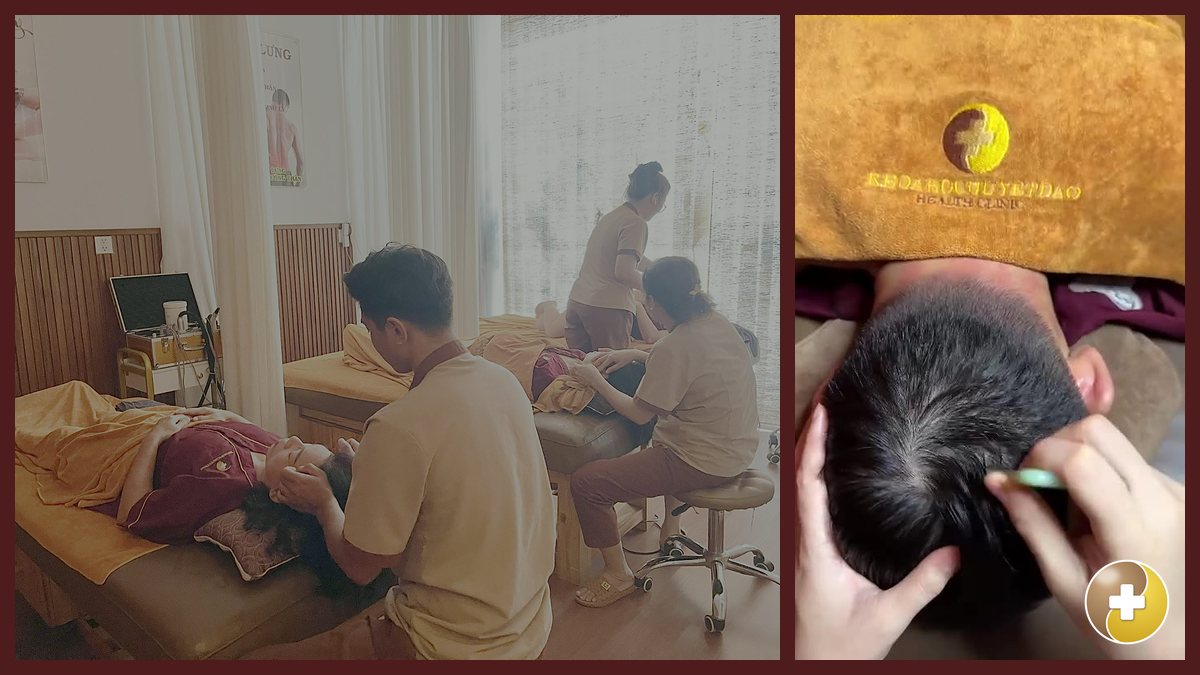
Quick answer: Nerves when speaking in public are the nervous system's alarm response: racing heart, trembling hands, shaky voice, dry mouth. Slow 4–6 breathing, practising key points instead of a script and less coffee help. Chest pain or fainting needs urgent care. Tong Gia in Ho Chi Minh City supports neck, shoulder and chest relaxation.
Want Lương Y Tống Văn Huynh’s team to read your spine and posture in person?
Nervous when speaking in public: what is happening?
It is your turn to stand up in the meeting and your heart starts pounding, your face burns, your voice wobbles and the hand holding the microphone is damp. The opening line you rehearsed disappears; the harder you try to remember, the more tangled it gets. Some people also get a dry mouth, a sudden need for the toilet or shaky legs. Office workers in District 1 and District 7 towers, students defending a thesis, job candidates, a groom or bride giving a wedding speech: plenty of people in Ho Chi Minh City know this feeling, and many expats feel it more when presenting in a second language.
The Western medical view: in front of a crowd the brain reads "being watched and possibly judged" as a situation to guard against. The Tong Gia curriculum explains that heart rate and blood pressure change with emotion through the autonomic nervous system, and that stress raises both. The "alert" side switches on: the heart beats faster and harder, breathing becomes short and high, blood moves to the muscles so hands and legs tremble, sweating rises, the mouth dries, and the voice loses resonance because the throat muscles and diaphragm tighten. It is a real body response, not a character flaw.
A moderate amount of nerves keeps you sharp and gives your talk energy. Too much freezes memory and makes people avoid every chance to speak. This article is not for deciding that you have social anxiety disorder or any mental health condition; that is for qualified professionals. If the fear makes you drop classes or jobs, or comes with lasting sadness or thoughts of self-harm, seek professional support right away.
At Tong Gia Acupoint Wellness (Huyệt Đạo Tống Gia), people rarely come in "for stage fright" itself; they come for the aftermath: a neck and shoulders locked tight after every presentation, a tight chest, a sleepless night before an interview.
Common reasons the heart races in front of a crowd
| Cause | Typical example | Effect on the body |
|---|---|---|
| Fear of being judged | Senior managers, a key client or a thesis panel in the room | Racing heart, hot face, blank mind |
| Under-prepared, or memorised word for word | Forget one line and the whole talk collapses | Panic when you lose your place, talking fast, breathless |
| Past bad experience | Laughed at for a mistake, interrupted | Nerves start the moment you know you must speak |
| Short sleep the night before | Up late fixing slides, worrying until morning | Shakier, weaker voice, poor focus |
| Coffee or energy drinks | Two or three cups to feel "sharp" | Faster heart, more trembling |
| Shallow breathing, braced posture | Hunched over a laptop all day, shoulders up, chest breathing | Breathless, thin voice, tight chest |
The Tong Gia curriculum notes that shallow breathing and a hunched posture keep the diaphragm from moving, so the lungs do not fully expand and people tire easily, feel short of breath and get tense. Desk workers often walk into the meeting room with the chest already "locked", so a little nervousness makes them breathless on the first sentence. If your neck and shoulders take the hit afterwards, see our neck and shoulder massage Q&A.
Signs that often come with it
- Heart and breath: fast, strong heartbeat, sometimes felt in the throat; short breaths, pausing mid-sentence for air; tight chest.
- Hands, legs and sweat: trembling hands and legs, cold damp palms.
- Voice: shaky, small or hoarse voice, stumbling over words or rushing, dry mouth.
- Mind: losing your thread, thinking "they are judging me", replaying every mistake afterwards.
- Afterwards: stiff neck and shoulders, headache, exhaustion; poor sleep the night before.
In the Tong Gia curriculum, Eastern medicine places "often sad, frequent sighing, worry" among the signs of the Lung, and "palpitations, easily startled" among those of the Heart. A single sign proves nothing; what matters is when the signs appear and whether they fade once the talk is over.
When to see a doctor
- Chest pain or tightness, breathlessness, cold sweat, fainting (even mid-speech): call 115 at once; no massage, no acupressure.
- Pounding palpitations with dizziness, fainting or near-fainting; an irregular heartbeat that keeps coming back even at rest.
- Palpitations with trembling, weight loss, bulging eyes or heat intolerance: get checked, as the thyroid may be involved.
- Fear of speaking or meeting people spreading to every situation, so you drop out of study or work or avoid going out: please see a doctor or psychologist.
- Weeks of sadness, loss of interest, or any thought of self-harm: seek professional support immediately and tell someone close; in an emergency call 115.
The curriculum notes that palpitations can come from anxiety, coffee, anaemia, an overactive thyroid and more, or from a heart rhythm problem, so do not put everything down to shyness. This is a wellness service, not medical care; a session only helps the body relax and does not replace a psychologist or medical staff.
The Eastern and face-reading view
According to the Tong Gia curriculum, the Heart governs the blood vessels and houses the spirit: mind, awareness and sleep. Sweat is called the fluid of the Heart, so a racing heart with sweaty palms when the spirit is unsettled is something Eastern medicine has long described. The Heart is said to open into the tongue, and many people notice their tongue "tripping" when they are very nervous. The Lung governs qi; the curriculum says "the Heart governs blood, the Lung governs qi, and qi commands the blood", and "weak Lung qi affects the Heart: breathlessness, palpitations, fatigue". The voice reflects the Lung: hoarseness, a weak small voice and tiring quickly when talking are listed among Lung signs.
What do the outer signs look like? In Y Tướng Học (face reading for wellness), "the signs show outside, the organs lie inside". Practitioners look for:
- A sunken, narrow area between the brows with vertical lines: this area mirrors the Heart and Lung; stuck Lung qi gives shallow breathing and breathlessness, and Heart blood stasis gives a pressed chest, sighing, palpitations and worry for no clear reason.
- Brows that meet in the middle: deep Liver qi stagnation "locked" between the brows, obstructing Heart and Lung: tight chest, sighing, facial muscles always tense.
- Round, very open eyes: impatience, worry, difficulty focusing for long; "a scattered spirit".
This is school-of-thought knowledge used to choose where to work, never to judge anyone's character, and never a substitute for a medical check. Read more in our face reading for wellness Q&A.
Spine segments and nerve-reflex zones involved
The curriculum teaches that C1–C7 relate to the head, face, neck and arms, and D1–D12 to circulation, breathing and digestion. For the "nerves and mind" group it combines the neck C1–C7, the upper back D1–D3 and the sacral area, as supportive work that does not replace medical assessment.
| Segment / area | Nerve link / function | Signs when nervous speaking | Organ (Eastern view) |
|---|---|---|---|
| C1–C3 (base of skull) | Head, face | Hot face, blank mind, headache afterwards | Heart, Liver |
| C4–C7, trapezius, front neck muscles | Neck, shoulders, arms | Braced neck, thin voice, shaky microphone hand | Liver (sinews), Lung |
| D1–D3 | Upper back, breathing | Shallow breath, out of air mid-sentence, tight chest | Lung, Heart |
| D4–D5 (Quyết âm du, Tâm du) | Circulation, heart rhythm | Pounding heart | Pericardium, Heart |
| Sacral area | Part of the nerves-and-mind group | Drained once the tension passes | Kidney |
The table shows links to guide where to work, not to identify disease. Practitioners compare both sides and work only on "excited" zones (warmer skin, tight muscle, more tenderness), never pressing directly on "inhibited" ones.
The Tong Gia method: spinal nerve-reflex balancing massage
This Vietnamese traditional wellness method was built by Lương Y Tống Văn Huynh, a master of traditional Vietnamese wellness and founder of Tong Gia, with over 13 years in Eastern wellness, Y Tướng Học and spinal nerve-reflex balancing. For people who get nervous in front of a crowd, the aim is an open chest, a softer neck and upper back, slower and deeper breathing and a calmer spirit. Tong Gia does not promise "no more shaking"; it helps rebalance the body so your own practice feels easier.
- Questions and screening: when the nerves appear, any fast heartbeat at rest, coffee, sleep, any current medical follow-up. Warning signs mean stopping and recommending a medical check first.
- Face-reading observation: complexion, the area between the brows, eyebrows, eyes, shoulder line and breathing.
- Reading the spine by hand: from C1 to the sacral area, reading skin temperature, muscle tone, vertebra shape and tender points.
- Muscle release: base of the skull, trapezius, between the shoulder blades and along the upper back, light to medium pressure, steady rhythm.
- Acupressure: Tâm du and Quyết âm du on the back; Nội quan and Thần môn at the wrist; gentle pressure on Đản trung at the centre of the breastbone (used in the curriculum to open the chest and move qi); finishing at Bách hội on the crown.
- Self-care coaching: 4–6 breathing, dropping the shoulders, pressing Nội quan for 1–2 minutes before you go on.
A typical session
A typical session might look like this for a sales executive in his thirties who presents to clients every week: as soon as he holds the microphone his heart pounds and his voice shakes, and afterwards his neck and shoulders stay stiff all day. The practitioner asks about sleep, coffee and any racing heart at rest, and sees raised shoulders, a frown and high chest breathing. Both trapezius muscles are tight, the muscles beside D1–D5 are thick and the base of the skull is warm. The neck is softened gently, the upper back vibrated, the back points pressed, then the wrists and Đản trung. Midway his breathing slows and the belly starts to rise and fall instead of only the chest. He leaves with 4–6 breathing and a simple shoulder-drop routine to use before he steps up.
Suitable services and prices
- Heart wellness session, 75 minutes: 750,000₫ (about 29 USD), for palpitations and poor sleep before big talks.
- Neck and shoulder care, 60 minutes: 550,000₫ (about 21 USD), first visit 399,000₫ (about 15 USD), when every presentation leaves the neck and shoulders locked.
- Herbal hair wash with neck and shoulder massage, 60 minutes: 250,000₫ (about 10 USD), for a gentle reset before an important day.
Full prices are on our price list. See also our acupressure massage Q&A and acupressure for sleep Q&A.
How it feels during and after
Most guests feel tenderness at the back of the neck and trapezius at first, then warmth, lower shoulders and a lighter chest. Pressing the wrist may send a mild tingle along the inner forearm. Many say breathing "down into the belly" feels easier afterwards and they sleep deeply that night. Responses vary; Tong Gia supports relaxation and does not replace speaking practice or a psychologist when needed.
Want Lương Y Tống Văn Huynh’s team to read your spine and posture in person?
Self-care at home and before you present
- Slow 4–6 breathing: in through the nose for 4 seconds, out slowly for 6, 5–10 minutes a day; 5–6 rounds just before you go on. A long out-breath helps the heart settle.
- Press Nội quan: 2 cun above the wrist crease, between the two tendons, gently for 1–2 minutes each side when tense. The night before a big day, press Thần môn with slow breathing to fall asleep more easily.
- Practise ideas, not a script: note 3–5 key points and say them aloud a few times to a mirror or a friend. If you lose a line, pause, breathe out and look at the next point.
- Open the chest every hour: stand, draw the shoulders back, turn the neck gently, walk for a few minutes so the diaphragm works again.
- Less coffee before you speak, enough sleep the night before: 10–15 minutes of quiet sitting with attention on the breath each day also calms the spirit.
The same steps help with nerves at job interviews, toasts and team meetings. Lasting sadness or any thought of self-harm means seeking professional support right away. For a gentle reset, many guests enjoy our Vietnamese head spa.
Book a session
- District 12: 225 Dương Thị Mười, Phường Tân Chánh Hiệp (Tan Chanh Hiep Ward; keep the Vietnamese address for taxis). Open 8:00–19:00 daily.
- Vinhomes Grand Park, District 9: Căn T16-21 khu Manhattan, Phường Long Bình, TP. Thủ Đức (unit T16-21, Manhattan zone, Long Binh Ward, Thu Duc City). Open 9:00–20:00 daily.
Call, Zalo or WhatsApp +84 888 264 559, or book online. Tell us when the nerves usually hit, whether you have a stiff neck or poor sleep, and whether you are being followed for heart or thyroid issues, so the practitioner can prepare. Real ratings and reviews are on each branch's Google Maps profile.
Visit us
- Đông Y Huyệt Đạo Tống Gia Quận 12 (District 12)
225 Dương Thị Mười, Phường Tân Chánh Hiệp, Quận 12, HCMC · 8:00–19:00 daily · 0888 264 559 · Directions on Google Maps - Đông Y Huyệt Đạo Tống Gia Quận 9 (Vinhomes Grand Park, District 9)
Căn T16-21 khu Manhattan, Vinhomes Grand Park, Phường Long Bình, TP. Thủ Đức, HCMC · 9:00–20:00 daily · 0888 264 559 · Directions on Google Maps
Want Lương Y Tống Văn Huynh’s team to read your spine and posture in person?
FAQ
Is it normal to feel nervous when speaking in public? Yes, mostly. It is the nervous system reacting: racing heart, trembling, dry mouth, easing once you finish. If it comes with chest pain, fainting, a fast heartbeat at rest, or the fear makes you avoid everything, see a doctor and a psychologist.
How can I reduce stress before a presentation? Prepare 3–5 key points instead of a script, rehearse aloud, sleep enough and cut coffee. Just before you go on, take 5–6 slow 4–6 breaths and press the Nội quan point on the wrist for 1–2 minutes.
What helps with nerves in a job interview? Arrive 10–15 minutes early, sit with your shoulders down and breathe out longer than you breathe in. See it as a two-way conversation and prepare a few real stories from past work. Slightly shaky or sweaty hands are normal.
Why does my voice shake and run out of breath when I speak? When anxious, breathing moves up into the chest and becomes short, and the throat muscles brace, so the voice thins and shakes. In Eastern medicine the Lung governs qi and the voice; slow belly breathing before you speak steadies it.
Is a racing heart in front of a crowd a heart problem? Usually it is the nervous system reacting to worry. But palpitations can also come from coffee, anaemia, the thyroid or a rhythm problem; a fast heartbeat at rest, irregular beats, dizziness or chest pain need a heart check.
Can massage help with public speaking nerves? It will not remove nerves, but it helps the neck, upper back and chest loosen, breathing deepen and sleep improve before a big day. Tong Gia supports relaxation only and does not replace practice or psychological support.
Author: Lương Y Tống Văn Huynh – founder of Huyệt Đạo Tống Gia, a master of traditional Vietnamese wellness with over 13 years in Eastern wellness care, Y Tướng Học (face reading) and spinal nerve-reflex balancing massage.
Updated: 2026-11-17
Related guides
- Red face when stressed: why it happens, when to see a doctor, and what face reading notices
- Anxious when your blood pressure is taken: why the heart races and the number jumps, how to measure properly, and what Tong Gia can and cannot do
- Nervous speaking in public: why the heart pounds and the voice shakes, and how to stay steadier at talks and interviews
- Waking up with a racing heart: what morning heartbeats mean, when to get checked, and how Tong Gia helps the body settle
- Cold hands and feet in women: why it happens more often and how to care for it
- Heart racing after a big meal: the link between stomach and heart, when to get checked, and how Tong Gia helps Heart and Spleen settle
This is a wellness service, not medical care.