
Anxious when your blood pressure is taken: why the heart races and the number jumps, how to measure properly, and what Tong Gia can and cannot do
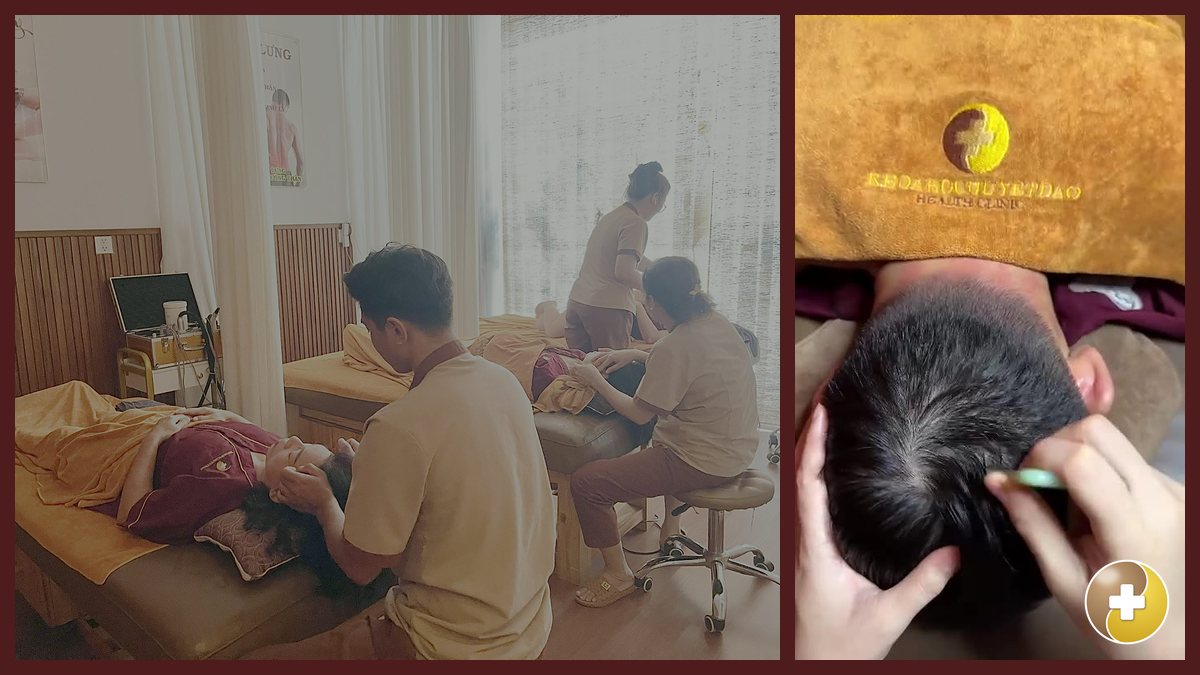
Quick answer: Nerves during a blood-pressure check make the heart race and can push the reading above your usual level. Rest 5 minutes, sit back, measure twice and average, and keep a home log. Repeated high readings still need a medical check. Tong Gia Acupoint Wellness (Huyệt Đạo Tống Gia) in Ho Chi Minh City only helps you relax; it does not replace blood-pressure care.
Want Lương Y Tống Văn Huynh’s team to read your spine and posture in person?
Nervous during a blood-pressure check: what is happening?
You sit down, the cuff tightens, and your heart starts pounding; your palms go damp and your mind asks "will it be high this time?". The machine beeps, the number is higher than you hoped, you worry more, and the next reading is higher still. Many people say their home readings are fine, but at a medical facility or a company health check the number shoots up. Some end up dreading the machine itself.
The Western medical view: the Tong Gia curriculum explains that heart rate and blood pressure change with emotion through the autonomic nervous system, and that stress raises both. When you are anxious, the "alert" side of that system switches on: the heart beats faster and harder and small blood vessels tighten, so the reading at that moment is higher than when you are calm. In Western medicine, readings that are clearly higher in a medical setting than at home because of nerves are often called the "white coat effect". It is a real body response, not something you imagine.
Just as important, the curriculum notes that high blood pressure usually has no symptoms. So you cannot dismiss every high number as "just nerves". The right approach is to measure properly, measure more than once, write it down, and let medical staff draw the conclusion. Tong Gia's part is helping the body relax, sleep better and release a tense neck and upper back, not "lowering blood pressure".
In Ho Chi Minh City, Tong Gia hears this from people at company health checks, older parents taken for checks by their children, people recently told to "keep an eye on" their pressure, those in high-pressure jobs such as sales and management, and anyone who tends to get nervous about everything.
Common reasons the heart races and the reading jumps
| Reason | Example | Effect on the reading |
|---|---|---|
| Worry about the number | Fear of a high result, told before it was "high" | Faster heart, reading above your calm level |
| Measuring in a rush | Straight after walking, stairs or riding in | Heart and pressure not yet at rest |
| Coffee or nicotine beforehand | Morning coffee, smoking within 30 minutes | The curriculum advises avoiding both for 30 minutes |
| Poor position | No back support, legs crossed or not on the floor, talking during the reading | Readings drift |
| One reading only | Taking the first number as final | The curriculum advises two readings 1–2 minutes apart, averaged |
| Poor sleep, long-term stress | Short nights, work until late | Stress raises heart rate and pressure |
| True high blood pressure | Salty, fatty food, alcohol, inactivity | High at home too, even when relaxed |
The curriculum's correct method: rest 5 minutes, sit with your back supported and feet on the floor; no coffee or smoking for 30 minutes before; take two readings 1–2 minutes apart and use the average. It also gives a reference table, with the reminder that the conclusion belongs to medical staff:
| Blood pressure (mmHg) | Reference meaning |
|---|---|
| Below 90/60 | Low; get checked if dizzy or fainting |
| Below 120/80 | Normal |
| 120–139 / 80–89 | High-normal: monitor and adjust lifestyle |
| 140/90 and above | High: needs medical assessment |
| 180/110 and above | Very high: get checked at once, especially with headache or chest pain |
Signs that often come with it
- Nerves: heart races as the cuff tightens, cold sweaty hands, slight trembling, tight chest, shallow breathing; settles with slow breathing.
- Leaning towards true high pressure: usually no symptoms, sometimes headache, dizziness or ringing ears. High readings at home while calm say more than any feeling.
- Leaning towards low pressure: blurred vision or dizziness on standing, tiredness, near-fainting.
- Heart signs: irregular beat, breathlessness on stairs, swollen ankles by evening, chest tightness on effort. The curriculum lists these as signs to get checked; one alone proves nothing.
When to see a doctor
The curriculum's first rule for the Heart: chest pain, breathlessness or signs of stroke mean call 115 (the emergency number in Vietnam) immediately, with no massage and no acupressure.
- Crushing chest pain, shortness of breath, sweating: call 115.
- Very high pressure with a severe headache or blurred vision: go to emergency; do not keep re-measuring.
- Facial droop, one-sided weakness, slurred speech, loss of balance, blurred vision: stroke signs (BE-FAST), call 115.
- Readings of 140/90 or above on several properly taken measurements, including at home.
- Below 90/60 with dizziness or fainting.
- Racing heart with dizziness or fainting; repeated irregular rhythm.
- Swelling legs, rapid weight gain, breathlessness lying down.
If your doctor has given you a blood-pressure plan, keep to it. The curriculum warns that stopping on your own can cause dangerous complications, and that "acupressure lowers blood pressure so you can stop your prescription" is a dangerous claim; acupressure only supports relaxation. If you have a stent or pacemaker, take blood thinners, or are pregnant, ask your doctor before massage. This is a wellness service, not medical care.
The Eastern and face-reading view
In the Tong Gia curriculum the Heart governs blood and vessels and houses the spirit: mood, emotion and sleep. Nerves in front of the machine are a moment when the spirit is unsettled. The Liver is often involved too: Liver fire easily stirs Heart fire, bringing restlessness, irritability and poor sleep, and when Liver yang rises upwards the curriculum describes heat rushing to the head, a short temper and fluctuating pressure. The kidneys also matter: in Western terms the curriculum notes they release renin, which helps regulate blood pressure.
Y Tướng Học (face reading for wellness) says "what is inside shows outside". Practitioners note very high, bony cheekbones (rising Liver yang, sudden pressure spikes, tight trapezius); sword-shaped brows (strong Liver qi, sudden spikes, tight neck tendons when temperament is rigid); "lion eyes" (pressure rising with anger); a broad forehead with a pointed chin ("full above, weak below", with headaches, poor sleep, high pressure above and tired knees below, and a warm upper neck at C1–C2); and a lined, sunken space between the brows (sighing, palpitations, unexplained worry). This is reference knowledge for choosing where to work, not a way to measure blood pressure, and never a judgement. More in Eastern face reading for wellness.
Spine segments and nerve-reflex zones involved
For the internal-organ and metabolic group, which includes high and low blood pressure, the curriculum focuses on D1–D12 and L1–L3, noting this is school-based support that does not replace medical checks and follow-up.
| Segment | Function | Common sign | Organ (Eastern view) |
|---|---|---|---|
| C1–C2 | Head, sleep | Warm back of head, heavy head, crown ache under stress | Liver, Heart |
| C3–C7, trapezius | Neck, shoulders, arms | Tense neck, shoulders lifting when anxious | Liver (governs tendons) |
| D1–D3 | Upper back, breathing | Shallow breathing during the check | Lung, Heart |
| D4–D5 (Jueyinshu, Xinshu) | Circulation | Palpitations when worried | Pericardium, Heart |
| L1–L3 | Kidneys, water and salt balance | Tired lower back, night urination | Kidney |
The table guides where to work; it is not a way to judge disease or estimate pressure. Practitioners compare both sides and work only on warmer, tighter, more tender "excited" zones.
The Tong Gia method: spinal nerve-reflex balancing massage
The method was built by Lương Y Tống Văn Huynh, a master of traditional Vietnamese wellness and founder of Tong Gia, with over 13 years in Eastern wellness, Y Tướng Học and spinal nerve-reflex balancing. For people who get nervous at blood-pressure checks, the aim is relaxation, a calmer spirit, a softer neck and upper back, and deeper sleep. Tong Gia does not claim massage lowers blood pressure. The curriculum calls "Baihui lowers blood pressure" an overstatement (Baihui is used to clear the head and calm the mind) and says the same of "foot soaks lower pressure instantly" (warm foot soaks simply help you relax and sleep).
- Screening: blood-pressure and heart history, current plan, stents, pacemaker, blood thinners, pregnancy, recent home readings. Very high pressure with severe headache, blurred vision, chest pain or stroke signs: stop and call 115 or get checked at once.
- Face-reading observation: complexion, cheekbones, brows, the space between the brows, tongue, shoulders, breathing rate.
- Reading the spine by hand from C1 to L3: skin temperature, muscle layer, vertebra shape, sensation.
- Muscle release: base of the skull, trapezius, neck and shoulders, between the shoulder blades, along the spine; light, even pressure and gentle vibration; only light pressure for anyone on blood thinners.
- Gentle acupressure: Xinshu and Jueyinshu on the back; Neiguan and Shenmen on the wrist for 1–2 minutes each side; finishing at Baihui.
- Home guidance: how to measure properly, 4–6 breathing during the 5-minute rest, keeping a log.
A typical session
A client in their fifties gets nervous at every check in a medical facility, reads lower at home, and is being followed by medical staff. The practitioner looks at the home log, sleep and coffee, sees lifted shoulders, a vertical line between the brows and short breaths, then finds the back of the head warm, the trapezius tight like a cord and thick muscle beside D4–D5. After slow work on the neck, vibration along the upper back and wrist points, the shoulders drop and breathing deepens; many clients doze off. At the end the client learns to rest 5 minutes with 4–6 breathing before measuring at home, and to bring the log to the next check. Results vary; Tong Gia promises no particular reading.
Suitable services and prices
- Heart wellness care, 75 min: 750,000 VND (about 29 USD), when palpitations, worry and poor sleep dominate.
- Head care, 60 min: 750,000 VND (about 29 USD), for a heavy head, warm neck and crown tension under stress.
- Hair wash with neck and shoulder massage, 60 min: 250,000 VND (about 10 USD), a gentle weekend unwind.
Full list on prices. See also Vietnamese head spa Q&A, neck and shoulder massage Q&A and acupressure massage in Saigon: Q&A.
Want Lương Y Tống Văn Huynh’s team to read your spine and posture in person?
Self-care at home and prevention
- Measure the curriculum's way: rest 5 minutes, back supported, feet on the floor, no coffee or smoking for 30 minutes, two readings 1–2 minutes apart, averaged. Use the rest time for 4–6 breathing.
- Keep a home log: same times each day, for example morning and evening, with pulse and notes on sleep or stress; bring it to your check-ups. Avoid measuring again and again while anxious.
- Press Neiguan when stressed: two thumb-widths above the wrist crease between the tendons, 1–2 minutes each side; Shenmen before sleep.
- Four habits that ease the heart: less salt (under 5 g a day), no nicotine, regular exercise (about 150 minutes a week) and enough sleep, plus less alcohol and a healthy weight.
- A warm foot soak in the evening to relax and sleep better; test the water carefully if you have high blood sugar. It is not a way to lower blood pressure.
Book a session
- District 12: 225 Dương Thị Mười, Tân Chánh Hiệp Ward (address in Vietnamese for taxis). Open 8:00–19:00 daily.
- Vinhomes Grand Park, District 9: Unit T16-21, Manhattan zone, Long Bình Ward, Thủ Đức City. Open 9:00–20:00 daily.
Call, Zalo or WhatsApp +84 888 264 559, or book online. Share your recent readings, your current plan, and whether you have a heavy head, poor sleep or a stiff neck. Real ratings and reviews are on each branch's Google Maps profile.
Visit us
- Đông Y Huyệt Đạo Tống Gia Quận 12 (District 12)
225 Dương Thị Mười, Phường Tân Chánh Hiệp, Quận 12, HCMC · 8:00–19:00 daily · 0888 264 559 · Directions on Google Maps - Đông Y Huyệt Đạo Tống Gia Quận 9 (Vinhomes Grand Park, District 9)
Căn T16-21 khu Manhattan, Vinhomes Grand Park, Phường Long Bình, TP. Thủ Đức, HCMC · 9:00–20:00 daily · 0888 264 559 · Directions on Google Maps
Want Lương Y Tống Văn Huynh’s team to read your spine and posture in person?
FAQ
Is it a problem if I get nervous when my blood pressure is taken? Nerves make the heart race and can push that reading above your usual level; it is a real body response. But high blood pressure usually has no symptoms, so measure properly several times, keep a home log, and let medical staff assess it.
Is my reading accurate if I am stressed? A reading taken while tense is usually higher than at rest. Sit back for 5 minutes, breathe slowly, avoid coffee for 30 minutes, take two readings 1–2 minutes apart and use the average.
Why is my blood pressure normal at home but high at a medical check? In Western medicine, anxiety in a medical setting can push readings above home levels, often called the white coat effect. A properly kept home log gives medical staff the fuller picture.
Can acupressure lower blood pressure? Tong Gia does not claim that. The curriculum says acupressure only supports relaxation, and calling it a way to stop your prescription is dangerous. Never stop a blood-pressure plan without asking the medical staff who follow you.
Can I have a massage if I have high blood pressure? Usually yes, if it is being monitored and stable and there are no warning signs, with gentle pressure. Tell the practitioner your readings and plan. With very high pressure and a severe headache, skip the massage and get checked at once.
Author: Lương Y Tống Văn Huynh – founder of Huyệt Đạo Tống Gia, a master of traditional Vietnamese wellness with over 13 years in Eastern wellness care, Y Tướng Học (face reading) and spinal nerve-reflex balancing massage.
Updated: 2026-11-17
Related guides
- Red face when stressed: why it happens, when to see a doctor, and what face reading notices
- Anxious when your blood pressure is taken: why the heart races and the number jumps, how to measure properly, and what Tong Gia can and cannot do
- Nervous speaking in public: why the heart pounds and the voice shakes, and how to stay steadier at talks and interviews
- Waking up with a racing heart: what morning heartbeats mean, when to get checked, and how Tong Gia helps the body settle
- Cold hands and feet in women: why it happens more often and how to care for it
- Heart racing after a big meal: the link between stomach and heart, when to get checked, and how Tong Gia helps Heart and Spleen settle
This is a wellness service, not medical care.