
Waking up with a racing heart: what morning heartbeats mean, when to get checked, and how Tong Gia helps the body settle
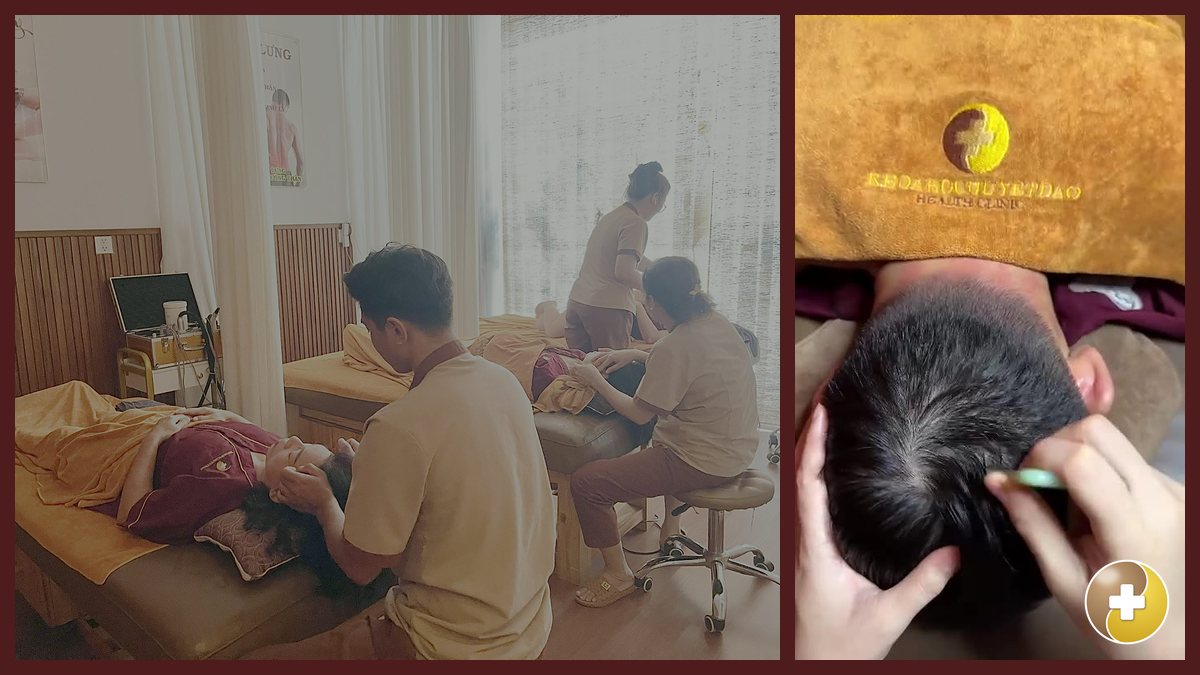
Quick answer: A racing heart on waking usually comes from getting up too fast, too little water overnight, broken sleep, alcohol the night before or morning worries. With dizziness, fainting, chest pain or breathlessness, get checked. Tong Gia Acupoint Wellness (Huyệt Đạo Tống Gia) in Ho Chi Minh City works by hand on the neck, D1–D5 and sleep-related points.
Want Lương Y Tống Văn Huynh’s team to read your spine and posture in person?
Racing heart after waking up: what is happening?
Some people open their eyes and already hear their heart thumping. Others feel it only when they sit up, with a few seconds of blurry vision. Others wake before dawn with a strong pounding and cannot fall back asleep. It is a common and unsettling start to the day.
The Western medical view: according to the Tong Gia curriculum, the sinus node is the heart's natural pacemaker, firing about 60–100 times a minute, and the resting adult heart rate sits in that range. Rate and blood pressure change with movement and emotion through the autonomic nervous system. In deep sleep the "rest" side of that system dominates and the heart slows; on waking, the "alert" side switches on and the heart speeds up a little to get you ready. That is normal. For some people the switch is too sharp, or other factors are stacked on top, so the rate jumps and every beat is noticeable.
A very common trigger is getting up too quickly. When you go from lying to standing, blood pools in the legs and the heart beats faster to keep blood flowing to the brain. After a night in air conditioning with little water, or when blood-pressure reflexes are slow, you get both a fast heart and a moment of blurred vision. So a racing heart on waking is a sign, not a disease name; the context tells you what it means.
In Ho Chi Minh City, Tong Gia hears this from office workers who scroll their phones past midnight, shift workers who sleep by day, drivers who start at 4 a.m., new parents up several times a night, women around menopause with night sweats, people after a late night out, and anyone carrying a big worry into the morning.
Common causes, group by group
| Group | Examples | Often noticed when |
|---|---|---|
| Sudden change of position | Jumping up at the alarm | Fast heart for a short while with blurred vision, better sitting down |
| Dehydration, cold room | Air conditioning all night, little water in the evening | Dry mouth, tiredness, faster heart on standing |
| Poor sleep, startling awake | Short sleep, bad dreams, waking at night | Wake already pounding, hard to sleep again |
| Alcohol, late meals, coffee | Drinks the night before, heavy late dinner, afternoon coffee | Hot, thirsty, fast heart in the morning |
| Empty stomach, low blood sugar | Skipped dinner, strict dieting | Shaky hands, sweating, hunger on waking |
| Anxiety and stress | Work pressure, family matters | Worry the moment you wake, tight chest, shallow breathing |
| Causes outside the heart | Anaemia, overactive thyroid, fever, hormonal change | Pale skin, weight loss, tremor, hot flushes |
| Heart rhythm, breathing in sleep | Arrhythmia, loud snoring with pauses in breathing | Irregular beat, dizziness, morning headache |
The curriculum notes that inactivity, stress and late nights raise heart rate and blood pressure, and poor sleep keeps the body from recovering; in the traditional view these habits drain Heart blood and unsettle the spirit. It also notes that late eating makes the stomach work while the body needs rest, which favours reflux and poor sleep. A short daytime nap of 15–30 minutes is recommended; a two-hour nap often ends with a heavy head and a fast heart.
Signs that often come with it
- Only a short burst on standing, better when sitting: points to position change and dehydration; still get checked if you nearly fall.
- Waking with pounding and night sweats: look at sleep, hormones and stress.
- Loud snoring, pauses in breathing noticed by a partner, morning headache: a sleep check is worthwhile.
- Irregular beat without coffee or alcohol: a heart check is worthwhile.
- Pale skin, tired on light effort: a blood test for anaemia may help.
The curriculum also lists signs of reduced heart function: chest heaviness on effort, breathlessness on stairs or lying flat, irregular beat, swollen ankles by evening, dizziness or near-fainting, waking breathless, night sweats, bluish lips. One sign alone proves nothing. A useful habit: for one or two weeks, sit on the bed each morning, count your pulse for a minute, and note it with your sleep hours, alcohol and coffee.
When to see a doctor
The curriculum's first rule for the Heart: chest pain, breathlessness or signs of stroke mean call 115 immediately, with no massage and no acupressure.
- Crushing chest pain, shortness of breath, sweating: call 115.
- Chest pain lasting more than 5–10 minutes or spreading to the left arm, neck or jaw.
- Fainting or near-fainting on getting up; racing heart with dizziness.
- Waking up breathless, needing to sit up to breathe.
- Facial droop, one-sided weakness, slurred speech, blurred vision or loss of balance on waking: stroke signs (BE-FAST), call 115.
- Very high blood pressure with a severe headache.
- Morning racing heart most days, an irregular rhythm, or weight loss, tremor, pallor: get checked alongside any wellness care.
If you have a stent or pacemaker, take blood thinners, or are pregnant, ask your doctor before massage. Keep following your doctor's plan for heart or blood pressure. This is a wellness service, not medical care.
The Eastern and face-reading view
In the Tong Gia curriculum the Heart governs blood and vessels and houses the spirit: mood, awareness and sleep. A morning racing heart often traces back to a restless night. Patterns the curriculum describes include Heart blood deficiency (startles easily, poor sleep, many dreams, pale lips, dizziness), Heart yin deficiency (restlessness, night sweats, hot palms and soles, red tongue with little coating), Heart qi deficiency (breathless on effort, tired, sweating) and Heart and Kidney not communicating (poor sleep, palpitations, sore lower back and knees). These are traditional concepts, not Western disease names.
Y Tướng Học (face reading for wellness) says "what is inside shows outside". Practitioners notice a red tongue tip or a small, sharp, very red tongue (Heart fire); a dipped or scarred bridge of the nose between the eyes, which the curriculum links to "dizziness on waking"; round, prominent eyes, read as scattered spirit with a fast heart and unexplained worry, and a reason to suggest a thyroid check if there is also tremor or weight loss; a broad forehead with a pointed chin ("full above, weak below"), with a warm upper neck at C1–C2; and a damp pillow or sweaty neck in the morning. This is reference knowledge for choosing where to work, not a judgement. More in Eastern face reading for wellness.
Spine segments and nerve-reflex zones involved
The curriculum maps the neck (C1–C7) to the head, neck and arms, the thoracic spine (D1–D12) to circulation, breathing and digestion, and for the nervous-system group (long-term poor sleep, nervous exhaustion) it focuses on C1–C7, D1–D3 and the sacral area.
| Segment | Function | Common sign | Organ (Eastern view) |
|---|---|---|---|
| C1–C2 | Head, sleep | Warm back of the head, heavy head in the morning | Heart, Liver |
| C3–C7 | Neck, shoulders, arms | Stiff neck on waking | Pericardium, Liver |
| D1–D3 | Upper back, breathing | Shallow breathing, tight chest on waking | Heart, Lung |
| D4–D5 (Jueyinshu, Xinshu) | Circulation | Palpitations, light sleep | Pericardium, Heart |
| L2 and sacral area | Kidney, pelvis | Sore lower back, night urination, night sweats | Kidney (Heart and Kidney) |
The Tong Gia method: spinal nerve-reflex balancing massage
The method was built by Lương Y Tống Văn Huynh, a master of traditional Vietnamese wellness and founder of Tong Gia, with over 13 years in Eastern wellness, Y Tướng Học and spinal nerve-reflex balancing. The aim, in the curriculum's words, is to nourish Heart qi and blood, calm the spirit and support sleep; acupoints do not act directly on the heart muscle or coronary arteries.
- Screening and observation: heart and blood-pressure history, stents, pacemaker, blood thinners, pregnancy; when the racing comes, how long, dizziness, sleep hours, snoring. Then tongue, nose bridge, eyes, complexion, sweat.
- Reading the spine by hand: skin temperature, muscle layer, vertebra shape and sensation from C1 to the sacrum, left against right.
- Muscle release: the base of the skull, neck and shoulders, between the shoulder blades and along the spine, with light, even pressure and gentle vibration.
- Acupressure: Xinshu and Jueyinshu on the back; Neiguan, Shenmen and Yinxi on the wrist for 1–2 minutes each side; finishing at Baihui on the crown.
- Home guidance: getting up slowly, breathing in bed, wrist points before sleep, sleep and coffee timing.
A typical session
A client who wakes before dawn with a pounding heart, already checked by a cardiologist, goes to bed after midnight with the phone in hand and often wakes with a damp neck. The practitioner sees a red tongue tip and raised shoulders, then finds the back of the head warm and the muscles beside D4–D5 thick and tender. Work starts gently on the hands and forearms, then the neck and upper back. Midway, breathing slows and many clients drift off. The session ends with the wrists and head, plus simple advice: roll to the side, sit on the edge of the bed for a minute, and keep the phone away from the pillow.
Suitable services and prices
- Heart wellness care, 75 min: 750,000 VND (about 29 USD), when palpitations come with light sleep and worry.
- Head care, 60 min: 750,000 VND (about 29 USD), when mornings bring a heavy head and a warm, tight neck.
- Traditional Vietnamese massage, 60 min: 450,000 VND (about 17 USD), a gentle first visit.
Full list on prices. See also acupressure for sleep in Saigon and Vietnamese head spa Q&A. In the session many people feel soreness at the neck first, then warmth and deeper breathing; afterwards many sleep more deeply. Results vary, and Tong Gia does not promise the racing will stop: sleep, alcohol and stress still need your part.
Want Lương Y Tống Văn Huynh’s team to read your spine and posture in person?
Self-care at home and prevention
- Get up slowly: turn off the alarm, roll to your side, sit on the edge of the bed for about a minute, then stand. Sit back down if your vision blurs.
- A glass of warm water in the morning, steady water through the day, and a not-too-cold bedroom.
- 4–6 breathing in bed: in through the nose for 4 seconds, out for 6, a few minutes before getting up and 5–10 minutes before sleep.
- Shenmen before sleep: on the wrist crease, little-finger side; press gently 1–2 minutes each side with slow breathing.
- Regular sleep times, less alcohol and late eating: nap 15–30 minutes, keep coffee to the morning, keep the phone away from the bed, and move about 30 minutes a day.
New to this kind of care? Read acupressure massage in Saigon: Q&A.
Book a session
- District 12: 225 Dương Thị Mười, Tân Chánh Hiệp Ward (address in Vietnamese for taxis). Open 8:00–19:00 daily.
- Vinhomes Grand Park, District 9: Unit T16-21, Manhattan zone, Long Bình Ward, Thủ Đức City. Open 9:00–20:00 daily.
Call, Zalo or WhatsApp +84 888 264 559, or book online. Tell us when the racing comes, how long it lasts, whether you feel dizzy or sleep badly, and any check results. Real ratings and reviews are on each branch's Google Maps profile.
Visit us
- Đông Y Huyệt Đạo Tống Gia Quận 12 (District 12)
225 Dương Thị Mười, Phường Tân Chánh Hiệp, Quận 12, HCMC · 8:00–19:00 daily · 0888 264 559 · Directions on Google Maps - Đông Y Huyệt Đạo Tống Gia Quận 9 (Vinhomes Grand Park, District 9)
Căn T16-21 khu Manhattan, Vinhomes Grand Park, Phường Long Bình, TP. Thủ Đức, HCMC · 9:00–20:00 daily · 0888 264 559 · Directions on Google Maps
Want Lương Y Tống Văn Huynh’s team to read your spine and posture in person?
FAQ
Why does my heart race when I wake up? Common reasons are getting up too fast, too little water overnight, broken sleep, alcohol or a late meal the night before, and morning worries. Anaemia, thyroid problems or a rhythm problem are also possible. With dizziness, fainting, chest pain or breathlessness, or if it happens most days, get checked.
Is a fast heartbeat right after waking dangerous? A short burst on standing that settles is usually the body adjusting to position. An irregular, lasting fast beat with dizziness or chest tightness deserves a heart check and an ECG if advised.
Why do I feel dizzy and my heart races when I get out of bed? Standing too quickly makes blood pool in the legs, so the heart speeds up to keep blood going to the brain; dehydration makes it worse. Sit on the edge of the bed for a minute first. If you faint or nearly faint, get checked.
What should I do if my heart races during the night? Sit up slowly, breathe 4–6, count your pulse and note the time. With chest pain, breathlessness or sweating, call 115. If it repeats, especially with loud snoring or pauses in breathing, get checked.
Can massage help with morning palpitations? If you have been checked and have no warning signs, gentle massage and acupressure can help you relax and sleep more deeply. At Tong Gia, the 75-minute heart wellness care (750,000 VND, about 29 USD) works on the neck, D4–D5 and wrist points. It does not replace a heart check.
Author: Lương Y Tống Văn Huynh – founder of Huyệt Đạo Tống Gia, a master of traditional Vietnamese wellness with over 13 years in Eastern wellness care, Y Tướng Học (face reading) and spinal nerve-reflex balancing massage.
Updated: 2026-11-17
Related guides
- Red face when stressed: why it happens, when to see a doctor, and what face reading notices
- Anxious when your blood pressure is taken: why the heart races and the number jumps, how to measure properly, and what Tong Gia can and cannot do
- Nervous speaking in public: why the heart pounds and the voice shakes, and how to stay steadier at talks and interviews
- Waking up with a racing heart: what morning heartbeats mean, when to get checked, and how Tong Gia helps the body settle
- Cold hands and feet in women: why it happens more often and how to care for it
- Heart racing after a big meal: the link between stomach and heart, when to get checked, and how Tong Gia helps Heart and Spleen settle
This is a wellness service, not medical care.