
Red face when stressed: why it happens, when to see a doctor, and what face reading notices
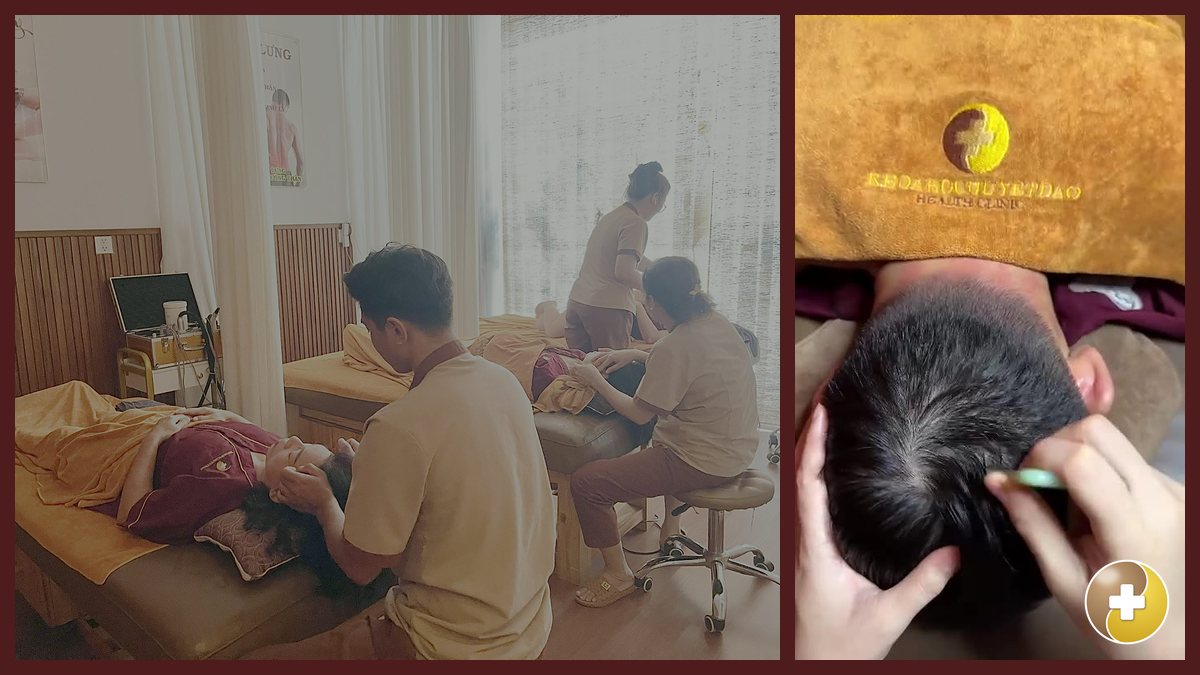
Quick answer: A red face under stress is a sympathetic nervous system reflex: adrenaline speeds the heart and widens small facial vessels, so blood rushes to the cheeks, ears and neck. Poor sleep, coffee, alcohol and sensitive skin make it worse. Flushing with chest pain or breathlessness needs a doctor. Tong Gia in Ho Chi Minh City offers calming care.
Want Lương Y Tống Văn Huynh’s team to read your spine and posture in person?
A red face when stressed: what it is and who gets it
Stress flushing is when, in a pressured moment, your face suddenly turns hot and red, spreading from the cheeks to the ears and neck, sometimes down to the upper chest. People say "my face goes red before I even speak" or "the harder I try to stay calm, the redder I get". Typical moments: being called on unexpectedly in a meeting, presenting to a client, a job interview, your manager asking for numbers, meeting strangers, being teased, or just thinking about having to speak.
In Western terms this is an automatic reflex of the sympathetic nervous system. When the brain reads a situation as a threat or as being watched, the body releases adrenaline: the heart beats faster, breathing gets shorter, and the small blood vessels in the facial skin widen, so more blood flows there and the face looks red and feels hot. The face has a dense network of small vessels close to the surface, so it shows first. You cannot switch the reflex off by willpower, which is why trying to "order" your face not to blush often makes it worse.
Occasional blushing is normal. It deserves attention when it happens very often, makes you avoid speaking, meetings or clients, or when your face turns red even without emotion, with burning, rash, palpitations or poor sleep. Then the nervous system may be over-sensitive, or another cause needs a doctor's look.
Among guests of Tong Gia Acupoint Wellness (Huyệt Đạo Tống Gia) in Ho Chi Minh City, stress flushing is common in:
- Sales staff, customer-facing roles and new teachers who speak in front of others every day;
- Office workers who sleep late and drink a lot of coffee, keeping the nervous system on alert;
- People with thin, fair or sensitive skin whose vessels show easily and redden with heat or spicy food;
- Careful, conscientious people who worry about what others think;
- Women in mid-life who sometimes get hot flushes that are easily confused with stress blushing.
If your face burns mainly when you are angry, see our Vietnamese article on flushing with anger; this page is about the blush of nerves, embarrassment and being watched, where the Heart is the organ Eastern wellness looks at first. New to face reading? Start with our Eastern face reading Q&A.
Common causes: seven groups behind stress flushing
This table helps you describe your flushing to a doctor and to our practitioners; it is not for judging it yourself.
| Cause group (Western view) | Typical pattern | Often comes with |
|---|---|---|
| Sympathetic reflex when watched | Fast, hot redness that fades in minutes | Racing heart, shaky voice, sweaty palms |
| Ongoing or social anxiety | Redness just from thinking about speaking | Avoiding meetings, poor sleep before big days |
| Poor sleep, coffee, energy drinks | Much easier flushing on tired days | Jitters, restlessness, slight tremor |
| Alcohol, spicy food, hot stuffy rooms | Redness spreading to neck and chest, lasting longer | Feeling hot, thirsty, headache |
| Sensitive skin, dilated vessels | Cheeks always pink, redder with emotion | Stinging, burning, visible fine vessels |
| Hormonal change | Waves of heat not tied to emotion | Sweating, poor sleep, cycle changes |
| Blood pressure, heart, some prescriptions | Red face with heavy head, pounding heart | Headache, dizziness, chest tightness |
The reflex itself. Feeling many eyes on you triggers a mild "fight or flight" response: red face, fast heart, dry mouth, shaky voice, sweaty hands, all settling a few minutes after the moment passes.
Anxiety. Some people blush so often that they start to fear blushing itself: worrying days ahead, avoiding speaking, hiding behind a mask. In Western terms this builds a loop of "worry, blush, worry more". If it affects work and relationships, see a mental health professional rather than coping alone.
Sleep and stimulants. Several nights under six hours, plus black coffee, milk tea and energy drinks, keep the sympathetic system high, so a small trigger is enough. Many people notice they blush less in weeks when they sleep well.
Alcohol, spice and heat. Alcohol and chilli widen peripheral vessels; crowded, stuffy meeting rooms and Saigon's midday heat make the body release heat through the skin. Add stress and the redness lasts longer and spreads wider.
Sensitive skin. Thin skin, a weak skin barrier or chronic facial redness with dilated vessels (rosacea) keeps the cheeks pink, redder with emotion, with stinging and fine visible vessels. This group should see a skin specialist.
Hormones. Around perimenopause, women can have hot flushes of face, neck and chest unrelated to emotion, with sweating and poor sleep. An overactive thyroid can also cause heat, fast heartbeat and trembling hands. These are easily mistaken for "just stress".
Blood pressure, heart and medication. The Tong Gia curriculum notes that high blood pressure often has no symptoms, sometimes headache, dizziness or ringing ears. Some prescriptions cause flushing as a side effect. With known heart or blood pressure problems, flushing with a heavy head or chest tightness must be checked.
Signs worth noting
- Situation: only when watched or speaking, or also when alone.
- Duration: a few minutes or hours.
- Area: just the cheeks, or ears, neck and chest.
- Together with: racing or pounding heart, trembling, sweaty palms, dry mouth, shaky voice.
- Skin: rash, bumps, pustules, burning, fine vessels, redness without emotion.
- Whole body: poor sleep, vivid dreams, restlessness, hot palms and soles at night, fatigue, weight loss, cycle changes.
- Habits: coffee, alcohol, spicy food, late nights, screen hours.
Keep a one-week log of when, where, what you drank and how long you slept; it helps a doctor and our practitioners understand your pattern quickly.
When to see a doctor
- Red, hot face with chest pain, shortness of breath or cold sweat: call 115 now.
- Red face with a sudden severe headache, drooping mouth, slurred speech, or weakness or numbness on one side: call 115 now.
- Known high blood pressure or heart disease, or high home readings.
- Lasting redness even without emotion, with rash, bumps, pustules, burning or fine vessels.
- Waves of heat, night sweats, fast heartbeat, trembling or unexplained weight loss: get checked at a medical facility in parallel.
- Flushing that started with a new prescription: ask the prescriber; do not stop on your own.
- Anxiety or fear of blushing that makes you avoid work or people, or ruins your sleep: see a mental health professional.
The Tong Gia curriculum requires practitioners to ask about heart disease, high blood pressure, stents and pacemakers before any Heart-focused session, and to stop and call 115 for lasting chest pain, breathlessness, fainting or a drooping mouth. If you have a medical plan, keep following it. This is a wellness service, not medical care.
The Y Tướng Học view: the Heart shows on the face, and Fire rises
Y Tướng Học (face reading for wellness) has roots over 2,000 years old in the idea that what is inside shows outside. Lương Y Tống Văn Huynh (master of traditional Vietnamese wellness) summarises it as "the signs show outside, the organs lie inside". Complexion is the first thing Tong Gia looks at when you walk in.
According to the Tong Gia curriculum, the Heart governs blood and vessels and houses the spirit (mind, awareness, sleep); it opens into the tongue and shows its health on the face, and sweat is the fluid of the Heart. The Heart belongs to Fire and its emotion is joy; the curriculum notes that too much excitement or too much worry both drain it. In balance the face is rosy, sleep is deep and the mind clear; early signals to care for are a pale or flushed face, trouble sleeping and palpitations.
| Pattern | Described in the Tong Gia curriculum | Wellness suggestion |
|---|---|---|
| Heart yin deficiency | Palpitations, restlessness, poor sleep, night sweats, hot palms and soles, red tongue with little coating | Early nights, less spicy food, slow breathing |
| Heart fire (traditional concept) | Restlessness, poor sleep, mouth and tongue sores | Fewer stimulants, calming care |
| Heart blood deficiency | Palpitations, easily startled, vivid dreams, forgetfulness, pale face and lips | Nourishing meals, rest |
| Liver fire rising (anger) | Hot temper, heat rising to the head, dry eyes, bitter mouth | Soothe the Liver, release the neck |
| Heart and Kidney out of contact | Poor sleep, palpitations, sore lower back and knees | Keep the lower back warm, regular bedtime |
These are traditional wellness concepts, not Western disease names, and should not be self-applied.
The curriculum describes the Giáp face (wide forehead, narrow pointed chin) as a "strong above, weak below" type: yang rises easily, so the head runs hot and sleep is light, while the lower back tends to be weak and cool; such people are often quick and bright. A pointed crown is described as qi tending to rush upward, with heat rising to the head. A small, pointed, deep-red tongue is described as strong Heart fire with an over-stimulated autonomic system, poor sleep, fast heartbeat and worry. This is reference knowledge used to decide where to care, never to judge character or label illness. People who blush easily are often thoughtful and responsible; the aim is to help the nervous system stand down, so the face is rosy rather than burning.
Spine and nerve-reflex areas involved
In the Tong Gia curriculum, C1–C7 govern the head, face, neck and arms; for the nerve and mind group (long-standing headaches, poor sleep, nervous exhaustion) the curriculum targets C1–C7, upper back D1–D3 and the sacral area. Stress flushers often have a hot upper neck, tight sub-occipital muscles, raised shoulders and a heavy area between the shoulder blades.
| Vertebrae | Nerve area, function | Common signs | Organ (Eastern view) |
|---|---|---|---|
| C1–C2 | Upper neck; hot and over-active in the Giáp face type | Hot head, tight back of neck, hot face | Heart – Liver |
| C1–C7 | Head, face, neck, arms | Stiff neck, raised shoulders, shaky voice | Liver (tendons) |
| D1–D3 | Nerve and mind group (curriculum) | Shallow breathing, mild chest tightness | Heart – Lung |
| D4–D5 | Jueyin shu and Heart shu area | Palpitations, light sleep | Heart |
| Lower lumbar | Often hollow and cool in the Giáp type | Tired back and knees, cold feet | Kidney |
"Linked" means a direction for care, not a conclusion about disease.
The Tong Gia method: spinal nerve-reflex balancing massage
Built by Lương Y Tống Văn Huynh over more than 13 years of Eastern wellness, face reading and spinal nerve-reflex balancing. For stress flushing the curriculum's aim is relaxation and calming of the spirit: cooling the head and neck, deepening the breath, settling sleep. Blushing is a natural reflex, so Tong Gia does not promise it will stop; we help an over-sensitive system calm down.
- Screening: heart disease, blood pressure, stents, pacemakers, prescriptions, pregnancy; warning signs mean no session and a referral.
- Observation: complexion on arrival and after a few quiet minutes, tongue, palms, breathing, shoulders; questions about sleep, coffee and triggers.
- Slow breathing first: following the curriculum's Heart routine, a few minutes of 4–6 breathing (in for 4, out for 6).
- Reading the spine by hand: skin temperature, muscle layer, vertebral shape, sensation; warm, tight (over-active) areas get attention, cool (under-active) areas are not worked directly.
- Muscle release: sub-occipital muscles, neck, shoulders and between the shoulder blades, light and steady.
- Acupressure: Heart shu and Jueyin shu on the back; Neiguan and Shenmen on the wrists, 1–2 minutes each side; Taichong on the foot if you hold in frustration; Baihui on the crown to finish.
- Self-care coaching: 4–6 breathing, Shenmen before bed, cutting afternoon coffee, keeping the lower back warm.
A typical session. A young salesman newly handling key accounts said he turned "red as a tomato" at every presentation, slept badly the night before meetings and drank three coffees a day; his blood pressure had been checked and was normal. On arrival his cheeks and ears were red, the tongue tip red, palms damp, shoulders high, breathing in the chest. After a few minutes of 4–6 breathing the redness eased. The upper neck at C1–C2 was clearly warm, sub-occipital muscles tight, the upper back heavy, the lower back slightly cool. Slow neck and shoulder release, then Heart shu, Jueyin shu, Neiguan, Shenmen and Baihui; he fell asleep halfway. He left with a plan: no afternoon coffee, two minutes of 4–6 breathing before entering the meeting room, and a follow-up in two weeks to see how his sleep changed.
Services and prices: Heart wellness 75 min 750,000 VND (about 29 USD); head care 60 min 750,000 VND (about 29 USD); Eastern massage 60 min 450,000 VND (about 17 USD). See our prices page, sleep acupressure and face reading for wellness.
How it feels. Many guests feel the face cool, the breath lengthen, the shoulders drop and the heartbeat slow; some fall asleep. Afterwards they report a lighter head, deeper sleep and a calmer next working day. Results vary; sleep, stimulants and preparation still decide most of it.
Want Lương Y Tống Văn Huynh’s team to read your spine and posture in person?
Self-care at home and prevention
- 4–6 breathing before pressure: in through the nose for 4, out slowly for 6, for 1–2 minutes; long out-breaths switch on the calming side of the nervous system.
- Neiguan and Shenmen: the curriculum suggests gentle pressure on Neiguan for 1–2 minutes each side when tense, and Shenmen before bed with slow breathing. Our acupressure for sleep Q&A explains more.
- Fewer stimulants, enough sleep: no coffee after 2 pm, little alcohol or chilli before an important day, bed before 11 pm, short naps.
- Cool down and prepare: a sip of cool water, rinse your face, sit near fresh air; prepare well and rehearse in front of a mirror or a friend.
- Accept the reflex and release the neck: tell yourself "I may go a little red, and that is fine"; many people blush less once they stop fighting it. If your neck and shoulders are always tight, read our neck and shoulder massage Q&A.
Book a session
- District 12: 225 Dương Thị Mười, Phường Tân Chánh Hiệp (Tan Chanh Hiep Ward, District 12). Open 8:00–19:00 daily.
- Vinhomes Grand Park, District 9: Căn T16-21 khu Manhattan, Phường Long Bình, TP. Thủ Đức (Unit T16-21, Manhattan zone, Long Binh Ward, Thu Duc City). Open 9:00–20:00 daily.
Book online or call, Zalo or WhatsApp +84 888 264 559. Tell us when you flush, how you sleep and whether your blood pressure has been checked; if you can, avoid booking right after a big meal or a coffee. Real reviews are on each branch's Google Maps page. Living in or visiting Ho Chi Minh City? Come and try a Vietnamese Eastern wellness method built by Lương Y Tống Văn Huynh.
Visit us
- Đông Y Huyệt Đạo Tống Gia Quận 12 (District 12)
225 Dương Thị Mười, Phường Tân Chánh Hiệp, Quận 12, HCMC · 8:00–19:00 daily · 0888 264 559 · Directions on Google Maps - Đông Y Huyệt Đạo Tống Gia Quận 9 (Vinhomes Grand Park, District 9)
Căn T16-21 khu Manhattan, Vinhomes Grand Park, Phường Long Bình, TP. Thủ Đức, HCMC · 9:00–20:00 daily · 0888 264 559 · Directions on Google Maps
Want Lương Y Tống Văn Huynh’s team to read your spine and posture in person?
FAQ
Why does my face go red when I am stressed? Usually a sympathetic reflex: adrenaline speeds the heart and widens facial vessels, so the face turns red and hot. Poor sleep, coffee, alcohol and sensitive skin make it easier. Redness without emotion, or with chest pain or breathlessness, needs a doctor.
Is blushing when talking to strangers a problem? Brief blushing when watched is normal. If it makes you avoid people or meetings, or ruins sleep before big days, see a mental health professional, alongside better sleep and fewer stimulants.
Is stress flushing linked to blood pressure? Blood pressure and heart rate can rise briefly under stress. If you already have high blood pressure or heart disease, or flushing comes with a heavy head or chest tightness, measure your pressure and see a doctor.
How can I blush less during presentations? Two minutes of 4–6 breathing before you go in, a sip of cool water, good preparation and no coffee that afternoon. Gentle pressure on Neiguan for 1–2 minutes each side helps some people; accepting the reflex instead of fighting it often helps most.
Which organ does Eastern wellness link with a flushed face? In the Tong Gia curriculum the Heart shows on the face; a pale or flushed face with poor sleep and palpitations is a sign to care for the Heart, while flushing with anger points more to the Liver. It is a wellness hint; only a check-up finds the cause.
Can massage or acupressure reduce stress flushing? A session helps you relax, loosens the neck, deepens breathing and settles sleep, so many guests feel less jittery. Tong Gia does not promise the blushing will stop; sleep, stimulants and daily breathing practice matter most.
Author: Lương Y Tống Văn Huynh – founder of Huyệt Đạo Tống Gia, a master of traditional Vietnamese wellness with over 13 years in Eastern wellness care, Y Tướng Học (face reading) and spinal nerve-reflex balancing massage.
Updated: 2026-11-17
Related guides
- Red face when stressed: why it happens, when to see a doctor, and what face reading notices
- Anxious when your blood pressure is taken: why the heart races and the number jumps, how to measure properly, and what Tong Gia can and cannot do
- Nervous speaking in public: why the heart pounds and the voice shakes, and how to stay steadier at talks and interviews
- Waking up with a racing heart: what morning heartbeats mean, when to get checked, and how Tong Gia helps the body settle
- Cold hands and feet in women: why it happens more often and how to care for it
- Heart racing after a big meal: the link between stomach and heart, when to get checked, and how Tong Gia helps Heart and Spleen settle
This is a wellness service, not medical care.