
Knee pain in older adults: common causes, when to get checked and safe wellness care
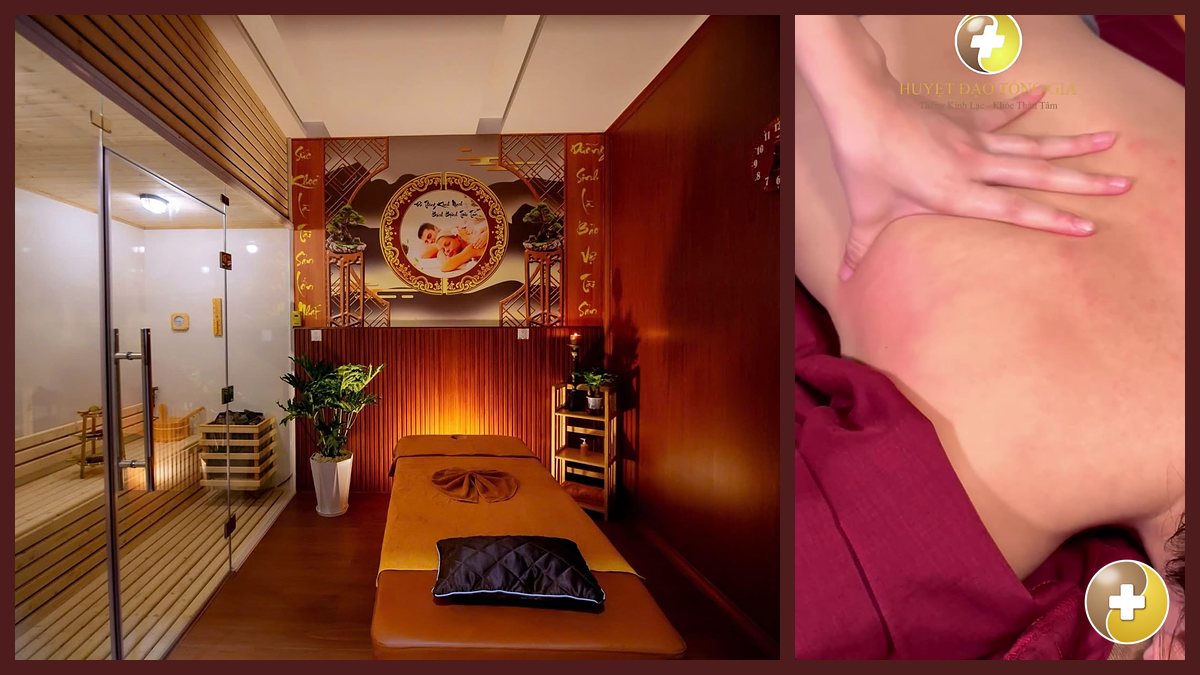
Quick answer: Knee pain in older adults usually comes from worn cartilage, weak thigh muscles and too little movement, sometimes from gout or a fall. A hot swollen knee needs a medical check first. Tong Gia Acupoint Wellness (Huyệt Đạo Tống Gia) in District 12 and Vinhomes Grand Park, Ho Chi Minh City, offers gentle care from the lower back down.
Want Lương Y Tống Văn Huynh’s team to read your spine and posture in person?
What is knee pain in older adults?
Knee pain in older adults means aching, stiffness, swelling or creaking in one or both knees, most common from the mid-fifties onward. In Western medicine, the knee is the joint that carries the most body weight. Every step and every time you stand up from a chair, that load passes through the cartilage covering the ends of the thigh bone and shin bone. With age the cartilage thins, joint fluid decreases and the front thigh muscles weaken, so the knee hurts more easily than it did at forty.
Families in Ho Chi Minh City describe familiar scenes: a mother who has stood in a kitchen or market stall her whole life now rubs her knees each morning before getting out of bed; a father comes back from the park with a slightly swollen knee; grandparents climb the stairs of a narrow tube house holding the rail on every step. Many older people walk less to avoid pain, the thigh muscles weaken further, and the knee hurts even more. If you are an expat or a Vietnamese family abroad bringing parents to Saigon, this cycle is worth understanding before you book anything.
One point first: knee pain in older people is not always "just age". Wear and tear is common, but inflammation, gout, a fall, or pain referred from the lower back or hip are also possible, and each needs a different approach. Get the cause checked first, then think about wellness care.
Common causes: age, habits, past work and environment
In Western medicine, knee pain in older adults usually falls into these groups. They help you picture what is going on; only a medical check with examination, imaging or blood tests can confirm the cause.
1. Knee osteoarthritis
Cartilage wears down and small bone spurs may form. Pain grows with walking, stairs and squatting, and eases with rest. Morning stiffness lasts a few minutes. It is common in people who stood or lifted for decades and in people carrying extra weight.
2. Weak thigh muscles and too little movement
After sixty, muscle mass drops unless it is used. Weak quadriceps cannot protect the joint, so the cartilage takes the full load. People who sit a lot often have knee pain with tired legs and need to sit after a short walk.
3. Inflammation and gout
A red, hot, swollen knee that hurts even at rest, sometimes after a rich meal or beer, needs a medical check. Rheumatoid arthritis tends to affect several joints on both sides with long morning stiffness. Never massage a hot, swollen joint.
4. Minor falls
A slip in the bathroom or a trip on a doorstep may seem harmless, then the knee swells days later. Bones can be more fragile with osteoporosis, so any fall deserves a check.
5. Pain from the back or hip
Lower back or hip problems can send pain down the front of the thigh to the knee. Rubbing the knee does little when the source is higher up.
6. Weather and air conditioning
Rainy season, an air conditioner blowing on the legs at night, or mopping with cold water make many older knees ache more. See knee pain in cold weather.
Other signs to watch
When a parent says "my knee hurts", ask and observe a little more. These details help medical staff and help a wellness practitioner know where to be gentle:
- One knee or both; front, inner side or behind the knee.
- How long morning stiffness lasts.
- Clicking or grinding; does the knee lock or give way.
- Swelling, warmth, redness; is one knee bigger.
- Lower back ache, numb legs or night cramps.
- Feeling cold easily, cold hands and feet, waking at night to urinate; or hot palms and soles at night.
- A recent fall, new shoes, weight gain or walking less.
| Type of knee pain | Often related to | What to do |
|---|---|---|
| Hurts after walking, eases with rest, short morning stiffness | Osteoarthritis | Medical check for severity; keep moving gently |
| Red, hot, swollen, painful at rest | Inflammation, gout | Get checked soon; no massage on the joint |
| After a fall, cannot bear weight | Injury, possible fracture | Go to hospital for an X-ray |
| Pain from thigh to knee with back ache | Lower back or hip | Have the back and hip checked too |
| Tired knees, weak legs, reluctant to walk | Weak thigh muscles | Gentle regular exercise, leg care |
When to see a doctor
For older people, safety comes first. Please see a doctor or go to a hospital if there is:
- A large, hot, red swelling, or fever.
- Pain after a fall, inability to stand or walk, or a deformed knee.
- Severe night pain that rest does not ease.
- One calf swollen, tight, warm and painful (a blood clot must be ruled out).
- A knee that locks and will not straighten, or suddenly gives way.
- Numbness or weakness in the leg, or loss of bladder control.
- Weight loss or long-lasting fatigue without a clear reason, which needs a medical check in parallel.
Tell any massage provider in advance if your parent takes blood thinners, has diabetes or high blood pressure, or has had a knee replacement. This is a wellness service, not medical care. Keep following your medical team's advice; hands-on care only supports comfort and relaxation.
The Y Tướng Học view: Kidney, Liver and Spleen
According to the Tong Gia curriculum, Eastern medicine reads the knee through three organ systems. The Kidney governs bones and marrow: when Kidney qi declines, the lower back aches and the knees feel tired and weak. The Liver governs the tendons: a healthy Liver keeps tendons supple, while a weak one brings stiffness, cramps and less flexibility. The Spleen governs muscles and limbs: weakness shows as slack muscles and heavy, tired arms and legs. In older people all three often decline together, so knee pain usually comes with back ache, cramps and weak legs.
Y Tướng Học (face reading for wellness) at Tong Gia follows the idea that "the outer form reflects the inner organs". The curriculum describes thin, soft ear rims, a flat bone behind the ear and tight muscles around the ear as signs of weak Kidney qi, often with back and knee ache, feeling cold, cold limbs and frequent night urination, plus early joint ageing and creaky, dry joints that ache deep inside when seasons change.
Two common patterns: Kidney yang weakness ("not enough fire to warm"), with cold back and knees, night urination and a pale, puffy tongue; and Kidney yin weakness ("not enough water to cool"), with tired knees, hot palms and soles, dry mouth, dreamy sleep and a red tongue. These are traditional concepts used to choose how to care, not Western disease names.
Spine segments and nerve-reflex areas involved
The Tong Gia curriculum notes that the lumbar vertebrae L1 to L5 relate to digestion, kidneys, urinary and reproductive function and the legs. In Western anatomy, nerve roots from L2 to L4 help supply the front thigh muscles and the skin around the knee, while L4 to S1 run down the back of the leg and calf. Tight lower back muscles can therefore pull on the thigh and the muscles around the knee.
| Segment / area | Nerves and function | Typical signs | Related organ (Eastern view) |
|---|---|---|---|
| L1 – L2 | Kidney area; the Shenshu point lies beside L2 | Lower back ache, cold back, night urination | Kidney |
| L2 – L4 | Roots to the front thigh and around the knee | Front thigh pain, tired knees, hard to stand up | Kidney, Liver |
| L4 – S1 | Roots to the back of the leg and calf | Tight calves, cramps, pain behind the knee | Liver, Kidney |
| S1 – S5 | Sacrum, hips, pelvic floor | Hip ache, uneven gait | Kidney |
| Back of the knee | Weizhong point at the centre of the knee crease | Tightness behind the knee, back ache | Bladder channel |
How Tong Gia works: spinal nerve-reflex balancing massage
Tong Gia Acupoint Wellness (Huyệt Đạo Tống Gia) was founded by Lương Y Tống Văn Huynh, a master of traditional Vietnamese wellness with over 13 years in Eastern wellness care, Y Tướng Học and spinal nerve-reflex balancing. For older guests with knee pain, Tong Gia does not press hard on the knee itself. The work starts from the lower back, hips, thighs and the back of the knee, always with light pressure.
- Observe: gait, how the guest stands up and sits down, complexion, ears.
- Read the spine by hand: skin temperature, muscle layer, vertebra shape and the guest's own sensations, comparing left and right.
- Release muscles: lower back, buttocks, front and back thigh, calves, to reduce pull on the knee.
- Press the right points: from the curriculum, such as Shenshu, Weizhong and Taixi, starting at the lightest of five pressure levels and checking comfort constantly.
- Home care: simple routines for the guest and family.
A typical session: a daughter brings her mother in her seventies, both knees sore, stiff in the morning, sensitive to cold, already checked and told it is wear and tear. The practitioner reviews the medical result, seats her on a low chair rather than asking her to lie down straight away, finds a cool, soft lower back and tight thighs and calves, spends most of the time there, and only strokes lightly around the knees. At the end the daughter learns how to rub the lower back and prepare a warm foot soak. Many older guests say their legs feel lighter; results vary from person to person.
Suitable services: Heavy tired legs care 60 minutes, 500,000 VND (about 19 USD); Kidney wellness care 75 minutes, 750,000 VND (about 29 USD); Eastern massage 60 minutes, 450,000 VND (about 17 USD). See the full price list. Planning a visit with parents? Read booking a massage for parents in Vietnam and traditional Vietnamese massage.
Want Lương Y Tống Văn Huynh’s team to read your spine and posture in person?
Home care and prevention
- Keep moving within comfort: slow walks on flat ground, several short walks a day; avoid deep squats and long kneeling.
- Thigh exercise while seated: straighten one leg, hold a few seconds, lower slowly, 8 to 10 times each side.
- Rub the lower back: warm the palms, place them on both sides of the lower back and rub up and down 50 to 100 times.
- Warm foot soak: 15 to 20 minutes at about 38 to 42°C before bed; people with diabetes should check the temperature carefully.
- A safer home: non-slip bathroom mats, night lights, stair rails, soft well-fitting shoes, healthy weight.
If knee pain started when getting up from a chair, see knee pain when standing up from a chair.
Book a session
- District 12: 225 Dương Thị Mười, Phường Tân Chánh Hiệp (Tan Chanh Hiep Ward, District 12). Open 8:00–19:00 daily.
- Vinhomes Grand Park, District 9: Căn T16-21 khu Manhattan, Phường Long Bình, TP. Thủ Đức (Unit T16-21, Manhattan zone, Long Binh Ward, Thu Duc City). Open 9:00–20:00 daily.
Book online or call, Zalo or WhatsApp +84 888 264 559. Tell us your parent's age, which knee hurts, whether it has been checked, any health conditions or prescriptions, and whether they need help walking. Real guest reviews are on each branch's Google Maps page. Visiting Ho Chi Minh City with family? Come and try a Vietnamese Eastern wellness method built by Lương Y Tống Văn Huynh.
Visit us
- Đông Y Huyệt Đạo Tống Gia Quận 12 (District 12)
225 Dương Thị Mười, Phường Tân Chánh Hiệp, Quận 12, HCMC · 8:00–19:00 daily · 0888 264 559 · Directions on Google Maps - Đông Y Huyệt Đạo Tống Gia Quận 9 (Vinhomes Grand Park, District 9)
Căn T16-21 khu Manhattan, Vinhomes Grand Park, Phường Long Bình, TP. Thủ Đức, HCMC · 9:00–20:00 daily · 0888 264 559 · Directions on Google Maps
Want Lương Y Tống Văn Huynh’s team to read your spine and posture in person?
FAQ
Is knee pain in older adults dangerous? Most cases come from wear and tear, weak thigh muscles and too little movement. It is rarely an emergency but makes older people walk less. Get a medical check soon if the knee is hot, red and swollen, hurts after a fall, cannot bear weight, or one calf is swollen and painful.
What should I do first when my parent's knee hurts? Have the cause checked first: wear and tear, inflammation, gout or injury. Then keep gentle daily movement, do seated thigh exercises, keep the knees warm and make the home slip-safe. Hands-on wellness care fits only once the knee is not hot or swollen.
Is massage safe for an elderly person with knee pain? Gentle work on the lower back, thighs and calves is usually comfortable, but there should be no hard pressure on the joint and no massage on a hot, swollen knee or right after a fall. At Tong Gia the practitioner asks about medical results first and always starts light.
How can I massage my parent's legs at home? Warm your palms and rub both sides of the lower back 50 to 100 times, stroke lightly from thigh to calf, and offer a warm foot soak at 38 to 42°C for 15 to 20 minutes before bed. Do not press hard on the knee and stop if pain increases.
How long until an older person's knee pain improves? It depends on the cause and the person. Wear and tear is long term; the aim is less ache and keeping mobility. Many feel lighter legs after a few regular sessions combined with thigh exercises, but results vary and should be followed with medical care.
Author: Lương Y Tống Văn Huynh – founder of Huyệt Đạo Tống Gia, a master of traditional Vietnamese wellness with over 13 years in Eastern wellness care, Y Tướng Học (face reading) and spinal nerve-reflex balancing massage.
Updated: 2026-11-17
Related guides
- Cramp while swimming: six steps in the water, common causes, and how Tong Gia can help
- Calf pain: seven common causes, warning signs, and how Tong Gia can help
- Calf pain after running: seven common causes, warning signs, and how Tong Gia can help
- Knee pain from standing all day: why standing jobs strain the knees and how to look after them
- Knee pain in older adults: common causes, when to get checked and safe wellness care
- Tired legs from varicose veins: why legs feel heavy, when to get checked, and how Tong Gia cares for them safely
This is a wellness service, not medical care.