
Calf pain: seven common causes, warning signs, and how Tong Gia can help
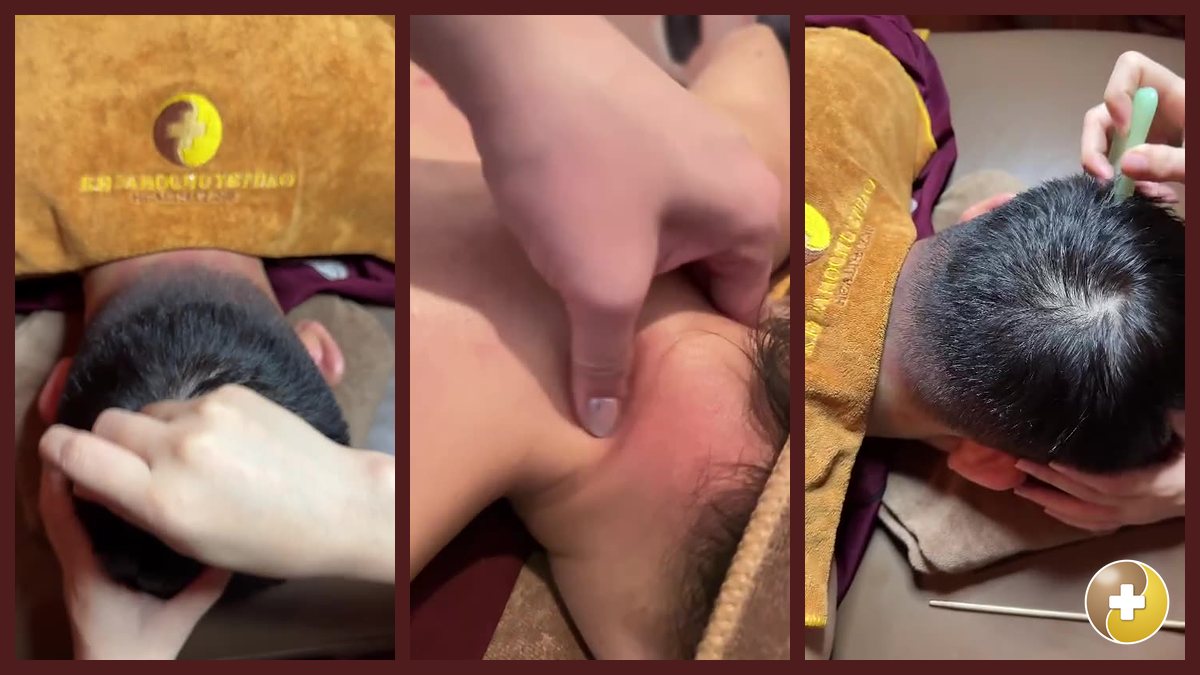
Quick answer: Calf pain usually comes from tired or strained muscles, cramps after exercise, long standing or sitting, unsuitable shoes, or pain travelling down from the lower back. One swollen, warm, red calf may be a blood clot and needs a doctor at once. Tong Gia Acupoint Wellness (Huyệt Đạo Tống Gia) in District 12 and Vinhomes Grand Park, Ho Chi Minh City, cares for tight, tired calves by hand.
Want Lương Y Tống Văn Huynh’s team to read your spine and posture in person?
What is calf pain?
The calf is the muscle mass at the back of the lower leg, between the back of the knee and the heel. In Western medical terms it has two main layers: the gastrocnemius near the surface, the two bellies you see when you rise onto your toes, and the soleus underneath. Together they form the Achilles tendon. Every step, every climb up the stairs and every stride of a run uses the calf to push you forward. It is often called the "second heart", because each contraction squeezes the deep veins and pumps blood from the legs back towards the heart.
Because it works so hard, the calf complains often: a dull ache, soreness, tightness, a sharp pulling pain, tenderness when pressed, pain when the leg is straightened, or a heavy, leaden feeling. It may be one calf or both; it may come on while walking, at night, or seemingly out of nowhere.
So there is no single answer to "what does calf pain mean". It is a symptom, not the name of a condition. Most cases involve the muscle itself: fatigue, tightness, cramps or overload after exercise. Some causes, however, need a prompt medical check, such as a clot in a deep vein, narrowed leg arteries, or an irritated nerve root in the lower back. This guide sorts the common causes into groups, shows the warning signs, and explains how Tong Gia looks at the calf through Eastern wellness, Y Tướng Học (face and body reading) and the spinal nerve-reflex system.
In Ho Chi Minh City, Tong Gia often sees calf pain in people who stand through long shifts, such as shop staff, cooks and hairdressers; in runners, footballers and badminton or pickleball players around Thu Duc and Vinhomes Grand Park; in office workers who sit all week and then hike or walk all weekend; in women who wear heels; and in less active older adults. Expats and visitors who suddenly walk far more than at home in the heat are another familiar group.
Common causes: habits, work, posture and environment
These groups follow Western medicine. They are here to help you describe what is happening, not to label it yourself, and several may apply at once.
- Tired, overloaded muscle. A longer run, stairs, hiking, skipping, football, a leg day at the gym or a full day of sightseeing. Tiny strains in the muscle fibres make the calf sore, usually worst 24 to 48 hours later, then fading. This is the most common and usually harmless group.
- Muscle strain or small tear. A jump or a sudden sprint, sometimes with a "pop" or a feeling of being kicked in the calf, then sharp pain, difficulty rising onto the toes and perhaps bruising. Common in middle-aged racquet players who skip the warm-up. Rest and get it checked.
- Cramps and spasm. A strong involuntary contraction with a hard knot, lasting seconds to minutes, often at night, while swimming or late in a match, leaving the calf sore for the day. Linked to fatigue, fluid and electrolyte loss in the Saigon heat, and cold air-conditioning on the legs.
- Standing or sitting too long. Standing still keeps the calf working to hold balance; sitting all day leaves it almost idle, so the "pump" weakens, blood and fluid pool and the legs feel heavy and tight by evening.
- Shoes and gait. High heels keep the calf shortened; switching to flats then stretches it painfully. Thin soles, worn running shoes, flat feet, high arches or a leg-length difference make one calf work harder, which is why pain is often one-sided.
- Pain travelling from the lower back or buttock. An irritated lumbar or sacral nerve root, for example from a disc problem, can send pain, numbness or tingling from the buttock down the back of the thigh into the calf. Rubbing the calf alone does little, because the source is higher up.
- Blood vessels and general health. A deep vein clot (one calf swollen, painful and warm), varicose veins, narrowed leg arteries (pain after walking a set distance that eases with rest, more common in smokers and people with diabetes), a cyst behind the knee, diabetic nerve damage, electrolyte imbalance, after a viral fever, or certain prescribed drugs. These cannot be told apart at home.
| Type of calf pain | Often linked to (Western view) | What to do |
|---|---|---|
| Both calves sore 1–2 days after running or hiking | Muscle overload | Rest, gentle stretching, easy walking |
| Sudden sharp pain on a jump, bruising | Strain or tear | Stop, cool it, get checked |
| Hard knot at night | Cramp, dehydration, cold | Stretch, drink enough, keep warm |
| Heavy and tight by evening | Pooling, too little movement | Walk, raise the legs, rotate ankles |
| From buttock to calf with numbness | Lumbar–sacral nerve root | Care for the back too; check if weak |
| One calf swollen, warm, red | Possible clot | See a doctor now, no massage |
| Must stop walking, eases with rest | Possible narrowed artery | Vascular check |
Other signs to watch
- One side or both: both calves after exercise usually means muscle; one side with swelling needs more caution.
- Swelling, warmth, redness or shiny skin on one calf, or one calf measuring larger than the other.
- Numbness, tingling or weakness: trouble rising onto the toes, tripping, a dropping foot.
- Back or buttock pain on the same side.
- Cold, pale legs, thinning leg hair, scratches that close slowly.
- Twisting visible veins, heavy itchy legs, ankle swelling by evening.
- Pain that is worse at night or at rest, with fever or weight loss.
- A recent long flight or bus trip, childbirth, a cast or a long time in bed.
A simple tip: for a few days, note when it hurts, which side, what kind of pain, any swelling, which shoes you wore and what activity you did. These notes help both medical staff and a Tong Gia practitioner understand you.
When to see a doctor
Please see a doctor first, and do not rely on massage alone, if any of these apply:
- One calf swollen, painful, warm and red, especially after a long flight, childbirth, surgery or a long time in bed: get checked at once, as this can be a blood clot, and do not have that area massaged. With chest pain, breathlessness or cold sweats, call 115 (Vietnam's emergency number) straight away.
- Sudden sharp pain with a "pop", bruising, and being unable to rise onto your toes.
- Calf pain that forces you to stop after a short walk and eases with rest, again and again; cold, pale legs.
- Pain with numbness, weakness, muscle wasting, bladder changes or numbness around the back passage.
- Pain with fever, unexplained weight loss or ongoing tiredness, or pain that grows at night while resting.
- Diabetes, heart or vascular disease, blood thinners, or pregnancy.
- Pain that does not ease after one to two weeks of rest and self-care.
If a doctor is already following you, keep to that advice and tell the practitioner before the session. This is a wellness service, not medical care.
The Y Tướng Học view: Liver sinews, Spleen muscles, Kidney bones
Y Tướng Học rests on one idea: what is inside shows outside. In the Tong Gia curriculum, calf aches, heaviness and tightness relate mainly to three organ systems of Eastern wellness:
- The Liver governs the sinews and stores blood. It nourishes tendons and ligaments and sends blood to the muscles during movement. The curriculum lists dry eyes, brittle nails and cramps under Liver blood deficiency, and stiff muscles, cramps and reduced flexibility when the Liver is weak. Long-term anger or stress makes Liver qi stagnate, so muscles tighten.
- The Spleen governs muscle and the four limbs. When it is weak, arms and legs feel tired and weak and muscles slack; when it moves fluids poorly, there is puffiness and heaviness. This is the heavy, sluggish calf rather than the sharp one.
- The Kidney governs the bones. Reduced Kidney function shows as an aching lower back, weak knees and legs that tire quickly when standing; Kidney yang deficiency adds cold hands and feet.
What you can observe yourself:
- The calf to the touch: the curriculum describes healthy flesh as soft, warm and springy, bouncing straight back when pressed. When this sign is off, the muscle becomes slack, cool and slow to spring back, with heavy limbs; or, in another body type, rock-hard, dry and tender, linked to stagnation and mental pressure.
- Nails and eyes (Liver): thin, ridged, brittle nails; eyes dry and tired by evening.
- Lips and tongue (Spleen): pale, dry lips; a puffy tongue with tooth marks.
- Ears and lower back (Kidney): thin ear rims; a cool lower back, tired knees.
These are cues for caring well, not labels. Learn more on our face reading for wellness page.
Spine segments and nerve-reflex areas involved
In the Tong Gia curriculum, the lumbar segments L1–L5 serve digestion, kidneys, urinary and reproductive organs and the legs; the sacral segments S1–S5 serve elimination and the pelvic floor. The muscle–bone–joint group, which includes sciatic pain and limb numbness, combines work on C5–C7, L1–L5 and S1–S5. In Western anatomy, the lower lumbar and upper sacral roots form the sciatic nerve, whose tibial branch drives the calf muscles. So Tong Gia reads the lower back, not only the calf.
| Segment / area | Nerves / function | Typical signs | Organ system |
|---|---|---|---|
| D7–D9 (Liver shu area) | Liver and gallbladder, mid-back muscles | Tight muscles, cramps, dry eyes | Liver |
| D11–D12 (Spleen and Stomach shu) | Digestion, making qi and blood | Tired, heavy legs, slack muscle | Spleen |
| L2 (Kidney shu, Mingmen) | Kidneys, lumbar muscles | Tired back and knees, cold legs | Kidney |
| L4–L5 | Lower lumbar roots (Western view): front of shin, big toe | Outer shin ache, tired ankles | Liver, Kidney |
| L5–S2 | Sciatic nerve, tibial branch (Western view): calf | Pain or numbness from buttock to calf | Liver, Kidney |
The curriculum also uses "paired work": the key point on the spine and its partner point on the limb are worked together, here the buttock, back of the thigh, back of the knee, calf and Achilles tendon.
How Tong Gia works: spinal nerve-reflex balancing massage
The method was built by Lương Y Tống Văn Huynh, a master of traditional Vietnamese wellness and founder of Tong Gia Acupoint Wellness, over more than 13 years of Eastern wellness practice, Y Tướng Học and spinal nerve-reflex balancing. A session for calf pain follows these steps:
- Observe and ask: which side, since when, when it hurts, any swelling, warmth, numbness or weakness, recent travel or training, diabetes, heart disease, pregnancy or blood thinners, and whether you have had a check. A swollen, warm calf is not worked on; you are advised to see a doctor. Then nails, eyes, lips, ears and calf texture are read.
- Read the spine by hand: skin temperature, the muscle layer, the shape of each vertebra and your own sensations, comparing left with right, upper with lower, spine with limb.
- Locate the key zone and point: usually in the lower back–sacrum and mid-back. Only "excited" zones (warm, tight, more painful) are worked directly.
- Release the muscles: back, lower back, buttocks, back of the thigh, back of the knee, then calf and Achilles tendon, in a rhythmic "sensation wave" whose pressure builds from a single finger according to your feedback. Hard calves are worked slowly and deeper over time; slack, cool calves gently. Bulging veins are never pressed directly.
- Press the right acupoints: Kidney shu, Mingmen and Zhishi on the lower back; Spleen shu; Weizhong in the centre of the knee crease ("for back pain, look to Weizhong"); Ququan at the inner knee crease, used for tight sinews and cramps; Yinlingquan, Zusanli; Sanyinjiao (never in pregnancy); Taixi between the inner ankle bone and the Achilles tendon.
- Stop at the right moment: when the skin over the key point turns from dry to slightly moist and its temperature shifts the right way; at once if anything feels wrong.
- Home guidance: calf stretches, how to stand at work, shoe choice and how to build running distance.
Suitable services (same price at both branches; see prices):
- Tired, heavy legs care, 60 minutes: 500,000 VND (about 19 USD). For calves that ache or feel heavy after standing, walking or training.
- Lower back care, 60 minutes: 550,000 VND (about 21 USD); first visit 399,000 VND (about 15 USD). When calf pain comes with lower back or buttock pain.
- Extra 30 minutes on one area: 199,000 VND (about 8 USD). To spend longer on the legs.
Active people can read our massage after running in Thu Duc Q&A and the sports recovery massage page; leg care is on the foot and leg massage page.
A typical session
This is a composite of many sessions, not one guest's story. A man of about 40 who works in an office in Thu Duc took up running two months ago and recently increased his distance. For a few weeks both calves have ached, they feel tight when he steps out of bed, the left is worse, and sometimes a mild ache runs down from the buttock. He has already had a medical check; a vein ultrasound was normal and he was told to rest from running for a few days and stretch. The practitioner notices ridged nails, eyes dry from screen work, and a left calf hard as wood and tender. Reading the spine, the left side around L5–S1 is warmer and tighter, and the mid-back is tense. The session releases the back with Liver, Spleen and Kidney shu points, moves to the buttock, back of the thigh and knee crease with Weizhong and Ququan, then works the calf and Achilles tendon with Taixi. He feels strong pressure in the left buttock and calf at first; halfway through the calf softens and the legs warm. He is advised to build distance slowly, stretch after every run, replace his worn shoes and stand up about once an hour at his desk.
What guests feel during and after
The most tender spots are usually the calf, the back of the knee and the buttock; many are surprised how tight their buttocks and lower back are. As these release, the legs feel lighter and warmer and walking eases. Many guests sleep well afterwards; some feel mild soreness in the calf for about a day, as after exercise. Everyone is different. Tong Gia helps the related muscles and spinal areas find balance again and does not promise the pain will be gone after one session. If the cause is vascular, nerve-related or needs medical follow-up, massage is only a relaxing companion to that care.
Want Lương Y Tống Văn Huynh’s team to read your spine and posture in person?
Home care and prevention
- Rest the smart way: gentle walking keeps blood moving; cut training intensity for a few days and raise running or walking distance gradually each week.
- Stretch the calves daily: hands on a wall, back leg straight with the heel down, hold 20–30 seconds each side, then bend the back knee slightly to reach the deeper layer. Never stretch a swollen, warm calf.
- Use the calf pump: on long standing or sitting shifts, rise onto your toes 15–20 times about once an hour, rotate the ankles and walk for a few minutes; in the evening rest with the legs slightly raised.
- Drink enough and keep legs warm: replace fluid and electrolytes when playing sport in the heat; do not let air-conditioning blow on your legs at night; a warm foot soak for 15–20 minutes is fine when the calf is not swollen or warm.
- Good shoes and a calm mind: cushioned, well-fitting, low-heeled shoes; replace running shoes when the soles wear. The curriculum notes that long-term stress tightens the muscles, so sleep and calm are part of calf care. More in our traditional Vietnamese massage Q&A and back massage Q&A.
Book a session
- District 12: 225 Dương Thị Mười, Phường Tân Chánh Hiệp (Tan Chanh Hiep Ward, District 12). Open 8:00–19:00 daily.
- Vinhomes Grand Park, District 9: Căn T16-21 khu Manhattan, Phường Long Bình, TP. Thủ Đức (Unit T16-21, Manhattan zone, Long Binh Ward, Thu Duc City). Open 9:00–20:00 daily.
Book online or call, Zalo or WhatsApp +84 888 264 559. Tell us which calf, since when, any swelling or numbness, whether you have had a check, and any diabetes, heart disease or pregnancy. Real guest reviews are on each branch's Google Maps page. Living in or visiting Ho Chi Minh City? Come and try a Vietnamese Eastern wellness method built by Lương Y Tống Văn Huynh.
Visit us
- Đông Y Huyệt Đạo Tống Gia Quận 12 (District 12)
225 Dương Thị Mười, Phường Tân Chánh Hiệp, Quận 12, HCMC · 8:00–19:00 daily · 0888 264 559 · Directions on Google Maps - Đông Y Huyệt Đạo Tống Gia Quận 9 (Vinhomes Grand Park, District 9)
Căn T16-21 khu Manhattan, Vinhomes Grand Park, Phường Long Bình, TP. Thủ Đức, HCMC · 9:00–20:00 daily · 0888 264 559 · Directions on Google Maps
Want Lương Y Tống Văn Huynh’s team to read your spine and posture in person?
FAQ
What causes calf pain? Calf pain is a symptom, not the name of a condition. Most often it comes from tired or tight muscles, cramps after exercise, long standing or sitting, or unsuitable shoes. Some cases come from a lower back nerve root, varicose veins, narrowed arteries or a blood clot and need a check. One swollen, warm, red calf needs a medical check at once.
Is aching calf pain dangerous? Aching in both calves after running, stairs or a long walk is usually muscle overload and fades within days. It is a warning sign when one calf is swollen, warm and red, hurts more when you pull the foot up, or comes with breathlessness: get checked at once and call 115 for chest pain.
Why do my calves hurt for no reason? Often there was a reason you did not notice: a long day standing, new shoes, cold air-conditioning on the legs or a cramp in your sleep. If the pain lasts, comes with swelling, numbness, weakness or fever, or follows a long trip or bed rest, get a medical check.
What helps calf pain at night? Night calf pain is often a cramp, tired muscle, too little fluid or cold legs. Stretch each calf for 20–30 seconds before bed, drink steadily through the day and keep air-conditioning off your legs. Pain every night, or pain while lying still, deserves a check.
Why do my calves hurt when walking? When you have just started walking a lot, it is usually unaccustomed muscle. If you must stop after a short distance, the pain eases after a few minutes and this repeats, especially in smokers or people with diabetes, it may involve the leg arteries and should be checked.
Should I get a massage for calf pain? For tired, tight or post-cramp calves, muscle release and acupressure help them soften, warm up and move more freely. No massage on a swollen, warm, red calf or on a fresh bruised injury. Tong Gia asks questions first and does not promise the pain will be gone after one session.
Author: Lương Y Tống Văn Huynh – founder of Huyệt Đạo Tống Gia, a master of traditional Vietnamese wellness with over 13 years in Eastern wellness care, Y Tướng Học (face reading) and spinal nerve-reflex balancing massage.
Updated: 2026-11-17
Related guides
- Cramp while swimming: six steps in the water, common causes, and how Tong Gia can help
- Calf pain: seven common causes, warning signs, and how Tong Gia can help
- Calf pain after running: seven common causes, warning signs, and how Tong Gia can help
- Knee pain from standing all day: why standing jobs strain the knees and how to look after them
- Knee pain in older adults: common causes, when to get checked and safe wellness care
- Tired legs from varicose veins: why legs feel heavy, when to get checked, and how Tong Gia cares for them safely
This is a wellness service, not medical care.