
Tightness on the left side of the chest: the usual causes, the warning signs that mean 115, and what Tong Gia can help with once you are checked
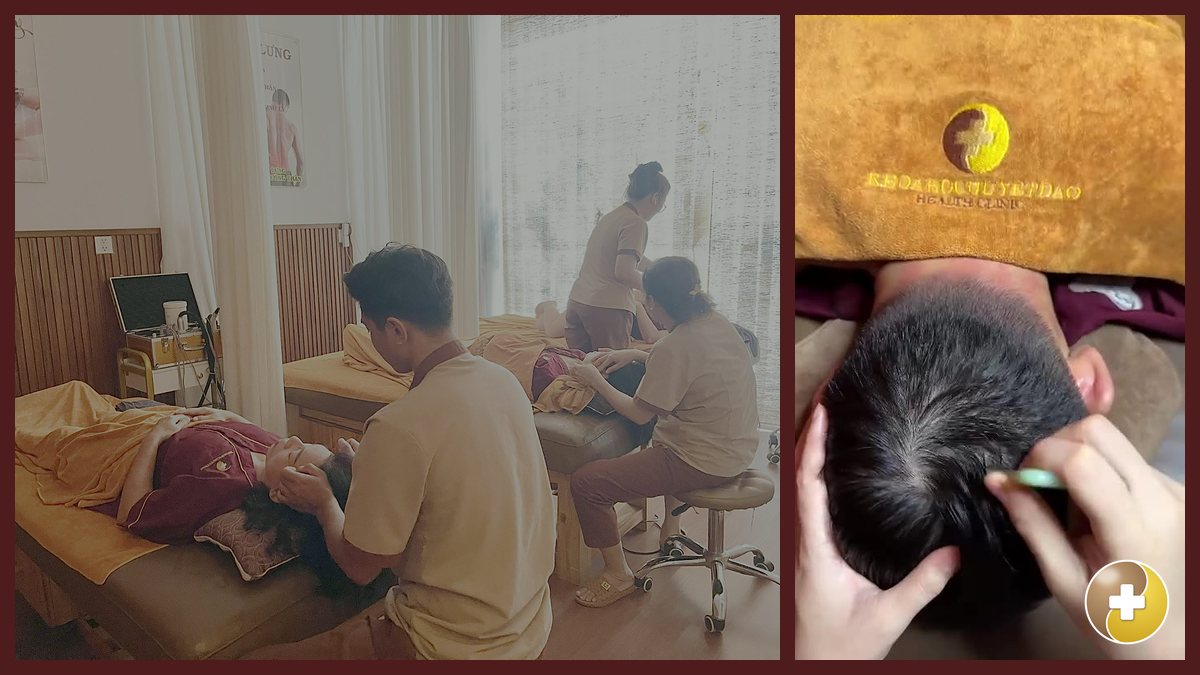
Quick answer: Left chest tightness can come from chest muscles, ribs, the stomach, the lungs, anxiety or the heart, so an unexplained episode needs a medical check first. Crushing pain, breathlessness, cold sweat, or pain spreading to the left arm or jaw: call 115 now. Once you are cleared, Tong Gia Acupoint Wellness (Huyệt Đạo Tống Gia) in Ho Chi Minh City helps the chest and upper back (D1–D5) let go.
Want Lương Y Tống Văn Huynh’s team to read your spine and posture in person?
Please read first: if you have never been checked for this tightness, do not get the chest massaged or pressed. Crushing chest pain, shortness of breath, cold sweat, pain spreading to the left arm, shoulder or jaw: call 115 (the emergency number in Vietnam) right away. The wellness part of this article is for people who have already been checked.
Left chest tightness: what is going on?
People describe it in many ways: a hand pressing on the chest, a small stab under the left breast when breathing in, or a band of tension that wraps from the left chest round to the shoulder blade. Because the heart sits in the chest, the first worry is always "is it my heart?". That worry is right to have. But the left chest is also a crowded place.
According to the Tong Gia curriculum, which follows standard Western anatomy here, the heart sits in the middle of the chest between the two lungs, behind the breastbone, about two thirds of it to the left, resting on the diaphragm inside its sac. Around it are the left lung and its lining, the ribs and rib cartilage, the large and small chest muscles, the muscles between the ribs, and the intercostal nerves that come out of the upper spine. Just under the diaphragm lie the stomach, slightly to the left, and the spleen. The curriculum states it plainly: pain on the left side of the chest is not always the heart; it can come from muscle, ribs or the stomach. The opposite is also true: never skip a heart check because you assume it is "just a muscle".
So there is no single answer to "what does left chest tightness mean". The answer lies in the context: when it comes, how long it lasts, whether it appears on effort or at rest, whether pressing on the spot hurts, whether it spreads, and what comes with it. In Ho Chi Minh City, Tong Gia often hears about left chest tightness from office workers hunched over laptops, riders and delivery drivers who carry loads on one side, people who have just restarted push-ups at the gym, people who eat late and lie down straight after, new parents who carry a baby on one arm, and anyone going through a stressful stretch at work.
Common causes, group by group
The table below shows common groups of causes from the Western medical view. It helps you describe your symptoms clearly to a doctor; it is not a way to label yourself.
| Group | Typical triggers | What the tightness often feels like |
|---|---|---|
| Muscles, ribs, rib cartilage | Lifting, heavy training, long hours hunched, a knock | Sore to the touch at one spot; worse when twisting or raising the arm |
| Intercostal nerves, upper spine | Tight upper-back muscles, poor posture | A sharp line along a rib, sometimes from the back to the front |
| Stomach, oesophagus | Reflux, lying down after a big meal, fatty food, alcohol | Burning behind the breastbone, sour burps, dry cough |
| Lungs, lung lining | Chest infection, long-lasting cough | Worse on deep breaths or coughing; may come with fever |
| Anxiety, shallow breathing | Work pressure, poor sleep, frequent sighing | A tight band, cannot get a full breath, raised shoulders |
| Heart and vessels | Coronary artery disease, rhythm or valve problems | Heavy pressure on exertion, eases with rest, spreads to the left arm or jaw |
The curriculum lists the classic picture of coronary artery disease as chest pain or tightness on exertion that may spread to the left arm or jaw and settles with rest, and a heart attack as severe, lasting chest pain with sweating, breathlessness and nausea: an emergency. The main risk factors it names are nicotine, high blood pressure, diabetes and high cholesterol, and young people are not exempt, because weight gain, inactivity and high blood pressure bring heart disease on earlier. On the digestive side, reflux shows as sour burps, burning behind the breastbone, dry cough and hoarseness; in the Eastern view, Stomach qi should move downwards, and when it rises it brings belching, hiccups and reflux.
Signs that often come with it
- Linked to effort? Worse on stairs or brisk walking, better at rest: get your heart checked soon.
- Sore when pressed? Pain at one spot, worse with twisting, leans towards muscle or ribs, but persistent pain still needs a check.
- Burning, sour taste, worse after meals? Points towards the stomach and oesophagus.
- Worse on a deep breath or cough, with fever? Points towards the lungs.
- Spreading? To the left arm, shoulder, neck or jaw is a warning sign.
- Palpitations, irregular beat, dizziness, swollen ankles in the evening, bluish lips? The curriculum lists these among signs of reduced heart function, and notes that one sign alone proves nothing; an ECG or heart ultrasound may be needed.
When to see a doctor
The first rule in the Tong Gia curriculum for anything involving the heart is: chest pain, breathlessness or signs of stroke mean call 115 immediately, with no massage and no acupressure. The curriculum also calls the phrase "left chest pain, let me massage it" dangerous. Please go to a medical facility, or call 115, if you have:
- Crushing chest pain, shortness of breath, cold sweat, nausea: call 115.
- Chest pain or tightness lasting more than 5–10 minutes that does not ease with rest.
- Pain spreading to the left arm, shoulder, neck, jaw or back.
- Sudden breathlessness, or breathlessness lying flat.
- Fainting or near-fainting, a racing heart with dizziness.
- Facial droop, weakness on one side, slurred speech, blurred vision, loss of balance: signs of stroke, call 115.
- Tightness after a fall or crash, or with coughing blood or high fever.
- A first episode in someone with high blood pressure, diabetes, high cholesterol, nicotine use or heart disease in the family, even if it has passed.
If you have a stent or pacemaker, take blood thinners, or are pregnant, ask your doctor before any massage and tell the practitioner. This is a wellness service, not medical care. As the curriculum puts it, massage helps you relax; it does not open narrowed coronary arteries.
The face-reading view: how chest tightness shows on the outside
Once serious causes are ruled out, the Eastern view looks at the Heart system. In the Tong Gia curriculum, the Heart is more than the organ: it governs blood and vessels and houses the spirit, meaning mood and sleep, and the Pericardium is its protective wall. Heart yang deficiency shows as palpitations, chest tightness, feeling cold, cold hands and feet, and a pale or dusky face. Y Tướng Học (face reading for wellness) holds that "what is inside shows outside". Practitioners look at:
- Ấn Đường, the space between the brows: deep, narrow, with vertical lines and tight muscle, it is read as Heart blood stagnation: a pressed chest, frequent sighing, palpitations.
- Brows that meet in the middle: read as deep Liver qi stagnation blocking the Heart and Lung: stress-related reflux, chest tightness, sighing.
- The tip of the nose: the curriculum reads it as the mirror of the heart; a grey-blue tip or fine red-purple veins is a reason to ask firmly about a heart check.
- Complexion and tongue: a pale or dusky face and a pale, puffy tongue lean towards Heart yang deficiency; a red tongue tip leans towards Heart fire.
- Posture: the left shoulder rolled forward and shoulders lifting on every breath is the shallow chest breathing seen with muscular tightness.
This is school-based reference knowledge used to choose where to examine on the back, never a substitute for a medical check. More on this approach in Eastern face reading for wellness.
Spine segments and nerve-reflex zones involved
In the curriculum, the neck (C1–C7) relates to the head, neck and arms; the thoracic spine (D1–D12) to circulation, breathing and digestion. In Western anatomy, the intercostal nerves leave the thoracic spine and run around the ribs to the front, so a knotted upper back can be felt as tightness in front.
| Segment | Nerve / function | Common sign | Organ (Eastern view) |
|---|---|---|---|
| C5–C7 | Neck, shoulder, arm | Stiff base of neck, tired left shoulder | Heart, Pericardium channels |
| D1–D3 | Upper back, breathing | Closed chest, shallow breathing | Lung, Heart |
| D4–D5 | Circulation; Jueyinshu below T4, Xinshu below T5 | Mild central tightness, palpitations | Pericardium, Heart |
| D4–D8 along the left ribs | Intercostal nerves | A sharp line along a rib | Liver qi stagnation when irritable |
| D11–D12 | Digestion; Spleen and Stomach back points | Burning, heaviness after meals | Spleen, Stomach |
The table shows related zones only, to guide where to examine. Practitioners always compare left with right and upper with lower, and work only on "excited" zones (warmer skin, tight muscle, more tenderness), never directly on "inhibited" cooler zones.
The Tong Gia method: spinal nerve-reflex balancing massage
This Vietnamese traditional method was built by Lương Y Tống Văn Huynh, a master of traditional Vietnamese wellness and founder of Tong Gia, with over 13 years in Eastern wellness, Y Tướng Học and spinal nerve-reflex balancing. For people who have been checked and cleared, a session runs like this:
- Screening and observation: your check results, heart and blood-pressure history, stents, pacemaker, blood thinners, pregnancy. Any warning sign and the session stops. Then the brows, nose tip, complexion, tongue, posture and resting breathing rate.
- Reading the spine by hand: skin temperature, muscle layer, vertebra shape and your sensations, comparing left with right from the neck to the lower back.
- Muscle release: base of the neck, trapezius, between the shoulder blades, along the spine; the left shoulder is eased back. Light pressure only on the chest, with even rhythm and gentle vibration.
- Acupressure: gentle Xinshu and Jueyinshu on the back, Neiguan and Shenmen on the wrist for 1–2 minutes each side, very light Danzhong on the breastbone, finishing at Baihui on the crown.
- Home guidance: 4–6 breathing, a chest stretch, desk posture, earlier dinners.
A typical session
An office worker who gets left chest tightness in the afternoon, already checked by a cardiologist, lies face down. The practitioner finds the left side of the neck base stiff and the muscle between the left shoulder blade and spine thicker and warmer; pressing near D4–D5 sends a mild ache to the front. After slow vibration and gliding strokes, the client turns over for a gentle chest opening and wrist points. Midway, breathing slows and deepens; many people say the chest "feels looser". Results vary; Tong Gia helps the body rebalance and does not promise the tightness will be gone.
Suitable services and prices
- Heart wellness care, 75 min: 750,000 VND (about 29 USD), all steps above.
- Neck and shoulder care, 60 min: 550,000 VND (about 21 USD), first visit 399,000 VND (about 15 USD), when the cause is clearly muscular.
- Extra 30 minutes on one area: 199,000 VND (about 8 USD).
Full list on prices. See also acupressure massage in Saigon: Q&A and neck and shoulder massage Q&A.
Want Lương Y Tống Văn Huynh’s team to read your spine and posture in person?
Self-care at home and prevention
- 4–6 breathing: in through the nose for 4 seconds into the belly, out slowly for 6, for 5–10 minutes a day.
- Doorway chest stretch: forearms on the frame at shoulder height, step forward gently, hold 20–30 seconds, 3 times. Stop and get checked if the tightness grows.
- Press Neiguan: two thumb-widths above the wrist crease between the tendons, 1–2 minutes each side when stressed.
- Eat dinner earlier and stay upright after it: a slow 10–15 minute walk; less fried food, alcohol and afternoon coffee.
- Long-term heart care: under 5 g of salt a day, about 150 minutes of exercise a week, no nicotine, regular blood-pressure checks, enough sleep.
Curious about the wider tradition? Read traditional Vietnamese massage Q&A.
Book a session
- District 12: 225 Dương Thị Mười, Tân Chánh Hiệp Ward (street address in Vietnamese for taxis). Open 8:00–19:00 daily.
- Vinhomes Grand Park, District 9: Unit T16-21, Manhattan zone, Long Bình Ward, Thủ Đức City. Open 9:00–20:00 daily.
Call, Zalo or WhatsApp +84 888 264 559, or book online. Please mention whether you have been checked, the results, and when the tightness comes. Real ratings and reviews are on each branch's Google Maps profile.
Visit us
- Đông Y Huyệt Đạo Tống Gia Quận 12 (District 12)
225 Dương Thị Mười, Phường Tân Chánh Hiệp, Quận 12, HCMC · 8:00–19:00 daily · 0888 264 559 · Directions on Google Maps - Đông Y Huyệt Đạo Tống Gia Quận 9 (Vinhomes Grand Park, District 9)
Căn T16-21 khu Manhattan, Vinhomes Grand Park, Phường Long Bình, TP. Thủ Đức, HCMC · 9:00–20:00 daily · 0888 264 559 · Directions on Google Maps
Want Lương Y Tống Văn Huynh’s team to read your spine and posture in person?
FAQ
What causes tightness on the left side of the chest? It can come from chest muscles, ribs, intercostal nerves, the stomach and oesophagus, the lungs, anxiety or the heart. Only a medical check can tell. Heavy pressure on exertion, spreading to the left arm or jaw, with sweating or breathlessness: call 115.
Is left chest tightness with shortness of breath dangerous? It can be, because heart and lung causes must be ruled out first. Sudden, lasting more than 5–10 minutes, or with sweating and nausea: call 115. Even mild, passing episodes deserve a check soon.
My chest hurts when I press on it. What does that mean? Pain at one spot that is worse when pressing, twisting or lifting the arm often points to muscle or rib cartilage. Do not self-label, though; if it lasts or you have heart risk factors, get checked.
Can I get a massage for left chest tightness? Not before the cause is known. Once you are cleared, tight chest muscles, neck base and upper back (D1–D5) can be eased with light muscle release and breathing work, for example the 75-minute heart wellness care at 750,000 VND (about 29 USD).
What can I do at home for chest tightness from stress? Slow 4–6 belly breathing for 5–10 minutes, pressing Neiguan on the wrist, a doorway chest stretch, enough sleep and less afternoon coffee. If it gets worse or changes, stop and get checked.
Author: Lương Y Tống Văn Huynh – founder of Huyệt Đạo Tống Gia, a master of traditional Vietnamese wellness with over 13 years in Eastern wellness care, Y Tướng Học (face reading) and spinal nerve-reflex balancing massage.
Updated: 2026-11-17
Related guides
- Red face when stressed: why it happens, when to see a doctor, and what face reading notices
- Anxious when your blood pressure is taken: why the heart races and the number jumps, how to measure properly, and what Tong Gia can and cannot do
- Nervous speaking in public: why the heart pounds and the voice shakes, and how to stay steadier at talks and interviews
- Waking up with a racing heart: what morning heartbeats mean, when to get checked, and how Tong Gia helps the body settle
- Cold hands and feet in women: why it happens more often and how to care for it
- Heart racing after a big meal: the link between stomach and heart, when to get checked, and how Tong Gia helps Heart and Spleen settle
This is a wellness service, not medical care.