
Why neck and shoulder pain returns after a massage: five common reasons and how to make the relief last in Ho Chi Minh City
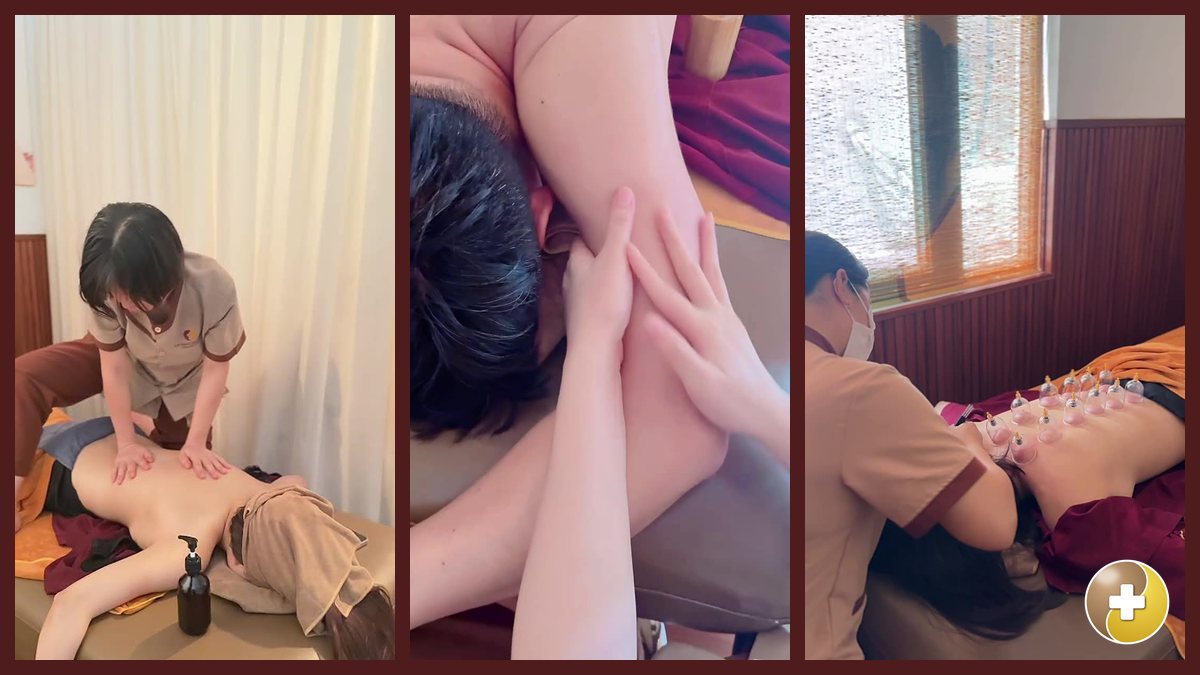
Quick answer: Neck and shoulder pain usually returns after a massage because daily habits keep tightening the muscles, the session only reached the surface, pressure was too hard, stress and poor sleep continue, or the pain is not muscular. Tong Gia in District 12 and District 9, Ho Chi Minh City reads the spine by hand.
Want Lương Y Tống Văn Huynh’s team to read your spine and posture in person?
Why does neck and shoulder pain come back after a massage, and who gets this?
Many guests say the same thing: "I felt great after the massage, then two or three days later my neck was heavy again." In Western physiology terms, a massage lengthens muscle fibres, brings blood in and quiets sensory nerve endings, so pain eases. But muscle adapts to what you do every day. If you spend eight hours a day looking down at a laptop, the trapezius and levator scapulae hold your head for eight hours and tighten right back. Deep knots, often called trigger points, can also keep pulling the outer layer tight if they were never softened.
So pain returning does not mean massage is useless; it means whatever tightens the muscle is still there, or the session did not reach the source. In Ho Chi Minh City it is common among laptop workers, motorbike commuters, people under air conditioning blowing on the neck, parents of small children, and anyone who only books a massage once the pain is bad.
Common reasons pain returns after a massage
| Reason | How you notice it | What to do |
|---|---|---|
| 1. Daily habits unchanged | Pain returns during work hours, worse by evening | Screen at eye level, move every 45–60 minutes |
| 2. Only the surface was worked | Instant relief, tight again within hours | Choose a practitioner who reads under the skull, base of the neck, inner shoulder blade |
| 3. Pressure too hard | Sore, bruised, stiffer the next day | Gradual pressure; speak up at sharp pain |
| 4. Ongoing stress | Raised shoulders, clenched jaw | Slow breathing, short breaks, enough sleep |
| 5. Poor sleep, bad pillow | Stiff on one side on waking | Adjust the pillow, aim for 7 hours |
| 6. Pain not from muscle | Numbness or weakness down the arm, night pain | Get checked first |
Surface versus source: rubbing the outer trapezius feels good immediately, but the source often sits deeper: the muscles under the skull around C1–C3, the levator scapulae attachment in the neck, and the inner edge of the shoulder blade around T1–T4. Pressure: pressed too hard, muscle guards itself and tightens; the Tong Gia curriculum builds pressure through 5 levels and only goes up when the muscle accepts it. Stress: the curriculum notes that long mental pressure tightens the scalp muscle and the shoulder-lifting muscles, so neck fatigue spreads into the head. Sleep: in Eastern terms the Liver stores blood at rest; short sleep leaves the sinews under-nourished.
Signs worth noticing
- Each relapse is worse and the relief window shorter.
- Pain on one side for months.
- Tingling or heaviness down the arm into the fingers.
- Headache at the back of the head, dizziness when turning the neck.
- Waking up from shoulder pain when you turn over.
- Bruising and soreness for days after every massage.
These help the practitioner decide where to read more carefully; they are not used to name any illness.
When to see a doctor
Please see a doctor at a medical facility first, rather than only booking massages, if you have:
- Neck pain spreading down the arm with numbness, weakness or dropping things.
- Pain after a fall, a knock or a traffic accident.
- A stiff neck with fever or a severe headache.
- Night pain that rest does not ease, with weight loss or unexplained tiredness: get checked in parallel.
- Dizziness, double vision, slurred speech, a drooping face or one-sided weakness: call 115 now.
- Left shoulder-blade pain with chest tightness, shortness of breath or cold sweat: call 115 now.
This is a wellness service, not medical care. If you have been checked and cleared for massage, bring the results so the practitioner knows where to go gently.
The Y Tướng Học view: the organ behind recurring tension, and who tends to relapse
Y Tướng Học (face reading for wellness) in the Tong Gia curriculum follows the principle "the signs show outside, the organs lie inside". For recurring neck tension, the key system is the Liver (Can) in its Eastern sense: it governs the sinews, keeps qi flowing smoothly and stores blood. Long anger or pressure makes Liver qi stagnate, circulation slows and relaxing is hard. The Gallbladder meridian, paired with the Liver, runs over the head and shoulders. People who sleep little and worry a lot often relapse faster for exactly this reason.
- Prominent cheekbones with little cover: linked with deep tendon tension and a tight, braided trapezius.
- Muscle hard as wood and tender: long-term deep tension that, the curriculum says, needs timely deep muscle release.
- Sword-shaped eyebrows: strong Liver qi and a tendency to tighten the neck tendons.
- An uneven face, one side larger: uneven circulation side to side, so pain often returns on one side.
Face reading only helps choose where to feel first; it never judges character or names a disease.
Spine and nerve-reflex areas involved
In the Tong Gia spinal nerve-reflex balancing curriculum, C1–C7 serve the head, face, neck and arms, and T1–T12 serve circulation, breathing and digestion. For muscle and joint complaints such as neck and shoulder pain, the curriculum combines C5–C7 with related zones.
| Vertebrae | Nerves, function | When pain returns | Related organ (Eastern view) |
|---|---|---|---|
| C1–C3 (base of skull) | Head, face; deep sub-occipital muscles | Stiff neck into the head, heavy head by evening | Liver, Kidney |
| C4–C7 (base of neck) | Neck, shoulders, arms; nerve roots to the arm | Heavy shoulders, ache into the upper arm | Liver governs the sinews |
| T1–T4 (between the shoulder blades) | Circulation, breathing | Tension between the blades, shallow breathing | Lung (T3), Heart (T4) |
| T7–T9 (mid-back) | Digestion, liver and gallbladder | Mid-back tightness under long stress | Liver, Spleen |
These are related areas, not findings about any illness.
The Tong Gia method: how it looks for the source
This Vietnamese Eastern wellness method was developed by Lương Y Tống Văn Huynh, a master of traditional Vietnamese wellness and founder of Tong Gia Acupoint Wellness (Huyệt Đạo Tống Gia), with over 13 years in Eastern wellness, Y Tướng Học and spinal nerve-reflex balancing. The difference is the order: feel by hand first, locate the zone and the point, and only then choose the technique.
- Observe: head posture, shoulder height, complexion; screen hours, sleep, when you last had a massage and how fast pain returned.
- Read the spine by hand along C1–C7 and T1–T9: skin temperature, muscle layer, vertebra shape and sensation, left against right.
- Locate the key point: from survey area to key zone to the smallest "root" that keeps the whole region tight, which surface rubbing tends to miss.
- Muscle release only on "excited" areas (warmer, tighter, more tender), building through 5 pressure levels.
- Acupressure with a sensation wave: an even rhythm of pleasant ache lets the muscle contract and release and the body adjust; stop when the skin turns from dry to slightly moist.
- Home tips and a sensible return rhythm.
A typical session: the guest has often tried several massage places and gets two or three good days each time. The practitioner sees a forward head and a raised left shoulder. The outer trapezius is not very hard, but deep under the left side of the skull and along the inner edge of the left shoulder blade the skin is clearly warmer, and the guest says "that's the spot". The practitioner works from outside in at the second and third pressure levels, never forcing. After about 40 minutes the neck turns further left. At the end: raise the laptop a hand's width and stretch every lunchtime.
Suitable services (single-visit prices; see prices and 60-minute first visit):
- Neck and shoulder care, 60 min: 550,000 VND (about 21 USD); first visit 399,000 VND (about 15 USD).
- Neck and shoulder care, 90 min: 750,000 VND (about 29 USD), time for the deep sub-occipital area, shoulder blades and mid-back.
- Add-on area, 30 min: 199,000 VND (about 8 USD), for the back or arms.
What guests feel: many realise the real spot is not where they had been rubbing; the key point gives a pleasant ache that spreads into warmth. Afterwards the shoulders feel lighter, the neck turns further and sleep is deeper; some feel mild soreness the next day. Tong Gia supports balance and does not promise the pain will not return, because daily habits decide how long relief lasts. See also the neck and shoulder massage Q&A, the Ho Chi Minh City neck massage experience and the acupressure experience.
Want Lương Y Tống Văn Huynh’s team to read your spine and posture in person?
Self-care at home to keep the relief longer
- Set up your desk: top of the screen at eye level, laptop raised with a separate keyboard, shoulders dropped.
- Short breaks every 45–60 minutes: stand, roll your shoulders back ten times, look into the distance, breathe slowly.
- Five minutes of stretching a day, and a warm compress on the neck for 10–15 minutes in the evening.
- Sleep and pillow: a pillow that keeps your neck in line when lying on your side; aim for 7 hours.
- Book on rhythm, not on pain: regular care while the shoulders are only slightly heavy stops muscles hardening into bands.
Booking
- District 12: 225 Dương Thị Mười, Phường Tân Chánh Hiệp, Quận 12 (District 12), daily 8:00–19:00.
- Vinhomes Grand Park: Căn T16-21 khu Manhattan, Phường Long Bình, TP. Thủ Đức (Thu Duc City, former District 9), daily 9:00–20:00.
WhatsApp or Zalo +84 888 264 559 (0888 264 559 in Vietnam), or book online; genuine Google Maps reviews are linked from each branch page. Mention "pain keeps coming back" so the practitioner plans time for the deep areas. If you live in or visit Ho Chi Minh City, come and try this Vietnamese method.
Visit us
- Đông Y Huyệt Đạo Tống Gia Quận 12 (District 12)
225 Dương Thị Mười, Phường Tân Chánh Hiệp, Quận 12, HCMC · 8:00–19:00 daily · 0888 264 559 · Directions on Google Maps - Đông Y Huyệt Đạo Tống Gia Quận 9 (Vinhomes Grand Park, District 9)
Căn T16-21 khu Manhattan, Vinhomes Grand Park, Phường Long Bình, TP. Thủ Đức, HCMC · 9:00–20:00 daily · 0888 264 559 · Directions on Google Maps
Want Lương Y Tống Văn Huynh’s team to read your spine and posture in person?
FAQ
Why does my neck pain come back after a massage? Usually because daily habits keep tightening the muscle, the session only reached the surface, pressure was too hard, stress and poor sleep continue, or the pain comes from a nerve root rather than muscle. With numbness or weakness in the arm, get checked.
What makes neck and shoulder pain keep recurring? A low screen, phone use, air conditioning on the neck, the wrong pillow, stress, short sleep and little movement are the usual suspects. In Eastern terms, stagnant Liver qi and too little blood nourishing the sinews also make muscles re-tighten.
Is it normal to feel sore after a neck massage? Mild soreness for a day is common. If pain grows, bruising is heavy, numbness spreads to the arm or it lasts more than 2–3 days, stop and get checked, and ask for lighter pressure next time.
How often should I get a neck and shoulder massage? It depends on how tense you are and how you work. Many desk workers start every 1–2 weeks and space it out once the shoulders feel lighter. Posture and daily stretching matter more; Tong Gia does not promise a set number of sessions.
Why do I constantly have neck and shoulder pain? Mostly because the trapezius, levator scapulae and muscles under the skull hold your head for hours, plus stress and short sleep. Sometimes wear in the neck or a nerve root is involved; numbness or weakness in the hand needs a check-up.
Air conditioning gives me neck pain. What helps? Turn the vent away from your neck, wear a light scarf, roll your shoulders every hour and use a warm compress in the evening. If it keeps returning, a 60-minute neck and shoulder session (first visit 399,000 VND) releases the deeper layers.
Author: Lương Y Tống Văn Huynh – founder of Huyệt Đạo Tống Gia, a master of traditional Vietnamese wellness with over 13 years in Eastern wellness care, Y Tướng Học (face reading) and spinal nerve-reflex balancing massage.
Updated: 2026-11-15
Related guides
- Neck and shoulder muscle strain: how it differs from everyday stiffness, what to do in the first 48 hours and when massage makes sense in Ho Chi Minh City
- Pain below the shoulder blade in Ho Chi Minh City: six causes, the warning signs, and how Tong Gia can help
- Shoulder joint pain in Ho Chi Minh City: six common causes, the warning signs, and how Tong Gia can help
- Trigger points: why a knot in the shoulder or hip sends pain to the head or leg, and how Tong Gia finds and releases it in Ho Chi Minh City
- What is muscle release? How it feels, who it suits and when to skip it
- Is a neck and shoulder massager worth it? What it does, where it stops, and when hands-on care helps in Ho Chi Minh City
This is a wellness service, not medical care.