
Pain in both shoulder blades: six common causes, the warning signs, and how Tong Gia can help
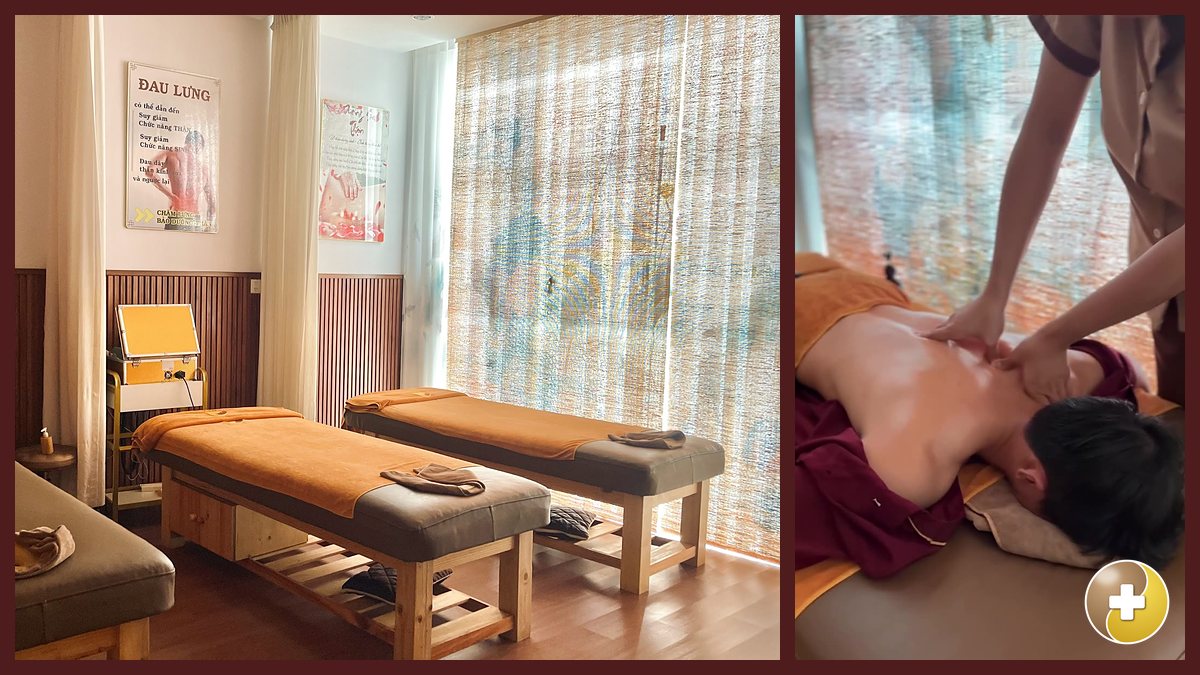
Quick answer: Pain in both shoulder blades usually comes from slouching with the head forward, stress, short sleep or the neck and upper spine; less often from body-wide inflammation, the heart or lungs. With chest tightness, breathlessness, weakness in both arms or sudden tearing pain, get help now. Tong Gia Acupoint Wellness (Huyệt Đạo Tống Gia), Ho Chi Minh City, cares for this area by hand.
Want Lương Y Tống Văn Huynh’s team to read your spine and posture in person?
What does pain in both shoulder blades mean?
This is when both shoulder blades ache, feel tired, heavy or burning at once: along the inner edges, across the tops spreading into the neck, or like a plank pressing across the upper back. Some feel a dull ache all day, some feel it build through the afternoon, some wake up with both blades stiff.
Pain in both shoulder blades is a different question from pain on one side. One-sided pain often points to an injury, a lopsided movement or carrying on one shoulder. When both sides hurt together, the cause is usually something acting on the whole body: posture all day, long stress, short sleep, the neck and upper spine, or less often a body-wide condition or an organ inside the chest. In Western medicine terms it is a symptom, not a disease.
In Ho Chi Minh City, Tong Gia Acupoint Wellness (Huyệt Đạo Tống Gia) sees it most in office workers and developers sitting 8 to 10 hours, teachers marking papers, tailors, accountants at month end, people working from home at low tables, students before exams and anyone under long stress. Many say it comes with poor sleep, headaches and shallow breathing.
Common causes: habits, work, posture and environment
From a Western medical view there are six usual groups; only a medical facility can confirm the cause.
1. Slouching with the head forward
The head weighs about 4 to 5 kg. Looking down at screens and phones with the head forward makes the muscles behind the neck and around both blades hold it for hours. Shoulders roll forward, the chest sinks, both blades are pulled apart and the muscles at their inner edges ache. This is the most frequent group.
2. Stress, short sleep, holding your breath
Under stress people shrug, brace the neck and breathe shallowly with the chest. Both trapezius muscles stay contracted, so by evening the blades feel like they carry stones. Short sleep leaves muscles unrecovered and pain more sensitive.
3. The neck and upper spine
Neck wear, neck discs or a stiff rounded upper back can cause pain in both blades with a tired neck. With numbness or weakness in both arms, clumsy hands or unsteady walking, get a medical check soon, as the spinal cord in the neck may be involved.
4. Heavy two-handed work
Painting a ceiling, a day of cleaning, carrying a baby for long, overdoing chest and back workouts, rowing or long swims tire the blade muscles on both sides. The trigger is usually clear and the pain eases over a few days.
5. Body-wide inflammatory or muscle conditions
In Western medicine some inflammatory joint and muscle conditions stiffen both shoulders. Over 50, morning stiffness in both shoulders and hips with fatigue, low fever or weight loss needs a medical check. Widespread pain with long fatigue and unrefreshing sleep is also worth checking.
6. Organs in the chest and abdomen
Angina can spread to the back, both shoulders and both arms. Pneumonia and pleurisy cause upper back pain on deep breaths. Stomach and gallbladder problems can radiate to the back. Rare but very dangerous is sudden, tearing pain between the shoulder blades from a large blood vessel in the chest: call 115.
| Pattern | Likely group | Clue |
|---|---|---|
| Worse by afternoon, eases with rest, forward shoulders | Slouching | Laptop and phone heavy days |
| Heavy "stones", poor sleep, shallow breathing | Stress, short sleep | Deadlines, exams |
| With tired neck, tingling in both arms | Neck, upper spine | Arm weakness needs a check |
| After a day of two-handed heavy work | Overuse | Eases in days |
| Morning stiffness, low fever, weight loss, over 50 | Body-wide inflammation | Medical check |
| With chest tightness, breathlessness, or sudden tearing pain | Heart, large vessel, lungs | Call 115 |
Other signs to watch
- When it hurts: on waking, after work, or even lying still.
- Numbness or weakness in both arms, clumsy hands, unsteady walking.
- Long morning stiffness in both shoulders and hips, fatigue, low fever.
- Chest tightness, breathlessness, cold sweat, pain into both arms, neck or jaw.
- Pain on deep breaths, cough, fever.
- Bloating, heartburn or nausea with upper back pain.
- Headaches, poor sleep, irritability, frequent sighing.
When to see a doctor
With any of the following, please see a doctor at a medical facility first and hold off on massage:
- Chest tightness, breathlessness or cold sweat, or pain into both shoulders, arms, neck or jaw: call 115 now.
- Sudden, tearing, severe pain between the shoulder blades: call 115.
- Numbness or weakness in both arms, clumsy hands, unsteady walking.
- Pain with fever, cough, breathlessness or coughing blood.
- Over 50 with morning stiffness of both shoulders, fatigue, weight loss or low fever.
- Pain after a fall or accident.
- Night pain at rest getting worse, with weight loss, long fatigue or night sweats: get checked at a medical facility alongside any wellness care.
- No improvement after two weeks of better posture, rest and home care.
If you are followed for heart, spine or joint conditions, keep to medical advice and tell the practitioner. This is a wellness service, not medical care.
The Y Tướng Học view: Lungs, Liver and Spleen speaking together
The Tong Gia curriculum says pain shows in one place while its source often lies elsewhere. Pain in both blades is usually several organ systems speaking at once:
- Lungs govern qi: they rule breathing; when weak you feel short of breath and tired. Weak ventilation shows as fast, shallow breathing, and neck and blade muscles then "help breathe" all day.
- Liver keeps qi flowing: when disturbed, qi stagnates, the chest feels tight, temper rises, sleep suffers; lasting anger lets Liver qi stagnate. The Liver also governs the sinews.
- Spleen governs the muscles: it makes the qi and blood that feed them; worry drains the Spleen, leaving the body heavy and limbs tired.
What you can observe: dry skin, a blocked nose, shallow breathing and sighing point to the Lungs (whose emotion is grief); dry tired eyes, irritability and a tight neck to the Liver; pale lips, bloating and heaviness to the Spleen (whose emotion is worry). The long, square "Đồng" face (同), a Metal type led by the Lungs, tends to tighten around D3 in the upper back. The long, narrow, thin "Mục" face (目) tends toward weak qi and blood with thin muscles along the spine, so both blades tire quickly with sitting and gentle, nourishing work suits it. These are signals for fitting care, not a medical verdict. See our face reading Q&A.
Spine segments and nerve-reflex areas involved
In the Tong Gia curriculum, C1–C7 serve the head, face, neck and arms; D1–D12 circulation, breathing and digestion. Neck and shoulder aches belong to the muscle-bone-joint group (C5–C7, L1–L5, S1–S5), while long insomnia, headaches and nervous exhaustion belong to the nervous-system group (C1–C7, D1–D3 and the sacral area). Pain in both blades from stress and short sleep often sits where these two groups meet.
| Segment | Nerve / function | Typical signs | Eastern organ |
|---|---|---|---|
| C1–C7 | Head, face, neck, arms; nervous-system group | Tired neck, headaches, poor sleep, tingling | Liver |
| D1–D3 (D3 Lung point) | Breathing, upper back | Inner edges of both blades, shallow breathing | Lungs |
| D7, D9 (Liver, Spleen points) | Mid back, digestion | Back muscles tighten under stress | Liver, Spleen |
| D11–D12 (Spleen, Stomach points) | Digestion, making qi and blood | Heaviness, quickly tired muscles | Spleen–Stomach |
With both sides painful, the curriculum's symmetry principle applies: compare right and left, upper and lower, to find which side is worse before choosing the key point.
How Tong Gia works: spinal nerve-reflex balancing massage
This method was built by Lương Y Tống Văn Huynh, master of traditional Vietnamese wellness and founder of Huyệt Đạo Tống Gia, over more than 13 years. A session for pain in both blades:
- Observe and ask: when it hurts, your work, sitting hours, sleep, stress, any arm tingling, chest tightness, fever or medical check. Warning signs mean we stop and advise a medical check. Then we look at skin, nose, eyes, lips, head and neck posture and breathing.
- Read the spine by hand: skin temperature, muscle layer, vertebra shape and sensation, comparing both sides.
- Locate key areas: usually C1–C7, D1–D3 and the inner edges of both blades; only "excited" areas are worked; no neck cracking.
- Release the muscles: base of the skull, trapezius, muscles around both blades, along the upper spine and the chest, in a comfortable wave paced with your slow breathing.
- Acupressure at the neck, shoulder tops, blades and upper back, following the key points.
- Stop at the right time, when the skin at the key point turns from dry to moist.
- Home guidance: sitting, breathing and gentle chest-opening moves.
Suitable services (see prices):
- Neck and shoulder care 60 min: 550,000 VND (about 21 USD), first visit 399,000 VND (about 15 USD); 90 min: 750,000 VND (about 29 USD). See neck and shoulder massage.
- Full-body care 120 min: 950,000 VND (about 37 USD) when the pain comes with fatigue, poor sleep and long stress.
- Cupping to clear cold 30 min: 85,000 VND (about 3 USD) when air-conditioning blows on your back all day.
A typical session
This combines many sessions, not one guest's story. An accountant around 38 in Thu Duc, at year-end closing and on the computer 11 hours a day, had pain in both shoulder blades for three weeks, heavy by afternoon, poor sleep, frequent sighing; no arm tingling, no chest symptoms, and a medical check found her neck fine. Her head sat forward, both shoulders rolled in, her lips were pale and eyes dry. Along C5–C7 and D1–D3 the skin was warmer than usual, the muscle layer thick on both sides and stiffer on the right; the inner edges of both blades felt like two stretched cords. Over 90 minutes the practitioner released the base of the skull, trapezius, muscles around both blades and the chest, pressed points at the neck and blades, and reminded her to breathe slowly. The right inner edge ached first, then warmth spread over the upper back and both shoulders dropped; at the end she said she could "breathe all the way to the belly".
What guests feel
During the session: tenderness along the inner blades and neck, then warmth and slower breathing; many doze off. Afterwards the upper back feels lighter and sleep deeper; some feel mild soreness for a day. If the slouching and stress stay the same, muscles tighten again, so habits need changing too. Tong Gia helps rebalance related muscles and spine and does not promise the pain will vanish in one visit. More in our neck and shoulder massage Q&A, acupressure for sleep Q&A and a back massage session in Saigon.
Want Lương Y Tống Văn Huynh’s team to read your spine and posture in person?
Home care and prevention
- Set up your seat: top of the screen at eye level, back supported, elbows on the desk; raise a laptop and use a separate keyboard.
- Every 45 minutes: stand, squeeze both blades together behind you for 5 seconds, 10 times; look into the distance for 20 seconds.
- Belly breathing for 5 minutes before bed so neck and shoulder muscles stop "helping breathe".
- Open the chest in a doorway, 20 seconds, three times each afternoon.
- Sleep and warmth: enough sleep, a pillow of the right height, no air-conditioning straight on your back; warm both blades for 15 minutes when stiff.
Book a session
- District 12: 225 Dương Thị Mười, Phường Tân Chánh Hiệp (Tan Chanh Hiep Ward, District 12). Open 8:00–19:00 daily.
- Vinhomes Grand Park, District 9: Căn T16-21 khu Manhattan, Phường Long Bình, TP. Thủ Đức (Unit T16-21, Manhattan zone, Long Binh Ward, Thu Duc City). Open 9:00–20:00 daily.
Book online or call, Zalo or WhatsApp +84 888 264 559. Tell us since when it hurts, any arm tingling, and whether you have had a medical check. Real guest reviews are on each branch's Google Maps page. In Ho Chi Minh City? Come and try a Vietnamese Eastern wellness method built by Lương Y Tống Văn Huynh.
Visit us
- Đông Y Huyệt Đạo Tống Gia Quận 12 (District 12)
225 Dương Thị Mười, Phường Tân Chánh Hiệp, Quận 12, HCMC · 8:00–19:00 daily · 0888 264 559 · Directions on Google Maps - Đông Y Huyệt Đạo Tống Gia Quận 9 (Vinhomes Grand Park, District 9)
Căn T16-21 khu Manhattan, Vinhomes Grand Park, Phường Long Bình, TP. Thủ Đức, HCMC · 9:00–20:00 daily · 0888 264 559 · Directions on Google Maps
Want Lương Y Tống Văn Huynh’s team to read your spine and posture in person?
FAQ
What causes pain in both shoulder blades? Most often slouching with the head forward for hours, stress and short sleep tighten the muscles around both blades; neck and upper spine wear or a stiff rounded back; heavy two-handed work. Less often, and needing a medical check, body-wide inflammation, the heart, lungs or a large chest blood vessel.
Both shoulder blades hurt and both arms tingle: is that serious? Numbness or weakness in both arms, clumsy hands or unsteady walking may come from pressure in the neck and needs a prompt medical check, with no strong massage on the neck. Brief mild tingling after long sitting is usually posture, but keep watching it.
Is pain in both shoulder blades with chest tightness dangerous? It can be. With chest tightness, breathlessness, cold sweat, pain into both arms, neck or jaw, or sudden tearing pain between the blades, call 115 straight away.
Can stress cause pain in both shoulder blades? Yes. Stress makes people shrug, brace the neck and breathe shallowly, so both trapezius muscles stay tight and the blades feel heavy by evening. Eastern medicine sees this as stagnant Liver qi; sleep, belly breathing, short breaks and muscle release usually help.
Can massage help pain in both shoulder blades? When the pain comes from posture, stress and tight muscles, and warning signs are ruled out, muscle release and acupressure around the neck and blades lighten the upper back, deepen breathing and help sleep. With arm weakness, chest tightness or fever, get a medical check first.
What should I do if desk work hurts both shoulder blades? Raise the screen to eye level, sit back against the chair, every 45 minutes squeeze the blades together 10 times, open the chest in a doorway, belly-breathe before bed and keep air-conditioning off your back.
Author: Lương Y Tống Văn Huynh – founder of Huyệt Đạo Tống Gia, a master of traditional Vietnamese wellness with over 13 years in Eastern wellness care, Y Tướng Học (face reading) and spinal nerve-reflex balancing massage.
Updated: 2026-11-17
Related guides
- Lump on the back of the neck: muscle knot, lymph node or cyst, and when to get it checked
- What causes a stiff neck? Seven common groups, one side or both, and when to get help
- Common health issues for IT workers: what developers often feel and how to look after it
- Pain in both shoulder blades: six common causes, the warning signs, and how Tong Gia can help
- Wrist pain after giving birth: causes, warning signs and gentle care in Ho Chi Minh City
- Shoulder pain from carrying heavy loads: six common causes, the warning signs, and how Tong Gia can help
This is a wellness service, not medical care.