
What causes a stiff neck? Seven common groups, one side or both, and when to get help
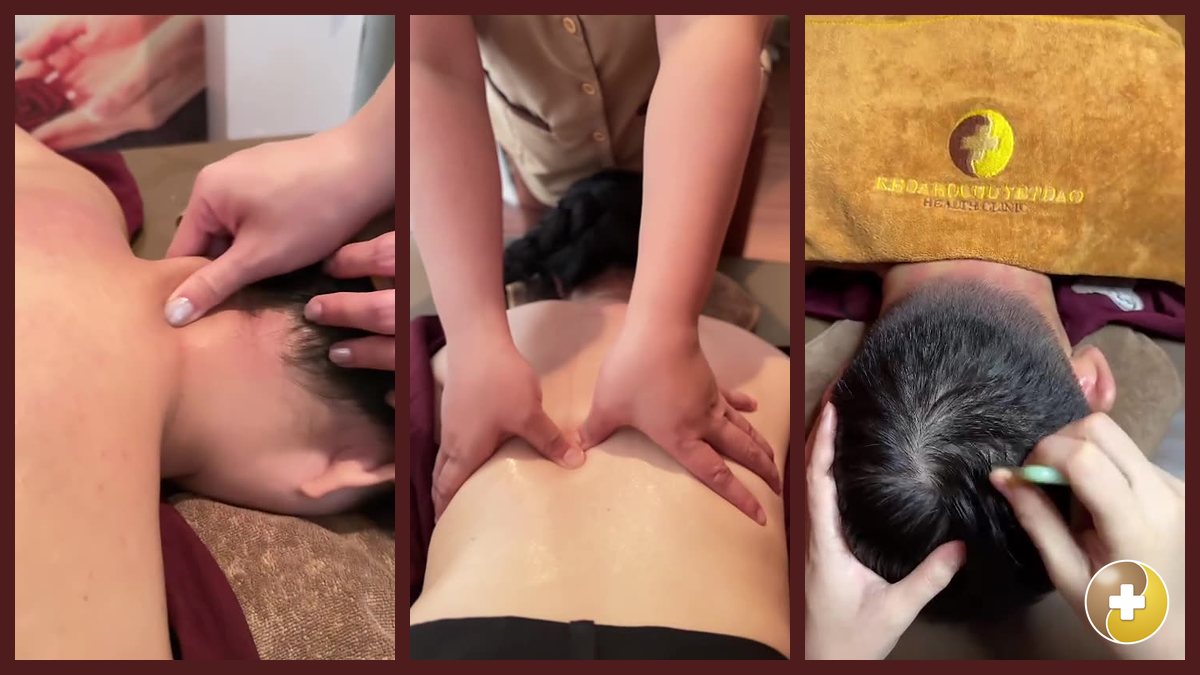
Quick answer: Most stiff necks come from neck muscles tightening after long screen time, the wrong pillow, cold air or stress; fewer come from injury, wear and tear or a disc. A stiff neck with fever, severe headache or vomiting needs emergency care. Tong Gia in Ho Chi Minh City helps release and rebalance the neck.
Want Lương Y Tống Văn Huynh’s team to read your spine and posture in person?
What is a stiff neck?
A stiff neck feels "locked": turning, bending, looking up or tilting all hurt, and the muscles at the back or sides of the neck feel like tight cords. Some people are stiff across the whole nape, some on one side only, some on both sides down into the shoulders. In conventional medicine a stiff neck is a sign, not the name of a condition. Most of the time muscles, tendons and ligaments contract to protect the neck; less often it signals a problem in the neck spine, the nerves or the whole body.
The neck is the most mobile part of the spine, yet it carries a head of roughly 4 to 5 kg. When the head drifts forward to look at a phone, the load on the neck muscles multiplies. In Ho Chi Minh City, Tong Gia Acupoint Wellness (Huyệt Đạo Tống Gia) sees stiff necks in office workers and developers, teachers marking papers, long-distance drivers, garment and nail workers, factory staff, people who sleep with the air conditioner blowing on their neck, and parents who carry children for hours.
Common causes: habits, work, posture and environment
From the conventional medical view, a stiff neck usually falls into one of seven groups. They help you compare, not label yourself.
1. Long hours with the head bent or pushed forward
Low screens, looking down at a phone, holding a phone between ear and shoulder: the neck muscles grip all day, lose blood flow and stiffen. This tends to affect both sides and the nape, worse in the afternoon.
2. Sleeping awkwardly, the wrong pillow
A pillow too high or too low, sleeping face down with the head turned, dozing at a desk or on a bus: the neck is twisted for hours while the muscles are relaxed, and you wake stiff on one side with a sharp pain turning that way.
3. Cold air, what Vietnamese call "trúng gió"
Air conditioning or a fan on the neck, night rides on a motorbike, getting caught in the rain, a late shower then straight to bed: cold makes muscles contract and more pain-sensitive. Stiffness comes on suddenly, the nape feels cold and draughts are unpleasant.
4. Stress
Under pressure we shrug, clench the jaw and brace the neck without noticing. Over time the nape and shoulder lifters harden, with headaches and poor sleep.
5. Strain and injury
A sudden turn, poor gym technique, carrying on one shoulder, or a whiplash jolt when braking hard can strain muscles and ligaments, sometimes deeper. After any accident, get checked first.
6. The neck spine: wear and tear, discs
From middle age, discs and small joints can wear; mornings are stiff, the neck clicks when turning, and pain may run into the shoulder and arm with tingling fingers.
7. Whole-body causes that need emergency care
Rare but important: meningitis brings fever, severe headache, nausea, light sensitivity and a neck so stiff the chin cannot reach the chest; a sudden "thunderclap" headache with a stiff neck can mean bleeding in the brain. Sore throats and swollen neck glands can also make the neck hard to turn.
| Pattern | Likely group | Clues |
|---|---|---|
| Both sides and nape, worse in the afternoon | Screen posture | Eases with breaks |
| One side on waking | Pillow, sleeping position | Sharp when turning one way |
| Sudden, cold nape, dislikes draughts | Cold air ("trúng gió") | After AC, rain, late shower |
| With jaw clenching, headache, poor sleep | Stress | Shoulders raised |
| After a fall, accident, hard braking | Injury | Get checked first |
| Morning stiffness, clicking, tingling hand | Wear and tear, disc | Middle age and older |
| With fever, severe headache, vomiting | Meningitis, brain bleed | Emergency now |
Other signs to watch
- One side or both: one side often follows sleep or turning one way; both sides often follow bending, stress or cold.
- Timing: on waking, late afternoon, after a cold night, after an incident.
- Where it spreads: into the head, shoulder blade, arm, fingers.
- Whole body: fever, severe headache, nausea, light sensitivity, drowsiness.
- Cold feeling: cold nape, dislikes wind, warmth feels good.
- Clicking and long morning stiffness.
When to see a doctor
- Stiff neck with fever, severe headache, nausea or vomiting, light sensitivity, chin unable to touch the chest, drowsiness or a rash: go to emergency now.
- A sudden, severe headache with a stiff neck: call 115.
- Neck or jaw pain with chest pain, breathlessness, cold sweat: call 115.
- Stiffness after a fall, accident or hard braking.
- Growing arm numbness or weakness, unsteady walking, bladder changes.
- Stiffness lasting more than one to two weeks despite rest, a new pillow and warmth.
- With weight loss, a lingering low fever or night pain getting worse: get checked at a medical facility alongside any wellness care.
This is a wellness service, not medical care.
The Y Tướng Học view: Liver sinews, Lung protection, Kidney bones
Y Tướng Học (face reading for wellness) holds that "the face shows outside what the organs hold inside". According to the Tong Gia curriculum, a stiff neck is not only about the neck:
- The Liver governs the sinews: when it is strong, sinews are supple and joints flexible; when weak, muscles stiffen and cramp. The Liver stores blood, so late nights and too little rest leave the sinews under-nourished.
- The Liver and emotion: long frustration makes Liver qi stagnate. The curriculum notes that people with very strong, rigid Liver energy are prone to spasm of the neck sinews, and that prolonged mental pressure tightens the scalp muscles and shoulder lifters.
- The Lung governs skin and protective qi: when protective qi is weak, cold wind gets in more easily. The curriculum describes the "Đồng" face type (Metal, Lung) as falling ill mainly through wind-cold; this is how Eastern medicine reads "trúng gió".
- The Kidney governs the bones: the curriculum links a flat back of the skull with weak Kidney essence, tight deep muscles under the skull and early wear of the upper neck, C1–C3.
Things you can notice: knitted brows, a lined forehead, tense cheekbones and hard shoulder muscles in people who brace; thin brittle nails; dry tired eyes and cramps; dry skin, a blocked nose and shallow breathing in people who chill easily; an uneven face or one shoulder higher, which the curriculum links with a tilted axis and one-sided stiffness. These are clues for tailoring care, not a verdict on your health. See our face reading for wellness Q&A.
Spine segments and nerve-reflex areas involved
According to the Tong Gia curriculum, C1–C7 serve the head, face, neck and arms, and D1–D12 serve circulation, breathing and digestion. The muscle, bone and joint group (neck ache, tingling limbs) works C5–C7 with L1–L5 and S1–S5; the nerve and mind group works C1–C7 with D1–D3 and the sacrum.
| Area | Role (curriculum) | Often felt as | Organ system |
|---|---|---|---|
| C1–C3, base of skull | Head, face; deep muscles | Stiff nape, heavy head | Kidney essence, Liver sinews |
| C1–C2 | Nape easily warm, overactive | Stiffness with headache, dizziness | Liver, Heart |
| C1–C7, D1–D3 | Nerve and mind group | Stress stiffness, poor sleep | Liver qi stagnation |
| C5–C7 | Muscle, bone and joint group | Stiffness into shoulder, tingling hand | Liver sinews |
| D3 | Upper back, breathing | Cold nape, frequent colds | Lung |
The practitioner reads skin temperature, muscle padding, vertebra shape and sensation. Strain usually shows warmer skin and bunched padding; cold-related stiffness often shows cool skin, tight muscle and a dislike of draughts.
How Tong Gia works: spinal nerve-reflex balancing massage
This is a Vietnamese Eastern wellness method built by Lương Y Tống Văn Huynh, master of traditional Vietnamese wellness and founder of Tong Gia, with over 13 years in Eastern wellness, Y Tướng Học and spinal nerve-reflex balancing.
- Observe and ask: how long, which side, after what, any fever, severe headache or tingling. With a warning sign the practitioner stops and refers you on. Brows, nails, skin and the balance of face and shoulders are observed.
- Read the spine by hand, comparing left and right, upper and lower.
- Locate the key area, usually C1–C7 and D1–D3; only warm, tight, tender areas are worked, and the neck is never cracked or twisted.
- Release the trapezius, shoulder lifters, the muscle along the side of the neck, the muscles under the skull and along the spine, from light to deeper pressure.
- Acupressure from the curriculum: Lie Que for "head and neck" stiffness, Da Zhui often used for colds, Tai Chong to ease tension, He Gu for the face (never in pregnancy).
- Stop at the right moment and show you pillow, screen and stretching tips.
Suitable services (full price list):
- Neck and shoulder care, 60 minutes: 550,000 VND (about 21 USD), first visit 399,000 VND (about 15 USD); 90 minutes 750,000 VND (about 29 USD). See neck and shoulder massage.
- Cupping to clear cold, 30 minutes: 85,000 VND (about 3 USD), for stiffness after AC, rain or night rides. See cupping in Saigon Q&A.
- Herbal compress: 130,000 VND (about 5 USD) to warm a stiff, cold nape.
A typical session. A composite, not one guest's story: an accountant living in Vinhomes Grand Park, almost 40, had been stiff on both sides of the neck and nape for weeks during year-end closing. She slept with the AC on, woke with a cold nape and was "stiff as wood" by afternoon, with no fever or tingling. The practitioner noticed a crease between the brows, raised shoulders and slightly dry skin. Around C1–C3 both sides were warm with bunched padding, while the upper back around D3 felt cool. The session released the trapezius, shoulder lifters and muscles under the skull, pressed Lie Que, Da Zhui and Tai Chong, then added cupping over the upper back. Tender at first, then warmth spread across her upper back, and turning her head became much easier. She was advised to redirect the AC, wear a light scarf at night and raise her screen.
How guests feel. During the session: tenderness at tight spots, then warmth, the neck lighter and longer. Afterwards many turn their head more easily and sleep deeper; some feel mild soreness for a day. Wear-and-tear stiffness usually needs regular care with medical follow-up. Tong Gia supports balance in the muscles and spine; there is no promise of a loose neck after one visit.
Want Lương Y Tống Văn Huynh’s team to read your spine and posture in person?
Home care and prevention
- Warmth for 15 to 20 minutes on a strained or chilled nape; after an impact, or if it is hot and swollen, get checked instead.
- Screen at eye level, phone up; every 45 to 60 minutes stand, roll the shoulders and tuck the chin gently ten times.
- A pillow that keeps the neck in line with the back; avoid sleeping face down with the head turned.
- Keep the nape warm: no AC or fan straight on the neck, a scarf on night rides, dry your hair before bed.
- Let go: slow breathing, dropped shoulders and enough sleep so the Liver can nourish the sinews.
More reading: neck and shoulder massage Q&A and acupressure massage Q&A.
Book a session
- District 12: 225 Dương Thị Mười, Phường Tân Chánh Hiệp (Tan Chanh Hiep Ward, District 12). Open 8:00–19:00 daily.
- Vinhomes Grand Park, District 9: Căn T16-21 khu Manhattan, Phường Long Bình, TP. Thủ Đức (Unit T16-21, Manhattan zone, Long Binh Ward, Thu Duc City). Open 9:00–20:00 daily.
Book online or call, Zalo or WhatsApp +84 888 264 559. Tell us which side is stiff, since when, and whether you have tingling or fever. Real guest reviews are on each branch's Google Maps page. In Ho Chi Minh City? Come and try a Vietnamese Eastern wellness method built by Lương Y Tống Văn Huynh.
Visit us
- Đông Y Huyệt Đạo Tống Gia Quận 12 (District 12)
225 Dương Thị Mười, Phường Tân Chánh Hiệp, Quận 12, HCMC · 8:00–19:00 daily · 0888 264 559 · Directions on Google Maps - Đông Y Huyệt Đạo Tống Gia Quận 9 (Vinhomes Grand Park, District 9)
Căn T16-21 khu Manhattan, Vinhomes Grand Park, Phường Long Bình, TP. Thủ Đức, HCMC · 9:00–20:00 daily · 0888 264 559 · Directions on Google Maps
Want Lương Y Tống Văn Huynh’s team to read your spine and posture in person?
FAQ
What causes a stiff neck? Mostly tight neck muscles from long screen time, the wrong pillow, cold air, stress or a sudden movement. Less often injury, wear and tear or a disc. Rarely, and dangerously, meningitis or bleeding in the brain, which come with fever, severe headache and vomiting and need emergency care.
Why is my neck stiff on only one side? One-sided stiffness often follows a night on the wrong pillow, sleeping face down, a screen set to one side or carrying a bag on one shoulder. If one arm tingles or weakens, or it has not eased after one to two weeks, get it checked.
What should I do for a stiff neck after cold air? Keep the nape warm, use warmth for 15 to 20 minutes and move the neck gently within a pain-free range. Cupping, a herbal compress and muscle release help the nape feel warm and soft. With fever or a severe headache, get checked.
How do I know if a stiff neck is serious? Fever, severe or sudden headache, nausea, light sensitivity, drowsiness, a rash or a chin that cannot touch the chest mean emergency care now. Stiffness after an accident or with growing arm weakness also needs a medical check first.
How long does a stiff neck last? Muscle strain or a bad night usually eases within a few days with rest, warmth and better posture. If it lasts more than one to two weeks, keeps returning or comes with tingling, have the neck spine checked.
Author: Lương Y Tống Văn Huynh – founder of Huyệt Đạo Tống Gia, a master of traditional Vietnamese wellness with over 13 years in Eastern wellness care, Y Tướng Học (face reading) and spinal nerve-reflex balancing massage.
Updated: 2026-11-17
Related guides
- Lump on the back of the neck: muscle knot, lymph node or cyst, and when to get it checked
- What causes a stiff neck? Seven common groups, one side or both, and when to get help
- Common health issues for IT workers: what developers often feel and how to look after it
- Pain in both shoulder blades: six common causes, the warning signs, and how Tong Gia can help
- Wrist pain after giving birth: causes, warning signs and gentle care in Ho Chi Minh City
- Shoulder pain from carrying heavy loads: six common causes, the warning signs, and how Tong Gia can help
This is a wellness service, not medical care.