
Shoulder pain from carrying heavy loads: six common causes, the warning signs, and how Tong Gia can help
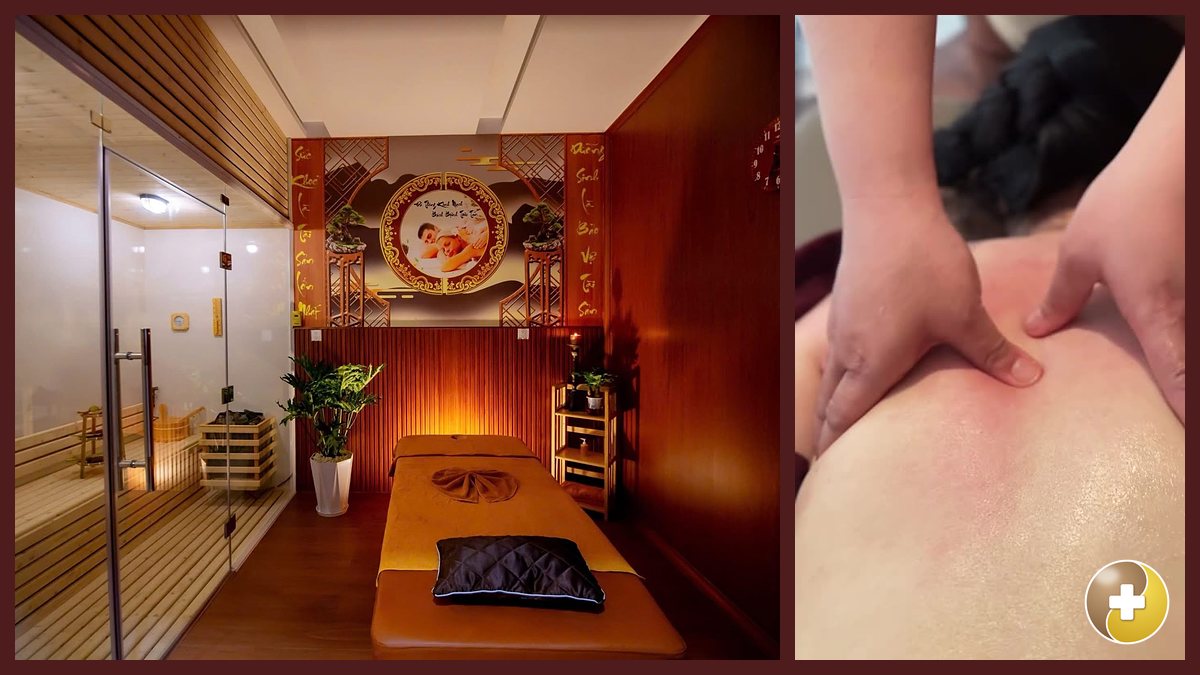
Quick answer: Shoulder pain from carrying heavy loads usually comes from strained trapezius and neck muscles pressed and tensed for hours, or a rotator cuff squeezed when swinging loads up high. A pop, a weak arm, lasting tingling or chest tightness needs a medical check now. Tong Gia Acupoint Wellness (Huyệt Đạo Tống Gia), Ho Chi Minh City, releases hard-working shoulders by hand.
Want Lương Y Tống Văn Huynh’s team to read your spine and posture in person?
What is shoulder pain from carrying heavy loads?
This is pain at the top of the shoulder, in the neck and shoulder muscles, on the outside of the shoulder or deep in the joint after carrying, lifting or shouldering heavy things: rice sacks, cement bags, boxes, 20-litre water bottles, crates of drinks, furniture on moving day. Some feel it while carrying, others only that evening, and the next morning turning the neck or lifting the arm catches. Some also feel tingling or a heavy, tired arm on the side they carried.
In Western medicine terms, a load resting on the shoulder presses straight onto the trapezius at the top of the shoulder, onto the collarbone and onto the hollow just above it, where nerve bundles and blood vessels run down to the arm. At the same time the neck, shoulder and upper back muscles must hold the load and your balance non-stop. Lifting a load from the floor onto the shoulder or pushing it onto a high shelf also forces the joint and rotator cuff to work in a poor position. So the pain may be simple muscle strain, but it can also be a squeezed tendon, a pinched nerve or even a torn tendon.
It is a symptom, not a disease. In Ho Chi Minh City, Tong Gia Acupoint Wellness (Huyệt Đạo Tống Gia) sees it often in porters at wholesale markets and warehouses, factory warehouse staff in the industrial parks, construction workers carrying cement and bricks, water and gas delivery riders, shop owners stocking up each morning, and anyone who has just moved house. People who always carry on the same shoulder for years usually hurt on that side, and that shoulder sits lower.
Common causes: habits, work, posture and environment
From a Western medical view there are six usual groups; a medical facility confirms the cause.
1. Strained trapezius and neck-lifting muscles
The load presses the top of the shoulder, the neck tilts to support it and the shoulder shrugs up for hours. These muscles are squeezed and tensed nonstop, short of blood, so they ache, the neck stiffens and hard knots appear. This is the most frequent group.
2. Squeezed rotator cuff and bursa from lifting onto the shoulder or overhead
Swinging sacks up onto the shoulder or pushing boxes above head height hundreds of times a day rubs the rotator cuff and the bursa under the shoulder tip. Signs: outer shoulder pain between shoulder height and overhead, night pain lying on that side.
3. Torn tendon or dislocation from a sudden lift, jerk or slip
Catching a falling load, jerking a sack or slipping while carrying can tear a shoulder tendon or dislocate the joint: sharp pain, sometimes a "pop", then clear weakness. This needs a medical check.
4. Pinched nerves above the collarbone
A load pressing long on the hollow above the collarbone can squeeze the nerve bundles to the arm: tingling, pins and needles, a heavy or weak arm and hand on the carrying side. Mild cases settle once you stop carrying; lasting or growing numbness needs a check. Very heavy backpacks do the same.
5. The neck and upper back under load
A tilted, bent neck loads the lower neck unevenly. Over years discs and small neck joints can wear and irritate nerve roots: shoulder pain with neck pain and tingling down the arm. The lower back carries load too.
6. The collarbone joint and wear from years of heavy work
The small joint between the collarbone and the shoulder tip is exactly where loads rest. Years of pressure can make it painful and worn: pinpoint pain at the top of the shoulder, tender to press, worse reaching across the chest.
And if left shoulder pain comes with chest tightness, breathlessness or cold sweat while carrying, the heart may be struggling with the effort: stop and call 115.
| Pain after carrying | Likely group | Clue |
|---|---|---|
| Aching shoulder top, stiff neck, knots | Trapezius strain | Eases after days off carrying |
| Outer shoulder pain lifting, night pain | Rotator cuff, bursa | Lifting onto shoulder, high shelves |
| Sharp pain, a pop, clear weakness | Torn tendon, dislocation | Medical check now |
| Tingling, weak arm on carrying side | Nerves above collarbone | Check if it lasts |
| With neck pain, tingling down the arm | Neck | Worse bending the neck |
| Pinpoint pain at shoulder top | Collarbone joint | Years of heavy work |
| Left shoulder pain with chest tightness on effort | Heart | Stop, call 115 |
Other signs to watch
- Tingling or weakness after carrying: dropping things, weak grip.
- Unable to lift the arm, or lifting it very painfully.
- Bruising, swelling or a deformed shoulder top or collarbone.
- Night pain when lying on that shoulder.
- A stiff neck, hard to turn.
- Uneven shoulders: one lower, one arm hanging longer.
- Chest tightness, breathlessness or cold sweat on effort.
- Low back pain after the same lifting.
When to see a doctor
With any of the following, stop carrying, please see a doctor at a medical facility first and hold off on massage:
- Left shoulder pain with chest tightness, breathlessness or cold sweat while carrying, or pain into the left arm, neck or jaw: call 115 now.
- Sudden severe pain, a "pop", then clear weakness, unable to lift the arm.
- A slip while carrying with a deformed, swollen or bruised shoulder or collarbone.
- Numbness or weakness in the arm or hand lasting more than a few days or getting worse.
- Pain with fever or a hot, red, swollen shoulder.
- Right shoulder pain with nausea, yellow skin or after fatty meals.
- Night pain at rest getting worse, with weight loss or long fatigue: get checked at a medical facility alongside any wellness care.
- No improvement after one to two weeks of rest and home care.
If it happened at work, tell your employer so lighter duties can be arranged while you recover. This is a wellness service, not medical care.
The Y Tướng Học view: Liver, Spleen and Kidneys in heavy work
Y Tướng Học holds that the outside reflects the organs inside. In the Tong Gia curriculum, people doing heavy physical work rely on three organ systems:
- Liver governs the sinews and stores the blood: at rest blood returns to the Liver to be replenished; in movement it goes to muscles and tendons. Heavy days with little sleep leave tendons underfed and shoulders stiff.
- Spleen governs the muscles and limbs: it turns food into qi and blood. Rushed or skipped meals and lots of iced drinks before heavy lifting tire the Spleen, so muscles fatigue fast.
- Kidneys govern the bones: after years of heavy work and with age, Kidney qi declines and joints wear more easily.
What you can observe: dry eyes, brittle ridged nails, cramps and a tight neck point to the Liver; pale lips, heaviness and tired limbs to the Spleen; tired knees, a cold lower back and ringing ears to the Kidneys. The curriculum describes the bony "Vương" face (王) as strong-willed and good at carrying burdens, but prone to fibrous tendons and early joint wear, exactly the person who works hard without complaining and needs slow, deep release. The square "Điền" face (田), an Earth type, has firm muscle and a thick back that can tighten in a large patch around D11–D12. The uneven "Dụng" face (用) tends toward one tight side and one loose side, much like a body that has carried on one shoulder for years. These are signals for fitting care, not a medical verdict. See our face reading Q&A.
Spine segments and nerve-reflex areas involved
In the Tong Gia curriculum, C1–C7 serve the head, face, neck and arms; D1–D12 circulation, breathing and digestion; L1–L5 digestion, kidneys and the legs. The muscle-bone-joint group is worked through C5–C7, L1–L5 and S1–S5. Heavy carriers almost always load the shoulder, neck and lower back together.
| Segment | Nerve / function | Typical signs | Eastern organ |
|---|---|---|---|
| C5–C7 | Neck to arm; muscle-bone-joint group | Shoulder pain, stiff neck, tingling on carrying side | Liver (sinews) |
| D1–D3 | Upper back, trapezius and blade muscles | Heavy, raised shoulder, stiff blade | Lungs (D3) |
| D11–D12 | Digestion, making qi and blood | Muscles tire fast, heaviness | Spleen–Stomach |
| L1–L5, S1–S5 | Legs; muscle-bone-joint group | Low back pain after lifting, tired knees | Kidneys (bones) |
Around the shoulder the practitioner also works the shoulder top, the area above the collarbone (only very lightly), the deltoid, the inner shoulder blade, the chest and the arm, together with the spinal key point: the curriculum calls this paired adjustment.
How Tong Gia works: spinal nerve-reflex balancing massage
This method was built by Lương Y Tống Văn Huynh, master of traditional Vietnamese wellness and founder of Huyệt Đạo Tống Gia, over more than 13 years. A session for this pain:
- Observe and ask: your job, what you carry, which side, how long, any slip, pop, tingling, weakness or chest tightness, any medical check. Warning signs mean we stop and advise a medical check. Then we look at eyes, nails, lips and how uneven the shoulders are.
- Read the spine by hand: skin temperature, muscle layer, vertebra shape and sensation, carrying side against the other.
- Locate key areas: usually C5–C7, D1–D3, the shoulder top, the blade and the lower back; only "excited" areas are worked; no cracking or yanking; very light pressure above the collarbone.
- Release the muscles: trapezius, neck-lifting muscle, blade muscles, deltoid, chest, back and lower back, in a comfortable wave.
- Acupressure at the shoulder top, blade, arm and lower back, following the key points.
- Stop at the right time, when the skin at the key point turns from dry to moist.
- Home guidance: lifting, carrying, switching sides, stretches after a shift.
Suitable services (see prices):
- Neck and shoulder or back care 60 min: 550,000 VND (about 21 USD), first visit 399,000 VND (about 15 USD); 90 min: 750,000 VND (about 29 USD), 90 minutes when both shoulder and back hurt. See neck and shoulder massage.
- Full-body care 120 min: 950,000 VND (about 37 USD) when the whole body is worn out.
- Herbal compress: 130,000 VND (about 5 USD) to warm stiff shoulders and back; not on a hot swollen injury.
A typical session
This combines many sessions, not one guest's story. A water delivery rider in his early forties near Tan Chanh Hiep, District 12, carries dozens of bottles on his right shoulder every day. For a week the top of that shoulder had ached, turning his neck right at night hurt, and his right hand tingled briefly in the mornings; no chest symptoms, and a medical check found muscle strain. His right shoulder sat lower and his neck tilted right. Along C6–C7 on the right the skin was warmer, and the right trapezius had a band like a rope; the right lower back was tight too. Over 90 minutes the practitioner released the trapezius, neck-lifting muscle, right blade muscles and chest, then the lower back, and pressed points around the shoulder and back. It ached at first at the shoulder top, then warmth spread and his neck turned more freely; he said the shoulder felt "like I just put the bottle down".
What guests feel
During the session: a tender ache along the tight band, then warmth, the shoulder dropping and the neck turning easier. Afterwards many sleep more deeply and wake with lighter shoulders; some feel mild soreness for a day. If the same heavy carrying continues unchanged, muscles tighten again, so changing how you carry matters too. Tong Gia helps rebalance related muscles and spine and does not promise the pain will vanish in one visit. More in our massage for hard-working bodies in District 12, massage for Hi-Tech Park workers and back massage Q&A.
Want Lương Y Tống Văn Huynh’s team to read your spine and posture in person?
Home care and prevention
- Lift well: squat, keep the back straight, hug the load close and stand up with your legs; never bend over and swing it onto the shoulder.
- Switch and split: change shoulders every few trips, split loads, use a trolley when possible, pad the shoulder top so pressure spreads.
- Stretch after the shift: tilt the head away from the sore side for 20 seconds, roll shoulders back 10 times, doorway chest stretch for 20 seconds.
- Cold or warm: a fresh hot ache gets a wrapped cold pack for 10 to 15 minutes; a stiff tired shoulder gets warmth for 15 to 20 minutes.
- Food and sleep: eat properly before work, prefer warm water to lots of iced drinks, sleep enough.
Book a session
- District 12: 225 Dương Thị Mười, Phường Tân Chánh Hiệp (Tan Chanh Hiep Ward, District 12). Open 8:00–19:00 daily.
- Vinhomes Grand Park, District 9: Căn T16-21 khu Manhattan, Phường Long Bình, TP. Thủ Đức (Unit T16-21, Manhattan zone, Long Binh Ward, Thu Duc City). Open 9:00–20:00 daily.
Book online or call, Zalo or WhatsApp +84 888 264 559. Tell us which shoulder you carry on, since when, any tingling, and whether you have had a medical check. Real guest reviews are on each branch's Google Maps page. In Ho Chi Minh City? Come and try a Vietnamese Eastern wellness method built by Lương Y Tống Văn Huynh.
Visit us
- Đông Y Huyệt Đạo Tống Gia Quận 12 (District 12)
225 Dương Thị Mười, Phường Tân Chánh Hiệp, Quận 12, HCMC · 8:00–19:00 daily · 0888 264 559 · Directions on Google Maps - Đông Y Huyệt Đạo Tống Gia Quận 9 (Vinhomes Grand Park, District 9)
Căn T16-21 khu Manhattan, Vinhomes Grand Park, Phường Long Bình, TP. Thủ Đức, HCMC · 9:00–20:00 daily · 0888 264 559 · Directions on Google Maps
Want Lương Y Tống Văn Huynh’s team to read your spine and posture in person?
FAQ
Is shoulder pain from heavy carrying serious? Most is trapezius and neck muscle strain that eases over a few days with less carrying, cold or warm packs and muscle release. Get checked for sudden severe pain with a pop, clear weakness, a deformed shoulder after a slip, lasting numbness, or left shoulder pain with chest tightness on effort.
Why does my arm tingle after carrying something heavy? A load pressing long on the hollow above the collarbone can squeeze the nerves to the arm, causing tingling and a heavy, weak arm. Mild cases settle once you stop; numbness or weakness lasting more than a few days or getting worse needs a check.
How long does it take to settle? Simple strain usually eases within a few days to about a week if you carry less, switch sides, use cold or warm packs and stretch. Pain beyond one to two weeks, night pain or difficulty lifting the arm warrants a tendon check.
Should I use ice or heat? In the first one or two days, if the shoulder feels hot, use a wrapped cold pack for 10 to 15 minutes; afterwards, or for stiff tired muscles, use warmth for 15 to 20 minutes. Never heat a hot, red, swollen area.
Can massage help shoulder pain from carrying? When the pain comes from tight neck and shoulder muscles or a mildly irritated tendon already checked, muscle release and acupressure help the shoulder relax, the neck turn and sleep deepen. With a suspected tear, dislocation or bruising after a fall, get a medical check first.
How can I carry heavy loads without hurting my shoulder? Lift with your legs and a straight back, hold the load close, switch shoulders every few trips, pad the shoulder top, split loads or use a trolley, stretch after work, and eat and sleep well.
Author: Lương Y Tống Văn Huynh – founder of Huyệt Đạo Tống Gia, a master of traditional Vietnamese wellness with over 13 years in Eastern wellness care, Y Tướng Học (face reading) and spinal nerve-reflex balancing massage.
Updated: 2026-11-17
Related guides
- Lump on the back of the neck: muscle knot, lymph node or cyst, and when to get it checked
- What causes a stiff neck? Seven common groups, one side or both, and when to get help
- Common health issues for IT workers: what developers often feel and how to look after it
- Pain in both shoulder blades: six common causes, the warning signs, and how Tong Gia can help
- Wrist pain after giving birth: causes, warning signs and gentle care in Ho Chi Minh City
- Shoulder pain from carrying heavy loads: six common causes, the warning signs, and how Tong Gia can help
This is a wellness service, not medical care.